TL;DR
For most builds, start with the Expo Arms® 16-inch Lite Barreled Upper, Nitride BCG, and their Single Stage Trigger. If you have more budget, step up to the Chrome BCG for a hard-used duty rifle, their 16-inch M-LOK upper, and their Two Stage Trigger.
- Best Lightweight Upper Receiver – Expo Arms 16-inch Lite Barreled Upper: A barreled upper with a 16-inch nitride barrel and a lightweight M-LOK handguard; it has a 1:8 twist, a mid-length gas system, and weighs just 3 pounds and 9.8 ounces (without a BCG or charging handle).
- Best Compact Upper Receiver – Expo Arms 8-inch Barreled Upper: Expo Arms’ only .300 Blackout upper; it’s outfitted with an 8-inch barrel, a 7-inch M-LOK handguard, and a pistol-length gas system for optimal reliability.
- Best General-Purpose Trigger – Expo Arms Two Stage Curved Trigger: A trigger designed for general purpose builds that has a 4.5-pound pull weight and smooth nickel boron finish.
- Best Precision Trigger – Expo Arms Single Stage Flat Trigger: A 5.5-pound pull with a flat trigger bow that offers extra leverage and less perceived pull weight.
- Best Budget BCG – Expo Arms Phosphate/Nitride BCG: The most affordable BCG in the Expo Arms lineup; it uses a 9310 steel bolt instead of a Carpenter-158 steel one, and it’s only magnetic particle inspected.
Expo Arms®: Brand Overview
Expo Arms is one of the firearm industry’s underdogs, offering top-tier components at a fraction of the cost of more well-known brands. Their lineup is vast and includes a wide range of parts and components that are fit for every experience level and budget. The Expo Arms brand and its lineup are offered exclusively through Primary Arms. Their products are made entirely in the USA, and they’re even backed by a limited lifetime warranty too.
As far what they offer, Expo Arms’ catalog is large, and regardless of what you look at, each of their offerings is designed to offer peak reliability while staying affordable. Among them, their upper receivers, bolt carrier groups, handguards, and lower parts kits consistently rank as some of their most popular offerings.
Which Expo Arms Upper Receiver Should You Buy?
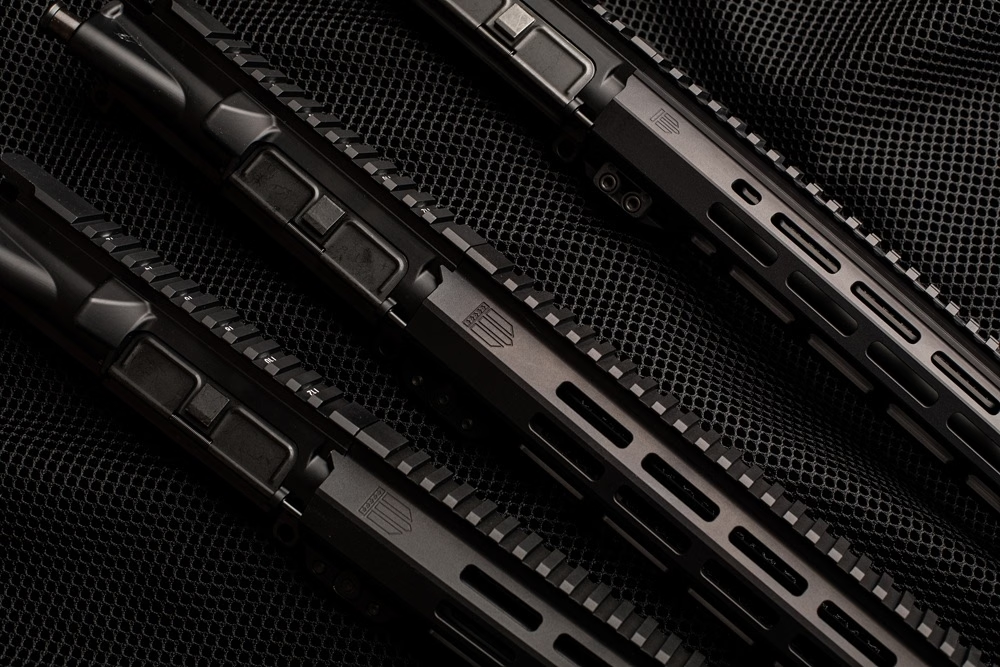
Expo Arms’ Upper Receivers are not only affordable, but they’re also available in several configurations. Each one is equipped with high-quality components, and they all lend themselves to different user preferences and applications.
| 16-inch Lite Barreled Upper | 16-inch Barreled Upper Receiver | 10.5-inch Barreled Upper Receiver | 8-inch Barreled Upper Receiver | |
|---|---|---|---|---|
| Caliber | 5.56 NATO | 5.56 NATO | 5.56 NATO | .300 Blackout |
| Barrel Length | 16 Inches | 16 Inches | 10.5 Inches | 8 Inches |
| Barrel Profile | Government | Government | Government | SOCOM |
| Twist Rate | 1:8 | 1:7 | 1:7 | 1:8 |
| Gas System Length | Mid-length | Mid-length | Carbine-Length | Pistol-Length |
| Barrel Finish | Salt Bath Nitride | Parkerized or Salt Bath Nitride | Salt Bath Nitride | Salt Bath Nitride |
| Handguard | 15-inch Lightweight M-LOK Handguard | 15-inch M-LOK Handguard; 13-inch Quad-Rail Handguard | 9.5-inch M-LOK Handguard | 7-inch M-LOK Handguard |
| Muzzle Thread Pitch | 1/2×28 | 1/2×28 | 1/2×28 | 5/8×24 |
Expo Arms 16-inch Lite Barreled Upper
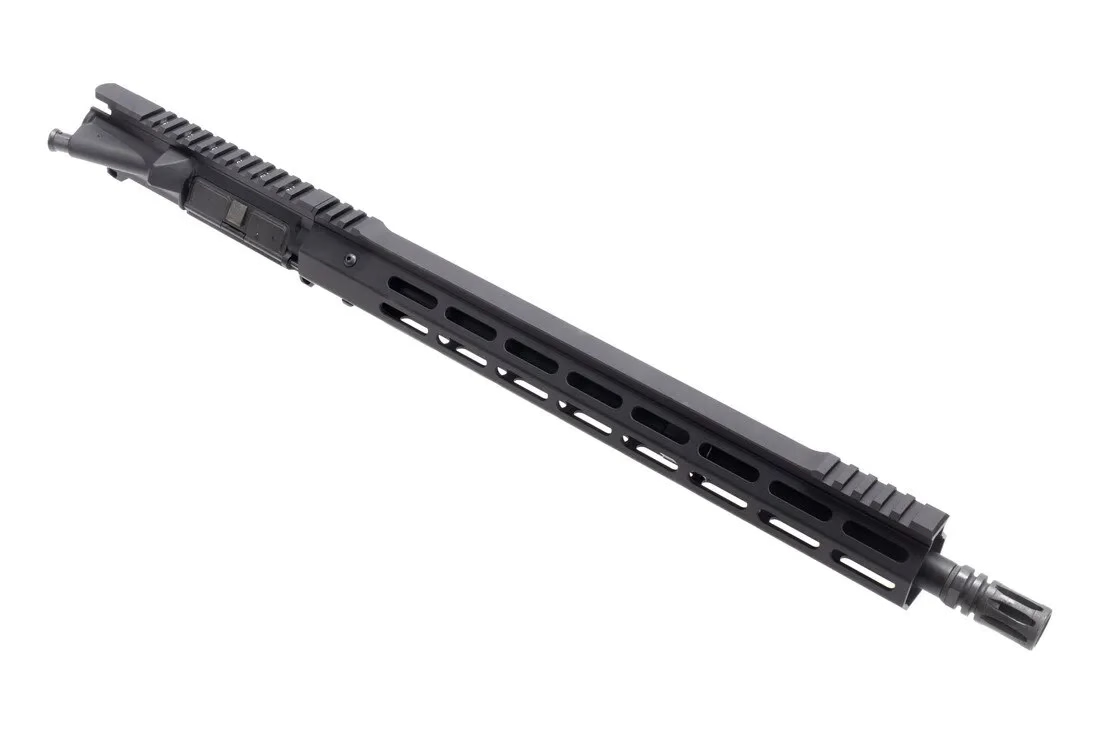
One of Expo Arms’ most sought after barreled upper assemblies comes in the form of their 16-inch Lite Barreled Upper in 5.56 NATO. Its upper receiver uses a mil-spec design and is made from forged 7075-T6 aluminum—a strong and lightweight aluminum alloy. It features a 16-inch with a 1:8 twist ratio, making it compatible with most, if not all, common 5.56 NATO bullet weights. Plus, it’s nitride coated to protect against rust and corrosion And for better reliability as well as a more pleasant shooting experience, this upper has a mid-length gas system and a 0.078-inch gas port. This combination creates a softer recoil impulse compared to other upper receivers. And when paired with the upper’s lighter overall weight, it’s a solid foundation for an agile rifle build.
Also equipped on this upper is Expo Arms’ Free-Floating Lite M-LOK handguard. It still has M-LOK slots along the bottom and sides of the handguard, but it doesn’t have a continuous upper picatinny rail. The middle portion of the upper rail is gone, leaving a small portion of picatinny rail space on both the rear and front ends of the handguard, giving you a space to mount a weapon light or backup front sights.
This is the lightest option they offer, with it weighing only 3 pounds and 9.8 ounces (without a BCG or charging handle). But even after you add those components to finish your upper, it’s still going to be a lighter alternative to many standard upper receiver models. For its many advantages, one might assume that this upper is on the pricier side. However, they’re priced at around $250. Although you do have to buy a BCG and a charging handle to complete it, Expo Arms offers them too, but we’ll go over them later. You should opt for this upper if you want to run a specific BCG or an upgraded charging handle.
It’s worth noting that Expo Arms also offers a Complete 16-Inch Lite Upper for around $330 too. This one is a better pick if you just want an upper that’s ready to go out of the box.
Expo Arms 16-inch Barreled Uppers
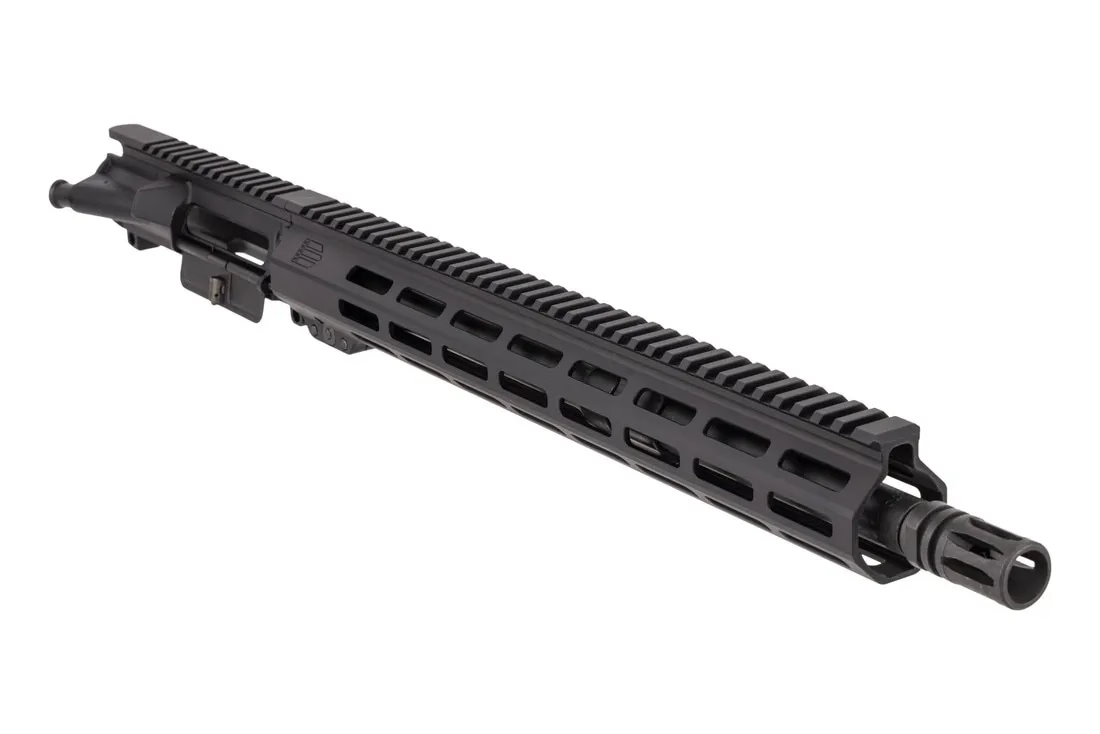
If you’re in the market for more of a standard upper receiver, the Expo Arms 16-inch Barreled Upper Receiver in 5.56 NATO is a great option. As far as its construction goes, it’s like the Lite Upper highlighted above. It uses a mil-spec upper receiver that’s made from forged 7075 aluminum, it has a 16-inch barrel chambered for 5.56 NATO, and it has a full-length M-LOK handguard. That said, there are some key distinctions between the two.
For starters, the barrel on this upper, while similar, is not one-to-one with the lite upper. While they do share some similarities—like their government profile, 16-inch length, mid-length gas system, and 1/2×28 muzzle threads—the barrel on a standard 16-inch upper is more of a mil-spec design. It has a 1:7 twist rate, making it more compatible with heavier projectiles like 62- to 77-grain. Also, the barrel has a parkerized finish. This model also comes with Expo Arms’ standard 15-inch Free-Float M-LOK handguard that has a full-length upper picatinny rail.
If you’d prefer to run a quad-rail handguard, the 16-inch Quad-Rail Barreled Upper Receiver is a solid alternative. Basically, it’s the same as the M-LOK version, just with a quad-rail handguard. That said, this upper receiver model comes with a shorter 13-inch handguard instead of a 15-inch one. Also, this upper has a nitride barrel, not a parkerized one.
Just like the Lite Upper, the standard Expo Arms 16-inch Barreled Upper Receiver is typically priced around $250, making it an excellent choice for a first rifle build. Meanwhile, the quad-rail variant is a bit more expensive, with it priced around $300.
Expo Arms 10.5-inch Barreled Upper
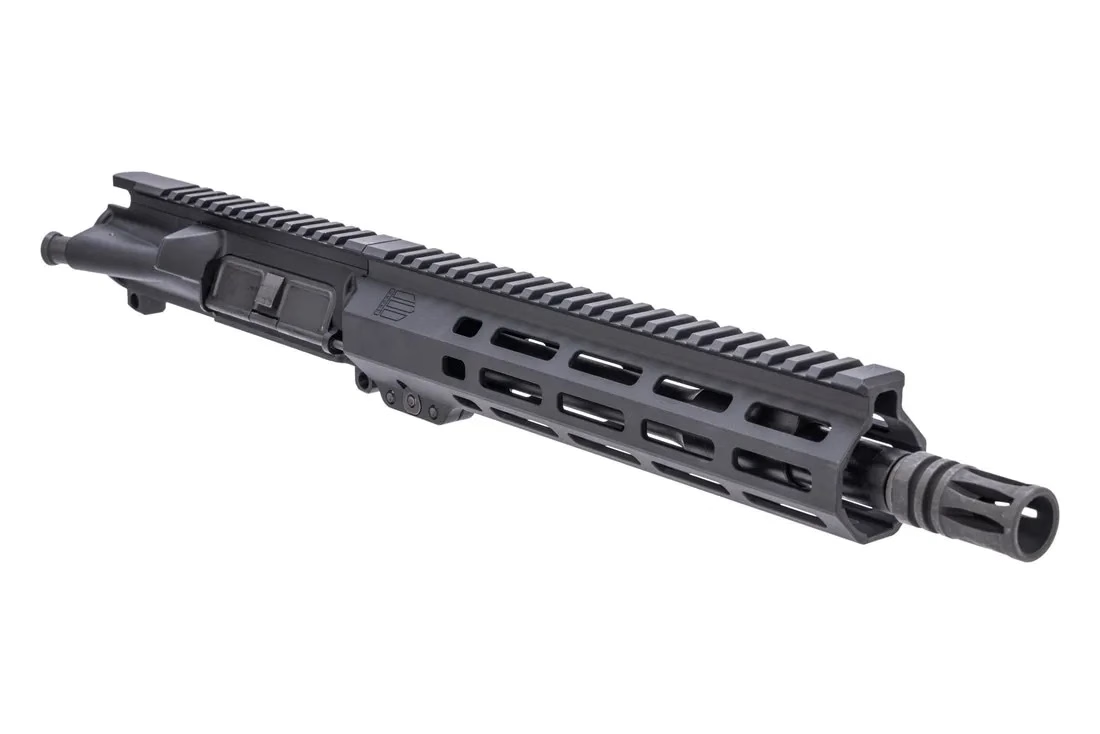
The Expo Arms 10.5-inch Barreled Upper is a shorter alternative that’s great for AR pistol or SBR builds. You can look at this upper as a shorter version of the standard 16-inch upper mentioned above, albeit with some alterations. Outside of using a shorter 10.5-inch barrel and 9.5-inch handguard, this upper uses a nitride barrel instead of a parkerized one. It also has a carbine-length gas system and a 1:7 twist rate.
Like the other uppers mentioned thus far, this one is priced around $250. If you do plan on picking one of these up, remember that NFA (National Firearms Act) laws still apply, meaning you cannot put it on a rifle lower unless it has been registered as a Short-Barrel Rifle (SBR) with the ATF since the barrel on this upper is shorter than 16 inches. Depending on your state of residence, you may be able to build an AR pistol, but it is up to you to know and abide by federal laws, as well as your state and local laws too.
Expo Arms 8-inch Barreled Upper
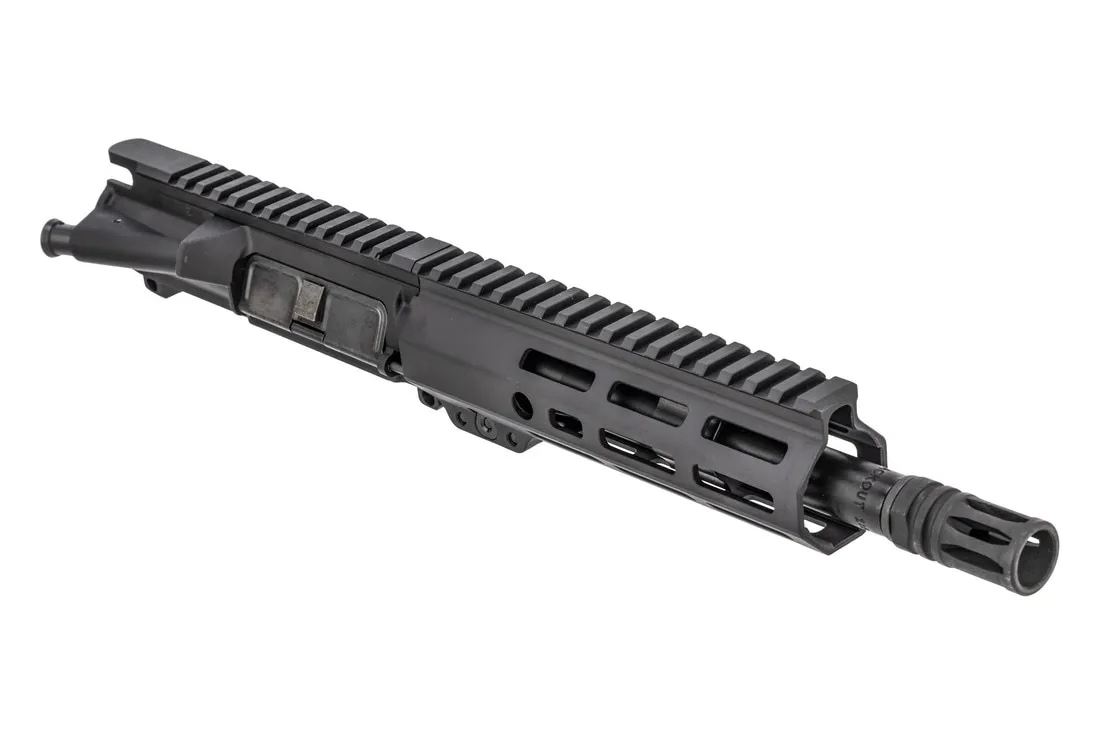
The Expo Arms 8-inch Barreled Upper is the shortest upper receiver they offer, and it’s also currently the only one they offer in .300 Blackout. Being chambered in .300 Blackout, this upper has some notable differences compared to the others.
For starters, it’s very short, as it has an 8-inch barrel. It uses a SOCOM profile barrel that has a nitride finish, and a much shorter pistol-length gas system to ensure it cycles properly when firing. Additionally, since it’s designed to fire a larger projectile, it uses a larger diameter 5/8×24 muzzle thread pitch. Outside of this, the rest of its features are similar to the 10.5-inch upper they offer in 5.56 NATO. The 8-inch upper comes standard with a 7-inch M-LOK handguard and does not come with either a BCG or a charging handle.
Compared to the other uppers in the Expo Arms lineup, this one has a slightly higher price, with it typically being priced around $260. But, if you’re wanting a .300 Blackout AR pistol or if you plan on building an SBR, this upper is worth considering. That said, if you do buy this upper, the same rules and regulations that apply to the 10.5-inch upper apply to this one. So, be sure to check your state and local laws to see if AR pistol or SBR ownership is legal where you reside.
Which Expo Arms Bolt Carrier Group Is Best?
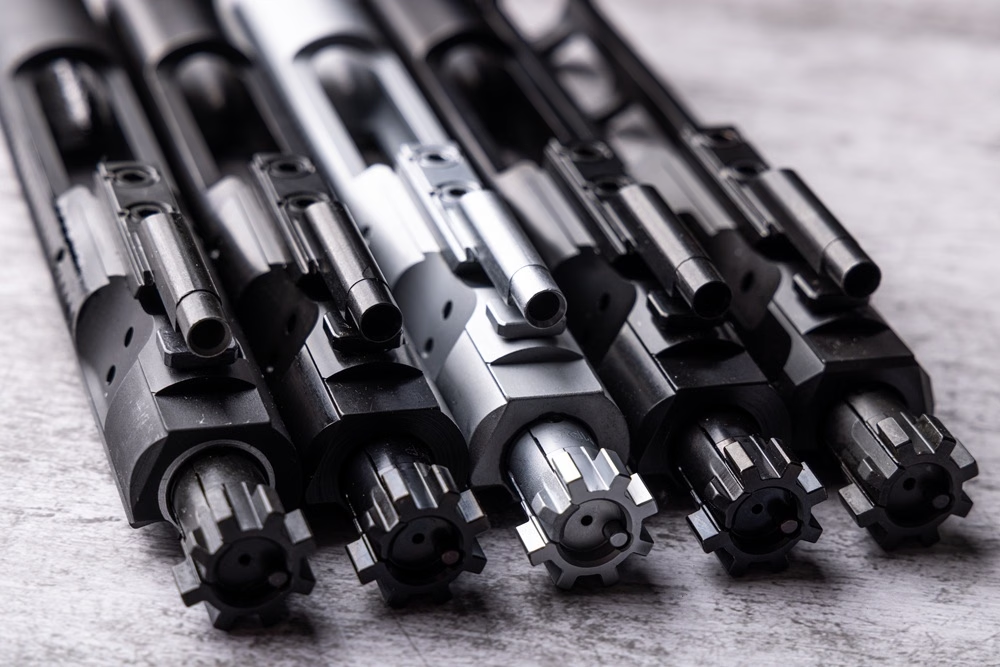
Expo Arms Bolt Carrier Groups are engineered to offer supreme reliability. The bolt carrier group is the heart of the entire rifle, one that houses important components like the firing pin, and serves as the primary moving part of the rifle that cycles ammunition. As such, having a quality BCG is critical to having a rifle that functions when needed.
| Nitride | Phosphate | Chrome | Phosphate / Nitride | |
|---|---|---|---|---|
| Carrier Material | 8620 Steel | 8620 Steel | 8620 Steel | 8620 Steel |
| Carrier Finish | Salt Bath Nitride | Manganese Phosphate | Hard Chrome | Salt Bath Nitride |
| Bolt Material | Carpenter-158 Steel | Carpenter-158 Steel | Carpenter-158 Steel | 9310 Steel |
| Bolt Finish | Salt Bath nitride | Manganese Phosphate | Hard chrome | Manganese phosphate |
| Magnetic Particle Inspected | Yes | Yes | Yes | Yes |
| High-Pressure Tested | Yes | Yes | Yes | No |
| Carrier Style | M16 | M16 | M16 | M16 |
Expo Arms Nitride Bolt Carrier Group
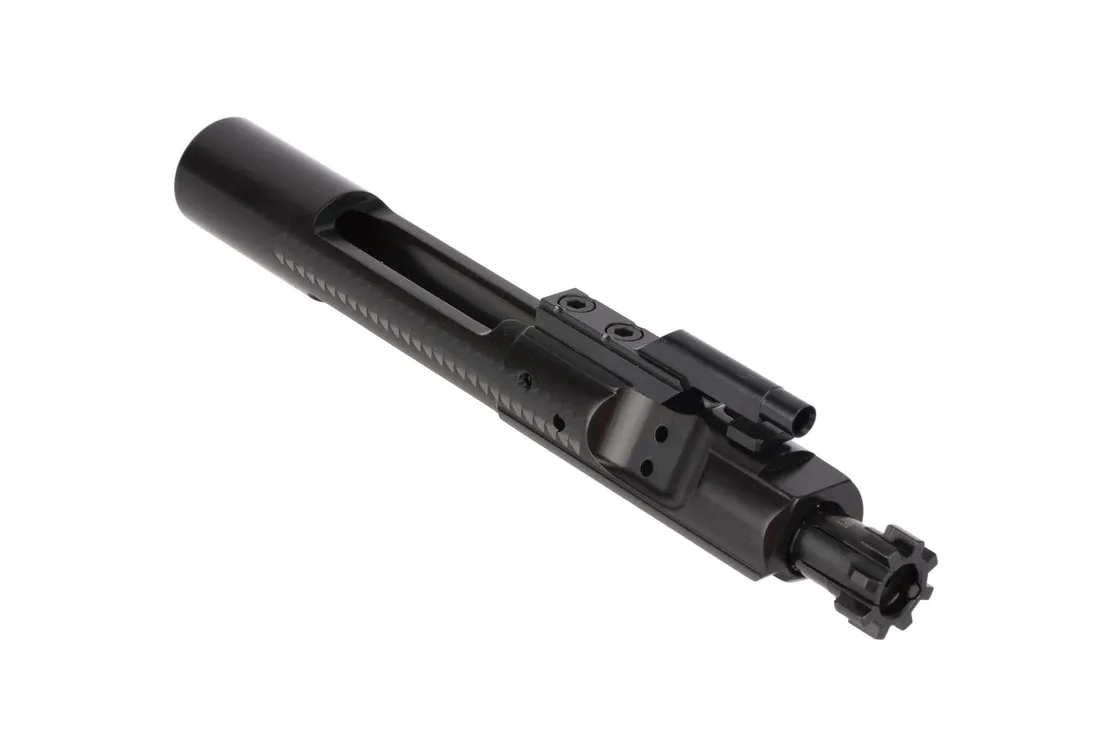
One of the most popular BCGs offered by Expo Arms is their Nitride BCG. This model BCG is based on the mil-spec design. It uses an M16 style carrier design, which is dimensionally one of the most reliable BCG designs around. It’s manufactured with very high-quality materials. The carrier is constructed out of 8620 steel, with the bolt being made from Carpenter-158 steel—the same materials used on mil-spec BCGs. Although the nitride finish isn’t a mil-spec one, it doesn’t alter the inherent quality of the BCG. It instead adds a slick, corrosion-resistant finish to it, allowing it to run reliably without being subject to too much carbon fouling.
To ensure they’re able to withstand the harshest use possible, Expo Arms puts their Nitride BCG through both a Magnetic Particle Inspection (MPI) and a High-Pressure Test (HPT). Both of these processes test to see if there are any microscopic flaws in the steel that aren’t visible to the human eye, and test to ensure the bolt can handle excessively high pressures, respectively. As such, these BCGs pair well with everything from general-purpose builds to more specialized ones like SPRs. And with them being priced around $130, they’re a great value too.
Expo Arms Phosphate BCG
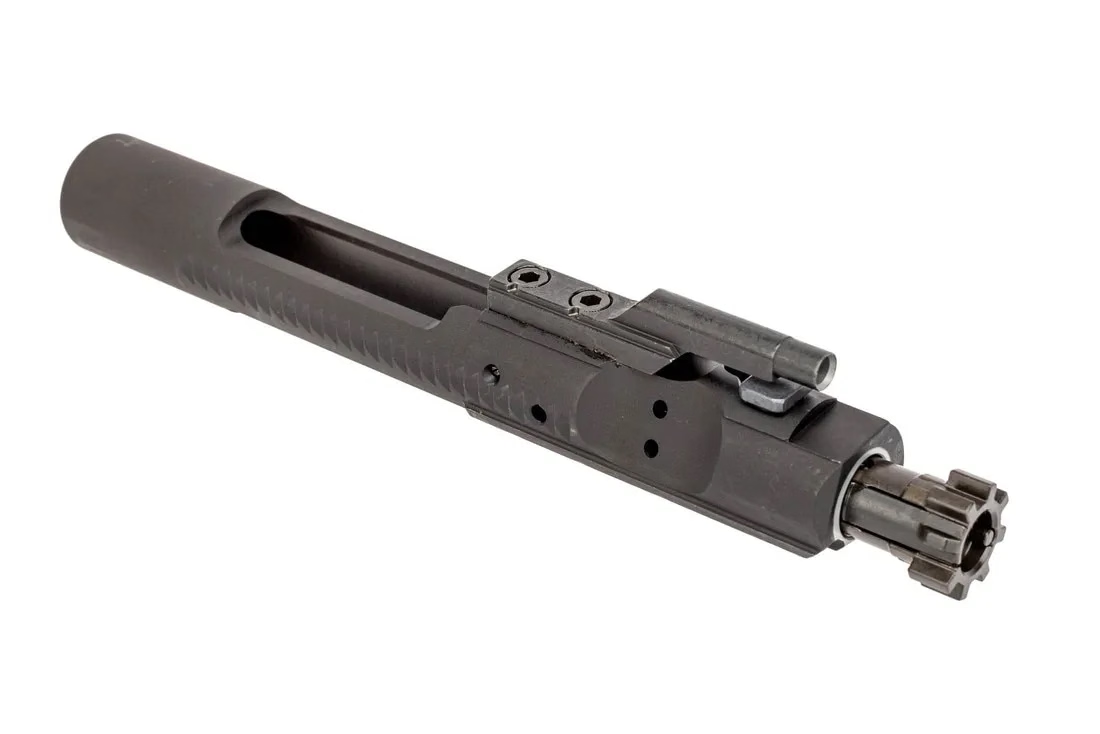
If you’re in the market for more of a true mil-spec BCG, the Expo Arms Phosphate BCG is the move. Like the Nitride carrier, the Phosphate carrier and bolt are made from the same 8620 and Carpenter-158 steel, respectively, and like the Nitride BCG, it has a properly staked gas key with Grade 8 screws. Additionally, this BCG has been MPI and HPT rated, so they can handle just about anything you can throw at it.
The big distinguisher between this BCG and the earlier one mentioned is its coating. As its name suggests, it has a Manganese Phosphate coating, which is what’s used on mil-spec BCGs. Phosphate coatings are, comparatively, a bit harder to clean since they aren’t as slick as Nitride coatings, but they still have their benefits. Phosphate coatings are porous, so they’re able to retain oil much easier than nitride coatings, allowing them to stay lubricated for longer. Also, phosphate coated BCGs have a hard-chrome lining to keep their internals resistant to carbon fouling. So, if you’re wanting more of a standard mil-spec BCG, this is an exceptional choice that’s still budget-conscious as it’s priced around $140.
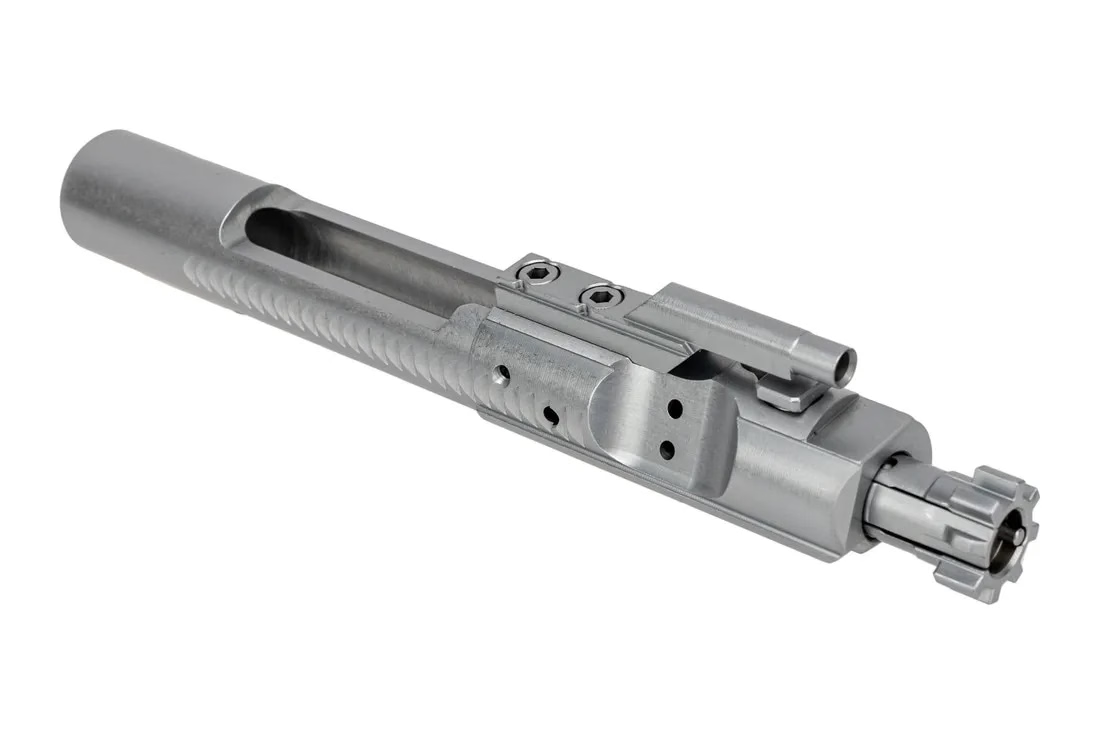
Expo Arms Chrome BCG
The Expo Arms Chrome BCG is the most premium option in their lineup. It’s built to the same specs as the two previously mentioned BCGs, so it’s built with 8620 and Carpenter-158 steel and has a properly staked gas key with Grade 8 screws. The substantial difference between it and the other BCGs is its Hard-Chrome finish.
Hard-Chrome finishes are great for BCGs. They’re exceptionally resistant to corrosion, easy to clean, and are very reliable. They have a naturally smooth finish like nitride finishes but offer far more corrosion resistance while still being easy to clean. Although the finish isn’t porous, it still retains oil with no issues. These BCGs are great for duty rifles that are likely to see long strings of fire, competition builds, and everything in between.
Now, being one of the more premium options offered by Expo Arms, it is the most expensive BCG in their lineup, with it being priced around $150. Still, the value is incredible for what you’re getting, giving you premium performance for less than $200.
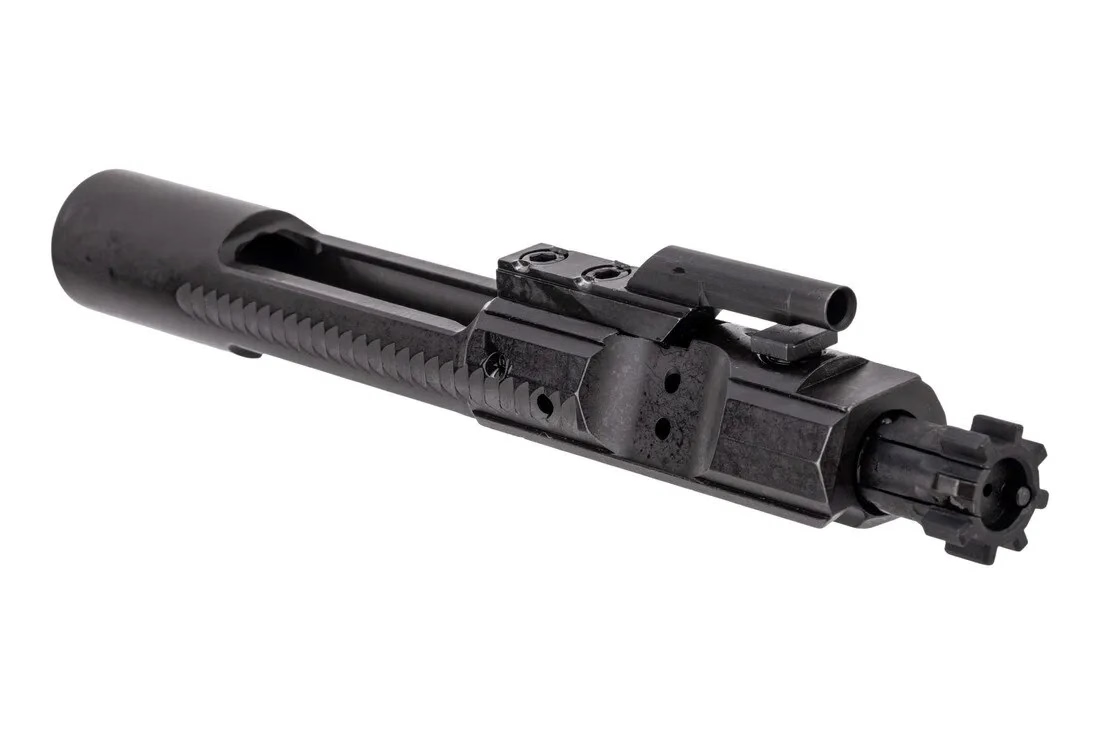
Expo Arms Phosphate/Nitride BCG
The Expo Arms Phosphate/Nitride BCG offers proven reliability, but comes in at less than $100, with it typically being priced around $80.
This BCG isn’t built to the same spec as the other BCGs listed above. Mainly, rather than using mil-spec materials like the others, these use 9310 steel for the bolt instead of Carpenter-158 steel—its carrier still uses 8620 steel. 9310 steel is still incredibly strong, but it isn’t what’s used on mil-spec BCGs. Additionally, their Phosphate/Nitride BCGs are MPI rated, but they aren’t HPT rated. Lastly, as the name suggests, they use two different coatings; the carrier is Nitride coated, while the bolt is Phosphate coated.
This BCG is still a practical choice for most AR-15 builds, as they still offer great durability and are resistant to corrosion. That said, since they’re a more budget-friendly choice, they aren’t tested to the same standards as the other models offered by Expo Arms. We recommend the Phosphate/Nitride BCG if you’re building a rifle on a budget, or don’t plan to use your rifle in extreme conditions.
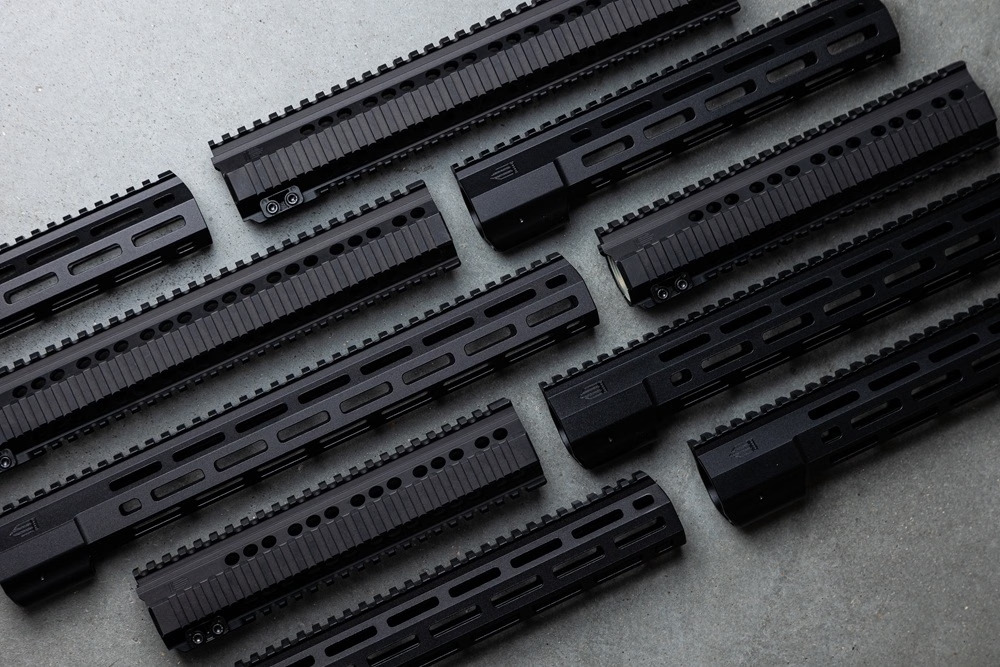
Which Expo Arms Handguard Should You Choose?
Expo Arms Handguards effectively blend quality with affordability, and they offer several variants of their M-LOK and Quad-Rail handguards:
| Handguard | Attachment System | Available Lengths | Available Finishes |
|---|---|---|---|
| Expo Arms Free Float AR-15 Handguard – M-LOK | M-LOK | 15 Inches 13 Inches 10.5 Inches 9.5 Inches 7 Inches 4 Inches | Black and FDE |
| Expo Arms Free Float AR-15 Handguard – Quad-Rail | Picatinny | 13 Inches 9.5 Inches | Black |
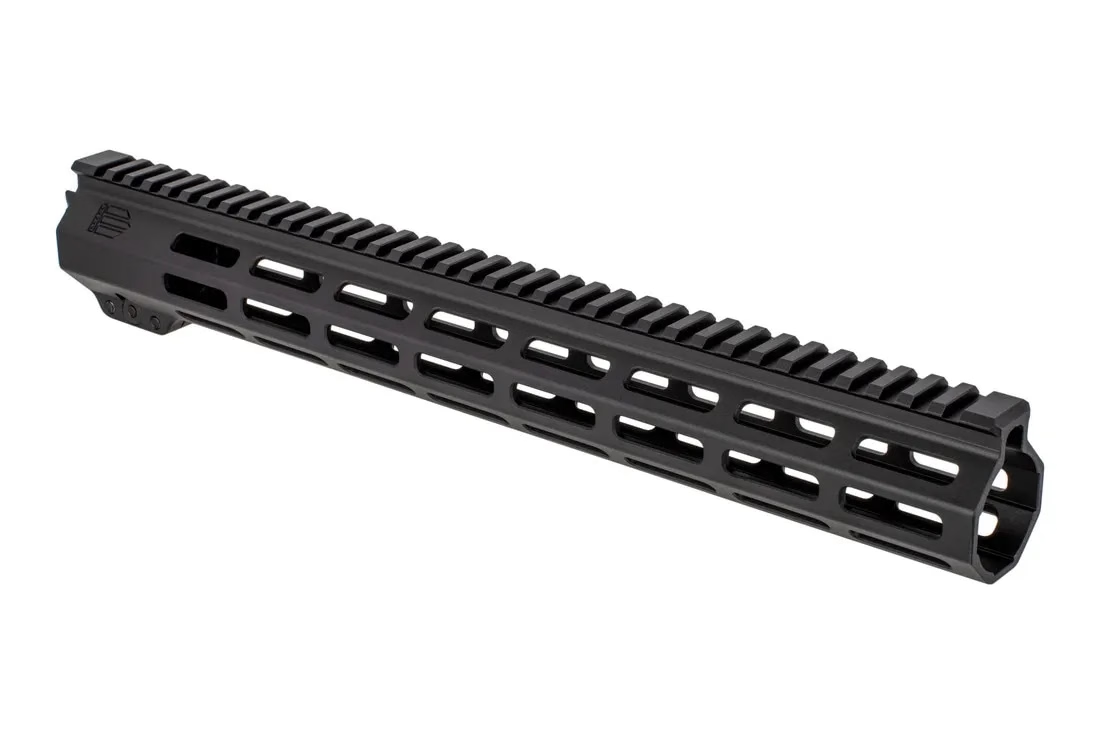
Expo Arms Free Float M-LOK Handguards
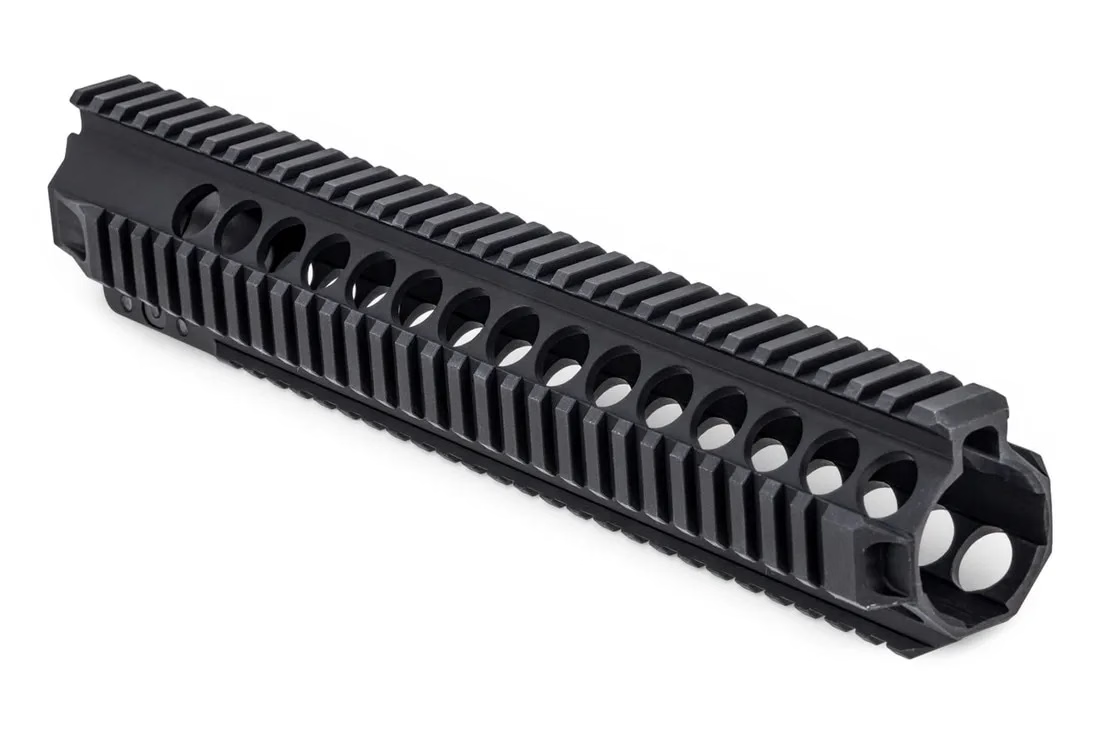
By far, the most popular handguards offered by Expo Arms are their Free Float M-LOK Handguards. Available in multiple lengths and finishes, they’re a great option that offers a lot of mounting space and a light overall weight. Regardless of which model you look at, they all share the same overall qualities, albeit with different lengths.
For starters, each handguard is constructed out of 6061-T6 aluminum, an alloy that’s known for being both strong and light. Design-wise, they’re made with adaptability in mind, as they have seven rows of M-LOK slots that span the length of the handguard, allowing you to mount accessories in almost every possible location. On top of the handguard is an upper picatinny rail that also spans the handguard’s entire length, giving you ample mounting space for accessories like backup iron sights, clip-on thermal units, and IR laser units.
Another key feature of this handguard is its mounting system. Like most other handguards, it mounts to the upper by attaching directly to the included barrel nut. Unlike other handguards though, this one has built-in locking tabs that keep both the handguard and barrel nut properly timed, so there’s no need to worry about it loosening over time.
As shown in the table above, these handguards are available in multiple lengths, ranging from 4 to 15 inches long, with the 15-inch variant also being available in FDE. Depending on which one you look at, they can range in price from around $50 to $120.
Expo Arms Free Float Quad-Rail Handguards
If M-LOK rails aren’t your speed, you can always opt for Expo Arms’ Free Float Quad-Rail Handguards instead. As far as their construction goes, they are identical to their M-LOK counterparts. They’re made from 6061-T6 aluminum, have anti-rotation tabs, and use a full-length upper picatinny rail. The key distinguisher between the two is their accessory mounting systems, as these handguards make use of quad-rails instead of M-LOK.
Expo Arms’ quad-rail handguards are currently only available in either a 9.5- or 13-inch length, and they’re only offered in a black finish. Still, they’re very affordable, being priced around $90 to $100, respectively.
Which Expo Arms Trigger Is Best?
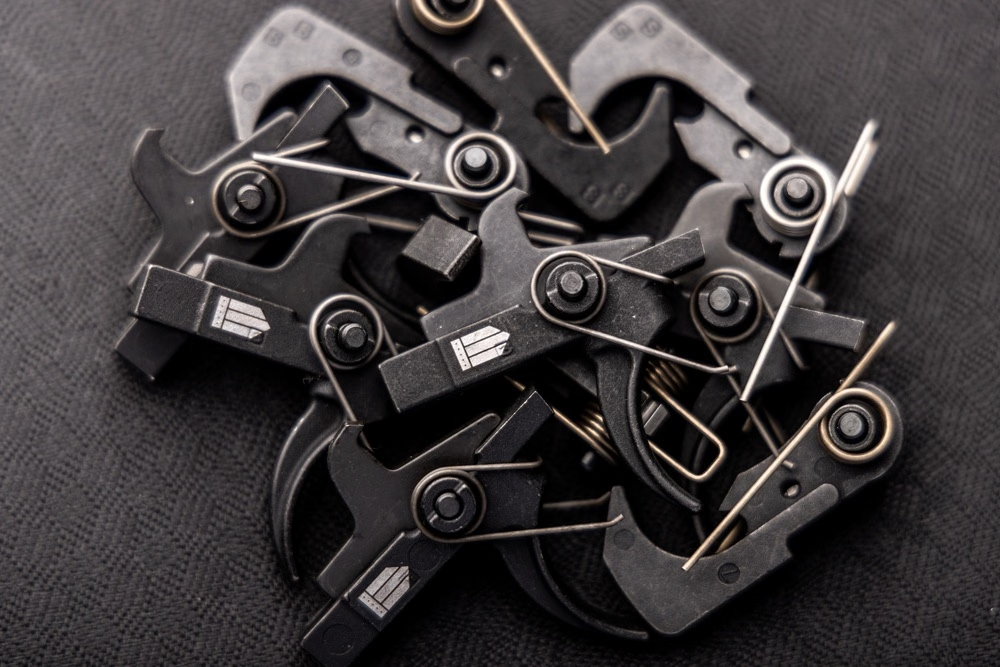
Expo Arms Triggers offer incredible performance for their price. They offer multiple triggers that are designed to accommodate the needs of both duty and precision rifle builds.
| Trigger | Type | Total Pull Weight | Trigger Bow | Finish |
|---|---|---|---|---|
| Expo Arms Single Stage AR-15 Trigger – Flat | Single Stage | 5.5 pounds | Flat | NTFE |
| Expo Arms Two Stage AR-15 Trigger – Curved | Two stage; 2-pound first stage 2.5-pound second stage | 4.5 pounds | Curved | Nickel boron |
| Expo Arms Mil-Spec Single Stage AR-15 Trigger – Curved | Single stage | 6.5 pounds | Curved | Black, uncoated |
Expo Arms Single Stage Flat Trigger
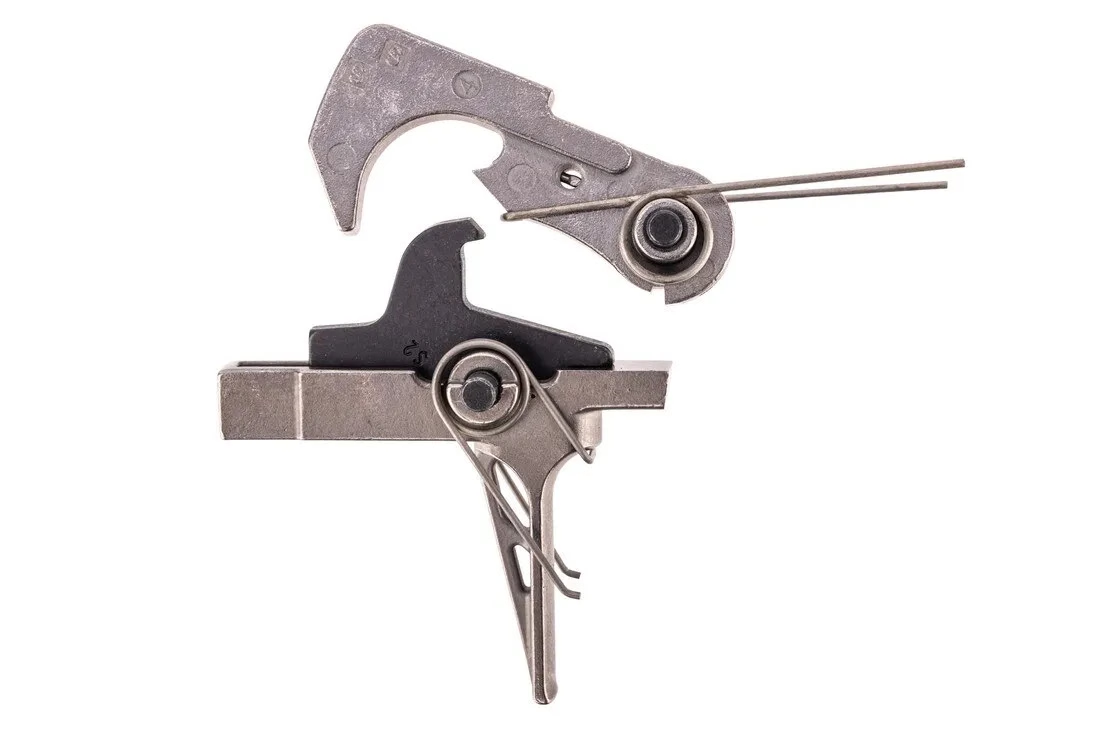
The Expo Arms Single Stage Flat Trigger is designed for precision applications. It uses a flat trigger bow, a single-stage pull, and has a 5.5-pound pull weight. Plus, it has a unique Nickel Teflon coating to give it as smooth a pull as possible.
Being a single stage trigger, it’s always at the wall, or break point. Once you pull through the trigger wall, the hammer will drop, starting the firing sequence. And since it’s a flat trigger, you’ll be able to place your finger in various places, rather than being locked into the middle like you would be with a curved trigger. As such, you can pull from the bottom for some extra leverage, lightening the perceived pull weight of the trigger. And, with it being priced around $55, it’s a great way to overhaul your rifle’s performance without breaking the bank.
Expo Arms Two Stage Curved Trigger
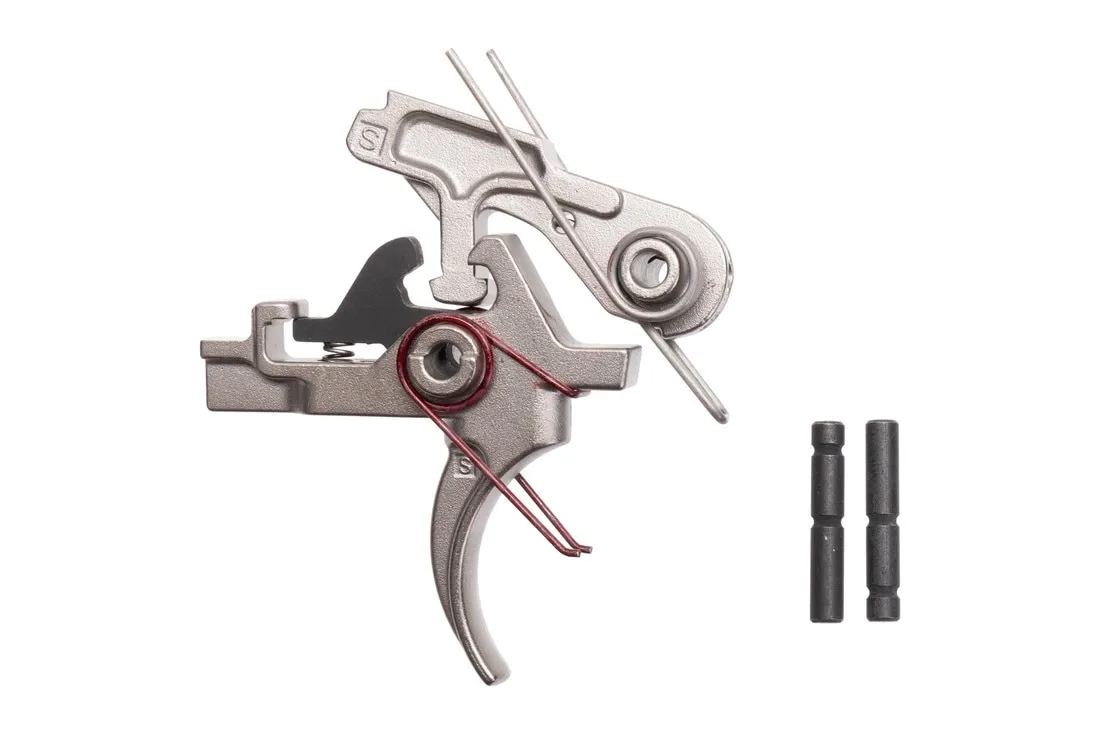
A more ideal choice for a general-purpose build, the Expo Arms Two Stage Curved Trigger is a nice upgrade over more standard mil-spec triggers. It has a total pull weight of 4.5 pounds (2 pounds in the first stage, 2.5 pounds in the second). It uses a curved facing trigger bow, and it has a Nickel Boron finish, creating a smooth and consistent trigger pull. Since it’s a two-stage trigger, it has a bit of take-up before reaching the trigger’s wall, but its lighter overall weight allows for quicker follow-up shots when needed.
As of publishing, this trigger is the most expensive one offered by Expo Arms. But, compared to other aftermarket triggers, it’s still one of the most affordable options. These triggers are typically priced around $100, and their performance rivals that of more premium options. So, if you’re looking to upgrade a starter rifle, or simply want to build a duty-ready one on a budget, it’s a great choice.
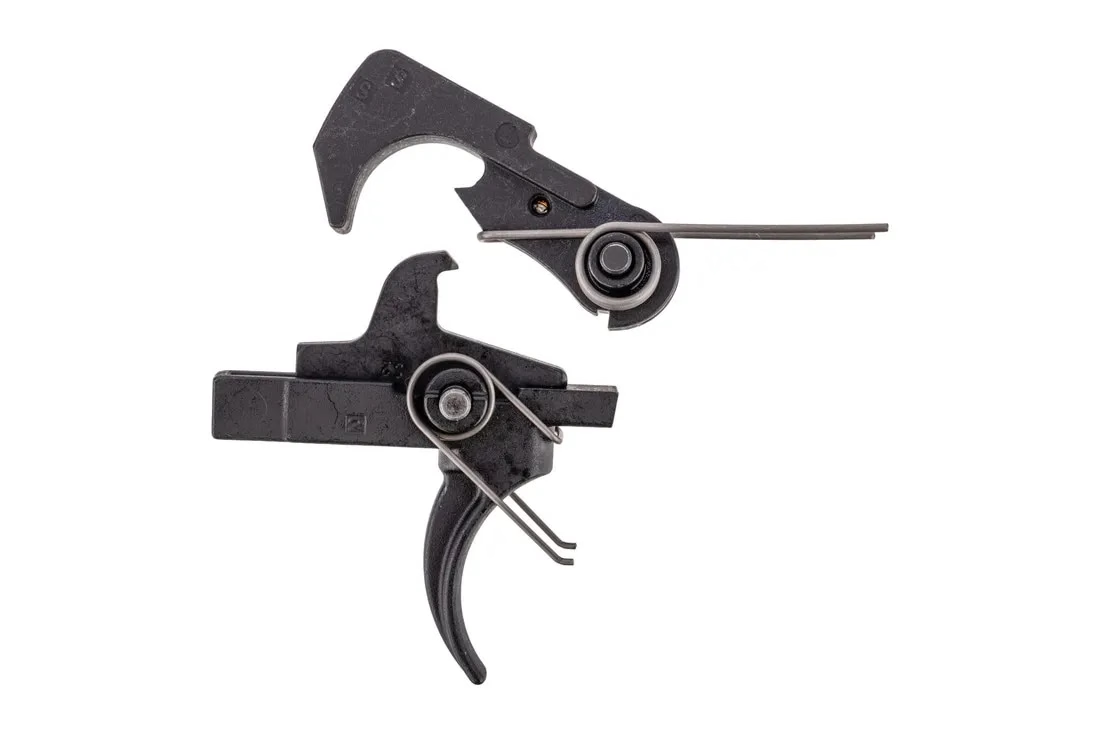
Expo Arms Mil-Spec Trigger
Finally, rounding out their trigger lineup is the Expo Arms Mil-Spec Trigger, a budget-friendly trigger engineered to the same spec as those in duty-grade rifles. By design, it’s the most basic of the bunch. It has a 6.5-pound trigger pull and has a standard mil-spec finish with no specialized coatings. Although it doesn’t offer the same upgraded performance as Expo Arms’ other trigger options, it’s still great for first time builders, or to have in your field kit on standby in the event your trigger ever goes down. Plus, with it being priced around $40 for the trigger assembly and the springs, it’s easy to see why it’s still a popular pick.
And speaking of field kits, Expo Arms also offers a Mil-Spec AR-15 Refresh Kit, that includes a new set of trigger springs, trigger pins, a disconnector, and disconnector springs. It’s worth having one of these kits on hand, especially considering they’re only priced around $14.
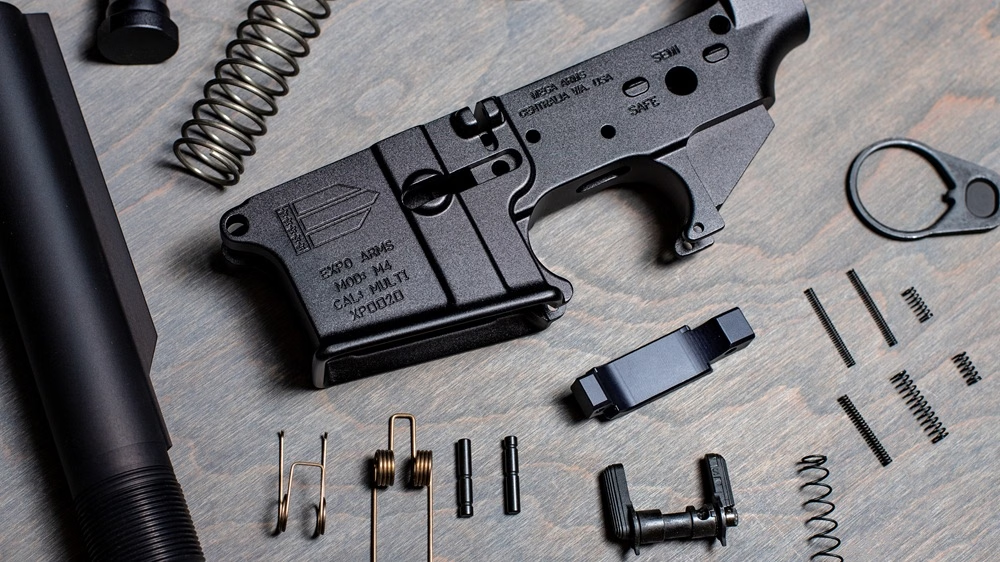
What Comes in an Expo Arms Lower Parts Kit?
For building out a lower, there are several Expo Arms Lower Parts kits to choose from. Depending on what you need, they offer parts kits that include springs and detents to full kits complete with pistol grips and triggers.
Depending on which one you look at, they can come equipped with either their upgraded flat trigger, or their two-stage nickel boron trigger mentioned earlier. Additionally, some of their kits can also come with upgraded furniture from other manufacturers such as the Kung Fu Grip from Die Free Co. Expo Arms’ lower parts kits vary in price, with them costing anywhere from around $10 to upwards of around $150.
Either way, their value is superb. And for that price, you’ll get American-made components that will get your lower ready to pair with your upper of choice.
FAQs
Is Expo Arms a good brand?
Yes, Expo Arms is a great brand that makes all their products in the USA, covering them with a limited lifetime warranty. Their catalog consists of a wide range of mil-spec components, and they even offer upgraded parts too. They’re an excellent option to consider if you’re on a budget, or building your first rifle.
Where are Expo Arms parts made?
All Expo Arms products are made in America. They’re offered exclusively by Primary Arms and cover a wide range of AR-15 parts and components.
What’s the difference between the Expo Arms nitride, phosphate, and chrome BCGs?
The primary difference is their coatings. All of them use the same 8620 steel carrier and Carpenter-158 steel bolt, and they’re all MPI and HPT rated as well. Nitride finishes are slick and easy to clean; phosphate coatings are the main mil-spec finish, and since it’s porous, it can hold on to oil for longer periods of time. Finally, the hard-chrome finish resists corrosion the best and cleans easily, making it a better pick for hard-run rifles. Prices run around $130, $140, and $150, respectively. Expo Arms does offer a more budget-friendly Phosphate/Nitride BCG that’s priced around $80. It uses a 9310 steel bolt instead of a Carpenter-158 one, and it’s MPI tested but not HPT tested.
Do Expo Arms’ barreled uppers come with a BCG and charging handle?
Normally no. For most manufacturers, the term “barreled upper” means that it only includes the receiver, barrel, and handguard, so you’ll need to buy a BCG and charging handle to finish it. That said, Expo Arms does offer the 16-inch Lite Upper Receiver as a complete upper for around $330.
Which Expo Arms trigger should I choose?
That depends on what features you want it to have, as well as what your rifle’s primary purpose is. The Two Stage Curved Trigger is best for general-purpose and duty builds. The Single Stage Flat Trigger is designed for precision-oriented applications, as its flat trigger offers more leverage and control in terms of finger placement, giving you better control over its 5.5-pound pull weight. Lastly, their Mil-Spec Trigger has a 6.5-pound pull and is built to exact mil-spec standards, making it a good choice for budget rifle builds.