TL;DR
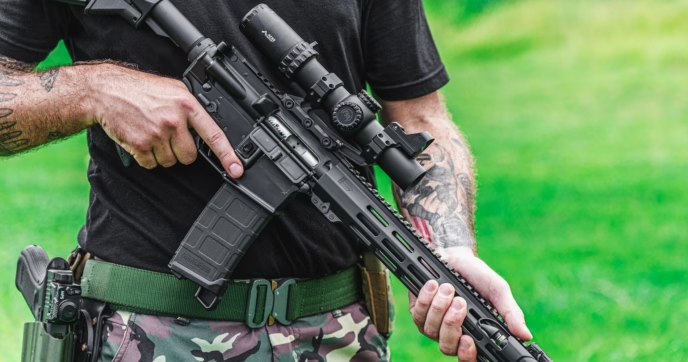
The BCM® RECCE-16 MCMR is a lightweight rifle weighing just 6.1 pounds, making it a great pick for first-time AR-15 owners. If you build your own rifles, BCM’s MK2 upper is reinforced for extra durability and less risk of snagging. And if you’re looking to upgrade your current rifle, BCM’s BCG, furniture, and accessories offer duty-grade quality.
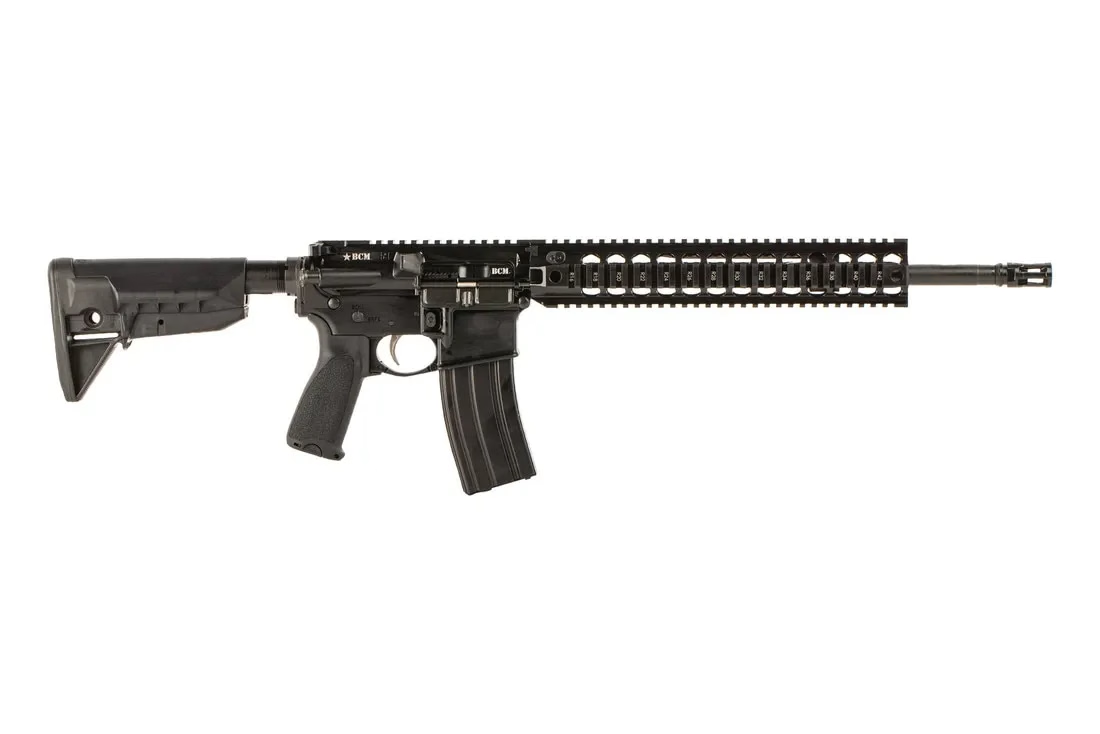
- Top Complete Rifle – RECCE-16 MCMR: A lightweight rifle with a 15-inch M-LOK handguard that provides you with a lot of rail space for accessories.
- Top Lightweight Rifle – RECCE-14 MCMR LW: Its shorter barrel and handguard drops the weight to just 5.7 pounds.
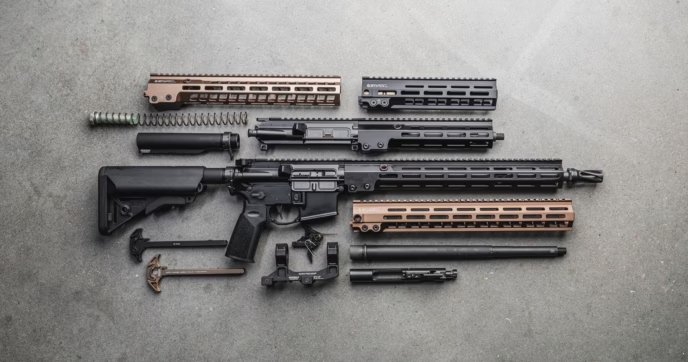
- Top Upgraded Upper – BCM MK2 Upper: Adds reinforcement around the ejection port, a smaller forward assist that’s less likely to snag on other gear, and an enhanced gas vent for more comfort when shooting.
- Top Single-Part Upgrade – BCM BCG: Every BCG is built with mil-spec components and is both magnetic particle inspected and high-pressure tested.
- Top Budget Upgraded – BCM Furniture: BCM’s rifle stocks, grips, and foregrips are more comfortable than mil-spec carbine furniture, and cost under $100 paired together.
Bravo Company Manufacturing, better known as just BCM, has long been one of the industry’s top manufacturers. Since their start in 2003, they’ve consistently put out some of the industry’s most sought-after rifle systems, components, and accessories.
With decades of proven performance under their belt, BCM products make up a large part of many enthusiasts carts at all times of the year—but especially towards the end of the year when holiday sales peak. That said, if you aren’t already familiar with them, BCM offers a lot.
And although we don’t carry their entire lineup, we carry enough to overwhelm those checking them out for the first time.
BCM Products available at Primary Arms: At a Glance
| Category | What’s Listed |
|---|---|
| Complete Rifles | RECCE 5.56 AR-15 (14.5- and 16-inch) RECCE Lightweight 5.56 AR-15 (14.5- and 16-inch) RECCE QRF 5.56 AR-15 (16-inch) |
| Barreled Uppers | BCM Standard Upper (11.5-, 12.5-, 14.5-, and 16-inch) BCMBFH Upper (11.5-, 14.5-, and 16-inch) BCM Enhanced Lightweight Upper (14.5- and 16-inch) BCM MK2 Upper (11.5-, 12.5-, 14.5-, and 16-inch) |
| Complete Lowers | BCM Standard Lower Receiver (with or without stock) BCM MK2 Lower Receiver (with or without stock) |
| Bolt Carrier Group | BCM 5.56 AR-15 Phosphate BCG |
| Stocks | MOD 0 SOPMOD Stock MOD 1 SOPMOD Stock MOD 2 SOPMOD Stock MOD 3 Carbine Stock |
| Pistol Grip | MOD 0 MOD 1 MOD 2 MOD 3/MOD 3 KD MOD 4 |
| Foregrips | VERTICAL GRIP MOD 3 (M-LOK, KeyMod, Picatinny) KINESTHETIC ANGLED GRIP (M-LOK, KeyMod, Picatinny) |
BCM RECCE Rifles: What are They?
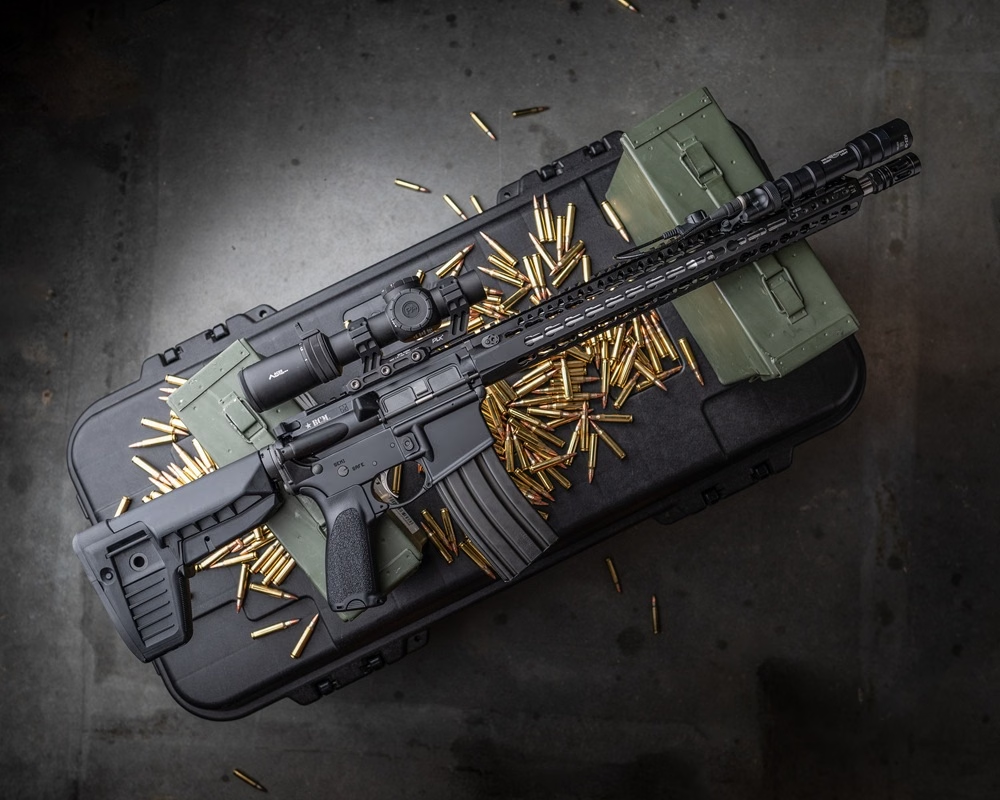
BCM RECCE Rifles are some of BCM’s most sought-after models. They’ve been engineered to the same standards as their other duty rifles and use a blend of mil-spec and enhanced components. BCM RECCE Rifles are outfitted with lightweight-profile barrels chambered for 5.56 NATO, a mid-length gas system, a BCM Polished Nickel Teflon (PNT) trigger, and their GUNFIGHTER furniture. As of this article’s publication, Primary Arms carries both the 14.5- and 16-inch variants of this rifle.
| RECCE-16 | RECCE-14 | |
|---|---|---|
| Barrel Length | 16 inches | 14.5 inches |
| Barrel Contour | Lightweight | Enhanced Light Weight |
| Twist Rate | 1:7 | 1:7 |
| Gas System | Mid-length | Mid-length |
| Available Handguards | MCMR M-LOK Rail – 13-inch MCMR M-LOK Rail – 15-inch QRF Quad-Rail – 12-inch | MCMR M-LOK Rail – 10-inch MCMR M-LOK Rail – 13-inch |
| Muzzle Device | BCM Mod 0 Compensator | BCM Mod 1 Compensator (pinned and welded) |
BCM RECCE-16
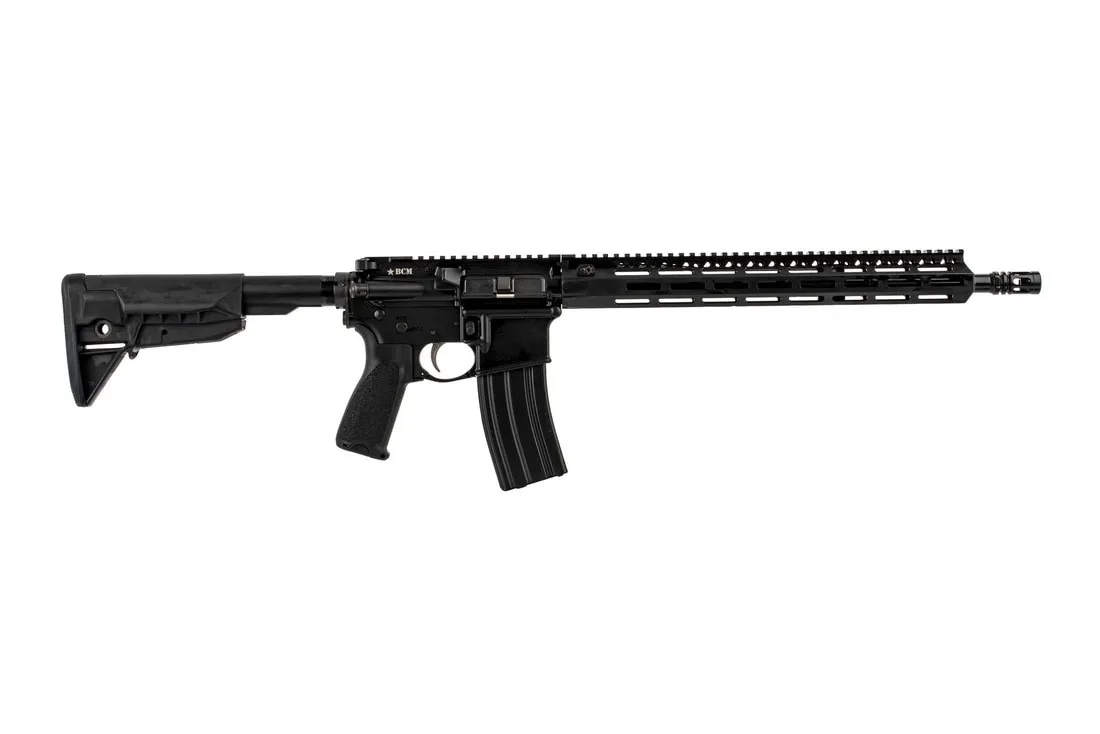
The RECCE-16 from BCM is easily one of their most popular offerings. With a 16-inch barrel, these rifles are free from any NFA regulation, allowing most enthusiasts to buy and own them with no more than standard 4473 paperwork and a background check. Outside of this, they’re simply a great rifle for both general purpose and more specialized rifle builds.
A large part of what makes them so adaptable is their barrels. BCM RECCE-16 rifles come equipped with incredibly durable 11595E-certified steel barrels—the same steel used to make mil-spec rifle barrels. These barrels feature a 1:7 twist rate, making them compatible with most common 5.56 NATO loads, including 62-grain FMJ and M855 ammunition, as well as heavier ones like 75- and 77-grain precision ammunition. On top of this, these barrels are chrome lined, making them extremely resilient to corrosion and rusting.
These rifles also come equipped with BCM’s BCG (Bolt Carrier Group), and their enhanced charging handle. We’ll touch more on them below, but their BCGs are built to withstand harsh use in extreme conditions, while their charging handles have an extended latch wing for easy operation. Right now, Primary Arms offers three different variants of the RECCE-16. For the most part, these rifles are the same, with their core distinction being their handguards. They’re available with either an MCMR or QRF handguard—BCM’s M-LOK and Quad-Rail handguards.
The RECCE-16 MCMR and RECCE-16 MCMR LW are highly sought-after, as M-LOK is arguably the current industry-standard mounting system. As highlighted in the table above, the main difference between them is their lengths. The Standard RECCE-16 MCMR is outfitted with a 15-inch handguard, giving you the most space for mounting accessories. Meanwhile, the RECCE-16 MCMR LW has a 13-inch MCMR that offers less mounting space in favor of a lighter base weight. Both rifles are already light, with them weighing 6.1 and 5.8 pounds, respectively. But, if you’re going for as light of a build as possible, choose the RECCE-16 MCMR LW. If rail space is more important to you, go with the standard RECCE-16 MCMR.
In addition to the RECCE-16 MCMR, you can also opt for the RECCE-16 QRF. Like we said above, component-wise, it’s basically the same as the other rifles, just with a 12-inch QRF handguard. The QRF handguard is BCM’s quad-rail handguard, which has four 1913 picatinny rail sections that span its entire length. Although quad-rails aren’t the standard handguard design anymore, 1913 picatinny quad-rails were the standard mounting system for a long time. As such, there are just as many, if not more accessories available for picatinny rails compared to M-LOK ones.
Still, quad-rails aren’t without their cons. We cover this in-depth in our guide on M-LOK vs. Picatinny Rails, but the gist is that M-LOK handguards are both lighter and more comfortable than quad-rails. Picatinny rails have sharper edges by design, so bare-handed they’re less comfortable to grip compared to smooth, flat surfaces of M-LOK handguards. Plus, quad-rails require more material to create, making them heavier. As such, the RECCE-16 QRF has a base weight of 6.5 pounds, which is still light. Put simply, the RECCE-16 QRF is a more robust rifle that’s built for duty-use or a general-purpose role.
BCM RECCE-14
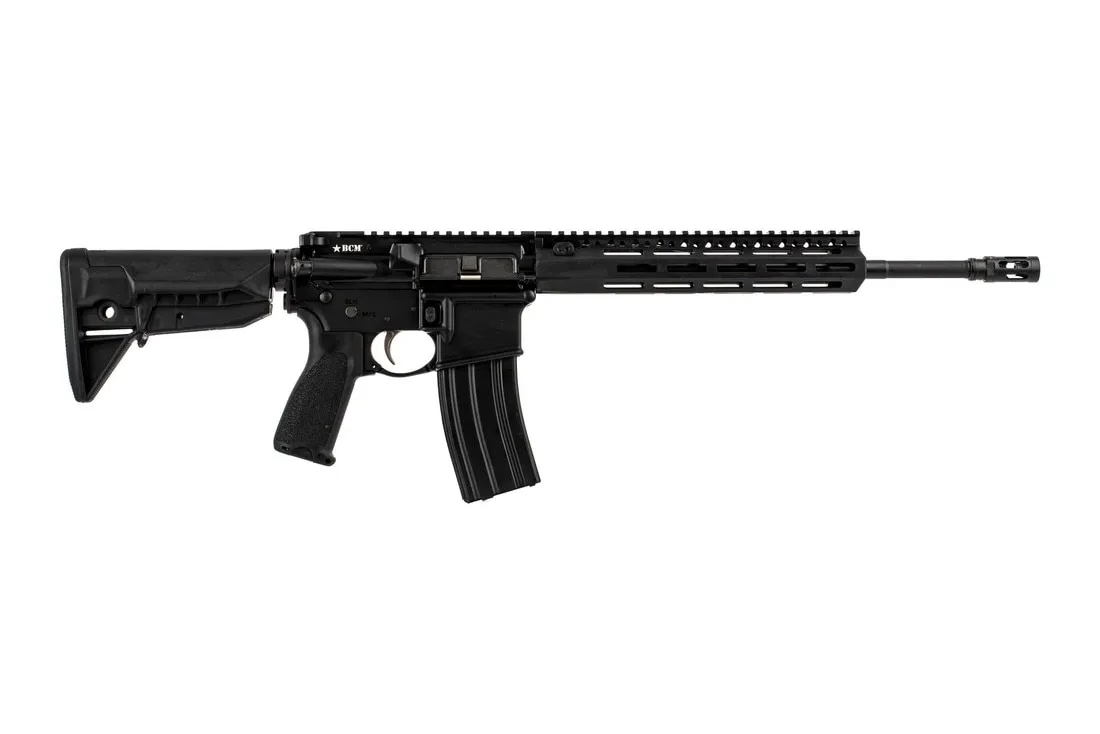
BCM RECCE-14 AR-15s are essentially the same rifle as the RECCE-16, just with a 14.5-inch barrel instead of a 16-inch one. They’re offered in similar configurations as well. Since they have a barrel that’s shorter than 16 inches, these rifles come from the factory with pinned welded muzzle devices, bringing their total overall length above 16 inches. Although this means you won’t be able to remove the muzzle device, it does make it a legal rifle and not an SBR (Short-Barreled Rifle). Regardless, since these rifles are shorter than their 16-inch counterparts, they’re an excellent pick for general-purpose builds.
Just like the RECCE-16 rifles, RECCE-14 rifles come equipped with certified mil-spec 11595E steel, chrome lined barrels. Likewise, they also feature PNT triggers, BCM furniture, as well as their BCG, and enhanced charging handle. Currently, Primary Arms offers both the RECCE-14 MCMR and the RECCE-14 MCMR-LW. As noted above, both rifles are, in essence, the same as the RECCE-16 rifle. The standard RECCE-14 MCMR has a 13-inch MCMR handguard. Compared to its barrel length, it offers a lot in terms of rail space, and it’s lightweight at just 6 pounds. Lastly, the RECCE-14 MCMR-LW has a shorter 10-inch MCMR handguard, and weighs only 5.7-pounds.
BCM Upper Receivers: What’s the Difference?
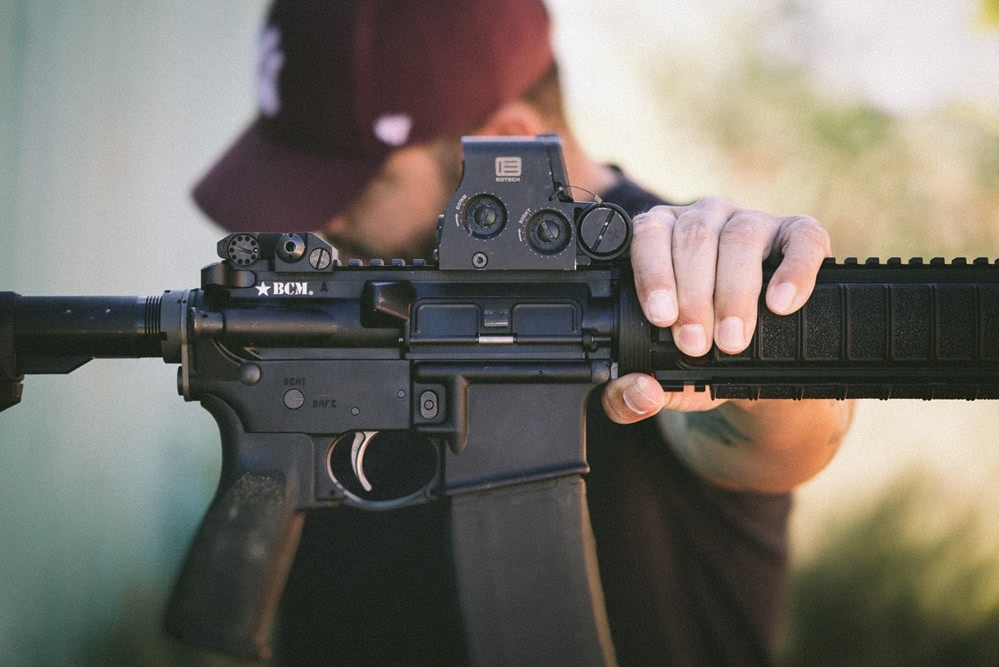
There are several BCM Upper Receivers available through Primary Arms, each with their own unique features, barrel lengths, and components. All of them fall into either BCM’s standard or MK2 line of uppers. We cover both types of uppers extensively in our guide, “MK2 vs. Standard BCM Uppers”. We recommend giving it a read after this article but below is a summation of their differences.
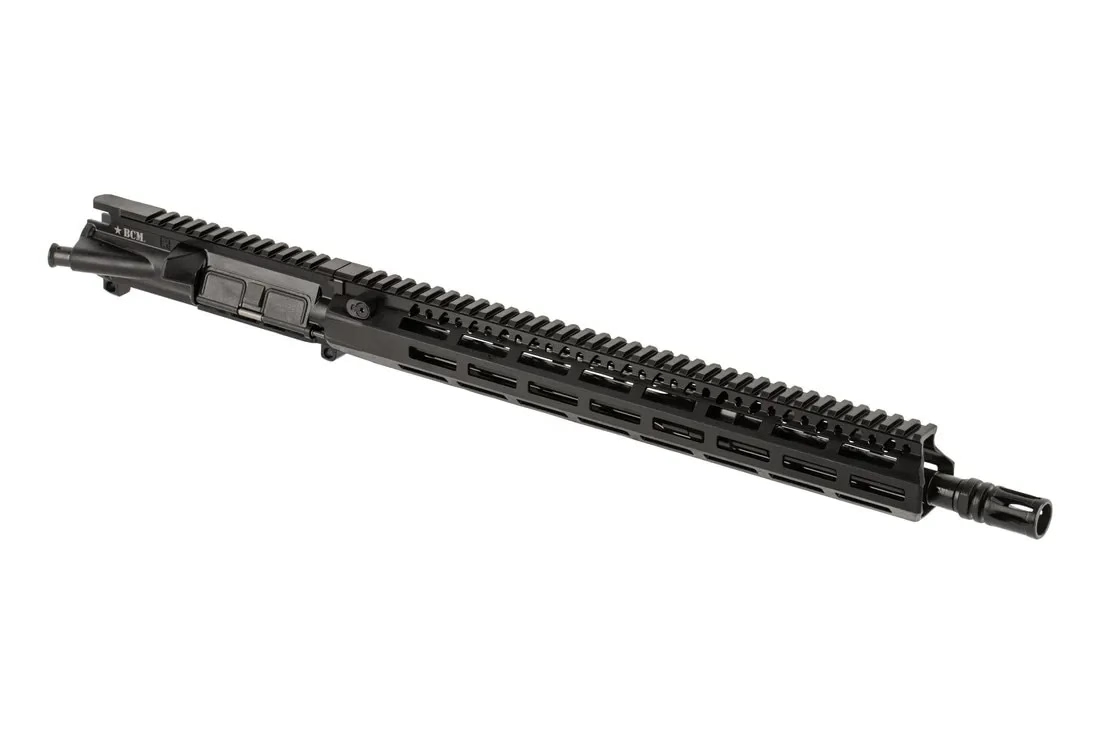
BCM Standard Upper Receivers
| Barrel Lengths | Handguards | Finishes | |
|---|---|---|---|
| Standard | 11.5 inches 12.5 inches 14.5 inches 14.5 inches (P/W) 16 inches | MCMR-10 MCMR-13 MCMR-15 RAIDER-M10 RAIDER-M13 | Black Black/FDE |
| BFH | 11.5 inches 14.5 inches (P/W) 16 inches | QRF-10 MCMR-10 MCMR-13 MCMR-15 | Black |
| BFH Enhanced Lightweight | 14.5 inches 16 inches | MCMR-13 MCMR-15 | Black |
Standard BCM upper receivers make up the bulk of their lineup. Despite being marked as ‘standard’ they’re still engineered to be as reliable as possible, as they’re all built to the same standards as BCM’s other offerings. As such, all the materials needed for these are purpose-built to be as rugged as possible. Even though there are multiple configurations of their standard series of upper receivers, they’re all built around a mil-spec upper receiver design.
Their most basic upper receivers are available in multiple configurations, as highlighted in the table above. Each one is built on a mil-spec receiver that’s made from forged 7075 aluminum. Much like the complete rifles we discussed earlier, each of their barreled upper assemblies comes equipped with a true mil-spec 11595E Steel barrel. And, depending on the model you look at, they can come with either BCM’s MCMR M-LOK handguard, or their RAIDER series handguard—an M-LOK handguard with picatinny rails at the front end. These uppers are best for those wanting a reliable rifle built on a tried-and-true mil-spec design. They vary in price, ranging from around $775 to around $815.
BCM’s standard upper receivers are also available in a lightweight configuration. They use many of the same high-quality core components but come with their lightweight profile barrels instead of Government profile barrels. These barrels are also BCM’s BFH series of barrels, which are cold hammer forged (CHF), and far more durable than standard barrels. Compared to the standard uppers, they can be several ounces lighter, depending on the configuration you choose. As such, they’re a strong contender for general purpose builds, with the longer variants being suitable for precision applications too. Being more specialized, these upper receivers are more expensive, typically costing around $880.
Finally, if you’re wanting more of a duty rifle setup, BCM has you covered with their BFH upper offerings. These uppers are built like the standard barreled upper, but they come with a far stronger BFH barrel that’s engineered to see harsh use and long strings of fire. These uppers are offered in either 14.5- or 16-inch configurations. Something else to note is that the 14.5-inch version is available with and without a pinned and welded (P/W) muzzle device. Being pinned and welded, the muzzle device cannot be removed, so if you’re wanting to use a specific muzzle device, you’ll need to opt for the non-pinned and welded upper. Just keep in mind that if you live in a state that requires SBRs to be registered with the ATF in accordance with NFA law, you will need to either register your rifle or pay a gunsmith to pin and weld the barrel. Depending on the model, these uppers typically cost around $860 to $880.
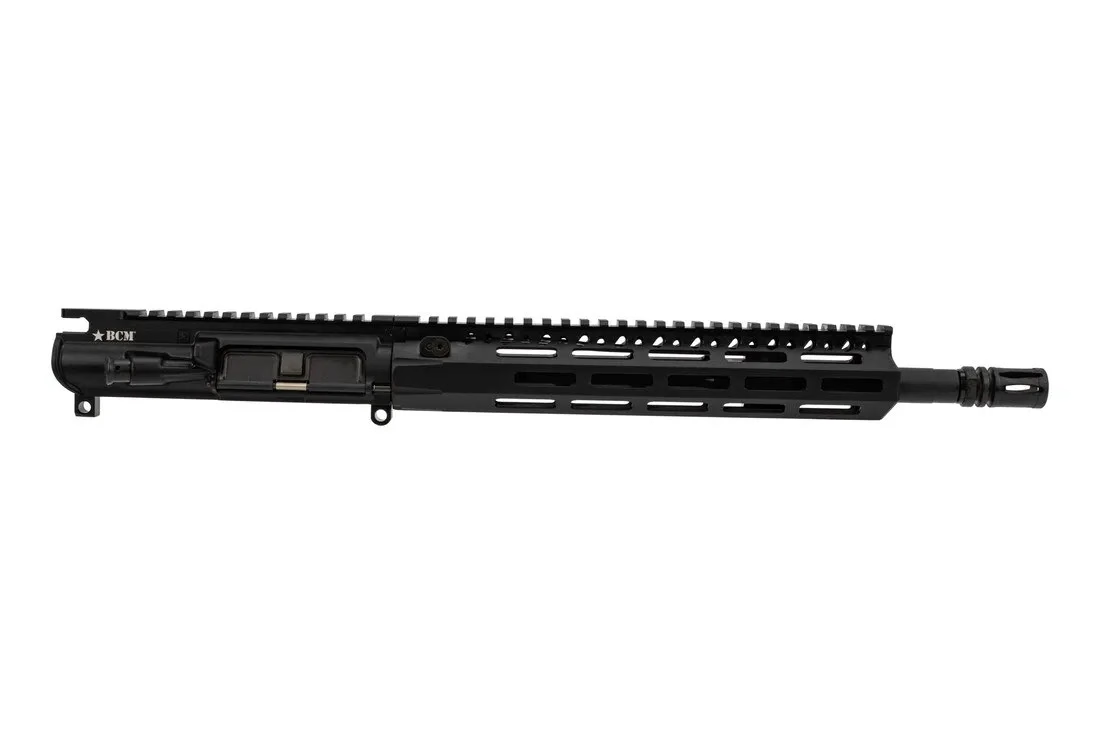
BCM MK2 Upper Receivers
| Barrel Lengths | Handguards | Finishes | |
|---|---|---|---|
| MK2 | 11.5 inches 12.5 inches 14.5 inches 16 inches | MCMR-10 MCMR-13 MCMR-15 | Black Black/FDE FDE |
| MK2 BFH | 11.5 inches | MCMR-10 | Black |
| MK2 BFH Enhanced Lightweight | 14.5 inches 16 inches | MCMR-13 MCMR-15 | Black |
BCM’s standard upper receivers are a great pick for anyone wanting a premium upgrade for their rifle or next build. If you’re wanting to step away from mil-spec rifles in favor of something a bit more specialized, the BCM MK2 Upper Receivers are where it’s at.
MK2 uppers use a fully redesigned upper receiver. Although there’s nothing wrong with the mil-spec upper receiver design, BCM noted some key areas that could be reinforced or positioned differently to offer better resilience and durability. For starters, the area around the ejection port has been reinforced with added material, and the forward assist has been moved forward. The forward assist itself is smaller than a mil-spec one too—it provides the same functionality but minimizes the risk of snagging gear like chest rigs or plate carriers. MK2 uppers are different on the inside too, as they have an upgraded gas ventilation path to keep excess gas from pouring out of the receiver near your face.
With these changes in mind, the MK2 is an excellent alternative to the standard mil-spec upper design. It’s available in multiple configurations, including BFH and Enhanced Lightweight versions. So, no matter what your rifle’s intended purpose is, BCM offers something for everyone. It’s worth noting that the MK2 line of upper receivers is BCM’s flagship line, so they cost more than their standard models. With that in mind, you’ll typically find these upper receivers priced around $900 to $925.
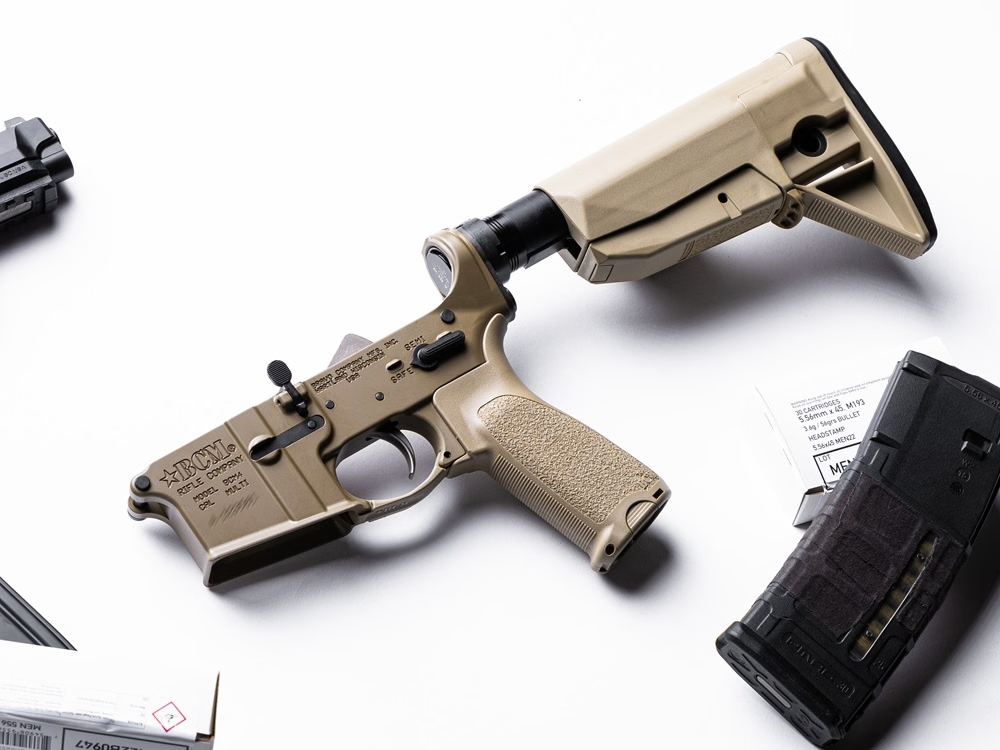
BCM Lower Receivers
BCM Lower Receivers serve as a solid foundation for any rifle build, and Primary Arms carries many unique BCM lowers, all of which are complete. For the most part, BCM’s lower receivers use a mil-spec design. Available in multiple configurations, they can come with various sets of BCM’s GUNFIGHTER furniture, which includes multiple stocks and grips.
Although these lower receivers are built to mil-spec standards, they aren’t like every other mil-spec lower available. Remember, BCM makes their rifles and other components to be as durable and duty ready as possible. Each BCM lower is built around a forged 7075-T6 aluminum lower receiver, complete with their internal components and furniture. To add to their overall quality, they come from the factory with properly staked castle nuts to keep them from loosening over time. Standard lowers come equipped with USGI H buffers and standard carbine springs. Depending on the model you look at, they can cost anywhere from around $450 for a no stock lower, to upwards of around $525.
In addition to their standard lower receivers, they’re also available in a MK2 configuration. BCM’s MK2 lower receivers are the same as the standard ones, however, they come with the upgraded MK2 buffer system.
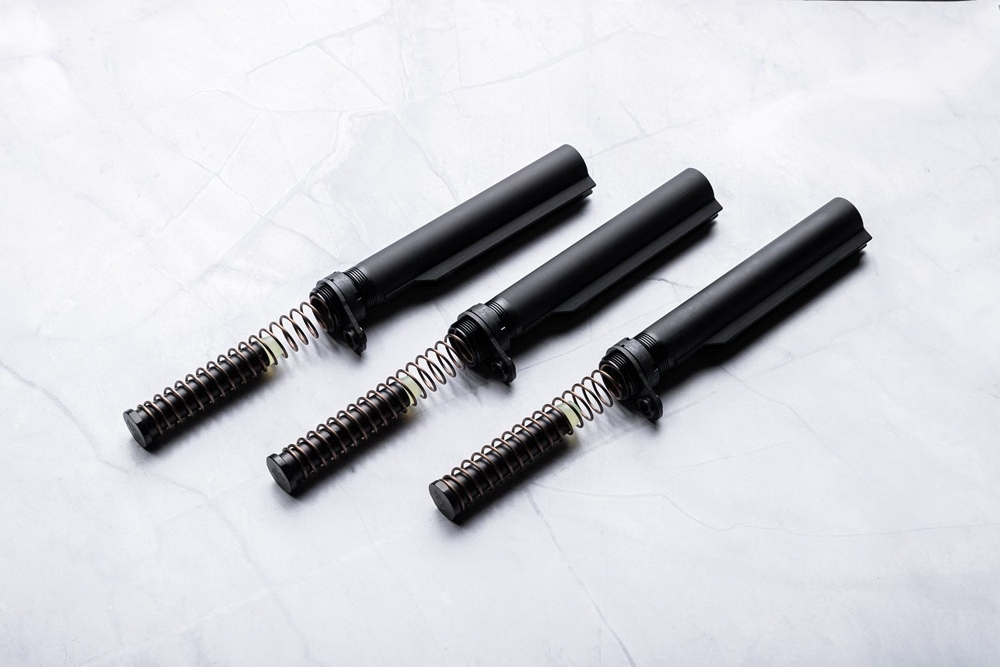
MK2 Recoil Mitigation System
The MK2 Recoil Mitigation System is a proprietary buffer system offered by BCM. Instead of using a standard carbine length buffer tube, it includes a longer buffer tube that pairs with BCM’s longer extended buffer weights and spring. This has a few advantages.
In terms of performance, the MK2 Recoil Mitigation System works to reduce felt recoil when firing, giving you greater control over the rifle during long strings of fire. With its longer spring, it spreads recoil forces over a longer duration, allowing for more consistency in bolt-travel, as well as a more comfortable shooting experience. One of the other notable features of this recoil system is its added positions. Whereas standard carbine buffer tubes have six stock positions, BCM’s MK2 buffer tube has eight. With it, you gain some extra adaptability to as far as stock placement is concerned, a feature that’s particularly nice for enthusiasts with longer arms.
Even though the MK2 system deviates from the mil-spec design, it’s still designed to offer superb reliability. Each of the components, from the buffer tube to the weights and springs, are made with high-quality materials. We recommend choosing a lower with the MK2 buffer system if you want better performance across specialized roles. It’s a great system that offers a noticeable decrease in felt recoil while maximizing adaptability.
BCM Bolt Carrier Groups
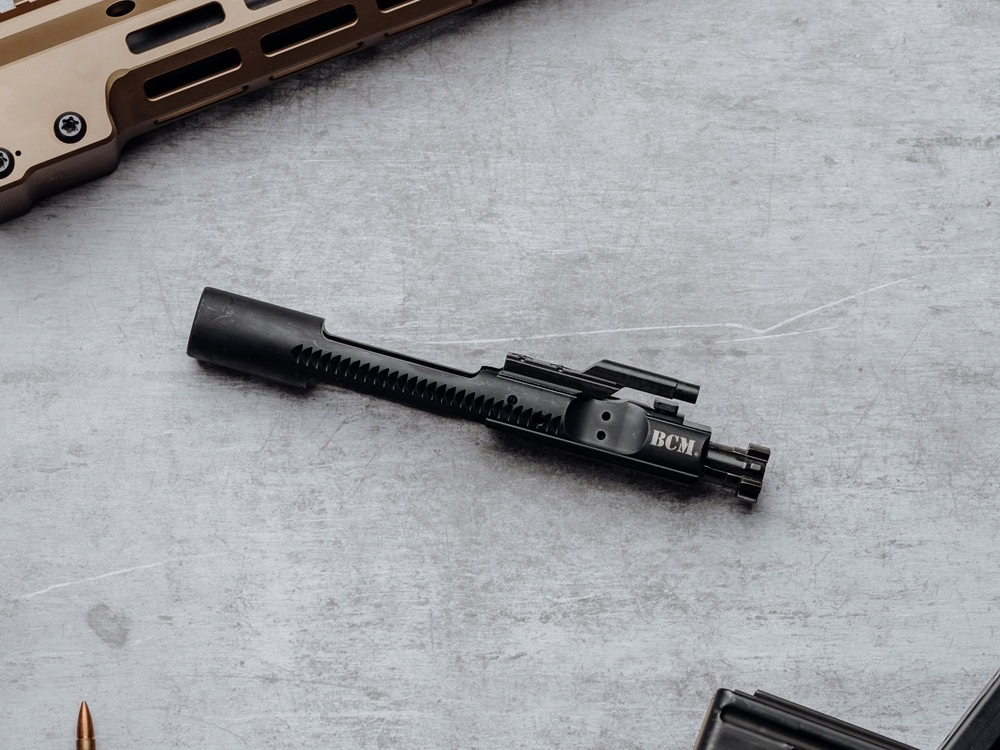
The bolt carrier group, or BCG, is the heart of this rifle system. Without it, there’s no way for it to eject spent casings and load fresh rounds into the chamber. Having a high-quality BCG is a necessity and BCM BCGs are some of the best in the industry.
| Carrier Style | M16 Cut |
| Bolt Material | Carpenter 158 Steel |
| Carrier Material | 8620 Steel |
| Finish | Manganese Phosphate; Chrome Lined |
| Testing | High pressure tested, magnetic particle inspected, test fired |
Like many BCM’s other products, their BCGs are engineered to be as reliable as possible.
Starting with the materials they’re made of, BCM builds their BCGs with USGI-spec materials. Using an M16 style carrier—one of the most battle-tested carrier styles—the carrier itself is made from 8620 Steel, while the bolt is made from Carpenter 158 Steel. For corrosion resistance, the interior of the carrier is chrome lined, while the outside is coated with a manganese phosphate coating. Phosphate coatings like this are porous, allowing them to soak up oil, keeping them lubricated longer than other coatings. BCM also offers BCGs with a specialized FDE PVD finish, which has the same benefits as a standard phosphate coating, just with an FDE finish.
Using these materials isn’t unique to BCM. What is unique to BCM is the level of care they put into each BCG they produce. From the factory, BCM BCGs are assembled methodically. They affix the gas key to the carrier with proper Grade-8 hardware and then stake it in place to keep it from loosening with use. Afterward, they perform a strict quality control test on each BCG. They put them through a Magnetic Particle Inspection to check for any surface level defects like cracks that are otherwise invisible to the human eye. Next, they put them through a High-Pressure Test that exerts pressures far higher than what 5.56 NATO rounds can produce. Only if they pass these tests do they make it off the line.
On the surface, BCM’s BCGs do look like another standard mil-spec model. But just because they look the same as other mil-spec BCGs, doesn’t mean they’re assembled the same way. They offer reliability that you can depend on in any application, whether you just use your rifle recreationally, or if you put it through its paces in a professional setting. Their standard phosphate BCG is priced around $200, with the FDE PVD BCG commonly being found for around $225. You can’t go wrong with either one. We recommend this BCG to anyone wanting to build a capable and dependable rifle.
BCM Stocks
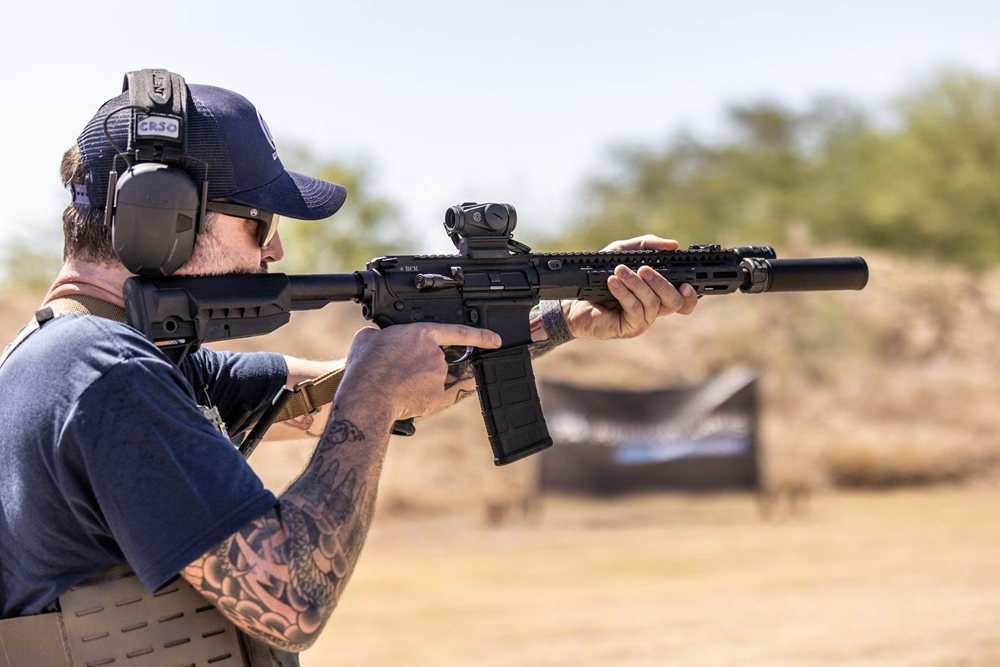
In addition to making AR-15 rifles and components, BCM also offers a wide range of furniture options for the platform, including buttstocks. BCM stocks are some of the industry’s most popular. They’re known well for their rugged reliability and utilitarian designs. And with how simple they are to install, they make for a quick and easy upgrade for beginner AR-15s.
BCM MOD 0
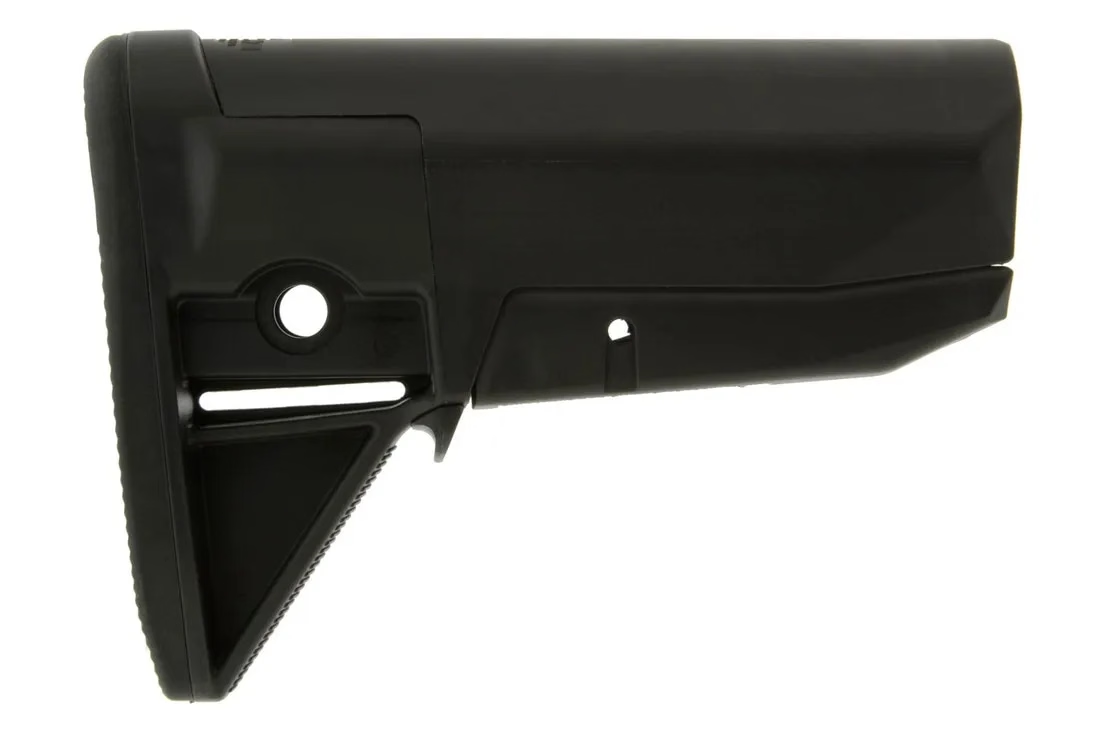
The GUNFIGHTER MOD 0 is perhaps BCM’s most popular stock they offer. Released in 2014, it has a slim profile and uses a durable polymer construction. Also, it was designed with sling mounting in mind too. It features a modular Vehicle Borne Operations Sling Tab (VBOST) and a smooth design to keep slings from snagging on the stock. Plus, these stocks are compatible with both carbine buffer tubes and BCM’s MK2 buffer tubes. You can typically find them priced around $60, and they’re available in multiple finishes as well.
BCM MOD 1 SOPMOD
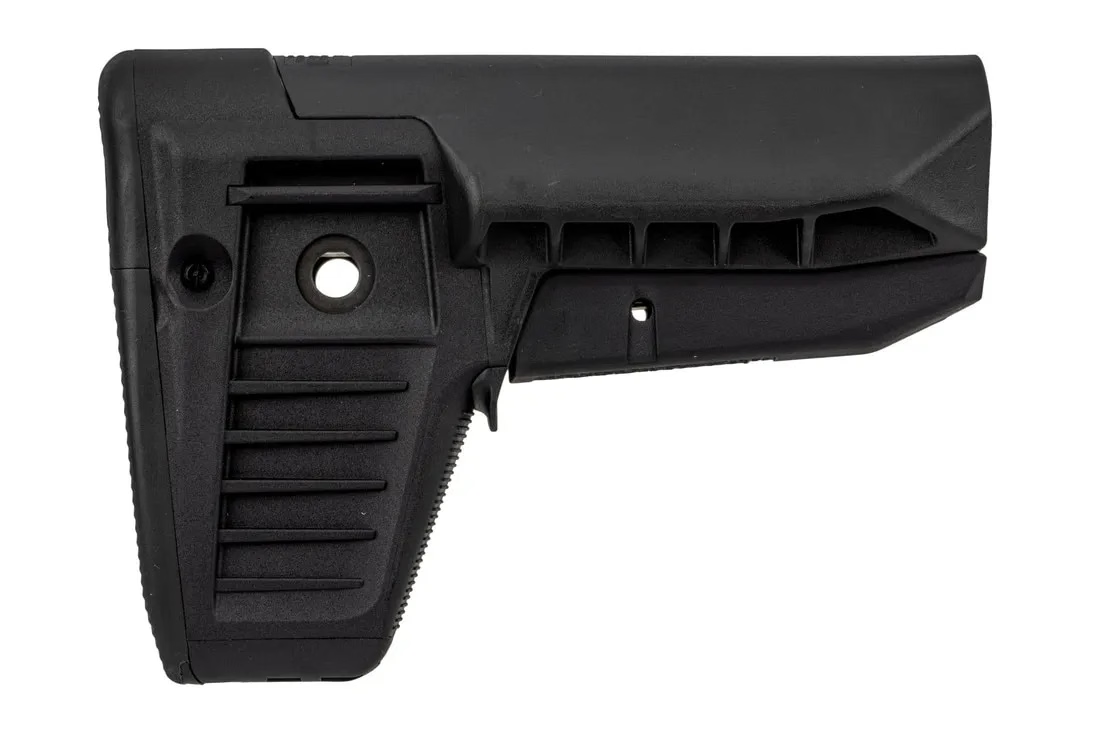
The GUNFIGHTER MOD 1 SOPMOD is the next evolution of the MOD 0 stock. This stock is like other SOPMOD style stocks in that it has a wider cheek weld than the MOD 0. Also, it has a storage compartment built into the rear of the stock, allowing you to store items like extra batteries for optics and weapon lights. This is a bulkier stock compared to the MOD 0, but it keeps the smooth outer edges and the VBOST tab for easy sling use. We recommend this stock if you prefer a wider cheek weld on your stocks, and with it costing around $70, it’s a great stock if you’re looking to upgrade.
BCM MOD 2 SOPMOD
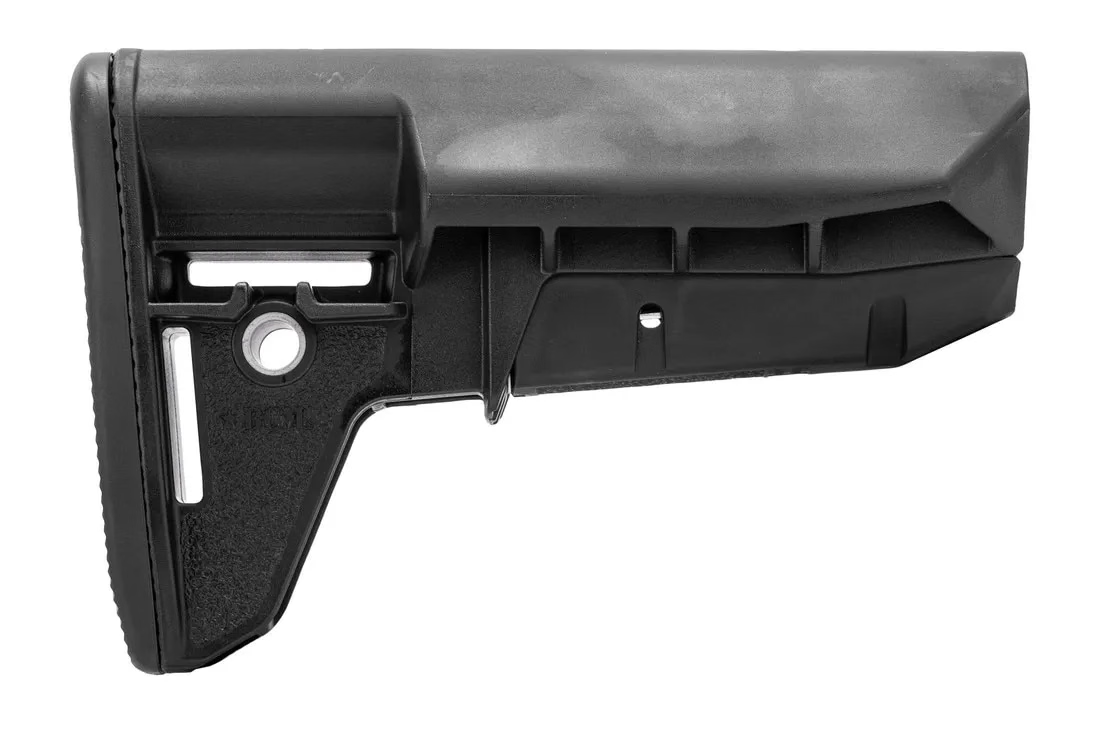
The BCM MOD 2 SOPMOD stock is essentially a blend of the MOD 0 and MOD 1. This stock keeps the wider cheek weld of the MOD 1, but forgoes the storage compartment, giving it a similar silhouette to the MOD 0. Just like both, it’s designed to accommodate mil-spec and MK2 buffer tubes, it has a smooth design, and it has VBOST tabs as well. Like the MOD 1, this stock is typically priced around $70.
BCM MOD 3
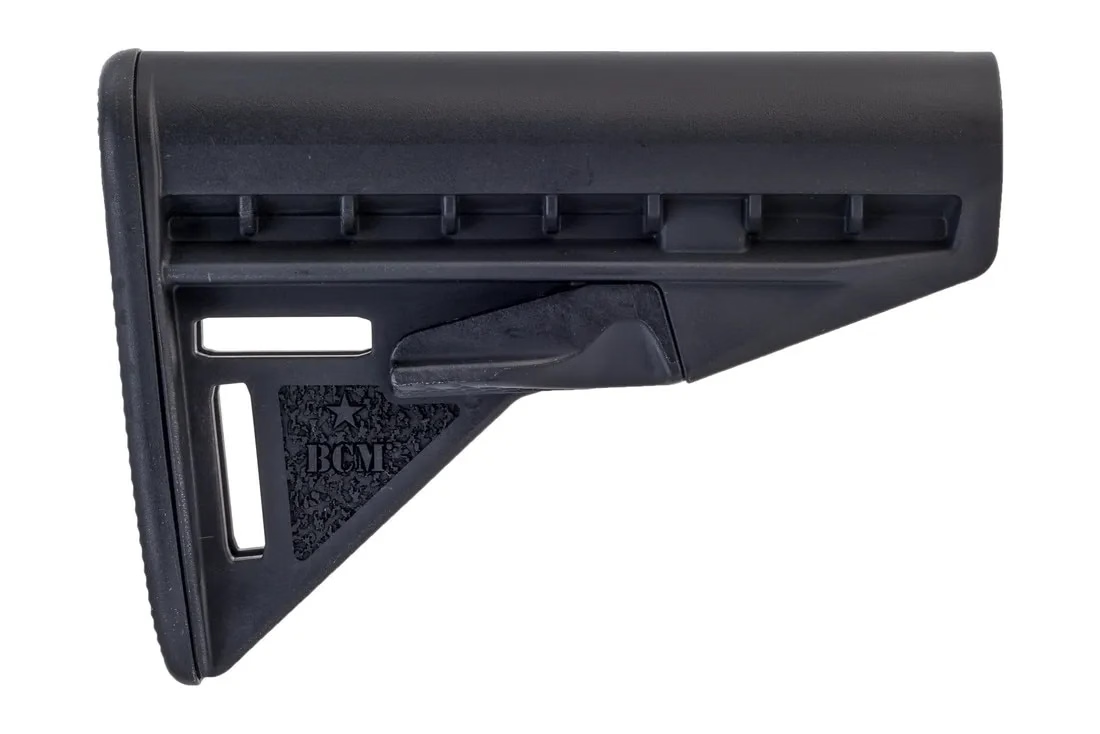
If you’re looking for more of a minimalist stock, the MOD 3 is one of the best stock options that BCM offers. Weighing just 6.4 ounces, this stock is designed to be as slim and snag-free as possible. While the lighter weight may be a cause for concern in terms of durability, BCM has taken care of this by using an improved H-Beam construction, giving the stock a unique double wall design. Another unique feature of this stock is its compatibility with cheek risers. Depending on your preference, you can use one of BCM’s M3 Cheek Risers to get a better cheek weld for taller optics. The MOD 3 is typically priced around $50, though for $65, you can get the MOD 3 stock with a set of cheek risers.
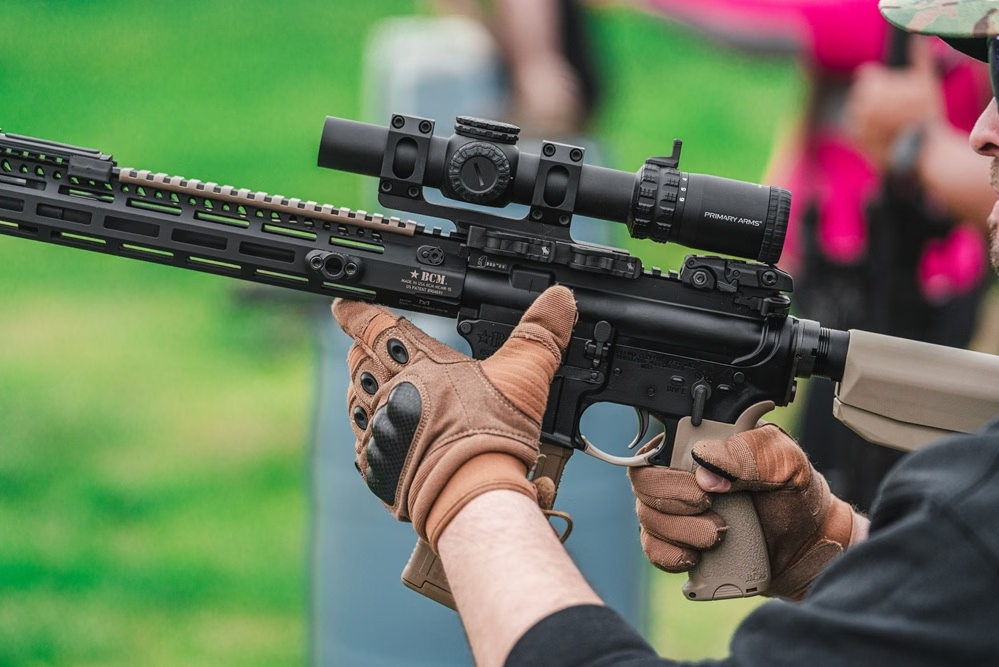
BCM Pistol Grips and Other Accessories
BCM Pistol Grips
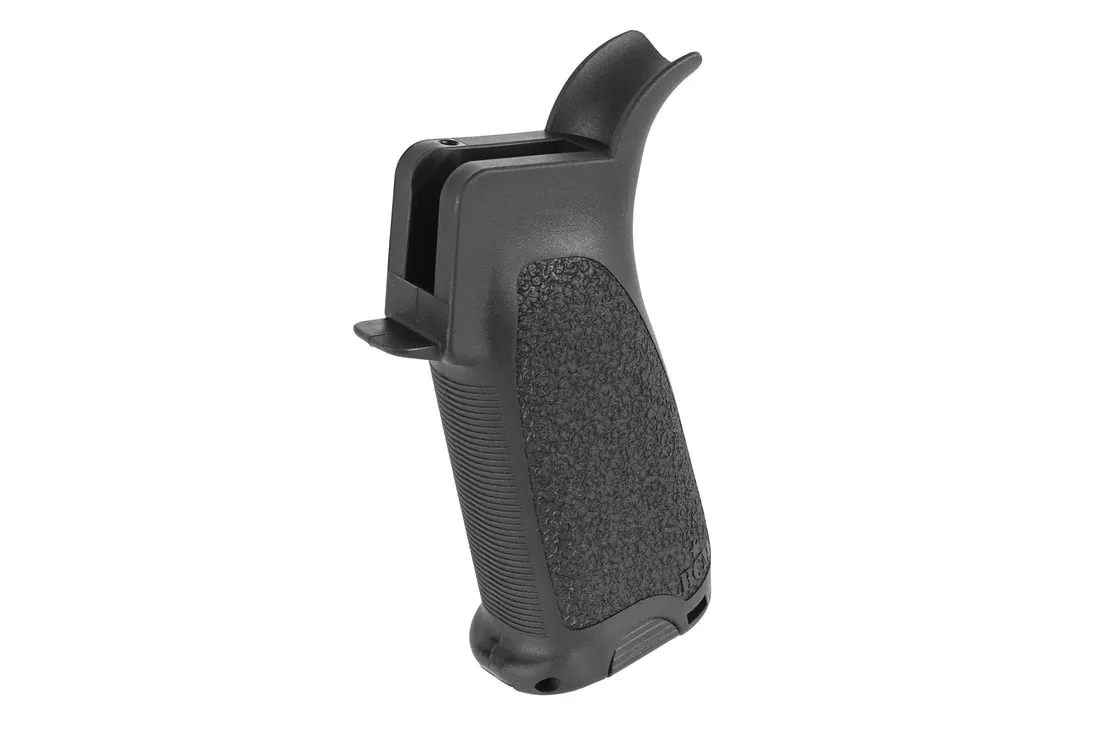
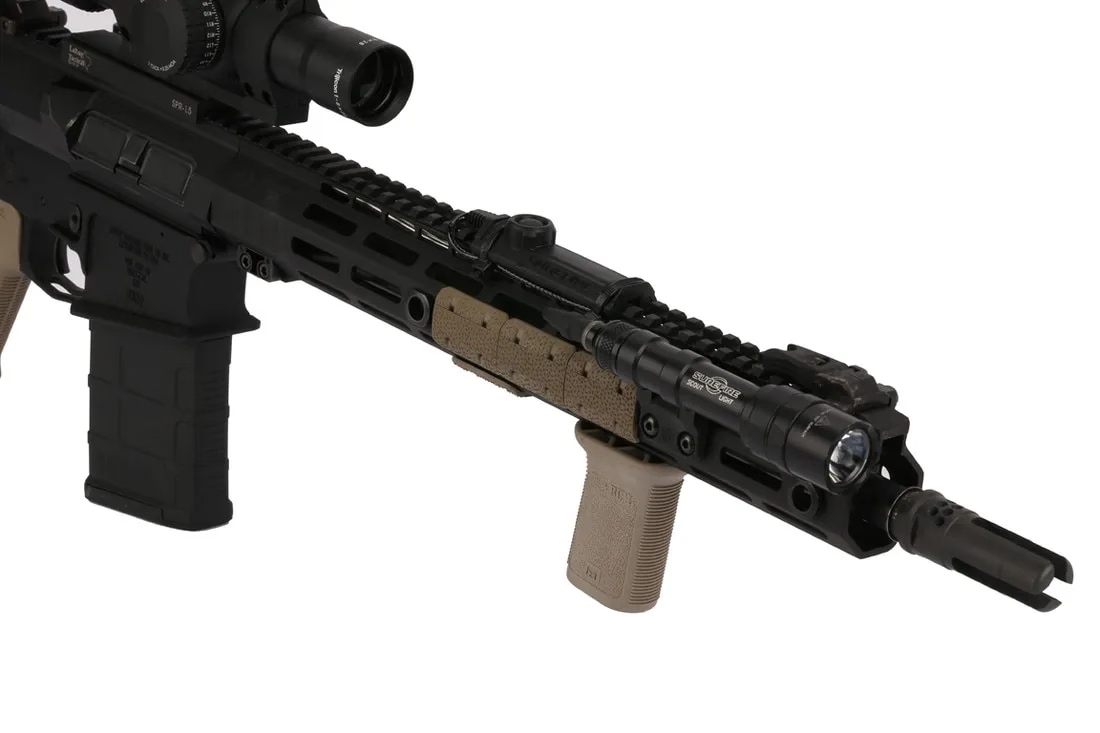
Pairing with their stocks, BCM offers several unique pistol grips for the AR-15. Among them, some of their most popular are the BCM Grip MOD 1, MOD 2, and MOD 3.
The Grip MOD 1 is a solid replacement for the mil-spec A2 grip. It offers a straighter grip angle, enhanced ergonomics, and improved texturing on the sides for the better grip. Plus, it has a hinging trapdoor on the bottom of the grip, allowing you to store things like batteries or a small oil bottle.
The MOD 2 is largely similar to the MOD 1, but it’s adjustable. Included with the grip are a series of adjustable backstraps that allow you to better size the grip to your hand size. Finally, the Grip MOD 3 is designed for enthusiasts with larger hands. They’re a ¼-inch wider than the MOD 1, and that slight increase in size allows users with large hands to get enough purchase on the grip when firing.
BCM Accessories
Finally, BCM has a lot of unique accessories in their lineup. Chief amongst them are the GUNFIGHTER VERTICAL GRIP and the KINESTHETIC ANGLED GRIP.
Between the two, the GUNFIGHTER VERTICAL GRIP is one of the industry’s most popular vertical foregrips. Despite being called a vertical foregrip, it isn’t vertical. It has a slight angle to it, and when mounted with the angle facing forward, it really secures your grip. With it, you can use it in conjunction with a C-Clamp style grip, giving you a lot of control over your rifle. It’s fair to note that you don’t have to use your grip this way. But regardless of how you orient your grip, it’ll provide you with more than enough grip to control your rifle. These grips are available for M-LOK, KeyMOD, and Picatinny rail systems, with each one being priced around $20.
The KINESTHETIC ANGLED GRIP is another popular foregrip choice offered by BCM. Rather than being a vertical grip, the KAG is a type of hand stop. The KAG was designed to accommodate the C-Clamp and other modern grips used on free float handguards. In fact, the KAG was developed in collaboration with Travis Haley, the founder of Haley Strategic. They’re a nice low-profile choice that’s great for minimalist rifle builds and general-purpose builds alike. And considering they only cost around $20, they’re more-than-worth picking up for your next build.
FAQs
Is BCM a good brand for AR-15 rifles and parts?
Yes, Bravo Company Manufacturing is absolutely a good brand to buy complete rifles and individual parts from—they’re one of the most trusted names in the industry. BCM has been building rifles and parts since 2003, and they build their civilian lineup with the same standards as their duty rifles. BCM barrels are made with mil-spec 11595E-certified steel, they’re chrome lined to resist rust and corrosion, and the 1:7 twist handles everything from 55-grain FMJ up to 77-grain match loads. The rest of their parts and components are engineered to be as reliable as possible, making them a solid possibility for anyone wanting to build a duty-grade rifle.
What’s the difference between BCM MK2 and standard uppers?
The MK2 is BCM’s flagship rifle and parts line that uses an improved receiver design, while the standard upper follows the mil-spec standard design. MK2 uppers have extra material around the ejection port to strengthen it, and the forward assist is positioned farther forward. It also shrank the forward assist so it’s less likely to snag on chest rigs or plate carriers. Inside, an upgraded gas vent path keeps excess gas away from your face. Both lines are built from forged 7075 aluminum. As of this article’s publication, standard barreled uppers are often priced around $775 to $815, while the MK2 uppers cost around $900 to $925.
What does BFH mean on a BCM barrel?
BFH is the designation for BCM’s line of cold hammer forged barrels. Cold hammer forging shapes the barrel by hammering steel into shape to create a denser, tougher barrel that’s more resistant to heat, while offering better durability. BCM offers BFH barrels in its standard, MK2, and Enhanced Lightweight upper lines.
Is the BCM RECCE-14 an SBR?
No, not as it ships from the factory. Under the National Firearms Act (NFA), a rifle with a barrel shorter than 16 inches is considered a short-barreled rifle (SBR). The RECCE-14 has a 14.5-inch barrel, but BCM pins and welds the muzzle device in place bringing the total barrel length above 16 inches, making it a rifle. Once pinned and welded, the muzzle device isn’t removable, at least without a trained gunsmith. As of October 9th, 2026, the ATF has made NFA registration voluntary, so you can opt for SBRs without having to register them with the ATF, so long as your state allows you to. State laws vary, so be sure to check yours before buying a firearm.
Is the BCM BCG worth it?
Yes, BCM’s bolt carrier group is one of the most dependable models you can put in an AR-15. The carrier is made from 8620 steel, the bolt is Carpenter 158 steel, and the inside is chrome lined while the outside gets a manganese phosphate finish that holds oil longer. Furthermore, the gas key is staked in place with Grade 8 hardware, and each BCG is magnetic particle inspected and high-pressure tested.