TL;DR
For a duty-ready AR-15 build, start out with an SSA trigger, SMR MK16 handguard, and a Super Charging Handle—the same trio used on Geissele’s URG-I Near-Clone upper receivers. The SSA-E’s lighter pull weight offers better performance for dedicated long-range use, while swap the MK16 for the lighter MK14 if you’re building for competition or all-day carry.
- Top Trigger – SSA-E: Solid all-around trigger with a light 2.9–3.8 lb pull that’s based on a proven DoD contract design; available around $250.
- Top entry-point trigger – G2S: Uses the same core design as the standard SSA trigger with only a few minor differences; available around $175.
- Top Handguard – SMR MK16: Features a continuous upper picatinny, M-LOK slots on all other sides, and a rigid mounting system; weighs 17.1 ounces at 15 inches.
- Top Lightweight Handguard – SMR MK14: Features a full-length upper picatinny rail, M-LOK slots on the sides and bottom; weighs 13 ounces at 15 inches.
- Highest-Impact Upgrade – Super Charging Handle: Offers ambidextrous control, better grip, and reduces gas blowback on suppressed rifle builds; available around $110.
Geissele Automatics is one of the most well-known brands in the firearm industry. With a long history of developing rifles and gear trusted by tier-one operators, competitors, and everyday enthusiasts. But whether you make a conscious decision to peruse their lineup or just stumble upon them by chance, you’ll end up faced with a mountain of choices.
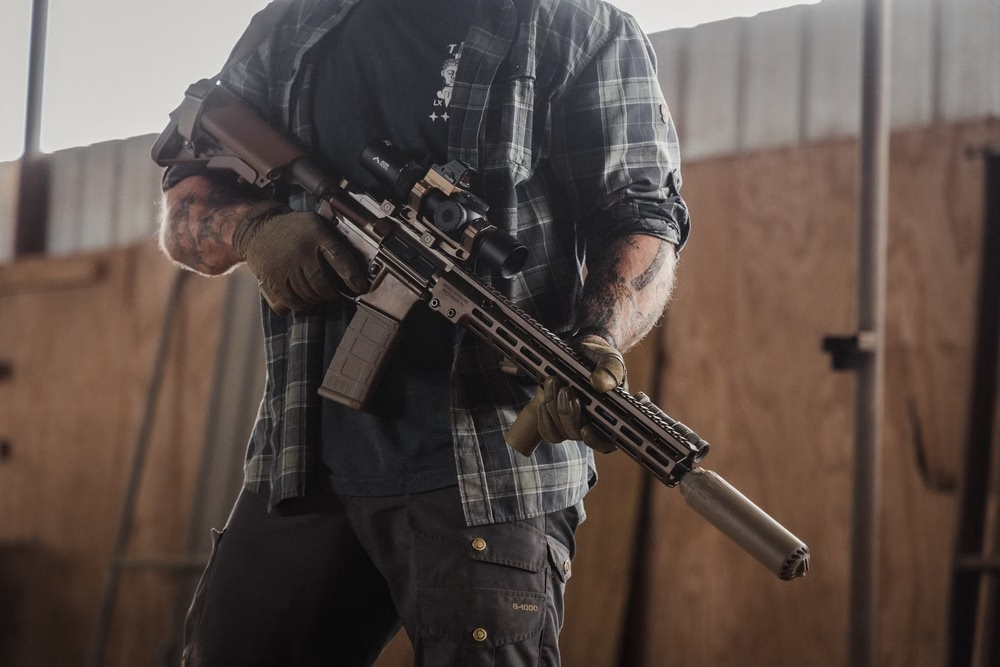
Why Geissele Earns the Premium
Geissele Automatics has had a long history of success, creating triggers and other components for The United States Special Operations Command (USSOCOM), Department of Defense (DoD), and various Law Enforcement Agencies. And all this success started from just one trigger.
Founded in 2004, Geissele Automatics started off as an aftermarket trigger manufacturer. One of their first successful triggers was the Hi-Speed National Match Trigger—one that’s still offered today. Originally designed for competitive shooting, its performance caught the eye of the U.S. Department of Defense.
At the time, the DoD wanted to upgrade military service rifles, so they tasked Geissele with developing a new trigger for them. In this endeavor, Geissele created the Super Select-Fire (SSF) trigger, and it was later adopted by USSOCOM. This basically launched Geissele Automatics into stardom within the industry. They were already successful before this, but after, they had a Government Contract to their name.
Not only did it allow them to invest heavily in their own production capacity, but it also bolstered their reputation as a quality manufacturer. And over the years, they spent countless hours developing innovative parts and gear, and have been an industry leader ever since.
Geissele Triggers: Which One Fits Your Build
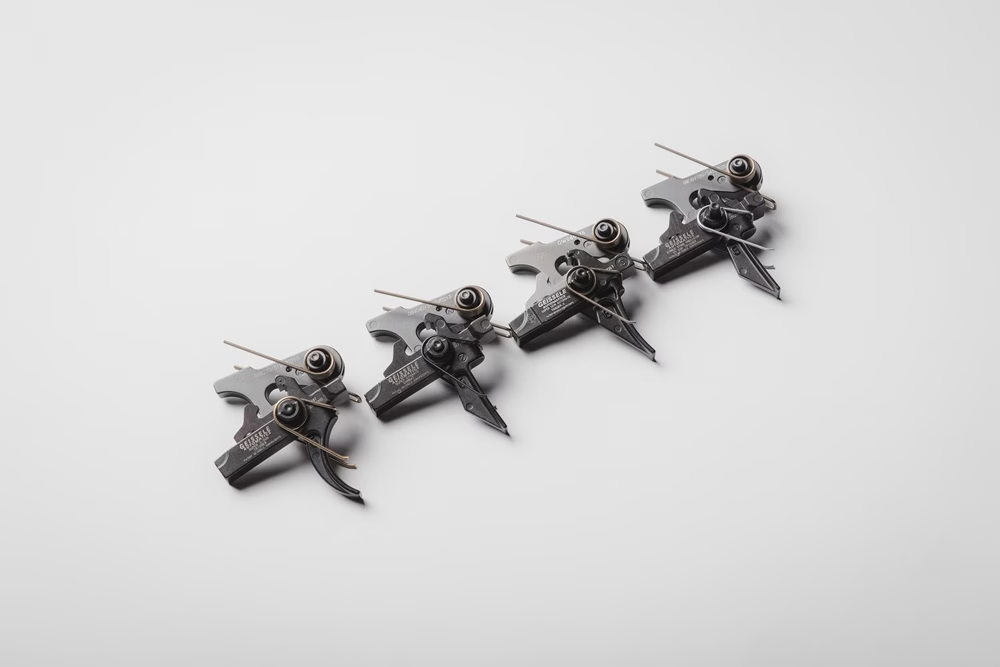
SSA® vs. SSA X® vs. SSA-E® vs. SSA-E X®
Of their many trigger options, by far, their most popular is the Super Semi-Automatic (SSA) series—the semi-auto version of the SSF trigger. Since its creation, Geissele has tweaked and refined its design a few times, creating multiple variations of the original trigger.
| Trigger | 1st Stage Pull Weight | 2nd Stage Pull Weight | Total Pull Weight | Trigger Bow (Shape) | Coating |
|---|---|---|---|---|---|
| SSA | 2.75 to 3 pounds | 1.5 to 1.75 pounds | 4.25 to 4.75 pounds | M4 Curve | Standard |
| SSA X | 2.75 to 3 pounds | 1.5 to 1.75 pounds | 4.25 to 4.75 pounds | Lightning Bow® | Nanoweapon® Coating |
| SSA-E | 2.0 to 2.5 pounds | 0.9 to 1.3 pounds | 2.9 to 3.8 pounds | M4 Curve | Standard |
| SSA-E X | 2.0 to 2.5 pounds | 0.9 to 1.3 pounds | 2.9 to 3.8 pounds | Lightning Bow | Nanoweapon Coating |
Each of these triggers, at their core, shares the same DNA. They’re all two-stage triggers; so as you pull it, there’s a bit of creep until you reach a hard wall, and pulling through it causes the trigger to break, firing the rifle. Each option uses the standard SSA trigger design philosophy, but they aren’t all one-to-one.
The Standard SSA trigger is perfect for general purpose builds. It has a lighter pull weight than a standard mil-spec trigger (around 5.5 to 8.5 pounds), and it’s just as durable since it’s certified to the Crane Naval Surface Warfare Center’s safety standards. The SSA X offers enhanced performance with its semi-curved Lightning Bow design. It’s also coated with Geissele’s Nanoweapon Coating. This makes it more resistant to corrosion and allows the trigger to run smoother in rougher conditions. Both are solid picks, and they cost around $250 and $335, respectively.
For those wanting a lighter trigger pull, the Geissele SSA-E (Super Semi-Automatic Enhanced®) and SSA-E X are great. The SSA-E is, in essence, the upgraded version of the SSA trigger. It has the same overall look and feel, just with a lighter pull weight. The lighter pull lets it excel across multiple scenarios, with it performing particularly well in long-range roles. The SSA-E X has the same pull weight as the SSA-E, but with it, you can reap the benefits of the Lightning Bow trigger and the Nanoweapon coating. Much like the other triggers in the SSA lineup, the SSA-E and SSA-E X typically run around $250 and $335, respectively.
If you’re on the fence, we recommend using the SSA/SSA X for general purpose and duty builds. Opt for the SSA-E/SSA-E X if you’re using it on a more specialized build that prioritizes speed and precision.
Flat Bow vs. Curved: Super Dynamic Series
The Super Dynamic trigger series is another popular one offered by Geissele. Depending on which one you look at, they offer similar performance and characteristics to the SSA series listed above. The main difference is the trigger face.
| Trigger | 1st Stage Pull Weight | 2nd Stage Pull Weight | Total Pull Weight | Trigger Bow (Shape) | Coating |
|---|---|---|---|---|---|
| SD-C® | 2.75 to 3 pounds | 1.5 to 1.75 pounds | 4.25 to 4.75 pounds | Flat | Standard |
| SD-E® | 2.0 to 2.5 pounds | 0.9 to 1.3 pounds | 2.9 to 3.8 pounds | Flat | Standard |
Basically, you can look at the SD-C (Super Dynamic Combat®) and SD-E (Super Dynamic Enhanced®) as the flat-facing variants of the SSA and SSA-E triggers. They offer the same respective performance, but they have a flat-facing trigger bow. Depending on your preference, this can be a serious advantage. With a flat trigger, you don’t have to worry about your finger placement being pulled to the center of the curve.
While that might not first seem like that big of a deal, many enthusiasts, both recreational and professional, find that they have better control with a flat trigger. Since there’s no curve to lock your finger into a specific position, you can place your finger lower or higher than usual. This gives you more, or less, leverage depending on your scenario and style. Plus, both cost the same: around $250.
Much like with the curved SSA and SSA-E triggers, their ideal use case is more or less the same. The SD-C is great for general purpose builds, while the SD-E is better for high-speed and precision rifles.
Single Stage and Other Options
Despite having many of them, not all Geissele’s triggers are two-stage triggers. More specifically, their popular options like the SSP and SD-3G use a single-stage and a hybrid rolling break design, respectively.
| Trigger | Total Pull Weight | Trigger Bow (Shape) | Coating |
|---|---|---|---|
| SSP | 3 to 3.75 pounds | Curved | Corrosion-resistant black oxide |
| SD-3G® | 3 to 4 pounds (lighter spring) 4.5 to 5.5 pounds (heavier spring) | Flat | Standard |
Both triggers are designed for different tasks. For starters, the SSP (Single-Stage Precision®) is like the SSA-E, just in a single-stage configuration. Rather than having to be pulled to the wall, single-stage triggers are always at the wall. And with it having a pull weight of around 3 to 3.75 pounds, it’s best suited for more dynamic applications. As such, the SSP trigger is a great pairing for general purpose rifles, though it’s more than suitable for other applications like duty, competition, and hunting too. Generally, these triggers can be found around $250.
The SD-3G (Super Dynamic 3-Gun) is another entrant in the Super Dynamic trigger line. However, this one is tailored for high-speed competitive use, specifically Three-Gun competitions, hence the name. Part of what makes this trigger unique is its hybrid rolling break design. By design, it doesn’t have a defined trigger wall, making it perform somewhere between single-stage and two-stage triggers. Paired with its flat-faced trigger bow, it’s perfect for competitive use. Plus, it comes with two sets of springs, so you can dial in its performance to match your preference. Also, it only runs around $250 too.
Starting out with Geissele: Entry-Level Triggers
All Geissele’s triggers are premium by nature, but if you aren’t even sure where to begin your search, the G2S is a solid start.
The Geissele G2S Two-Stage AR-15 Trigger is a no-frills trigger that just gets the job done. It’s nearly identical to the standard SSA trigger, but it has a few main differences. There are no laser markings, it has a different trigger pin holder, and they aren’t fully checked during the Magnetic Particle (MP) inspection, just spot checked. Other than that, it has the same performance specs as the SSA trigger, but costs less with it being available around $175.
Geissele Uppers: URG-I Near Clones and Super Duty
Made from 7075-T6 aluminum, a lightweight and durable aluminum alloy, Geissele AR-15 upper receivers use a mil-spec design, the industry-standard design, but they have been specifically made to offer tighter tolerances, especially when paired with Geissele’s lowers. When complete, they’re outfitted with top-tier components like cold-hammer forged (CHF) chrome-lined barrels, specialized muzzle devices, Geissele’s SMR handguards and more.
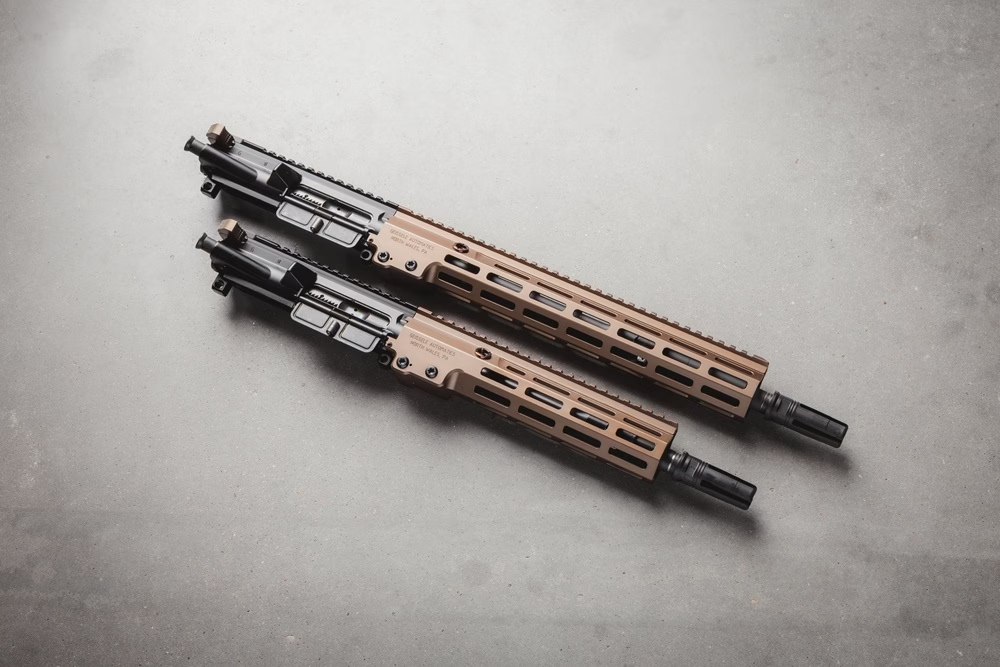
URG-I Near-Clone Uppers
The development of the SSF trigger wasn’t the only time Geissele worked closely with USSOCOM. They played a key role in their URG-I (Upper Receiver Group Improved) program. We go over them at length in our URG-I Upper Receiver Guide, but the gist of what they offer is below:
| Model | Barrel Length | Gas System Length | Handguard Type and Length |
|---|---|---|---|
| URG-I 14.5 | 14.5 inches | Mid-Length | SMR MK16 13.5-inch |
| URG-I 11.5 | 11.5 inches | Carbine | SMR MK16 10.5-inch |
| URG-I 10.3 | 10.3 inches | Carbine | SMR MK16 9.3-inch |
Available in three configurations, Geissele’s URG-I Near Clone uppers are a solid possibility for those looking to build a duty-grade rifle. Outside of the barrel and gas system length, they’re each kitted out with the same components. Each one houses a Geissele CHF, chrome lined, Government profile barrel. For the uninitiated, CHF barrels are some of the most durable barrels available, and Geissele’s come from the factory with a chrome-lined bore extra corrosion resistance. For accessory mounting, they come standard with the SMR (Super Modular Rail) MK16 handguard—the one designed specifically for the URG-I program. Made from 7000-series aluminum, they’re exceptionally rigid and light, and to maximize their adaptability, they’re covered on all sides in M-LOK slots.
Additionally, these uppers come outfitted with a bunch of other upgraded components too. Just like actual URG-I uppers, the Near Clone options also come with SureFire Four-Prong flash hiders, Geissele’s Airborne Charging Handle, and their Reliability Enhanced bolt carrier group. It’s also worth noting that the 14.5-inch variant comes with a pinned and welded muzzle device from the factory, so you can run it on a regular rifle lower. Also, remember that the 11.5- and 10.3-inch can’t be put on a rifle lower without registering it with the ATF as a Short-Barreled Rifle (SBR).
Either way, these uppers are a solid choice for general-purpose, competitive, and defensive rifle builds. Plus, if you want, they’re also available in a ‘stripped’ configuration, coming with everything except a muzzle device, BCG, or charging handle. Depending on which one you look at, they can cost anywhere from around $1,225 to $1,525.
Super Duty Uppers
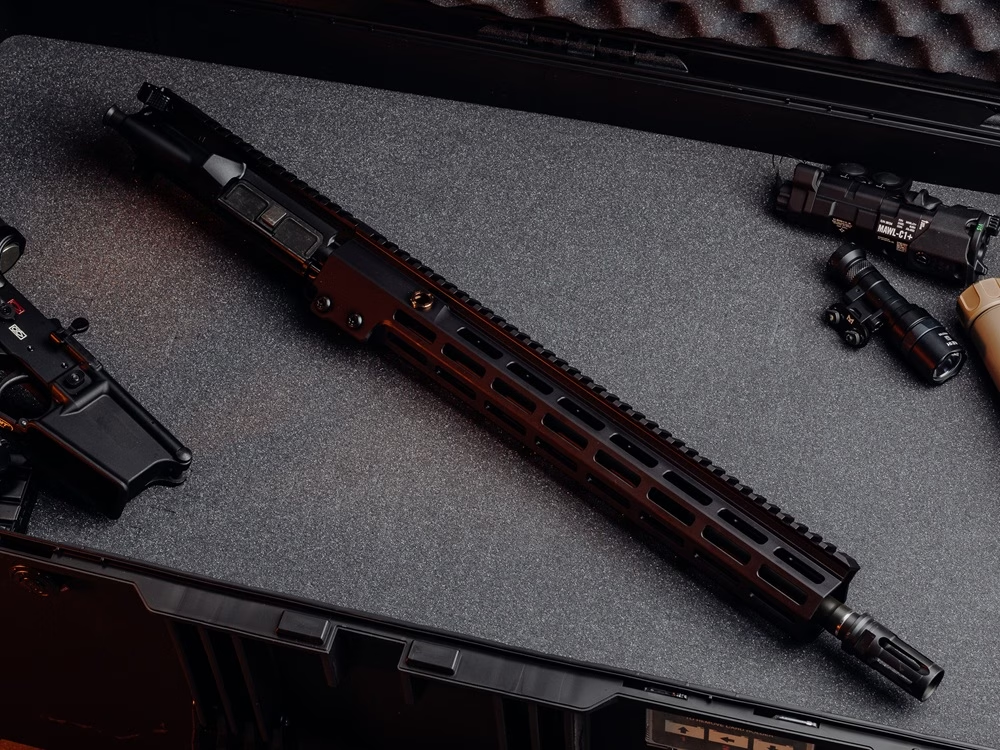
Geissele’s Super Duty uppers are offered in a wide range of configurations to accommodate the needs of the different style rifle builds. Much like the URG-I uppers listed above, complete Super Duty upper receivers also come standard with CHF chrome lined barrels, Reliability Enhanced BCGs, and much more. These aren’t beholden to any clone-correct designs and thus can feature a wider range of configurations.
| Model | Barrel Length Options | Barrel Profile | Gas System Length | Handguard Type and Length |
|---|---|---|---|---|
| Super Duty MOD1 | 10.3, 11.5, 12.5, 13.9, 14.5, or 16 inches | Geissele Tapered Profile | Carbine, Mid-Length, or Geissele Length | Tabbed SMR MK16 9.3- to 15-inch |
| Super Duty MOD1 Heavy Barrel | 14.5 or 16 inches | Geissele Heavy Profile | Mid-Length or Geissele Length | Tabbed SMR MK16 13.5- or 15-inch |
| Super HBAR | 14.5 or 16 inches | Super Heavy Profile | Mid-Length or Geissele Length | Tabbed SMR MK16 13.5- or 15-inch |
| Super Duty MOD1 (.300 Blackout) | 8 inches | Geissele Profile | Pistol-Length | Tabbed SMR MK16 7-inch |
As you can see, there are many Super Duty upper receivers available. It isn’t all that feasible to lay out the specifics of every single one in this article, but we can get you up to speed on what you need to know about them. Mainly, there’s a lot of variety in the Super Duty line, allowing you to pick an upper that’s best tailored for your intended application.
For general purpose use, the standard Super Duty MOD1 upper receiver is hard to beat. It has the most barrel length options, a Geissele Taper profile barrel, and a Tabbed SMR MK16 handguard. The added tabs found on these MK16 handguards aren’t available on standard ones, and they offer even more rigidity too. For even more durability, the Super Duty MOD1 Heavy Barrel offers the same core capabilities, but as its name suggests, it’s equipped with a heavier barrel. It’s designed to handle heat better during long strings of fire, and to hold up better in rougher conditions.
For more specialized applications, such as competitions or precision shooting, the Super Duty HBAR is a solid pick. Coming with an HBAR profile—one of the heavier readily-available AR-15 barrel profiles—it’s a solid pick for use in rougher conditions, or when shooting at distance. HBAR barrels have much thicker walls than more conventional barrel profiles. As such, they typically offer some of the best heat endurance, allowing them to be ran harder for longer periods of time. Additionally, all that extra barrel material keeps it rigid under stress too, making it more accurate than thinner barrels.
Finally, although Geissele primarily makes Super Duty Uppers in 5.56 NATO, they do cater to those who prefer to use the AR-15’s second most popular caliber: .300 Blackout. The Super Duty MOD1 in .300 Blackout is one of the shortest uppers they offer. It’s also ready to be suppressed. It comes standard with a HUXWRX QD Flash Hider, making it compatible with HUXWRX .30 Caliber suppressors out of the box. Depending on the model you look at, these uppers can range in price from around $1,025 to $1,325.
Geissele Rails: MK16, MK14, and MK8
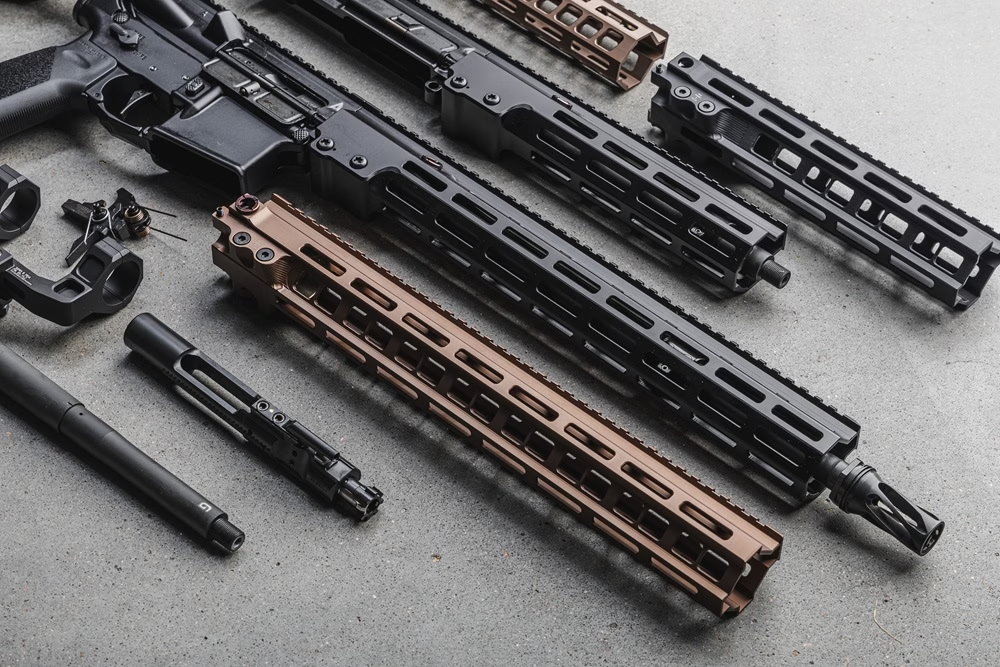
We briefly mentioned the Super Modular Rails above but Geissele rails and handguards are always some of their top offerings. Essentially, they’re Geissele’s handguard options, and just like all their other offerings we’ve discussed so far, they’re available in a multitude of options. Among them though, the MK16, MK14, and MK8 consistently rank as some of the most popular.
Though different in design, they all share the same core features that make them so sought-after in the first place. All of them are free-floating to offer better barrel harmonics, and they have built-in anti-rotation tabs to keep them from shifting position during hard use. Plus, they all use an incredibly rigid mounting system, allowing them to hold zero in all conditions, and they’re all available in multiple lengths. At the end of the day, choosing between them is more a matter of preference than anything else. That said, they each have their own distinct advantages.
SMR MK16
The MK16 is easily the most popular Geissele handguard available today. As you know, this handguard is featured prominently on both their Super Duty and URG-I upper receivers, with it being a product of the URG-I program. As such, it’s well known for its reliability and adaptability. Plus, it’s comfortable too if you run your rifle without a foregrip.
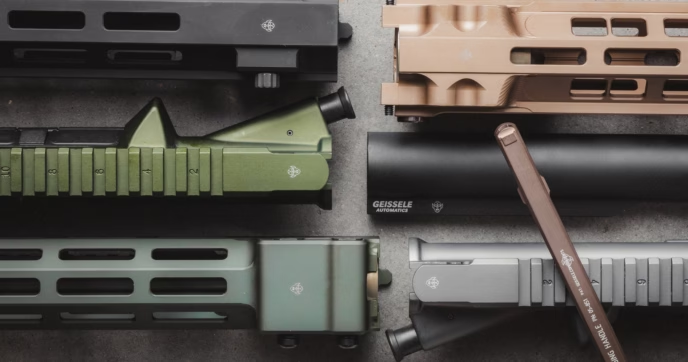
Its main mounting system is M-LOK, the industry standard mounting system in the U.S. It has M-LOK slots running the entire length of the handguard on all sides, including the 1, 5, 7, and 11 o’clock positions, and a full-length upper picatinny rail. Compared to the MK14 and MK8, the MK16 is the heavier handguard, weighing 17.1 ounces in its 15-inch configuration. But in terms of sheer battle-tested reliability, it reigns supreme. So, we recommend this one if you’re looking for a rugged handguard for a duty-grade rifle. Currently these handguards are available in a 9.3-, 10.5-, 13.5-, and a 15-inch configuration, and they can cost anywhere from around $300 to as much as $375.
Given its developmental origin, the MK16 is easily one of the most durable handguards offered by Geissele. As such, it can be used effectively on all matters of rifle builds ranging from general-purpose builds to SPRs and other specialized rifles.
SMR MK14
You can view the SMR MK14 handguard as the little brother to the MK16. They share many of the same features and look similar, but the significant difference between them is their weight and accessory mounting slots. The MK14 comes in at a much lighter 13 ounces, but it has M-LOK mounting slots on the sides and bottom, not along the angled sections. Other than this, the two are largely the same, aesthetically speaking.
Given its lighter weight, this handguard is a solid pick for simpler, lighter rifle builds. Plus, despite its reduced weight, it’s still super rigid, making it a great pick for high-speed applications like competition, duty, and defense. Even though it lacks the mounting adaptability of the MK16, it’s an excellent pick for lightweight rifle builds. Like the MK16, these handguards are available in the same 9.3-, 10.5-, 13.5-, and 15-inch configurations, and they even cost the same too.
SMR MK8
Of their three most popular handguards, the SMR MK8 is the oldest of the three, but that doesn’t mean its time in the spotlight is anywhere near its end. The MK8 is a great handguard that’s relatively lightweight and offers a lot of accessory mounting flexibility.
Much like the MK16, it has M-LOK slots on all sides of the handguard, minus the top. It’s lighter than the MK16—14.3 ounces in its 15-inch configuration—and its design has different ergonomics. The sides flare out away from the angled sections, giving it a different feel. That doesn’t mean that it’s any less reliable though, as it’s been a longstanding favorite amongst enthusiasts.
And just like the MK16, it’s a fitting rail for any kind of strenuous use, whether it be in a duty, competitive, or recreational capacity. These handguards are similar to the others mentioned in that they’re available in multiple lengths: 9.3, 10.5, 13.5, and 15 inches. And depending on which one you look at, they can range in price from around $325 to $375.
Geissele Charging Handles
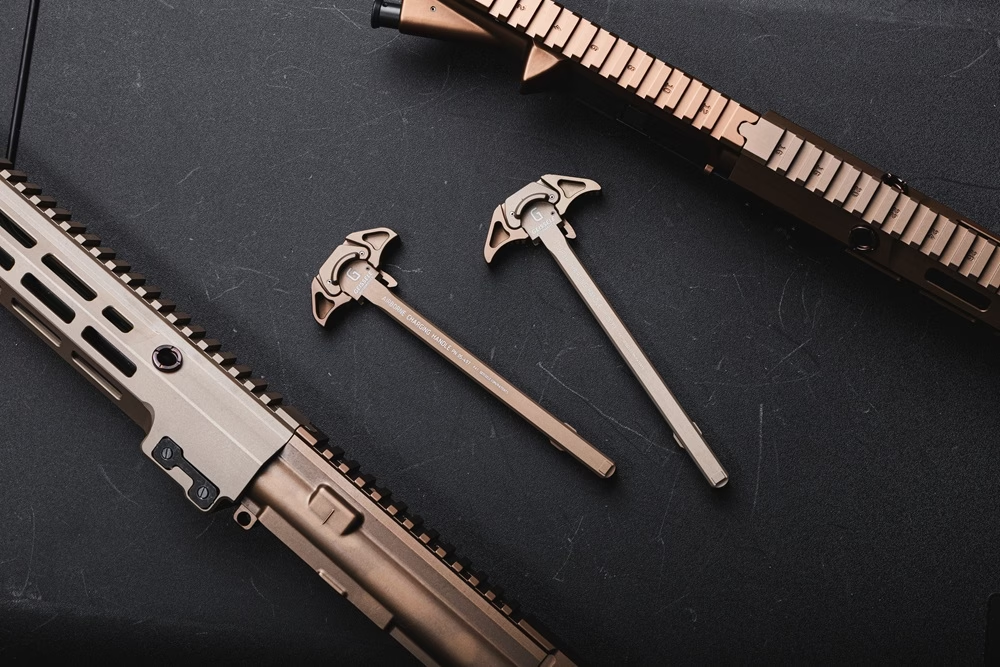
Outside of their trigger assemblies, Geissele charging handles are easily the second most popular small part they offer. Each of their premium charging handle models are made from 7075-T6 aluminum and are designed to offer as much usability as possible. They even offer a more basic mil-spec model. But if you’re looking for an upgraded experience, the Super Charging Handle and Airborne Charging Handle are their most popular.
The Super Charging Handle (SCH®) is the go-to charging handle that most enthusiasts think of when they hear “Geissele Charging Handle.” It has an ambidextrous design that uses a dual-lever system. So, whether you’re left-handed, like to train with your non-dominant hand, or are just in an awkward position, you’ll still have ready access to your charging handle. Another enhancement is its raised rear lip. This lip helps to block excess gas from venting out the upper through the charging handle slot, making shooting suppressed a much more pleasant time.
Another great pick is the Airborne Charging Handle (ACH®). Essentially, you can look at this charging handle as a more minimalist version of the SCH. Its latch wings are smaller to prevent snagging on gear, but aside from this, it’s largely the same, boasting the same inherent durability, as well as the raised rear lip. Either way you go, they’re one of the least costly upgrades (around $110 to $120) that has arguably the greatest effect on your rifle’s performance.
Because of their impact on performance and overall control, there’s often a debate as to which is best. In all honesty, they’re both awesome, but are built for different purposes. The SCH offers more purchase the latches, but this comes at the cost of being a potential snag risk. Meanwhile, the ACH minimizes and snag risks but doesn’t have as much latch grip. So, it comes down to a matter of which advantage is best for your preferences.
Super 42 Spring, Buffer Weights, and Lower Parts Kits
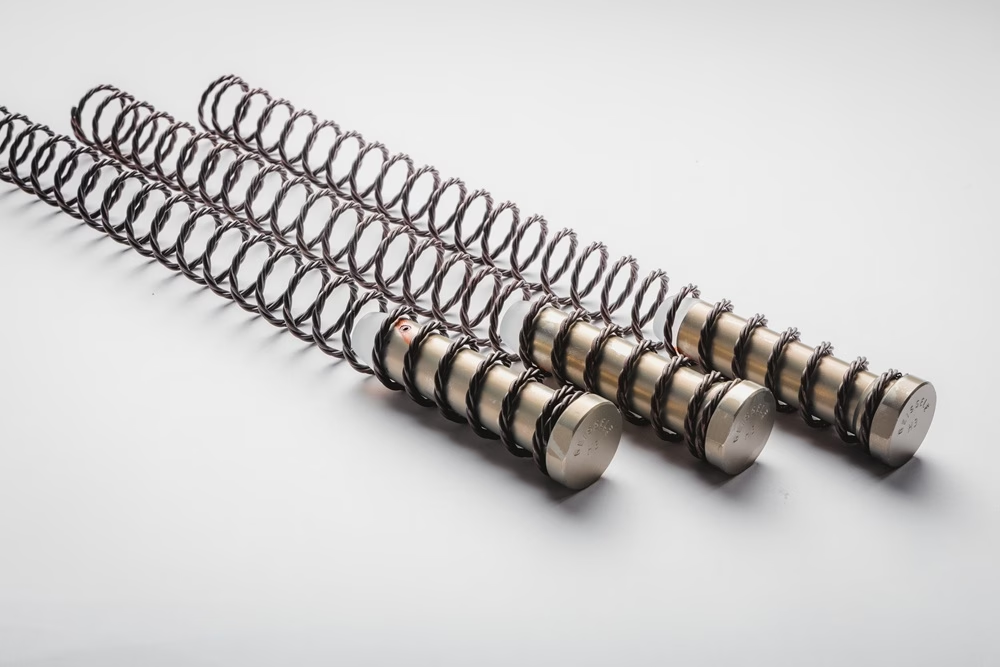
If you’re building a stripped lower, or just looking to upgrade, Geissele has you covered on that front too. For starters, their Super 42 Spring is one of the industry’s top buffer spring options. Taking inspiration from the MG42’s recoil spring assembly, the Super 42 Spring is braided, consisting of three distinct spring wires. And, while you can just get the spring itself, Geissele also packages it with one of their many buffer weights. You can even get the entire assembly with the buffer tube, castle nut, and endplate too.
They also offer an assortment of lower parts. Their lower parts kits can include many of their premium components, like their ambidextrous safety selectors, enhanced trigger guards, and even their Maritime Bolt Catch. Depending on which parts kit you opt for, they can come in a multitude of configurations. And, if you’re just looking for a quick upgrade for your current rifle, you can always opt for their standalone components.
Geissele AR-15s: Super Duty Series
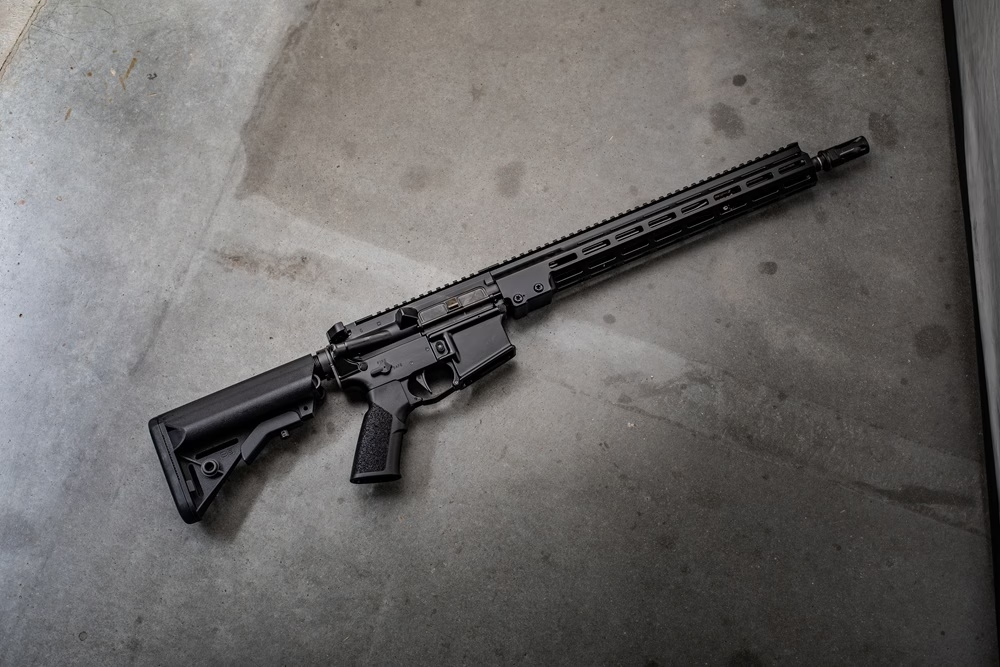
The Super Duty line of AR-15s stands out as one of Geissele’s most successful endeavors. These rifles are engineered to perform out of the box. Each of the components used in these rifles are not only made in-house at Geissele’s facilities, but they’re meticulously installed to ensure that each rifle is ready for anything. Because of this, these rifles have seen a serious growth in popularity, since all you really need to do is fit it with an optic, and then you’re ready to go.
By now, we’ve already gone over the bulk of what these rifles come standard with. Every Super Duty AR-15 comes from the factory outfitted with many of Geissele’s top-tier components. Legendary performers like their CHF barrels, tabbed SMR MK16 handguards, SSA-E X trigger, ACH, as well as their Ultra Duty lower parts are all standard. Plus, just like Super Duty uppers listed above, they come standard with HUXWRX flash hiders, with the 13.7- and 14.5-inch rifles already coming pinned and welded.
So, if you opt for a Super Duty, you already have a highly capable rifle from the start. But, with Geissele being committed to crafting high-class rifles, they’re outfitted with some extras. For starters, they make use of furniture from B5 Systems, one of the industry’s top stock and grip manufacturers. Their stocks are comfortable and offer a solid amount of cushion for recoil mitigation, and their grips are comfortable while still having enough grip to maintain positive control when firing.
Depending on which one you look at, these rifles can serve as the perfect blank canvas for everything from intensive duty and competitive builds to recreational ones. Coming pre-equipped with some of the best gear the industry has to offer, they cost a bit more than other options, as they’re priced around $2,100 to $2,400+. Still, you’ll be hard-pressed to find a more capable rifle.
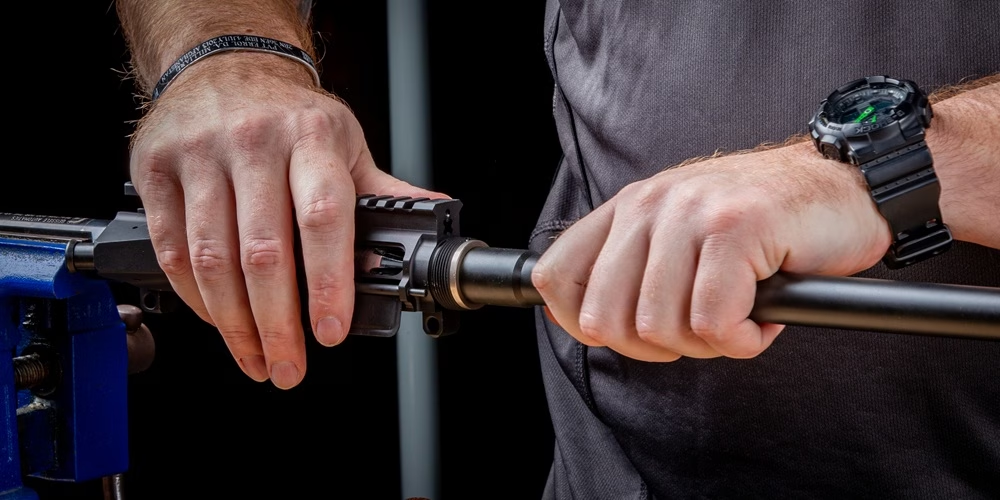
Geissele Tools: Which Do You Actually Need?
Lastly, one part of their lineup that often goes overlooked is their tools. Geissele offers everything from suppressor alignment rods and punch sets to barrel nut wrenches and their Reaction series tools.
The Reaction series consists of their vise blocks for the AR-15. The Reaction Block® is designed to hold the lower receiver by the buffer tube. Once affixed in a bench vise, you can slide and lock the buffer tube in it, giving you access to your lower. It has four different locking positions as well, giving you 360° access to the lower. For working on your upper, the Reaction Rod® will keep it locked in place without marring its surface. With it, you can install barrels, handguards, and other parts without the upper moving, giving you the best ability to do so.
Each one has its purpose and is a great addition to any enthusiast’s tool kit. By design, they make rifle assembly, disassembly, and maintenance as easy as possible. While they aren’t a necessity if you plan to own a rifle, they’re well worth the investment if you plan on building multiple setups.
Frequently Asked Questions (FAQ)
-
What is the difference between the Geissele SSA and SSA-E?
Both are non-adjustable, two-stage triggers with a similar design, but their difference is their pull weight. The SSA runs a 2.75- to 3-pound first stage and a 1.5- to 1.75-pound second stage, for a total pull weight of 4.25 to 4.75 pounds. The SSA-E lightens both: a 2- to 2.5-pound first stage and a 0.9- to 1.3-pound second stage, for a total pull weight of 2.9 to 3.8 pounds.
Geissele describes the SSA as forgiving enough for close-in work and recommends it for law enforcement and dynamic environments, while the SSA-E is better for precision use in a Designated Marksman role. If your carbine gets used under stress, choose the SSA. If it gets used for precise shots at distance, choose the SSA-E. All weights are approximate per Geissele’s published specifications.
-
Are Geissele triggers duty-grade for law enforcement patrol rifles?
Yes, and the SSA is the model built for it. Geissele lists the SSA as safety certified by Crane Division of the Naval Surface Warfare Center and specifically recommends it for law enforcement use. Its lineage runs directly through the Super Select-Fire trigger adopted by U.S. Special Operations. The design choices matter for duty: the pull weight is non-adjustable and there are no set screws that can back out from repeated use. A patented secondary sear keeps the hammer from falling unless the trigger is pulled. One warning we always give agency buyers is that minimum pull weight is set by department policy, not by us. So, confirm the model against your armorer’s standard before ordering in quantity.
-
Which Geissele rail is used on URG-I Uppers?
The SMR MK16 is the handguard used on the URG-I rail. It was developed specifically for USSOCOM’s URG-I (Upper Receiver Group Improved) project, and was chosen for its rugged reliability, accessory mounting capabilities, and rigid mounting system.
-
How do the SMR MK16, MK14, and MK8 differ?
The MK16 is the URG-I rail adopted by U.S. Army Special Operations Command. It uses a longer-than-standard Geissele barrel nut that increases contact area with the upper receiver for a more rigid lockup, plus anti-rotation tabs and set screws that keep the rail from shifting your accessory zero. M-LOK sits on every quadrant under a full-length M1913 Picatinny top rail. The MK14 is a slimmer profile, and the MK8 is even slimmer, so the choice is mostly about how much rail diameter your hands and accessories want. All are 7000-series aluminum with a Mil-Spec Type III hardcoat anodized finish—a step up from the 6061-alloy used for other handguards. Published MK16 weights run 10.1 ounces at 9.3 inches, to 17.1 ounces at 15 inches.
-
Does the Geissele Super Charging Handle help with gas blowback on a suppressed rifle?
It doesn’t fix over gassing, but it does reduce the amount that’s vented out near your face. Over gassing occurs when the barrel’s gas port is too large, causing more gas to be siphoned than usual. The Super Charging Handle is machined from a solid block of 7075-T6 aluminum, with a raised rear lip that redirects gas away from the shooter rather than letting it vent straight back. To fix over gassing, you’ll need an adjustable gas block, a heavier buffer, or a different recoil spring. If you want the same construction in a lower profile, the Airborne Charging Handle uses shorter levers that reduce the risk of snagging, and clear low-mounted optics. They do have less purchase on the grip though.
-
Will a Geissele trigger drop into any AR-15 lower receiver?
Most of their triggers are designed for mil-spec lowers, which covers the vast majority of AR-15s, as well as most AR-308 and SR-25 pattern rifles. Geissele builds its standard triggers around mil-spec .154″ pins, which are the most common. Older Colt lowers used oversized .170″ holes, something that’s still used on select lowers today. Installation is the same for both; they just use two different pin sizes. Either way, be sure to double check which size pins your specific lower receiver uses before purchasing a trigger. Also, keep in mind that the SSA and SSA-E do not fit HK416 rifles that have a firing pin safety.