TL;DR
A police trade-in is one of the cheapest ways into a duty-grade handgun or AR-15 — a used GLOCK 17 can run around $400 against roughly $700 new — as long as you inspect it before transfer. These are well-maintained but genuinely used guns with no factory warranty, so the value only holds once you’ve confirmed the condition yourself.
- Best value – trade-in pistols: GLOCK, Smith & Wesson, and SIG Sauer duty guns are the most common, generally around $350 to $600 as of this writing.
- Also common – trade-in AR-15s: complete rifles or bare uppers from Smith & Wesson, Bushmaster, Colt, and BCM, roughly $450 to $700+.
- The main trade-off: round counts range from a few hundred to 10,000+, with no warranty — barrel and internal wear is the real risk.
- The non-negotiable step: inspect at your FFL (function check, field strip) before you transfer; condition varies gun to gun.
- When to skip: if you want pristine cosmetics or a warranty, or the model is an SBR/NFA configuration you aren’t ready to stamp.
Adding a new firearm to your collection is always exciting, but one of the most prominent hurdles for many is their price. Although there are many good budget options to pick from, firearms from more well-known and premium brands like GLOCK, BCM, or Smith & Wesson can all be quite expensive for most budgets, making police trade-ins a good alternative.
Police trade-ins are incredibly sought-after by many enthusiasts since they provide you with the opportunity to buy a high-quality firearm at a discounted price. Even though they often have wear from their prior use, you’re likely to find a hidden gem that offers both quality and value.
If you aren’t familiar with what police trade-in guns are, there’s a lot you’ll need to know before buying one. Follow along as we break down what they are and what to look for when shopping for one.

What Are Some Examples of Police Trade-In Guns?
A police trade-in is a firearm that was previously owned and used by a Law Enforcement Agency. Whenever these agencies upgrade to newer gear, their older firearms are traded in and sold at a reduced price. Despite being used, trade-ins tend to be well-maintained. So, although they might not be perfect cosmetically, they’re still in good condition and fully functional.
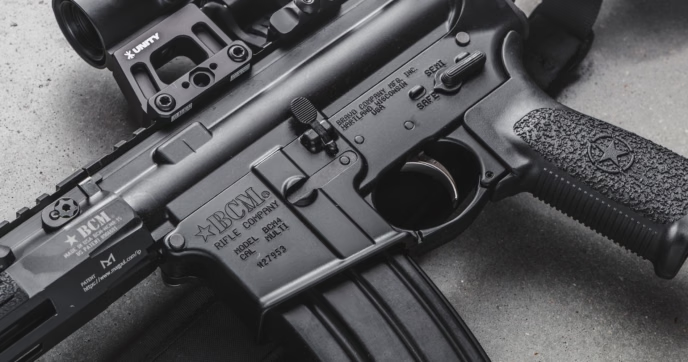
Police trade-ins most often consist of various handguns and AR-15s, the brands of which vary since different agencies get issued different gear. It’s common to find various GLOCK, Smith & Wesson, and SIG Sauer pistols for sale, as well as AR-15s from various brands like, Bushmaster, Smith & Wesson, BCM, Colt, and more. Occasionally, you might even come across bolt-action rifles and shotguns too, although not as much.
While the sheer variety police trade-ins provide is more than enough to make them a popular option, their main draw is their price. Police trade-ins tend to be very affordable, allowing enthusiasts to buy high quality firearms for well below what they’d cost brand new. For instance, a brand-new GLOCK 17 can cost upwards of $700, while a trade-in model can be as low as $400.
Colt’s a good case in point. Right now we’ve got Colt M4 Carbine LE 6921 trade-ins in stock -14.5-inch 5.56 NATO carbines for $799.99 as of this writing instead of $999.99 new. These are used and SBR-configured, so they won’t be right for everyone, but if you want a duty Colt without the new-gun price, they’re absolutely worth a look!

Pros and Cons of Purchasing Police Trade-In Guns
While they can be a good possibility to consider, police trade-ins, like any used firearm, have their pros and cons. One of the main advantages of trade-ins is their price. As we mentioned above, trade-ins can be priced considerably lower than new models, with many still being in good condition despite their previous use.
However, being a used firearm is double edged sword. Although used firearms generally bring a lower price, their prior usage can take a toll on their construction. Some trade-ins may have only a few hundred to a few thousand rounds through them while others could have several thousand to upwards of 10,000+ rounds through them. The extent of their usage can cause excess wear on their internal components and shorten the lifespan of the barrel. Additionally, trade-ins typically don’t come with any factory guarantee or warranties, so it’s imperative that you know what to look for if you plan to purchase one.
Factors to Consider Before Buying Police Trade-In Guns

Condition of the Firearm
Since these firearms are used, their overall condition varies depending on the extent of their usage. For the most part, these firearms are in good condition, but there’s always going to be some degree of variance. Because of this, it’s crucial for you to inspect the quality of these firearms when they arrive at your FFL of choice.
We go in-depth on the inspection process in our guide, “How to Inspect a Firearm Before Transfer”, but in summary:
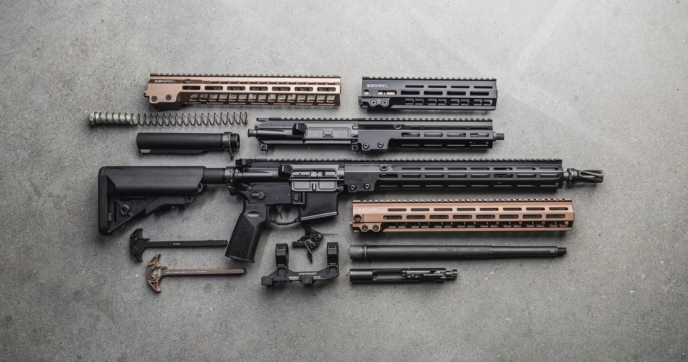
You need to look the firearm over to make sure it’s the right one, it passes a function check, the internals look to be in good condition after field stripping it, and lastly, you’ll need to confirm that everything that’s supposed to be included in the package is there. All these steps are paramount to ensuring you get the best deal possible, so we recommend reading the full inspection article after you finish reading this one.

Brand and Model Considerations
Trade-in firearms offer a fair amount of variety, to a certain extent. Certain makes and models are more common than others, and they make up most of what’s available.
As far as pistols are concerned, you’ll most commonly see pistols from GLOCK, Smith & Wesson, and SIG Sauer. GLOCK pistols like the Gen 4 and 5 G19 and G17 are especially common, although it’s becoming more common to find newer models like the G19x and G45. The G22 and G35, which are chambered in .40S&W, are also available at times. Smith & Wesson pistols most often consist of M&P series pistols such as the M&P9, M&P40, and M&P45, in either the standard or newer M&P2.0 configuration. Lastly, options like the SIG Sauer P320, P229, and P226 are common too, with them coming in many different calibers.
For rifles, AR-15s are the most common ones traded in. Trade-in AR-15s can come from a wide array of assorted brands like Smith & Wesson, Bushmaster, Colt, and even BCM. Most of the time, these rifles are complete, but it’s also common for just the upper receiver to be traded in too. Depending on the agency, some will use various uppers on a select-fire lower, so they’ll trade in just the upper rather than the complete rifle when they upgrade.
Lastly, while not as common as the models above, there can, at times, be some more unique options traded in. These generally consist of bolt-action rifles and shotguns, but keep in mind that they aren’t typically as available as the other models mentioned.
Legal Requirements
The process of buying a trade-in firearm is the same as buying any other one from a dealer. To buy one, you must be able to pass a federal background check, and the firearm you intend to purchase must be legal to own in your state. As such, you are responsible for knowing and abiding by the laws regarding firearm ownership in your State and Local area.
Additionally, if you plan to purchase a trade-in that’s in an SBR (Short-Barreled Rifle), or other NFA regulated configuration, you’ll need to acquire a tax stamp and approval from the ATF to legally own it.

Pricing and Tips for Making a Smart Purchase
The price of trade-ins varies based on the model and the condition it’s in. You can expect to find most handgun options priced anywhere from around $350 to upwards of $600+ depending on what’s included in the package. AR-15s and shotguns can range in price from around $450 to upwards of $700+, with other rifles like bolt-actions being as much as $1,000+ depending on its configuration. The Primary Arms store page sells police trade-ins, as well as other used firearms, the amount and variety of which fluctuates as gear gets traded in. We recommend checking it out every so often to see what all’s available.
As always, whenever you’re buying any type of used firearm or gear, it’s essential to look into the condition and, if possible, the history of it. While a detailed history isn’t always available, they offer some insight into how the firearm was used and maintained. If a history isn’t available, your inspection of the firearm is essential. Remember to field strip it, perform function checks, and make sure that everything is as it should be before transferring it into your name.

Conclusion
Police trade-in guns provide enthusiasts with a budget-friendly alternative to buying brand new firearms. Consisting of several models from reputable manufacturers, trade-ins offer enough variety to provide something for everyone.
Despite being a solid choice to consider, we can’t stress the importance of firearm inspection enough. Remember, police trade-ins are still used guns, so despite them being regularly maintained, it’s likely that they’ll still have varying amounts of wear from regular use. As such, it’s important to inspect these firearms just like you would with a new, or other used firearm.
At the end of the day, if the added wear doesn’t bother you, and it passes your personal inspection before transfer, a police trade-in can be a solid option for your next personal defense or range build. If you’re specifically shopping for a firearm with personal defense in mind, our guide, “Buying a Gun for Personal Defense” goes over everything you’ll need to know when buying a firearm for defense. We recommend giving it a read before you make any final decisions.
Frequently Asked Questions (FAQ)
-
What is a police trade-in gun?
A police trade-in is a used firearm that a law enforcement agency previously owned and issued, then sold off when it upgraded its gear. These are genuinely used guns, but they tend to be well-maintained, so they’re usually fully functional even if they aren’t perfect cosmetically. Most are handguns and AR-15s, and the brands vary because different agencies issue different gear- GLOCK, Smith & Wesson, and SIG Sauer pistols are the most common, alongside AR-15s from Smith & Wesson, Bushmaster, Colt, and BCM. You’ll occasionally see bolt-action rifles and shotguns too, though not as often. The draw is price: you get a duty-grade gun for well under new.
-
Are police trade-in guns reliable?
Generally yes, but condition varies from gun to gun, so you have to inspect each one before you transfer it. Round counts can run anywhere from a few hundred to 10,000 or more, and that wear shows up in the internal components and the barrel’s lifespan – that’s the real risk, not cosmetics. There’s no factory warranty backing the gun, so your own inspection is the safeguard. When it lands at your FFL, confirm it’s the right gun, run a function check, field strip it to look over the internals, and make sure everything that’s supposed to be in the package is there. If it passes, a trade-in is a solid range or defensive build.
-
How much do police trade-in guns cost?
Most run well below new. As of this writing, a used GLOCK 17 can go for around $400, against roughly $700 for a new one. Broadly, handguns land around $350 to $600 and up, AR-15s and shotguns around $450 to $700 and up, and other rifles like bolt-actions can reach $1,000 or more, depending on the model, the condition, and what’s included in the package.
-
Do police trade-in guns come with a warranty?
No – police trade-ins typically don’t carry a factory warranty or guarantee. They’re used guns, so there’s no manufacturer coverage backing them the way there is on a new firearm, and that’s the main trade-off for the lower price. It’s also why inspecting before transfer matters so much: with no warranty to fall back on, your function check and field strip at the FFL are what protect you. If a warranty or pristine, unused condition is a priority for you, buying new is the better call.
-
What do I need to legally buy a police trade-in gun?
For a standard trade-in, the process is the same as buying any firearm from a dealer. You have to pass a federal background check, the gun has to be legal to own in your state, and you’re responsible for knowing and following the firearm laws in your state and local area. The one area that’s changed is NFA-regulated configurations like short-barreled rifles. As of October 9, 2026, ATF stated it will no longer enforce the NFA’s prior-approval, registration, and tax-stamp requirements for SBRs, SBSs, suppressors, and AOWs, nationwide, following a federal court ruling in Silencer Shop Foundation v. ATF. This is an enforcement-discretion policy, not a repeal – those items are still NFA items under federal law, and state and local laws are unchanged and may still regulate them. Confirm current ATF guidance and your state’s law before you buy.