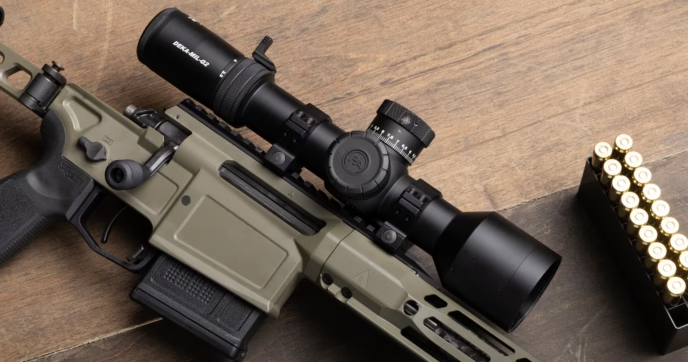
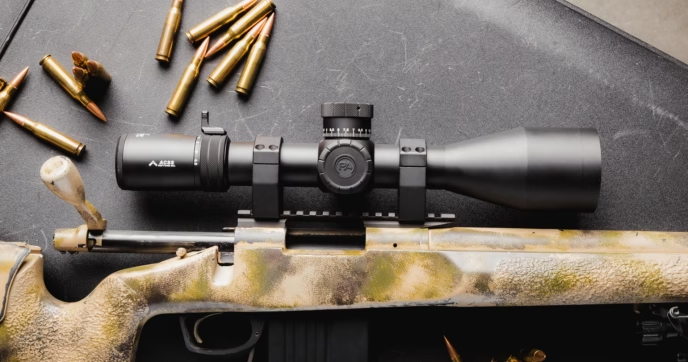
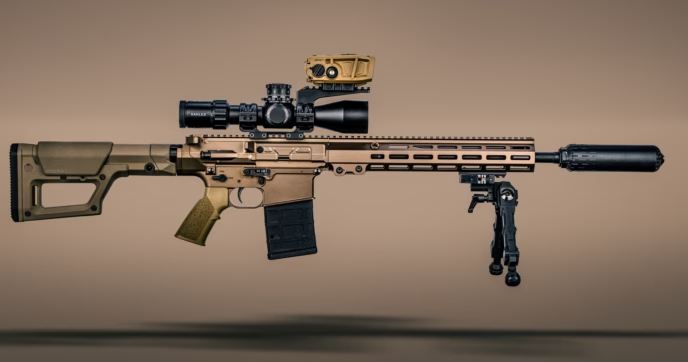
Every year, hunters across the country spend countless hours preparing for deer season. And with hunting season fast approaching, now is the time that many start looking to upgrade their setups.
Now, while your rifle of choice is certainly important, the optic you use is equally so. In short, your rifle is only going to be as capable as the optic it’s been paired with. Although there are a lot of brands producing solid hunting scopes, Leupold stands tall as one of the industry’s leading optic manufacturers.
Still, even when you narrow down your search to focus on just one brand, there are dozens of great picks. But if you know what to look for, finding the best Leupold scope for your deer rifle isn’t a challenge.
Deer Hunting: Matching your Scope to your Terrain
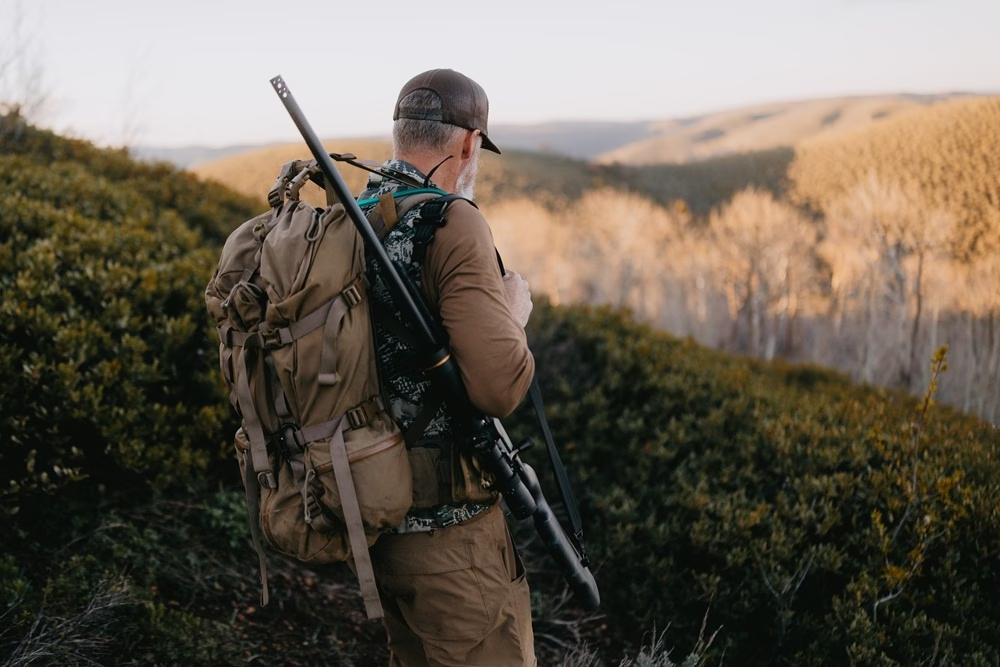
Whitetail deer are some of the most commonly hunted big game animals across the United States. But just because deer are found from the East to the West Coast, doesn’t mean that the terrain and overall lay of the land they roam stays the same.
America is complex from a geographic perspective. There are dense forests, tall mountain ranges, deserts, grasslands, and everything in between. And taking note of this is incredibly important whenever you’re shopping for a rifle scope. Not every optic is created the same. Each one has its own set of features that’ll make it better suited for hunting across various environments.
Magnification
The terrain of the area you plan to hunt in plays a direct role in determining the magnification of your scope. While you might be tempted to look for the highest power scope you can find if you’re new to the hunting scene, that isn’t really the best move. Different areas will require different power scopes. Below are some guidelines to help point you in the right direction:
- Close-Range: In heavily wooded areas and places with rolling hills, high-power scopes aren’t always needed. Many hunters often opt for Leupold scopes with magnification ranges like 1-6x, 3-9x, 2-10x, or 2-12x. They’re lighter and more compact than high-power scopes, and they can still effectively engage further targets when needed.
- Close- to Medium-Range: Although the terrain of some areas remains largely consistent, not all of them do. And if you’re hunting in such areas, your average distance to target can vary quite drastically at times. So, if you’re hunting in areas with varying landscapes, it’s best to use an optic with a more adaptable magnification range. Scopes with a 4-12x or 3-15x magnification offer greater flexibility in such areas.
- Medium- to Long-Range: Flatter terrain can drastically increase your likely distance-to-target when hunting deer. This is where higher power scopes become a more advantageous tool. And Leupold has several optics fit for this role. They’re available with multiple magnification ranges like 3-15x, 4-16x, 3-18x, 4-20x, 5-25x, and beyond. It’s important to note that these optics are heavier than those mentioned thus far, but they offer the power needed for long-distance hunts.
Reticle Types
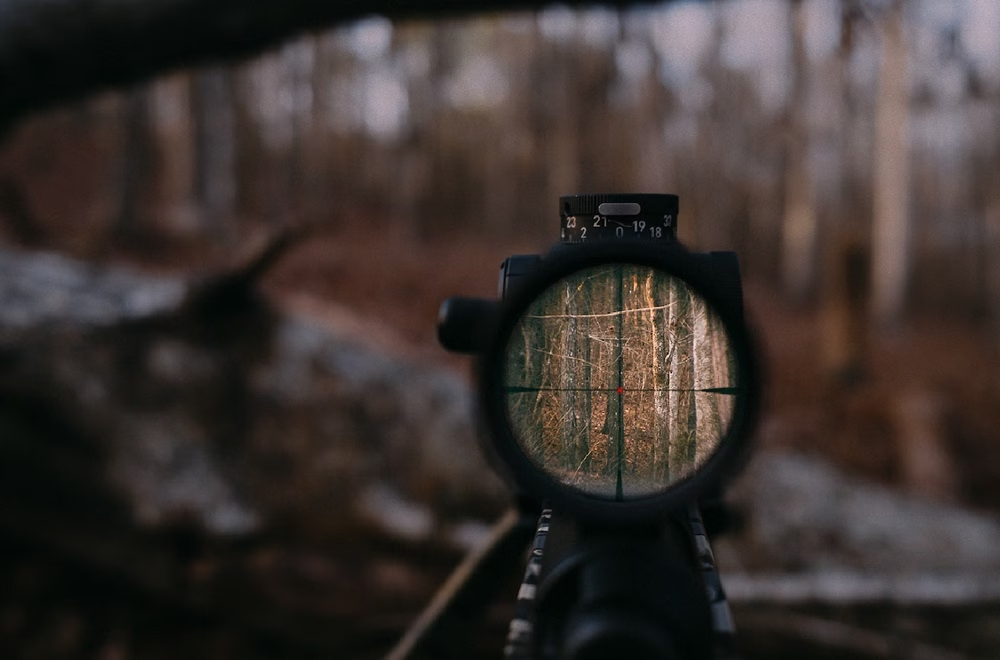
Just like with magnification, having the right reticle in your scope is extremely important. If you already know, or have estimated, the distance you’ll likely be hunting deer at, you’ll need a reticle that compliments it.
Most of Leupold’s hunting scopes house simplistic reticles, such as their Duplex reticle. It’s made up of vertical and horizontal crosshairs and has no other elements unless you opt for a FireDot model, which has an illuminated center dot. Despite its simpler design, it’s long been one of the more popular reticles amongst hunters. However, in our modern age, it’s better suited for close-range hunting, as they lack many comforts found in modern reticle designs.
For further engagements, reticles such as Leupold’s WindPlex and Twilight Hunter are much better. The WindPlex reticle builds on the foundation of the traditional duplex reticle. Rather than leaving the crosshairs bare, the horizontal stadia has a series of hash marks for compensating for wind. The FireDot Twilight Hunter is another solid choice too. Its horizontal stadia starts wide and then tapers down into a thin line to give you an unobstructed view of your target. Its vertical stadia start out wide at the bottom, then it thins out and keeps a thin profile all the way to top of the reticle.

Matching your Scope to Your Rifle
Just like terrain, the type of rifle you intend to hunt with also has a significant impact on the type of scope you use. Hunting rifles are available in all sorts of configurations. Hunters today use modern semi-auto rifles like the AR-15 and AR-10, as well as more traditional bolt- and lever-action rifles.
Rifle Caliber and Effective Range
No matter which type of rifle you look at, they can all come chambered in several different calibers.
For starters, AR platform rifles have a lot of caliber variety. AR-15s can house several unique intermediate cartridges like .223 Remington/5.56 NATO, .300 Blackout, 6.5 Grendel, and more. Meanwhile, AR-308 rifles chamber full-power rifle cartridges. As such, they commonly come chambered in .308 Winchester and 6.5 Creedmoor, though select models are available in .260 Remington and 8.6 Blackout.
Similarly, bolt-actions can chamber all those calibers and then some. Calibers like .270 Winchester, 7mm-08, .30-06 Springfield, and much larger magnum cartridges like .300 Win-Mag. Lastly, lever-actions are unique in that they’re commonly chambered in revolver cartridges like .357 Magnum, .44 Magnum, and .45 Long Colt. They can also chamber far more powerful rifle cartridges like .30-30 Winchester, .45-70 Government, and .360 Buckhammer, to name a few.
All this is to say that each one of these calibers performs vastly different. They have their own unique flight characteristics, effective ranges, and best use cases. As such, you’ll need to take them into consideration when you’re choosing a scope for your hunting rifle of choice. For instance, if you’re shooting a .45-70 lever gun, your effective range is only going to be 200 to 250 yards, so you won’t need larger high-power scope. However, for a larger caliber rifle with a much further effective range, you can better justify the use of a higher power optic.
Which Leupold Scope Should You Choose?
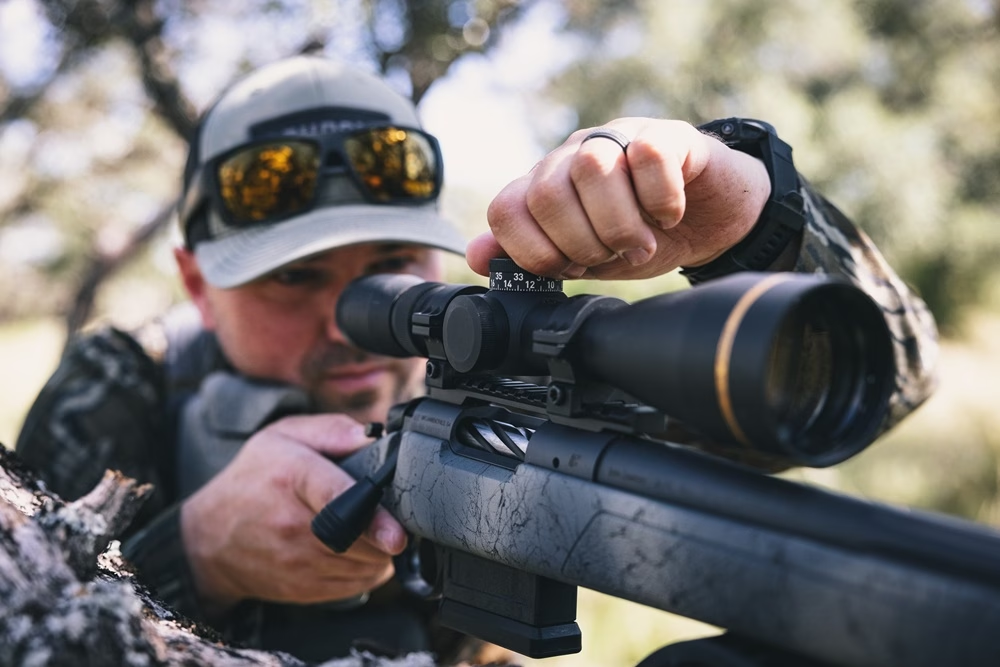
Ultimately, it depends. Like we noted earlier in this article, shopping for an optic isn’t always a cut-and-dry process. There’s no universal ‘best’ rifle scope for every hunting rifle and landscape. So, at the end of the day, it’s up to you to decide which one best fits your own individual needs and preferences. Fortunately, Leupold has several great options to choose from. No matter which optic you look at, the glass in everything from their budget-friendly optics to their upper echelon models are all tested to the same impact standards. Still, despite them all boasting incredible quality, not every Leupold optic is the same.
We already have a guide on Leupold’s Optic Lineup, and it provides a solid overview of what each one offers. We definitely recommend giving it a read when you can, but in the meantime, we can get you up to speed on their characteristics.
- The VX-Freedom line is Leupold’s most budget-friendly scope series that’s great for hunters of all experience levels. Each VX-Freedom scope is water, shock, and fog proof, and they’re built around a durable aluminum optic body that’s ready for field use. Using a 3:1 zoom ratio, you can choose from several versatile magnification ranges. For close- to medium-range hunting, their 1.5-4x and 3-9x scopes are great, especially for brush guns. And if you want some extra power, there are 4-12x and 6-18x VX-Freedom scopes too.
- Leupold’s VX-3HD and VX-4HD scopes offer more premium features and enhanced glass clarity for a higher price. Their improved lens coatings offer much better lowlight performance, and they also feature the ZeroLock® turret system. As far as magnification goes, VX-3HD scopes have a 3:1 zoom ratio while VX-4HD scopes have a 4:1 ratio. The 1.5-5x, 2.5-8x, and 3.5-10x scopes in the VX-3HD line are great for close-range, while the 4.5-14x has extra ranged capabilities. Lastly, the VX-4HD is available with either a 3-12x or 4-16x zoom, making them a solid pick for medium to long-range hunting.
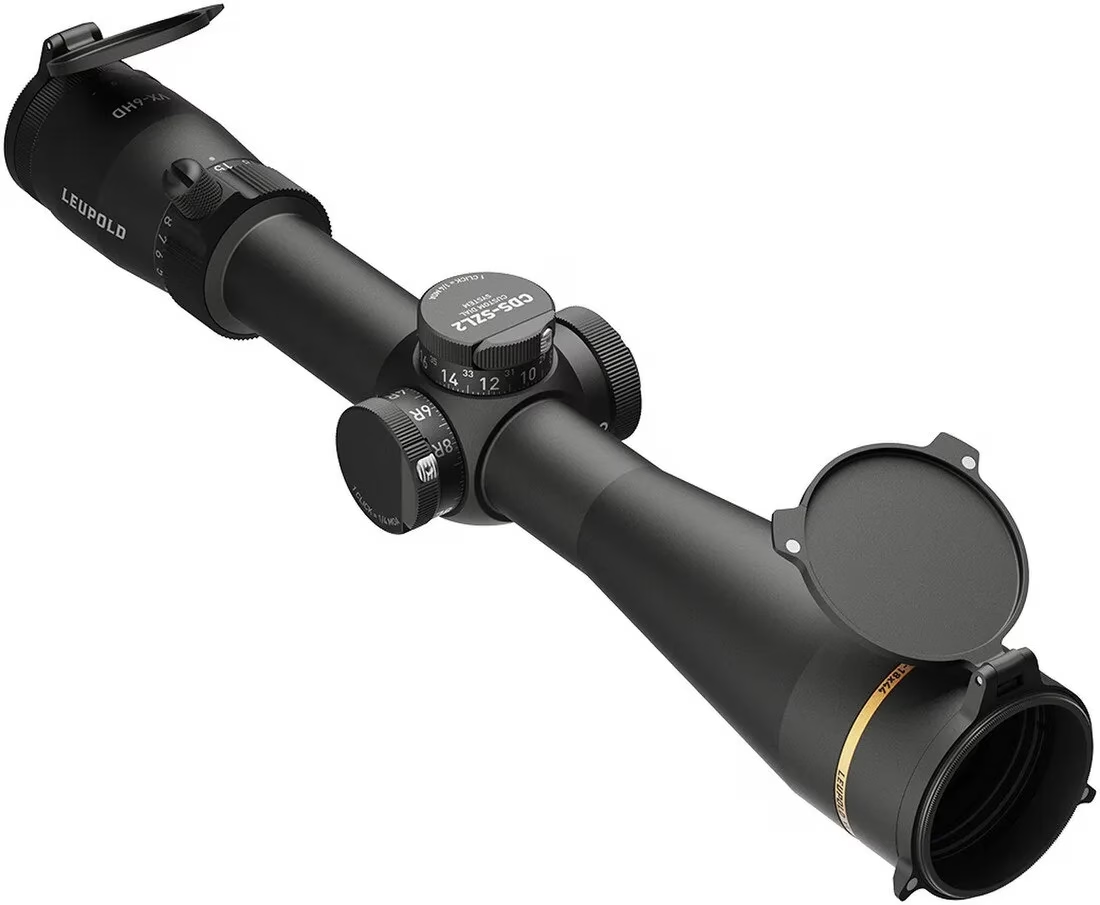
- VX-5HD and VX-6HD GEN 2 scopes are Leupold’s top-of-the-line models outfitted with their CDS-ZL2 dial and Guard-Ion lens coating. Plus, the VX-6HD GEN 2 also has an internal level system that the VX-5HD doesn’t have. Magnification-wise, they have a 5:1 and 6:1 magnification ratio, respectively. On the low end, VX-5HD scopes are available with either a 1-5x or 2-10x magnification range. On the higher end, they can have a 3-15x, 4-20x, or a 7-35x magnification range. VX-6HD GEN 2 scopes have the widest magnification ranges, with them housing either a 1-6x, 2-12x, 3-18x, or a 4-24x magnification range.
Mounting your Scope to your Rifle
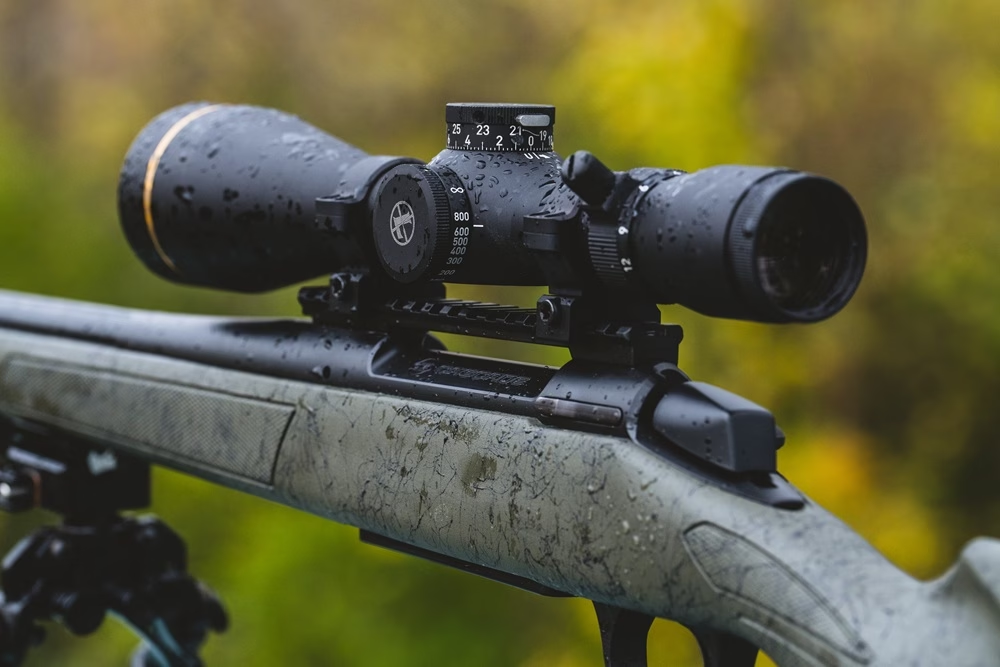
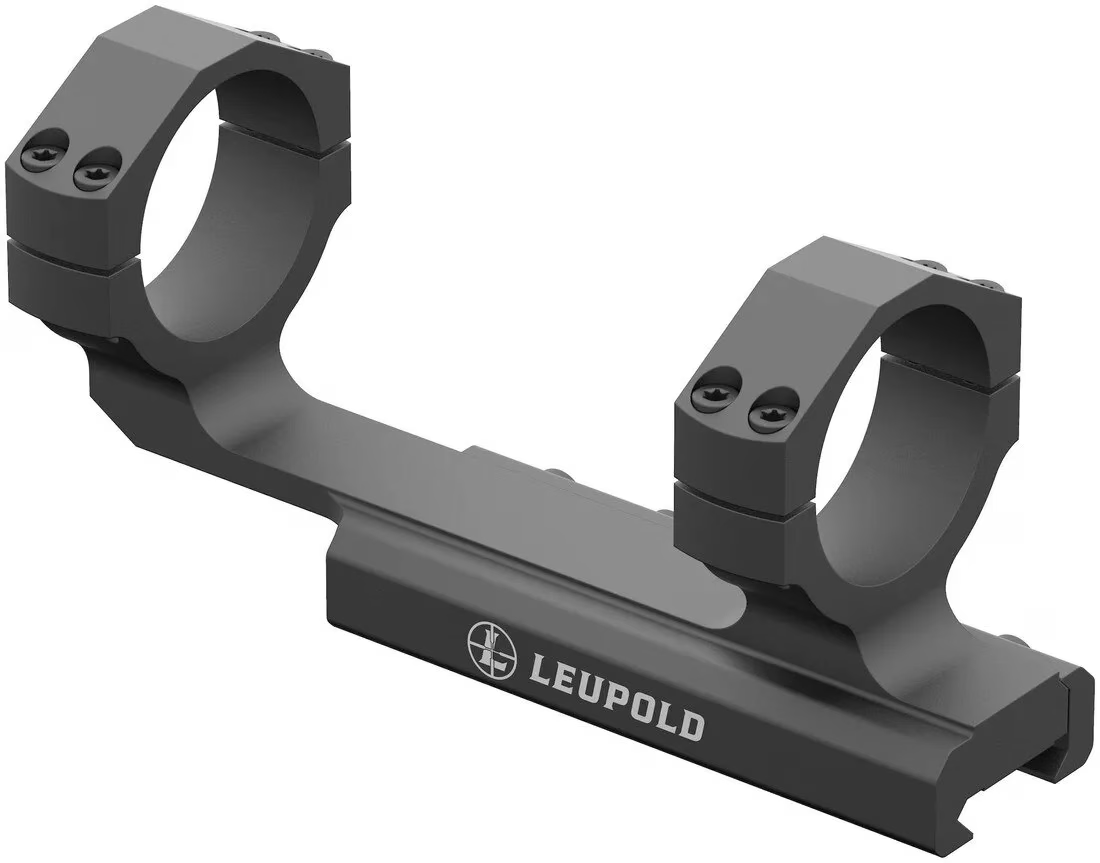
Regardless of which scope you opt for, you’ll need to mount it to your rifle. But it’s important to note that different rifle platforms often require different scope mounts.
Scope mounts aren’t universal. While rifles like the AR-15 and AR-10 often have upper picatinny rails specifically for optics, not all bolt- and lever-actions do. As such, you’ll need to make sure you have the right mount for your rifle.
For AR platform rifles, a single body scope mount is one of the best options. They’re available in multiple sizes to accommodate different optics. And depending on the model you choose, they can even come with added features like QD mounts and 0- or 20-MOA cant for long-range shots. Bolt-action rifles often have their own dedicated rings made specifically to mount onto the receiver. You can also mount a picatinny rail section in lieu of scope rings, letting you run any picatinny scope mounts or rings you want.
Mounting an optic to a lever gun can be a bit tricky. Most modern lever actions either have integrated upper picatinny rails or threaded mounts to accept scope rings or rails. That said, not every lever-action is optic-ready out of the box. If your rifle doesn’t have either of these, you’ll need to send it to a gunsmith to have it tapped and threaded to accept scope mounts or rings.
Conclusion
Choosing a rifle scope for your deer rifle is a task that’s sound more complicated than it is. While it can be daunting when you’re faced with a near-endless number of options to choose from, Leupold offers something for everyone. And by taking your intended hunting landscape and your rifle’s capabilities into consideration, you can find the right one for you with ease.
At the end of the day, pairing a scope with your rifle is all about finding one that matches your intended hunting environment, rifle caliber, as well as the type of rifle you have. Once you take them into consideration, finding the right scope becomes more than possible.
Frequently Asked Questions (FAQ)
-
What Leupold scope magnification do I need for deer hunting?
It depends on where you’re hunting, and what caliber you use. The terrain and surroundings of your hunting area have a direct impact on how far out your targets will likely be, and your rifle caliber’s effective range will too.
-
Is the Leupold VX-Freedom good enough for deer hunting?
Absolutely. The VX-Freedom scope line is a solid entry-level option for both new and seasoned hunters. They’re affordable, and they have all the features needed for whitetail deer hunting.
-
What is the difference between Leupold VX-3HD and VX-5HD for hunting?
Leupold’s VX-3HD scopes are a mid-tier option equipped with a 3:1 magnification ratio and many other features like the ZeroLock turret system and enhanced lens coatings. The VX-5HD series is one of Leupold’s top-tier scope lines. They have a 5:1 magnification ratio and have more premium features like the CDS-ZL2 elevation dial, and their Guard-Ion lens coating.
-
What does Leupold CDS mean, and do I need it for deer hunting?
CDS is an acronym that stands for “Custom Dial System”. It allows you to swap out your elevation dial with a custom one that’s tailored for your specific rifle, ammunition, and environment, allowing you to more easily adjust your scope for shots at further distances. It’s incredibly useful for shots past 200 yards and is great for hunting. That said, it isn’t strictly necessary for hunting, but it’s certainly nice to have. Regardless, every Leupold rifle scope comes with a free Custom Dial Turret that you can get directly from Leupold after purchasing.
-
Can I use a Leupold VX-6HD GEN 2 for whitetail deer, or is it overkill?
Of course you can, and it isn’t necessarily overkill either. The VX-6HD is a fantastic optic for whitetail deer hunting. It has several premium features and reticle options, making it one of the foremost hunting scopes on the market. As to whether it’s overkill or not depends on a few things. Ultimately, it’s a matter of determining how well the scope meets your needs. Where are you hunting? What is your budget? Are the added features present in the scope worth it to you? Knowing all this beforehand will more easily help you decide whether the VX-6HD GEN 2 is a good fit for you.