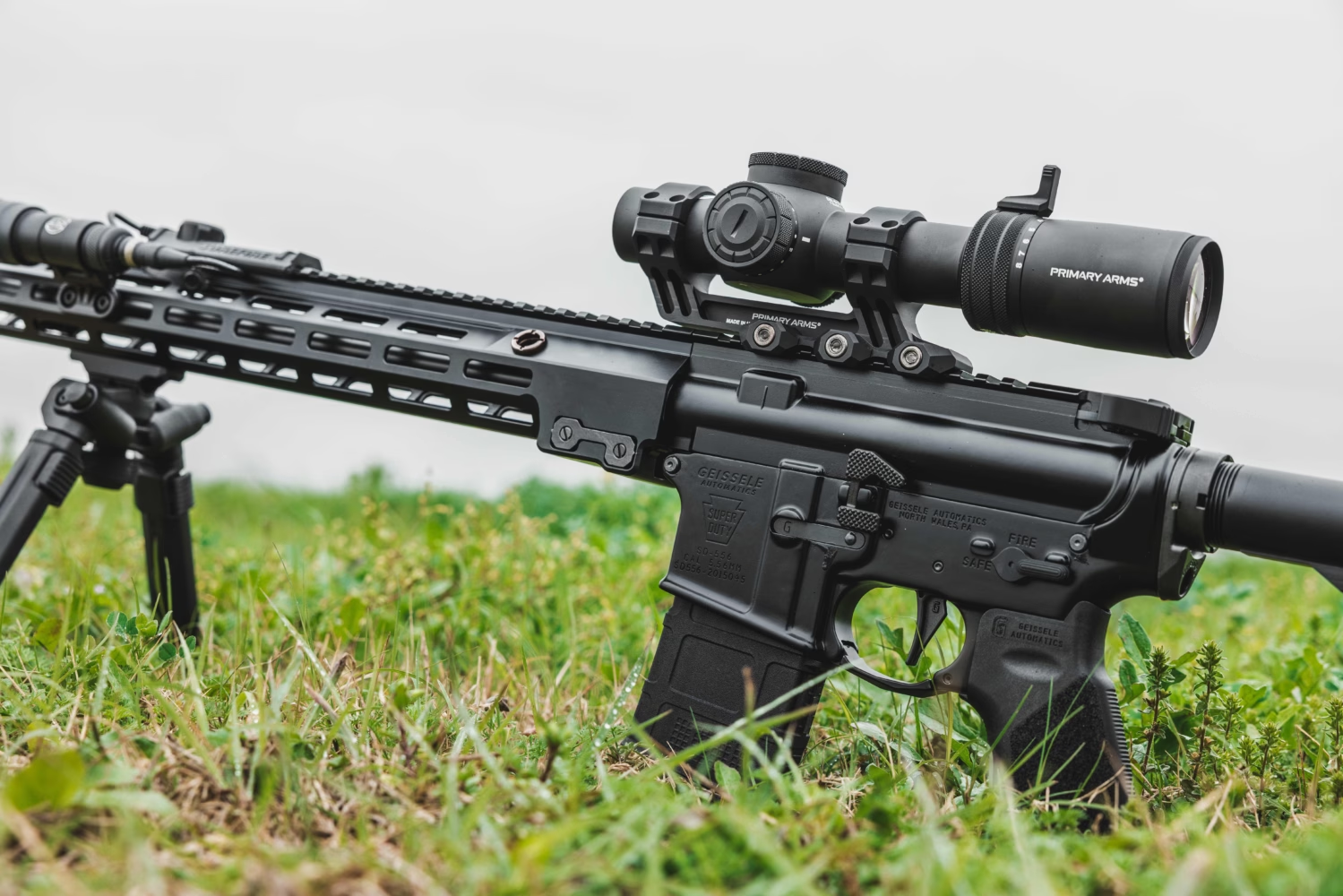
For owners and builders of AR-15s, Geissele Automatics is a name that consistently appears at the top of parts lists. Founded with a focus on precision engineering and battlefield-proven reliability, Geissele has earned an enviable reputation for producing triggers and components that perform under the most demanding conditions. Their product portfolio ranges from purpose-built duty triggers to match-grade units for precision-focused builds.
Company Background: Who Is Geissele?
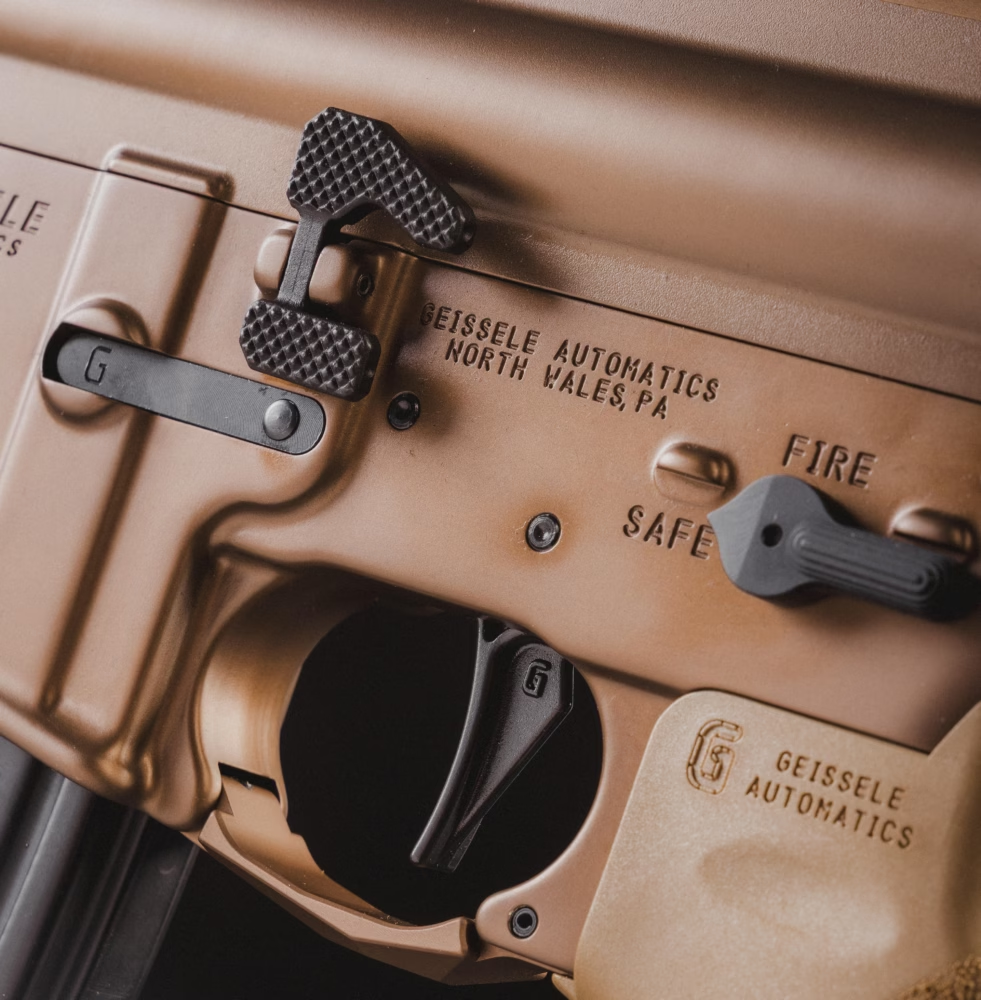
Geissele Automatics began in North Wales, Pennsylvania, and remains rooted in U.S. manufacturing and engineering. The company’s founder, Bill Geissele, is an engineer by training and a methodical craftsman by inclination; that combination shaped an early emphasis on reliability, tolerance control, and repeatable performance.
From the first match-grade AR-15 triggers to more complex fire control group improvements and rail systems, Geissele’s growth has been driven by continuous refinement rather than marketing excess. The firm’s work with military and law enforcement communities helped validate many designs in real-world, high-demand use, and that practical feedback loop continues to inform the evolution of their products.
Today, Geissele’s catalog includes everything from high-performing buffer kits and precision triggers to complete upper assemblies and proprietary mounting solutions, all produced with a level of quality control that distinguishes the brand within the parts market.
Understanding Trigger Types
A clear understanding of trigger mechanics is essential before selecting a model. Triggers are the human interface for firing a weapon system, and their mechanical behavior affects accuracy, cadence, and user confidence.
Single-stage triggers present a direct, uninterrupted pull that proceeds from initial application of pressure to the break. This single-phase feel is familiar to many and is favored for defensive or dynamic applications where immediate, repeatable response is prized.
A two-stage trigger introduces a lighter first stage followed by a defined wall and then the final break. That two-step arrangement permits a user to “take up” to the wall, stabilize the platform, and then execute a precise break. Two-stage designs are broadly favored in precision-oriented contexts because the pre-travel and wall provide tactile information that helps the operator time and control the release.
Beyond single- and two-stage classifications, geometry of the trigger bow (curved versus flat), the quality of the sear engagement, and reset characteristics all influence practical performance. Geissele’s engineering addresses each of those areas with attention to metallurgy, surface finish, and geometry to produce consistent, reliable actuation round after round.
Popular Geissele Trigger Models
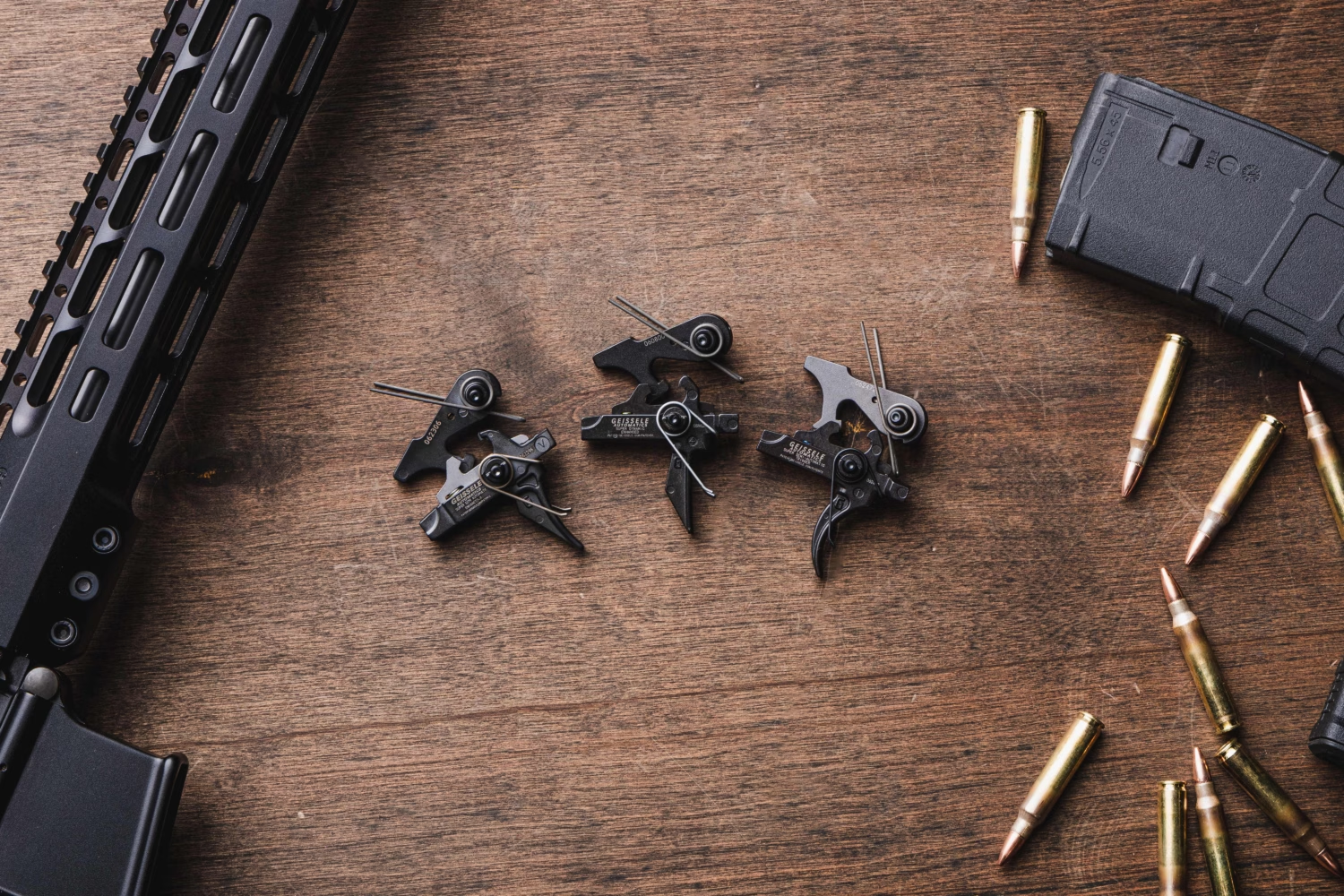
The Geissele product line is intentionally broad to serve a variety of platforms and user preferences. Several models have achieved particular prominence due to their balance of durability, feel, and application-specific tuning. The following triggers are among the most popular offered by Geissele.
Geissele SSA-E (Super Semi-Automatic Enhanced)
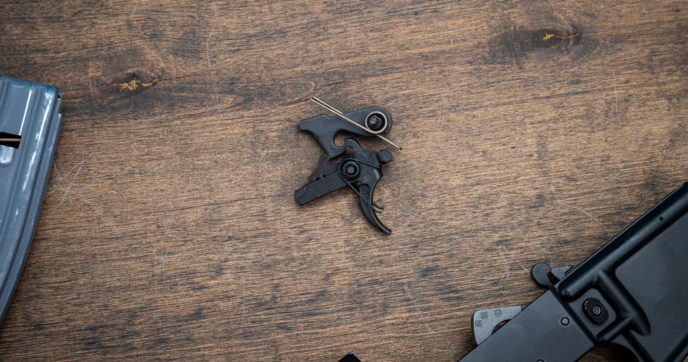
The SSA-E two-stage AR-15 trigger is Geissele’s answer for precision-oriented AR platforms. Mechanically, the unit separates initial take-up from the second-stage engagement, providing a tactile wall that many operators favor for precise marksmanship.
Typical factory specifications place the first-stage take-up in 2-2.5lb rand and the second-stage break at around a pound, give or take a few ounces; the combined pull of around 3-4 pounds is engineered to balance precision and safety. What distinguishes the SSA-E from other precision triggers in practical terms is its wide, flat sear interface and the meticulous surface finishes on contact areas, which reduce friction and provide a “glass-like” break.
The reset is positive without being abrupt, and the overall design is robust enough for duty applications, even though its primary identity is precision. The SSA-E is an especially good fit for designated marksman rifles, precision-oriented patrol rifles, and any build where follow-through and minimal disturbance of sight picture during the break are priorities.
Geissele SD-3G (Super Dynamic 3-Gun)
The SD-3G is Geissele’s purpose-built answer for dynamic competition use, where rapid follow-up engagement and an ultra-short reset are paramount. Engineered to marry the robustness expected of a combat-capable fire control with the reflexive characteristics demanded by three-gun competitors, the SD-3G offers a near-instant reset that allows the user to cycle shots with minimal finger travel. The design emphasizes a positive, tactile break with very little overtravel, enabling faster cadence without sacrificing predictability during the press.
Mechanically, the SD-3G retains Geissele’s commitment to durable materials and precise sear geometry, but its internals are optimized for speed. The sear engagement surfaces and spring rates are selected to produce a crisp, consistent break while keeping the reset short and unmistakable. The result is a trigger that feels immediate and direct under rapid actuation yet remains reliable under high round counts and in adverse conditions. For competitors who transition rapidly between targets and demand instantaneous recovery, the SD-3G provides a practical, repeatable interface that reduces the time between shots.
Ergonomically, the SD-3G features Geissele’s flat trigger shoe option, because that profiles encourage a straight, consistent finger pull that complements the trigger’s low reset travel and maximizes leverage. This pairing helps deliver rapid, controlled shots with minimal effort on the part of the user. Installation is straightforward on standard mil-spec lowers, and field maintenance aligns with Geissele’s general recommendations: periodic inspection, light cleaning when fouling is present, and the use of genuine replacement parts when wear items eventually require service.
In real-world usage, the SD-3G rewards those who train with it. Users will notice a practical advantage in speed and recovery, which is substantial for competitive formats where time is crucial. For anyone building a platform specifically for dynamic competitions such as 3-Gun, or for an operator who prioritizes fastest-possible follow-up while retaining the durability of a duty-grade component, the SD-3G is an excellent option.
Geissele Lightning Bow
Geissele’s Lightning Bow is a design focused on ergonomics rather than altering fire control mechanics. The Lightning Bow replaces the conventional curved or straight trigger bow with a thin, low-mass, ergonomically contoured hybrid bow intended to speed consistent finger placement and improve tactile feedback during rapid strings of fire. Its profile is narrower and often lower in height than standard bows, designed for operators who prefer a minimal interface that still provides a positive engagement surface.
The Lightning Bow’s semi-flat geometry reduces finger drag and can encourage a straighter pull, which some users claim enhances perceived smoothness and reduces lateral displacement of the index finger during the break. While the Lightning Bow does not alter internal sear geometry, the combination of a Lightning Bow with Geissele’s tuned sears and springs can noticeably change the shooter experience, particularly during rapid or repeated actuation. The Lightning Bow is available as an option on several Geissele models and is often chosen by competitors and operators who prioritize fast, consistent finger index and reset awareness.
Geissele AK-47 Trigger
The stock fire control groups for many AK variants are functional but often characterized by long, gritty pulls, significant overtravel, and inconsistent resets. Geissele’s AK trigger addresses those shortcomings with a drop-in unit that reconfigures leverage geometry and sear engagement for a markedly cleaner pull and a shortened reset. The redesigned internals reduce trigger slap and present a more repeatable wall, which in turn improves the ability to deliver quick, accurate follow-up attempts.
Importantly, Geissele preserved the AK’s legendary reliability in adverse conditions, using corrosion-resistant materials and conservative tolerances where needed. For operators who value the AK platform’s simplicity and ruggedness but desire improved control and finer trigger feel, the Geissele AK trigger is a transformative upgrade.
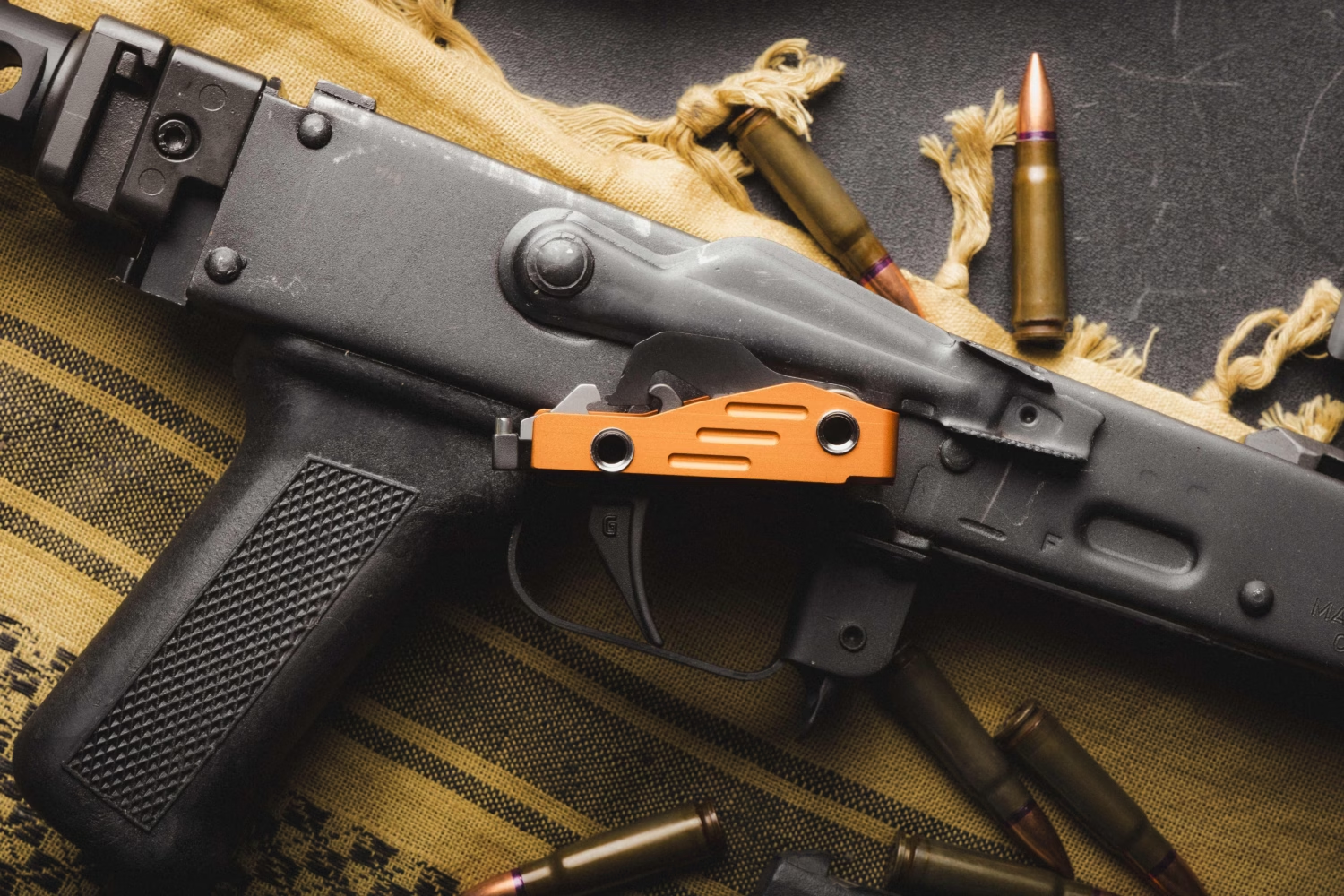
The Geissele AK-X trigger is a particularly innovative design, utilize a drop-in cassette for ultra-simple installation and offering a two-stage pull—a rarity in AK-pattern firearms.
Geissele SCAR Trigger
The FN SCAR platform’s factory trigger is serviceable, but many users notice a somewhat heavy or uneven pull compared with high-end aftermarket triggers. The Geissele Super SCAR reimagines the SCAR’s fire control group to provide a lighter, more predictable two-stage engagement.
Practical benefits include improved accuracy at medium and long ranges through better shot timing and reduced movement at the break. The Geissele unit maintains robust safety margins and a conservative yet refined reset, giving operators the confidence to employ the SCAR in both duty and precision roles. The Super SCAR’s metallurgy and surface treatments are selected with attention to wear resistance and continued crispness over many thousands of cycles.
Other AR-15 and AR-10 Trigger Options
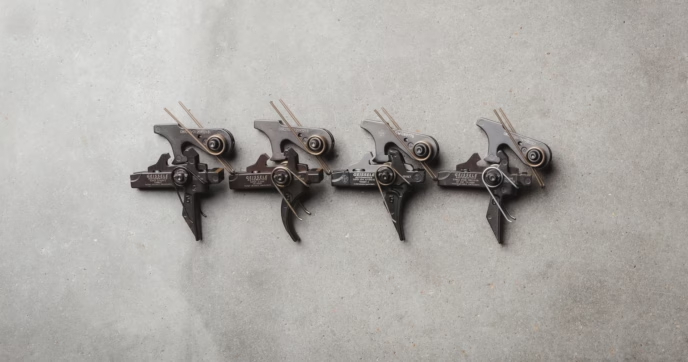
Geissele’s catalog includes additional offerings tailored to specific applications. The SSA is the more duty-oriented variant related to the SSA-E but with slightly different pull characteristics to suit higher stress use. Both are among the most popular AR-15 and AR-10 triggers on the market.
The Super 3-Gun model provides an exceptionally short reset and a single-stage feel optimized for dynamic competitive environments where cadence and immediate recovery are essential. Geissele’s
National Match and Hi-Speed lines cater to precision builders who want adjustable or ultra-refined interactions, with options to tune pull weight and reset length to exacting preferences.
One unique option in the Geissele catalogue is the large-pin trigger, a variation offered for several of their models in order to be compatible with select Colt lowers. While most Colt lower receivers use standard, mil-spec pin dimensions, rifles manufactured in the 90s and 2000s may have been made with slightly larger trigger pins.
Across the range, Geissele’s design philosophy remains constant: purposeful material selection, sear geometry that minimizes creep and overtravel, and finishes that reduce friction without compromising longevity.
Choosing the Right Geissele Trigger
Selecting the appropriate Geissele trigger begins with defining the platform and the intended use. For builds intended primarily for precise applications like benchrest or long-range precision use, the SSA-E and the Hi-Speed National Match options are particularly well suited. These models emphasize a glassy break, minimal movement at the point of fire, and a predictable tactile interface for follow-through.
For duty and defensive applications where repeated, reliable function under stress is the priority, the SSA and SD-E present balanced pull weights and robust engagement surfaces engineered to prevent inadvertent release in real-world environments. The Lightning Bow and flat-bow options like the SD-E are attractive when consistent finger placement and quick recovery are required, such as in dynamic matches or when training for fast, accurate engagement transitions.
For AK and SCAR platforms, Geissele’s purpose-built models represent the easiest route to a meaningful upgrade in control and consistency while preserving the platform’s original reliability characteristics.
Blemula: Geissele “Blem” Products
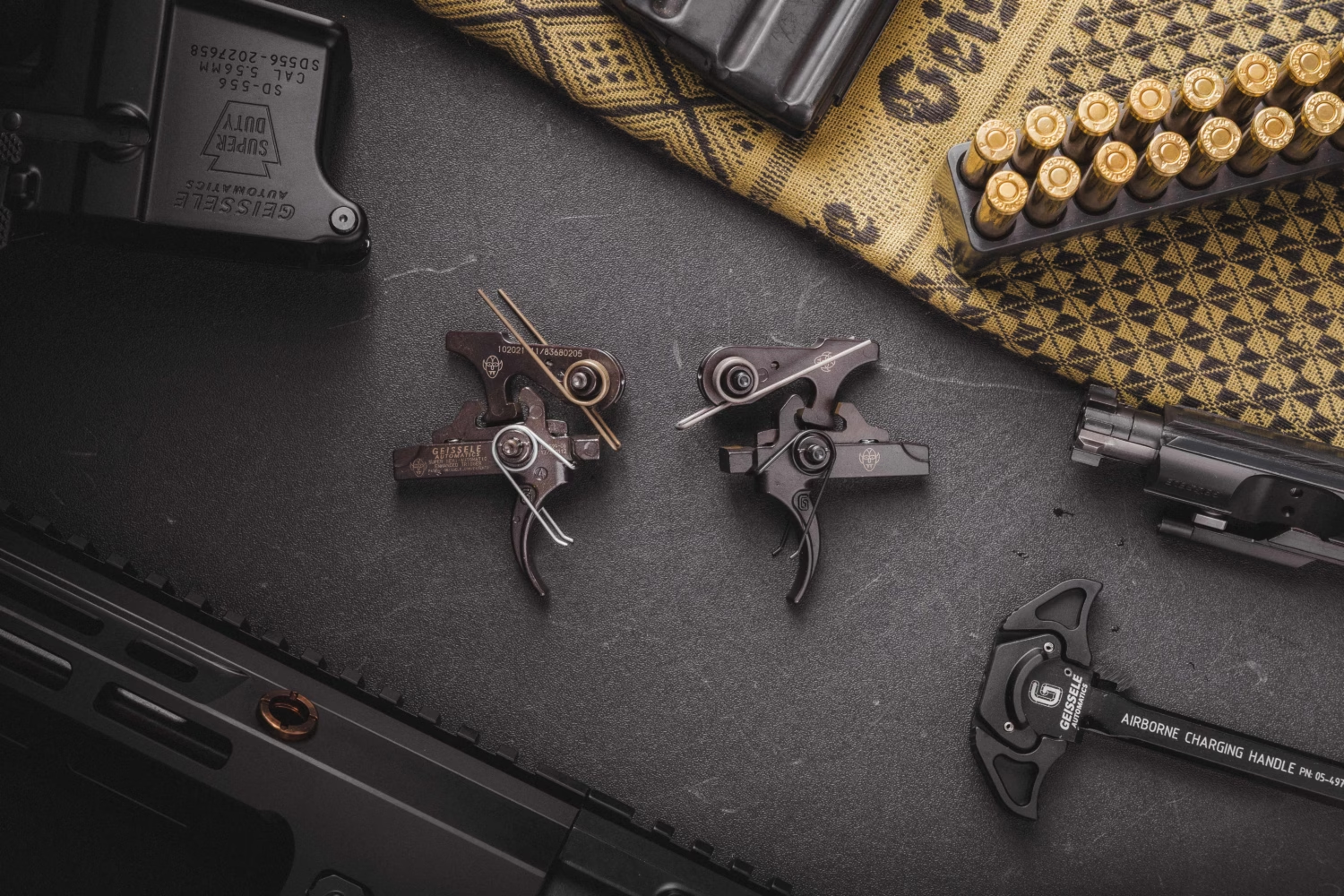
Geissele’s blemished inventory—branded as “Blemula” by Geissele and represented by a cartoon vampire mascot—is a channel through which the company offers parts that possess cosmetic imperfections but remain fully serviceable and mechanically sound.
Typical blemishes include minor anodizing imperfections, small cosmetic marks, or noncritical aesthetic deviations that do not affect function. Geissele subjects blem items to the same operational testing standards as non-blem units, meaning that safety and mechanical integrity are not compromised.
The principal advantage for buyers is cost savings: blemished parts are often discounted by a meaningful percentage relative to first-quality stock. The trade-off is purely visual. For many builders, especially those who intend to further finish or configure their build, a blem part is a pragmatic means of obtaining Geissele quality at a reduced price point. Responsible buyers should evaluate their tolerance for cosmetic variance before purchasing blem inventory for a display-grade project.
Geissele blemished products are typically released in drops, which come once or twice a year in the form of the Geissele Blemula sale.
Installation & Compatibility
Installing a Geissele trigger is straightforward for anyone comfortable with basic armorer procedures.
Begin by ensuring the platform is unloaded and safety procedures are followed. With the lower receiver accessible, the existing fire control group components are removed by driving out the trigger and hammer pins. The Geissele unit is then placed into the lower receiver, taking care to orient the hammer, trigger, and disconnector per the supplied documentation.
Geissele provides detailed installation instructions that describe the order of operations for inserting the parts, aligning spring legs, and installing any retaining pins or additional parts where required. Tools needed for a standard installation include a bench vise or appropriate block, a set of punches sized for the pins, and a light hammer. You’ll also need add a small amount of lubricant to pivot points to ensure initial smoothness, but Geissele products typically come with a small vial of their signature Go-Juice.
Compatibility is a practical concern for builders. Geissele builds its AR triggers to fit standard, mil-spec AR lower receivers. That said, tolerances can vary among nonstandard lowers, and users should confirm the lower conforms to standard dimensions when using precision triggers. While it’s rarely an issue for common models like the SSA-E, more eclectic variants like Geissele’s select-fire triggers may not function with certain lowers due to the dimensions of the rear shelf.
Geissele’s AK and SCAR triggers are purpose-designed to be drop-in within those platforms; however, due to variations in aftermarket receivers and certain domestic or imported variants, final fitment should be verified before permanent installation. This is particularly true of AK models, which are not subject to the same standardized dimensions of platforms like the SCAR or AR-15.
Interchangeability of parts between models is limited by design: while internal components may share design philosophies, sears, springs, and pins are generally model-specific and should not be mixed across different Geissele families unless explicitly stated by the manufacturer. For any uncertainty, Geissele’s technical support is responsive and can advise on specific configuration questions.
Maintenance, Longevity, and Field Care
Geissele triggers are produced from high-quality steels and treated surfaces, which translates into long service life and resistance to wear. Routine care is minimal: periodic inspection of pivot points, light cleaning to remove fouling, and confirmation that retaining pins are secure are typically sufficient.
Because triggers are critical safety components, any sign of deformation, excessive wear, or unusual engagement characteristics should prompt removal and inspection. Geissele offers replacement parts for wear items; using genuine Geissele components preserves engineering intent and avoids introducing variables that could impact safety.
In field conditions where dust, grit, or moisture are present, conservative maintenance—wiping exposed surfaces and reapplying a thin film of suitable lubricant—will help preserve consistent operation. It is also good practice to confirm function after maintenance and to perform a few dry actuation cycles to verify crispness and reset before live use.
Frequently Asked Practical Questions
A common question is whether a Geissele trigger will make a large difference on a basic, entry-level rifle. The answer depends on expectations. For most users, a lighter or smoother trigger will yield an immediate improvement to accuracy, and often to rate of fire as well. The lighter weight and shorter travel might not directly impact the mechanical accuracy or cyclical rate of the firearm, but by allowing the user to fire more quickly and with less movement, the practical impact is generally an improvement in both.
However, it’s worth noting that a better trigger doesn’t truly improve the mechanical accuracy of your firearm. Truly expert marksman can often wring MOA or better groups out of a quality rifle even with a standard mil-spec fire control unit, and in such a case, a match trigger might make the process easier, but it won’t make the rifle any more accurate.
Another frequent question concerns break-in. Geissele triggers tend to feel excellent out of the box thanks to quality control and surface finishes, but a modest number of cycles under controlled conditions helps parts seat and provides the user with a consistent baseline.
Finally, many ask if trigger choice should be deferred until other upgrades are made. A trigger is a foundational interface component; installing a high-quality trigger early in a build can guide decisions about stocks, handguards, and optics because it clarifies the platform’s handling characteristics.
Conclusion
Geissele Automatics has built a reputation on engineering rigor and real-world performance. Whether the objective is absolute precision, rugged duty reliability, or ergonomic optimization, Geissele offers models that are engineered to match those intents.
The SSA-E, SD-E, and variants equipped with the Lightning Bow present a range of tactile and ergonomic options for AR users, while the company’s AK and SCAR triggers provide targeted improvements where factory units leave room for refinement. Blemished inventory from Geissele provides a cost-sensitive path to ownership without compromising function, and installation is straightforward for those comfortable with basic armorer procedures.
Geissele remains a sensible choice for anyone building a platform that demands predictable, repeatable actuation and long-term durability. Evaluate your platform, define the role you intend for the rifle, and let that purpose dictate the trigger selection; for most operators and competitors, a Geissele trigger will remain a defining upgrade that improves both confidence and performance.
For more information on Geissele’s other products, including handguards, rifles, and more, check out our Geissele Brand Review.