Shotguns are known widely for their versatility, with the shotguns of decades past still holding up in the modern firearm landscape. Still, while classic designs like the pump-action shotgun have more or less retained their original design, they can still be improved upon.
In the context of home defense, there is a lot you can do to overhaul your shotgun performance. With a few key parts and accessories, you can maximize its performance and overall capabilities.
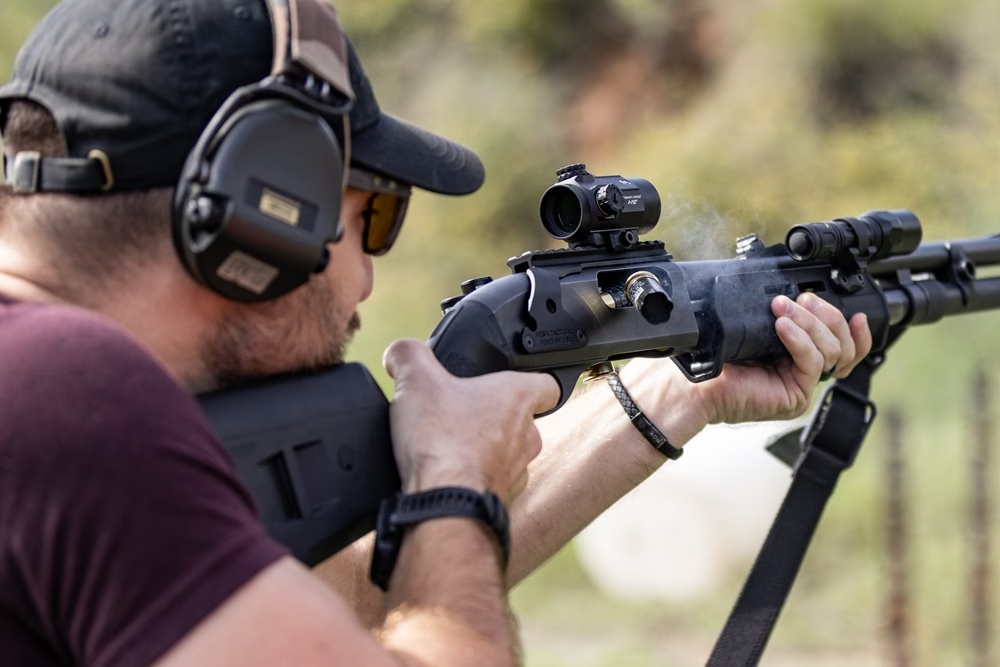
Understanding the Platform: The Pump-Action Shotgun
Reliable, affordable, and practical, pump-action shotguns are excellent for enthusiasts of all experience levels. The term “pump-action” refers to the shotgun’s cyclic action. After firing, you need to pump the action, pulling the forend back to eject the spent shell, and pushing it forward to load a new one into the chamber. This manual action makes them remarkably reliable, and makes them more affordable then
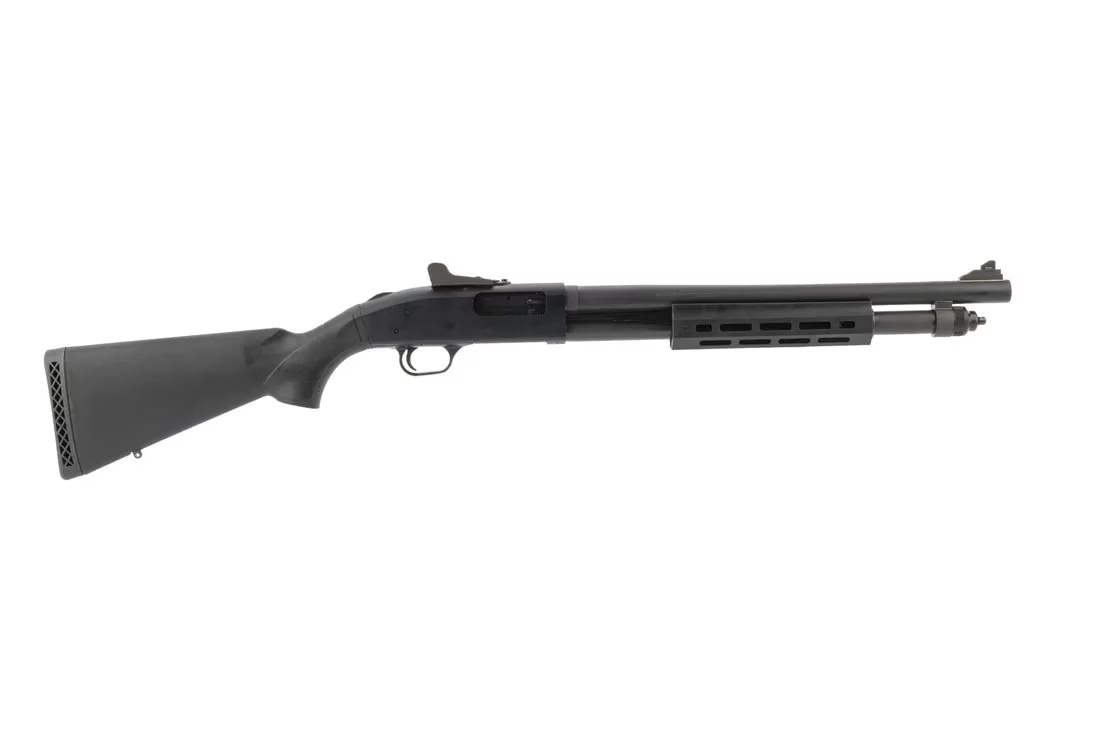
For this discussion in particular, we’re going to focus on upgrades for the Mossberg 590, one of the most popular models on the market. But most of the accessories and components we’ll cover are available for other shotgun models too. Regardless, be sure to make sure that whatever components you intend to use are compatible with your shotgun make and model.
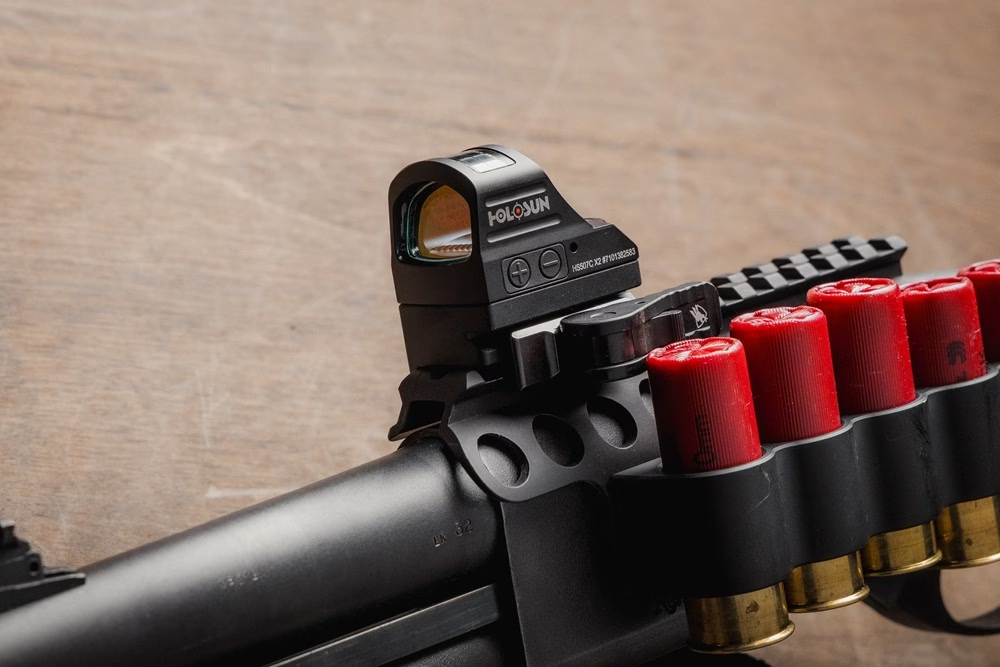
#1. Optics: Red Dot Sights
For most of their tenure, shotguns have primarily used bead sights for aiming. On their own, they’re perfectly functional, but they aren’t easy to see in low light. This is where the Red Dot Sight comes into play. Red dots are type of electronic optic that projects a reticle onto a glass lens. And these optics have several advantages over traditional iron sights.
If your red dot is zeroed properly, aiming is incredibly intuitive. They allow you to more easily aim with both eyes open, letting you put your full focus on the target. And since there’s no physical sights to line up, aiming is as simple as putting the dot on target. Plus, in low light, the illuminated reticle is really easy to see, speeding up target acquisition time.
Choosing your First Red Dot Sight
You’ll often see the term ‘MOA’ attached to most red dots. This is an acronym that stands for “minute of angle”. MOA can mean a lot of things when it comes to optics, but for reflex sights it’s most often used to describe reticle size. And picking the right reticle is important. On the smaller end of the spectrum, one of the most common reticle sizes is the 2-MOA dot. It offers a finer point of aim and is the standard for long guns. Larger dots, like 4- and 6-MOA ones, are larger. Although less precise, they offer quicker target acquisition speeds since they’re more eye-catching thanks to their larger size.
But since shotguns fire multiple projectiles at once—unless you’re shooting slugs—your reticle isn’t going to approximate the exact point of impact. Instead, it’ll represent roughly the center of your pattern. As such, choosing one over another is ultimately a matter of personal preference. If you don’t want a dot reticle, circle dot reticles are great too. They’re made up of a dot surrounded by an outer circle, which is great for fast target acquisition. Other specialized reticles, like the ACSS® CQB from Primary Arms Optics, have an outer horseshoe that approximates shot spread at 25 yards.
Choosing an optic can always pose a bit of a challenge, especially if you’re a newer enthusiast. There are dozens of high-quality options to pick from. But it can be quite easy if you know what to look for. Below is a table with some great options to consider:
| Optic | Price | Overview & Features |
|---|---|---|
| SIG Sauer Romeo 5 | Around $150 | Incredibly budget friendly microdot Projects a 2-MOA Red Dot Reticle Average battery life of 40,000 hours Equipped with SIG’s MOTAC Motion-Activation |
| PAO GLx® MD-21s Microdot | Around $220 to $260 | Microdot in PAO’s GLx Optic Tier Available with a 2-MOA dot or ACSS CQB reticle Incredibly long battery life Equipped with PAO’s AutoLive® Motion-Sensing Illumination Has an automatic shut-off feature Has a built-in solar failsafe unit |
| Holosun HS507C X2 or HS407C X2 | Around $185 to $235 | Durable open-emitter mini-reflex sights Available with a 2-MOA dot or circle-dot reticle Lightweight, minimalist construction Offers a wide field of view |
| Aimpoint ACRO P-2 | Around $620 to $670 | One of the most premium pistol red dot sights available Available with a 3.5-MOA dot reticle Immensely durable construction Has a very long battery life |
With the right mount, each optic listed above can be a great pick. A lot of modern shotguns have an upper picatinny rail for optics. If not, they likely have threaded points designed to accept various mounts. If your shotgun’s receiver is drilled and tapped for an optic mount, all you need to do is buy the right mount, attach it to the receiver, and attach your optic. There are even specific mounts for mini reflex sights like the HS507c, HS407c, or the ACRO. These give you a lower mount height and remove the need for a picatinny adapter. And if you plan to run a standard microdot, a picatinny rail is the best move.
#2. Weapon Lights: Identifying Your Target
While optics are good for acquiring targets quick, you can’t engage what you can’t see. So, in addition to an optic, a weapon light is one of the best accessories you can have. One of the core fundamental rules of gun safety is to know your target and what’s beyond it. And in low-light environments, like at night or a dimly lit room, proper target identification is a must.
Theoretically, you could use a handheld light to illuminate your targets. But this isn’t all that practical. For starters, pump actions require both hands to be used properly. A dedicated weapon light mounted to your shotgun will illuminate your target and let you keep full control of the gun. Much like optics, there are a lot of weapon lights to choose from, but they don’t all pair well with shotguns. When shopping for one, there are two key terms to understand: Lumens and Candela.
Lumens measure the total light output from a given source, in this case, the emitter diode. The higher the lumens, the brighter the light source. Candela measures the overall intensity of the light beam in a specific direction, referring to how wide or narrow the beam projection is. Low candela lights have a wider projection (more flood), and high candela ones have a narrower beam that projects farther (more throw).
In a home-defense context, your likely engagement distance is going to be around 10 yards and back. In this instance, you don’t need a light with a lot of throw. Lights with 500 to 1,000+ lumens are more than bright enough for indoor use. And if you opt for one with lower candela, around 25,000 candela or less, you can easily light up your target and surroundings.
Weapon Light Recommendations
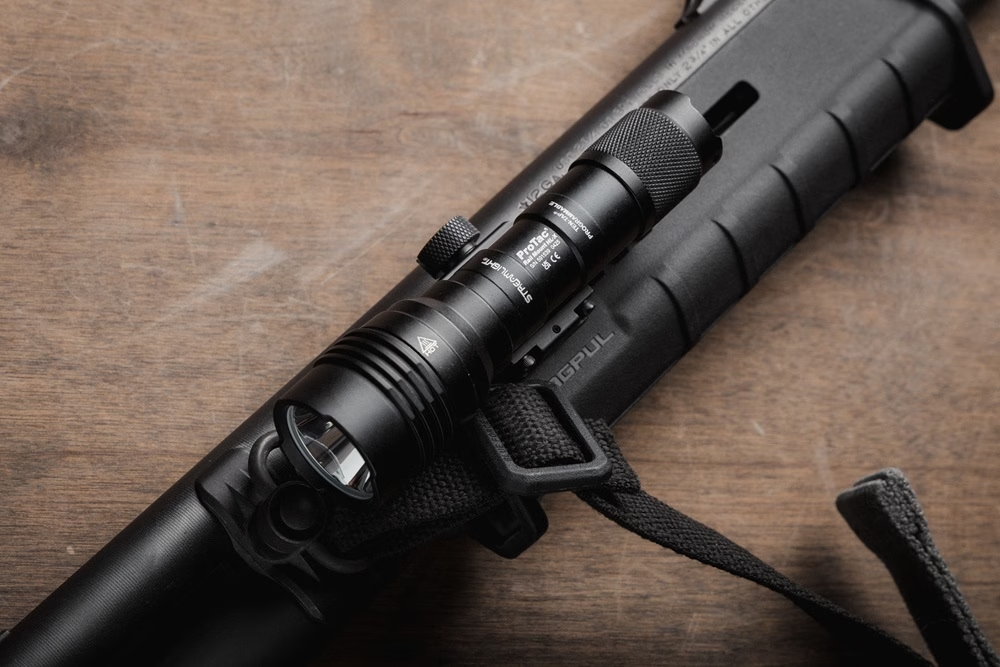
One of the best options for beginners is the Streamlight ProTac Rail Mount HL-X. These lights are a great value. They come with an integrated picatinny rail mount, and they’re incredibly bright too. On its high setting, it boasts a 1,000-lumen output with a peak beam intensity of 50,000 candela. It also has a low setting with a 60-lumen output with a peak intensity of 3,100 candela. Plus, it has a strobe function as well that can disorient an intruder. Despite having so many top-tier features, this light is commonly priced around $150, and this includes all the other accessories it comes with.
All you need in addition to the light is a mount for it. The Mossberg 590 linked above uses a Magpul forend with M-LOK slots. With it, mounting the light is simple since you’d just need an M-LOK picatinny rail section. But this isn’t the case for every shotgun model. Fortunately, there are other light mounts to consider. GG&G, for example, offers various mounts that secure to the end of the magazine tube. Other mounts can clamp onto the magazine tube, letting you mount the light closer without interfering with the pump action. Either way, you have a litany of options to consider.
#3. Slings
A lot of new enthusiasts overlook slings. They often have the impression that they’re only good for carrying your gun on long hunting trips or in professional/duty applications. However, they have their place on defensive setups as well.
A sling’s primary purpose is to keep your shotgun attached to your body. In a home defense context, it is especially important. If you were to get into an altercation while defending your home, the assailant wouldn’t be able to pull your shotgun from you.
Additionally, slings are good for stowing your shotgun as well. If you ever needed to open a door, use a phone to call 911, or stow it on your body to guide your family members to safety, you could do so. Without a sling, you would have to put your shotgun down, which is very unsafe in a defensive scenario.
Types of Slings
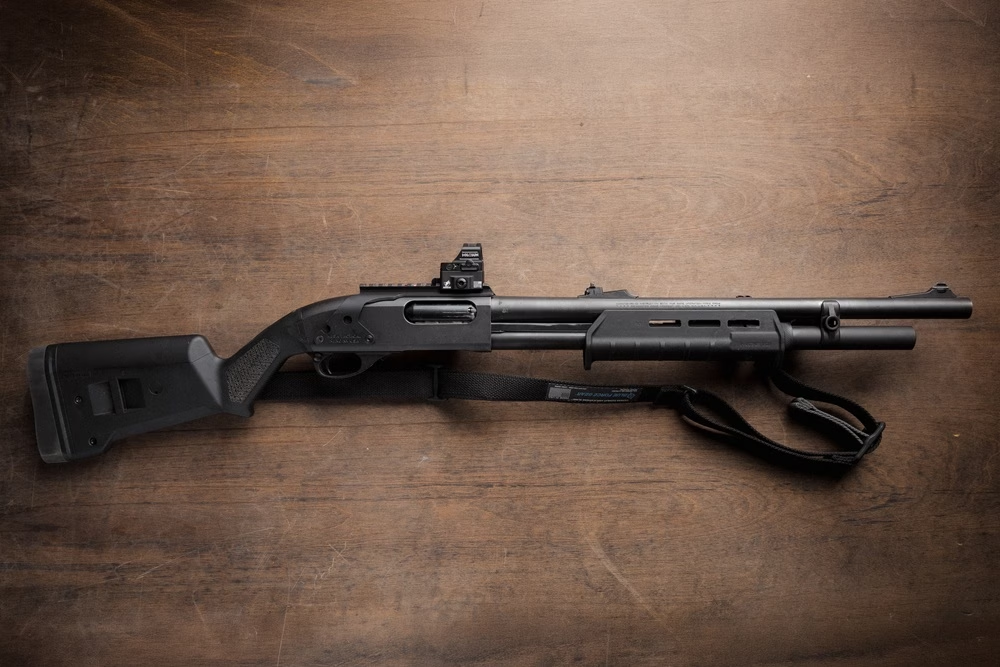
In general, there are three types of slings available, two-point, single-point, and three-point slings. Of the three, two-point slings are the move. Two-point slings attach to both the front and back of the gun. They allow your shotgun to be secured across the front of your body, and when sinched down, they keep it snug in place until it needs to be used.
Single-point slings aren’t bad by any means, but for larger firearms like rifles and shotguns, they aren’t the best choice. As their name suggests, they only attach to one point of the shotgun—most often the rear. Without the secondary attachment point, the shotgun is going to just dangle from your neck. They do give you a bit more flexibility when transitioning shoulders, but overall, they’re best suited for compact setups.
Last are three-point slings, which use a continuous loop system. Essentially, it connects to the front and rear of the shotgun like a two-point sling but has an added third section that loops around your body. While usable, their added complexity makes them less-than-ideal in a home-defense setup. And given the size of most pump-action shotguns, a two-point sling makes the most sense.
#4. Ammo Management: Side Saddles
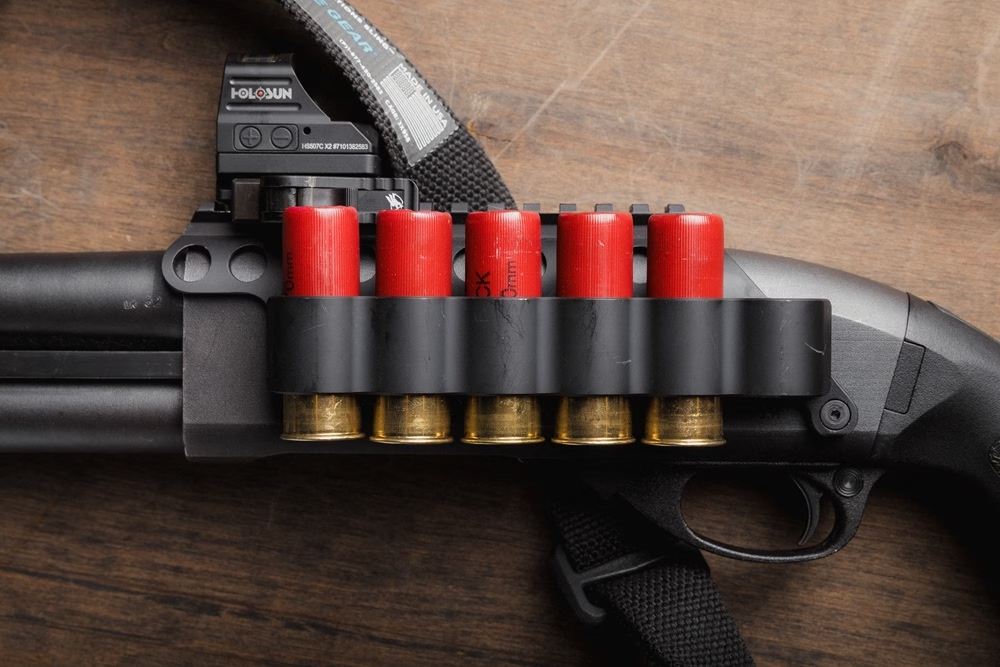
We’d be remiss if we didn’t bring up one of the greatest disadvantages of shotguns: their ammo capacity. Pump actions most often have a standard capacity of 5 to 8 shells, depending on the model. Although it’s unlikely that you’ll need all your shot shells when defending your home, it’s best to have them on hand, just in case.
Hard Side Saddles vs. Soft Velcro Cards
Extra shot shells can easily be stored on the shotgun itself. You can either opt for a dedicated side saddle, which is usually made of polymer or metal. Or you can go with a Velcro card, which is typically made of nylon.
| Ammo Carrier | Description | Pros | Cons |
|---|---|---|---|
| Standard Side Saddles | A metal or polymer accessory that mounts onto the side of the receiver to hold extra shotshells | Very secure and durable; there are several options available from reputable brands | They can be a bit bulky depending on the model you look at; if you opt for a polymer model, they can bend/weaken over time |
| Velcro Shotgun Cards | A strip of heavy-duty webbing with Velcro on the back; they mount to the receiver using Velcro adhered to its side | Very affordable; when the card is empty, you can easily remove it and put on a fresh one, or just reload it conventionally | The adhesive needed to keep the Velcro on the receiver only lasts for so long, and it requires extra surface prep for the best results. |
Both options are incredible. They give you ready access to extra shells if they’re ever needed, and they’re both secure. As such, choosing one over the other ultimately comes down to a matter of personal preference.
If you want to maximize rigidity, a metal side saddle is the move. They mount to the receiver incredibly securely, and depending on the model you look at, they can even come with an integrated upper picatinny for mounting optics. However, they aren’t available for every shotgun. For popular models like the Mossberg 500 and 590, as well as the Remington 870, you have plenty to choose from, but for other models, parts availability isn’t always on par. Regardless, brands like GG&G, Mesa Tactical, and Wilson Combat all offer solid side saddles.
If you’re in such a situation, you aren’t out of luck. Velcro cards are compatible with just about every single shotgun on the market since they’re a universal fit. Once you have your Velcro piece adhered to the receiver, you can slap on the card with ease, giving you the same overall capabilities as a side saddle. Plus, they’re much lighter too. However, compared to side saddles, Velcro cards have their considerations as well. For starters, over time, the adhesive needed that holds the Velcro can wear out over time. But, if you properly prep the surface area before application, it can still last for a long time. Brands like ESSTAC are a solid choice to consider.
#5. The Stock and Forend
Stocks
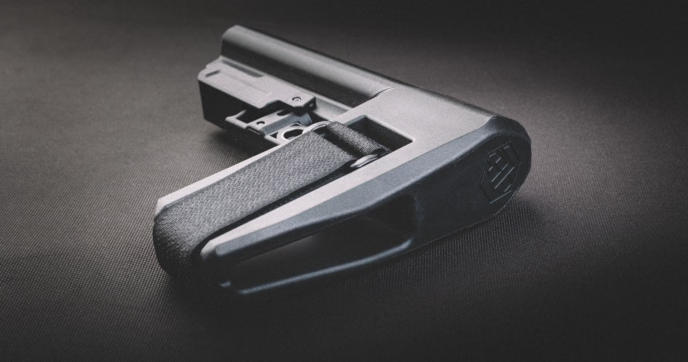
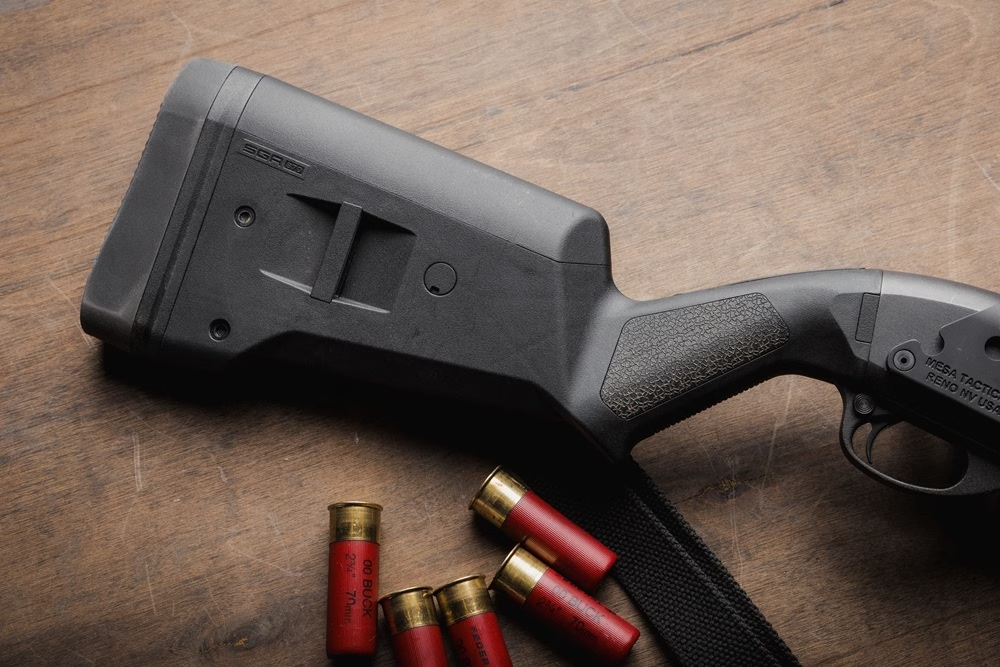
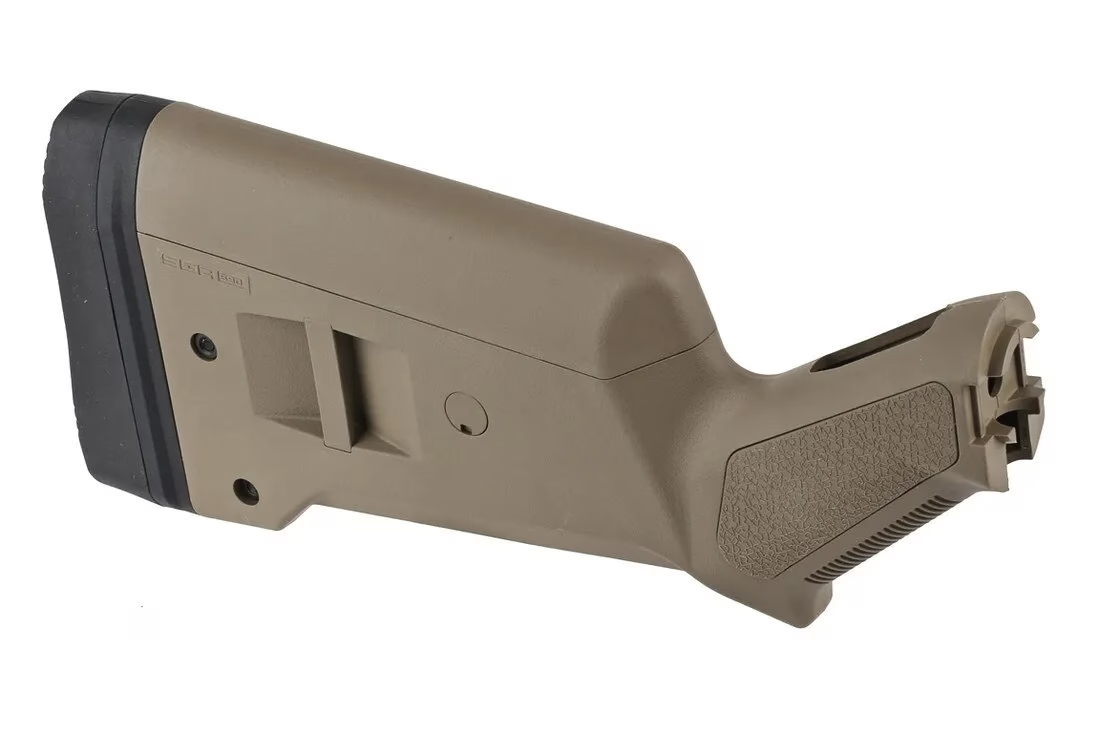
The stock is one of the most important points of contact you’ll have on your shotgun, providing stability when aiming and recoil transmission. Most factory shotgun stocks are good on their own, but proper fitment isn’t necessarily guaranteed. Most shotguns use fixed stocks, so there’s no adjustable length of pull.
Your stock’s length of pull is the total distance between trigger and the rear of the stock. And most factory stocks have a total LOP of around 14 inches. For many, this is okay, but if your stature differs from the average person, using it comfortably can be a challenge. Fortunately, aftermarket stocks exist that fix this issue.
One of the most popular is the Magpul SGA Stock. While it isn’t freely adjustable, it does come with several spacers that let you adjust the length of pull. With them, it can be adjusted to be as short as 12.3 inches long or as long as 14.3 inches. Plus, if you’re running a taller optic, or just want a better cheek weld, it’s compatible with Magpul cheek risers. Also, it has a steeper, more pronounced grip with extra texture, giving you better control and grip. Finally, the installation is fairly straightforward as well.
Forends
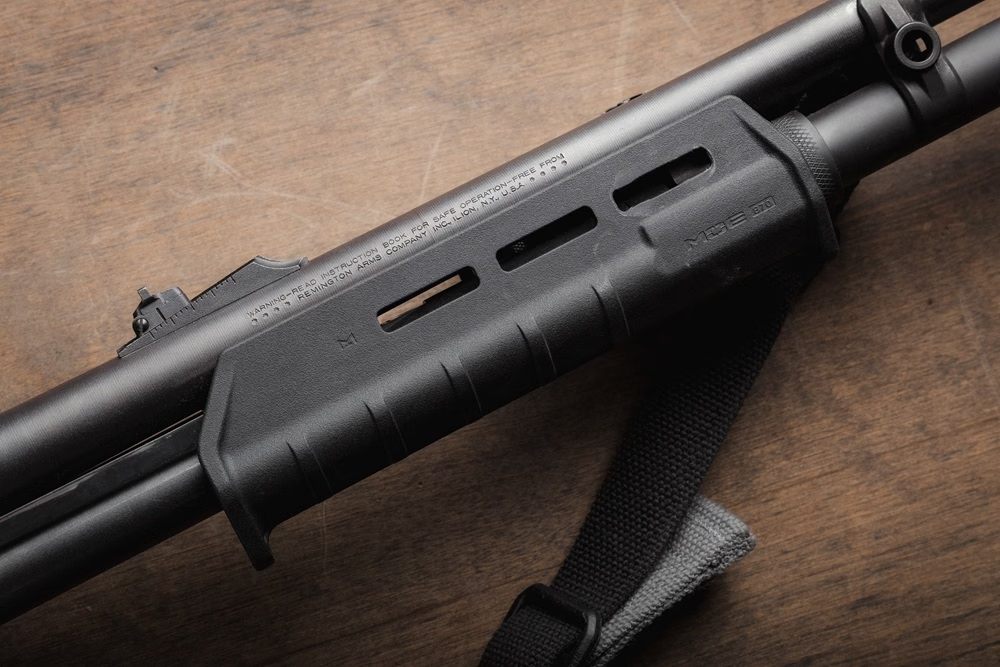
Just like upgrading the stock, upgrading the forend can do a lot to enhance the overall feel of your shotgun. We mentioned this briefly above when discussing the Magpul forend on the Mossberg 590, but they make them for other shotguns too.
Most stock pump-actions feature a minimalistic forend. It may either be smooth or have some ribs for extra grip, but they’re only designed for cycling the action. Magpul’s MOE Forend is made from a durable polymer, has M-LOK compatibility, and it has a thinner profile for reduced snagging. Currently, they’re available for Mossberg 590 and Remington 870 pattern shotguns.
Although they don’t seem like a huge upgrade on the surface, their M-LOK compatibility is a gamechanger. As mentioned earlier, you can use it to mount weapon lights, but you can also have foregrips and other accessories to them too.
Conclusion
Shotguns are, by far, some of the greatest tools for home defense. And when paired with the right upgrades and accessories, they can become a formidable firearm that offers peak performance. As a beginner, it is easy to get lost in the sauce when looking at all that’s available, but if you stick with what’s listed above, you can easily build a functional shotgun fit for defending your home.
Still, all the gear in the world doesn’t supplement a lack of training. Even if you have the nicest gear and optics, if you aren’t practicing the fundamentals, you won’t be able to use your rig effectively when needed. Remember to regularly spend time at the range and practice using your setup. If you do, you’ll be ready to use it, should that time ever arise.
Frequently Asked Questions (FAQ)
-
Do I really need a red dot? Can’t I just use the bead?
Bead sights are perfectly usable across most applications. But, like standard iron sights, they’re outclassed by the performance and advantages red dot sights provide, as they greatly simplify aiming and target acquisition. That said, if you are on a strict budget, invest in quality ammo and a weapon light first. Then you can buy a red dot later.
-
Will these accessories void my warranty?
Generally, no. In most instances, changing the furniture and adding lights or optics is all fairly standard user modification. However, this is entirely dependent on the manufacturer, and the type of modification you make. Always check your shotgun’s specific manual for the most accurate warranty information.
-
What battery do red dots use?
It depends on the make and model red dot you have. Many modern red dots use CR2032 batteries, while others use CR1632, CR123, and even AA or AAA batteries. Regardless of which one your optic uses, they’re fairly common, and it’s always a good idea to have a spare or two in your range bag.
-
Is the recoil going to hurt?
Shotguns definitely have more recoil than most handguns and rifles, but they’re very manageable with proper technique. Pulling the stock into your shoulder and having a firm grip on it allows your body to more easily absorb its recoil. Plus, using an upgraded stock, like the Magpul SGA, does a lot to help too.