Geissele Automatics occupies a particular place in the modern small-arms aftermarket: the brand name is shorthand for engineering rigor, precise tolerances, and parts that are intended to work reliably under the most demanding conditions.
That reputation has translated into strong demand for Geissele upper receivers — both complete barreled uppers and stripped receiver sets — from professional end users and civilian builders alike. Below, we’ll take a look at the company’s engineering pedigree, explain the differences between their two most popular product upper receiver product lines, and offer some practical guidance for selecting the right Geissele configuration for your needs, whether that be home defense, competition, or a general-purpose rifle.
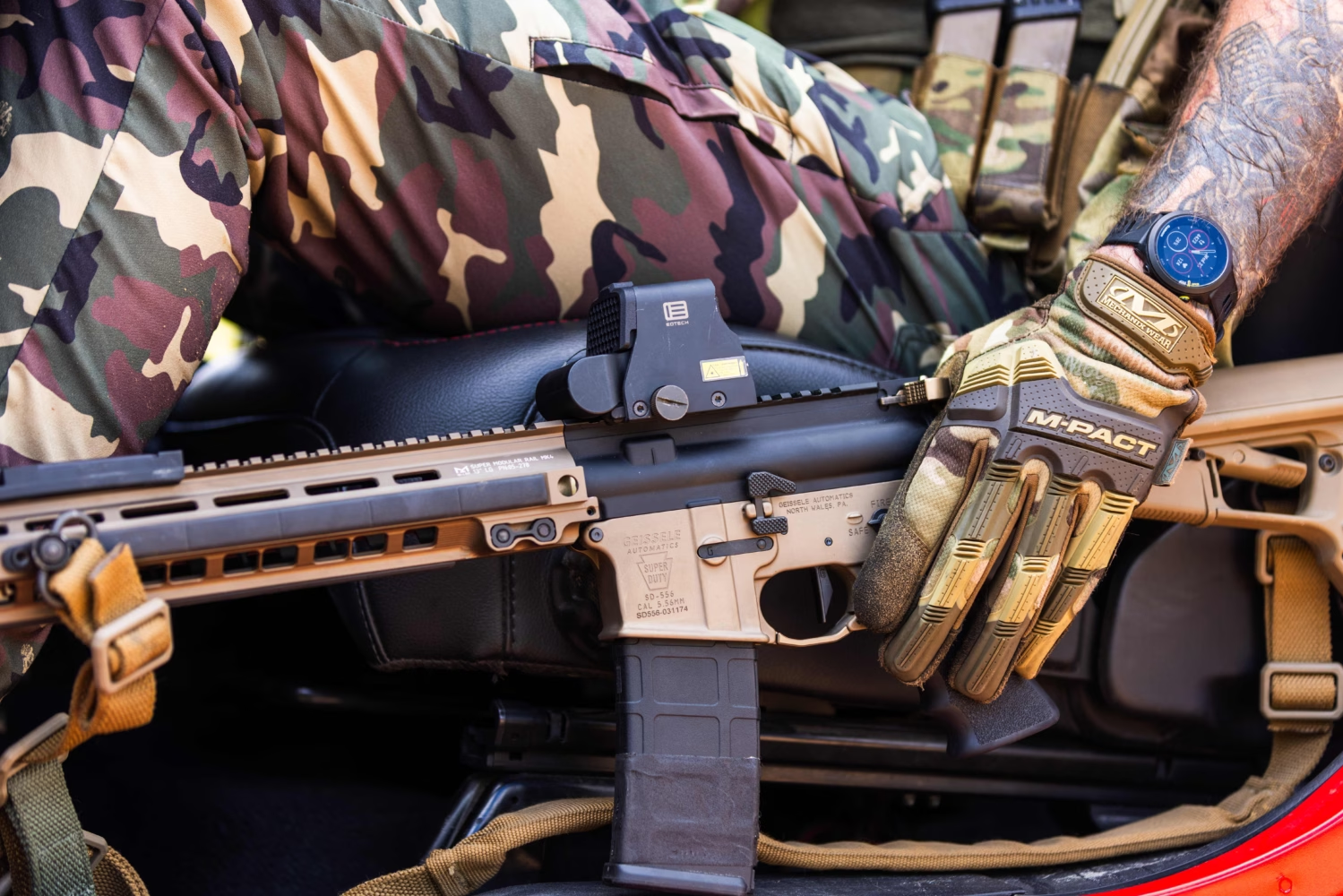
A Geissele Automatics Primer
Geissele Automatics began as a boutique enterprise focused on precision trigger design and quickly earned a reputation for quality that opened doors into government and military contracts. From those roots the company expanded its in-house capabilities to include rails, barrels, optics mounts, and complete upper receiver assemblies.
Geissele emphasizes domestic manufacturing, strict quality control, and designs that prioritize durability and repeatable performance. The firm’s public messaging and product line reflect an engineering-first approach: components are machined to tight tolerances and intended to integrate with proven platform standards. While many of Geissele’s products enhance performance and are often spotted on high-level competition rifles, none compromise the reliability or duty-readiness of the rifle they are installed on.
That engineering-first identity is important because it shapes how Geissele approaches upper design. Rather than chasing cosmetic features or the lightest possible weight at the expense of longevity, Geissele often targets system-level robustness: rail and barrel interface geometry to prevent rotation, receiver mating features for concentricity, and barrel manufacturing processes that favor longevity and consistent harmonics.
This mindset is a through-line from the company’s trigger roots to its complete upper assemblies and helps explain why Geissele upper receivers have become so overwhelmingly popular. If you’re still curious about the Geissele story, you can read over our Geissele Brand Review for more information.
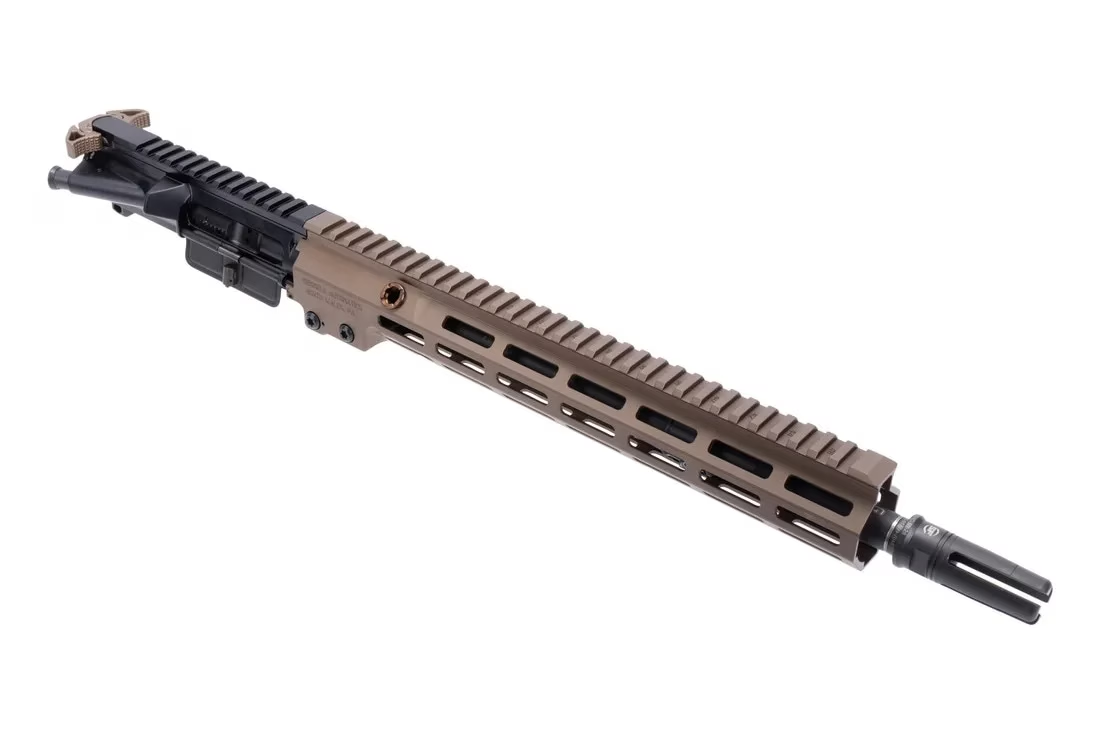
Geissele URGI Near-Clone Upper — The Military-Inspired Favorite
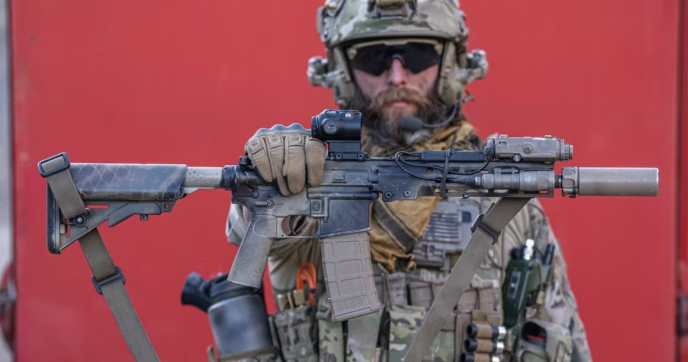
The URGI (Upper Receiver Group Improved) Near-Clone Upper is Geissele’s field-forward offering that traces its lineage to a requirement-driven, military-origin platform. Originally designed to satisfy a US Army SOCOM Contract, the Near-Clone Upper is notable for a specific combination of components: a mid-length gas system paired with a cold hammer forged barrel, the MK16 series free-float rail, and small parts chosen to meet duty-grade reliability expectations. The assembly is sold as a complete upper in specified barrel lengths and with carefully selected muzzle devices and handguard geometry. Geissele’s product description for the URGI Near-Clone emphasizes the integrated design intent: component selection is not accidental but chosen to maximize the platform’s balance of controllability, reliability, and modularity.
Mechanically, what sets the Geissle URGI upper receiver apart is how the components are matched. The URGI’s barrel profile and gas system length are selected to work well together to yield predictable gas pressures and bolt carrier group timing across a broad range of ammunition. Everything from the gas system length, to the port diameter, to the gas block geometry are synchronized to work in concert to provide the perfect balance of reliability and recoil.
The free-float rail system is designed to index to the upper in a way that eliminates rail rotation and ensures repeatable optic zero when accessories are removed and reinstalled. Those details might read like nuance, but for many users they matter: a rugged, properly aligned rail is essential for maintaining zero with an infrared laser or forward-mounted offset red dot. Geissele’s emphasis on these interfaces is one reason militaries and professional units with frequent night vision use have adopted the platform, and why many end users perceive the URGI as a “drop-in” duty quality upper.
From a buyer’s perspective the URGI typically carries a premium over more common uppers because a complete URGI includes quality control steps, a matched barrel and rail package, and hardware such as pinned/welded muzzle assemblies where applicable. That factory matching and quality control—along with the upper’s military pedigree—provides a level of assurance that many users find extremely desirable.
It also means a civilian buyer receives the same baseline design decisions that informed the military specification, which is attractive for users who prefer a proven system rather than tailoring a custom upper to their needs.

Geissele Super Duty MOD1 Upper — The Modern Classic
The Super Duty upper reflects Geissele’s broader approach to high-quality, hard-use components packaged for both professional and civilian markets. Where the URGI references a particular military requirement set, the Super Duty line expresses Geissele’s generalist, mission-agnostic platform for users who want a stout, reliable upper that can be configured across a range of barrel lengths and calibers.
Super Duty uppers are offered as complete assemblies or as stripped receiver sets and are typically mated to Geissele’s MK16 Super Modular Rail family. The Super Duty family is notable for features such as precision machining to mil-spec receiver dimensions, M4 feed ramps, and options for heavy or government profiles and chrome-lined, cold hammer forged barrels depending on the listed configuration.
Two design choices raise the Geissele Super Duty complete upper receiver above generic alternatives. First, the rail-to-upper interface is engineered to prevent rotation: Geissele uses a center aligning tab and other indexing features so that handguards seat repeatably and resist torsion. Repeatable alignment directly impacts the user’s ability to preserve zero on optics and maintain the same leverage and ergonomics when switching components.
Second, the barrels are manufactured and finished to Geissele’s internal standards—cold hammer forging and chrome lining in many 5.56 barrels—tradeoffs that favor barrel longevity and consistent point-of-impact during high round counts. Those manufacturing choices increase unit cost but provide measurable benefits in long term durability and service life.
The MOD1 variant of the Super Duty upper, in particular, is notable for it’s inclusion of a preinstalled HUXWRX Flash Hider. This makes ever MOD1 upper immediately compatible with HUXWRX suppressors straight from the factory.
In practice the Super Duty is the model many builders reference when they want a “do-it-all” upper that tolerates hard use, thermal cycling, and the routine of optics mounting and re-zeroing. The family’s breadth of offered barrel lengths—short carbine profiles up to 16-inch and rifle profiles—makes it flexible for differing roles while preserving the system’s underlying robustness.
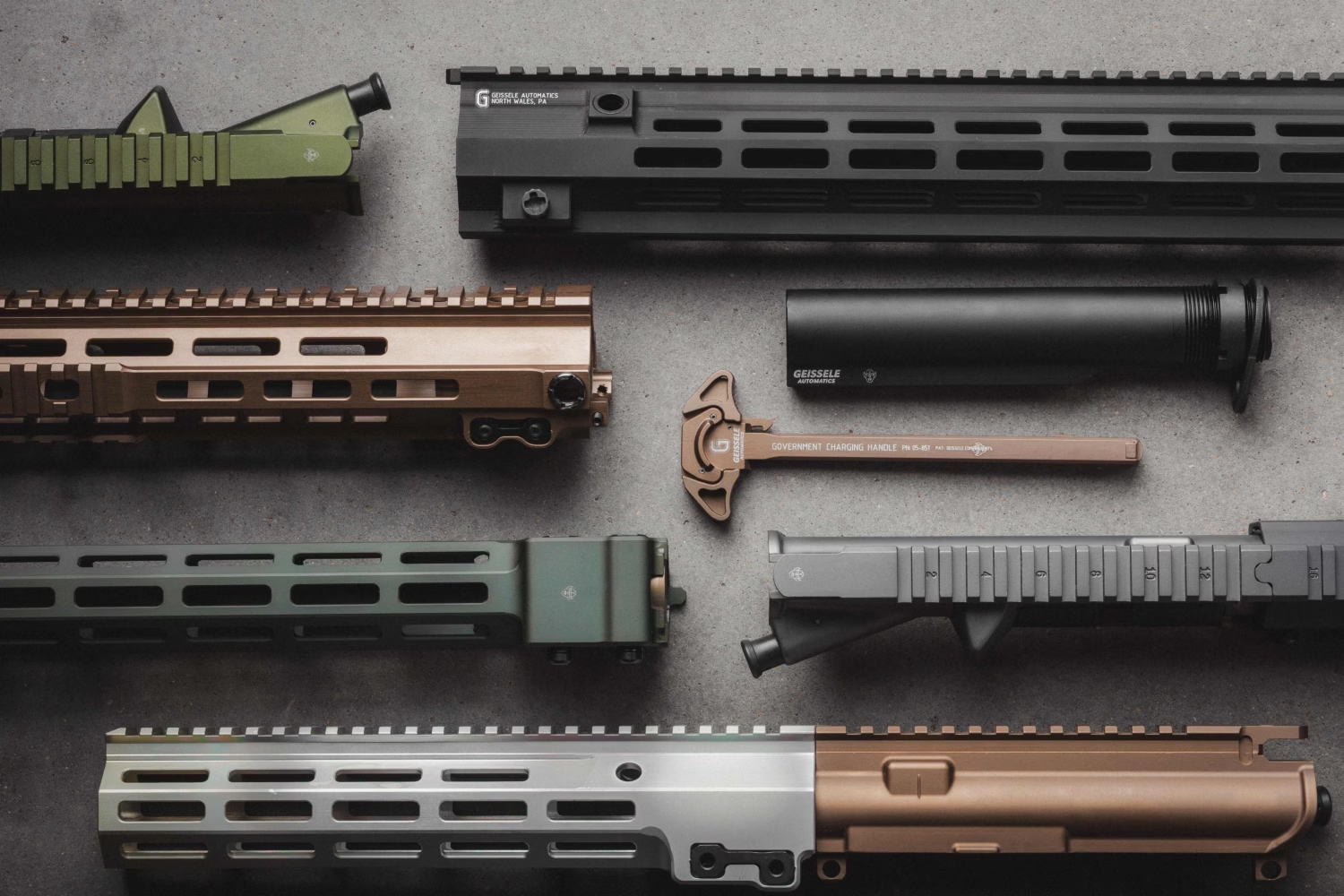
Complete vs Stripped Uppers
Deciding between a complete Geissele upper and a stripped Geissele receiver is fundamentally a question about risk, convenience, and control. A factory assembled Geissele complete upper like the USGI or Super Duty MOD1 offers the benefits of factory matched components, professional assembly, and quality control steps performed before the unit ships. Buyers receive a product that will function as advertised with minimal assembly or setup, which reduces the likelihood of inadvertent tolerancing issues that can arise in a home build.
For users who value their time highly and wish to avoid any potential parts incompatibility or troubleshooting steps, the complete upper is a strong value proposition.
A stripped Geissele upper receiver trades that convenience for flexibility. Builders who select a stripped receiver can choose their own barrel manufacturer, gas block type, muzzle device, and handguard. This route is appealing when a very specific barrel contour, twist rate, or non-standard accessory set is required.
That said, the builder assumes responsibility for proper headspace, gas port sizing, and torque specifications. Experienced builders can achieve better weight distribution or custom ergonomics by assembling from a stripped Geissele receiver, but mistakes in assembly or mismatched gas geometry can produce functional problems such as under- or over-gassing.
Furthermore, by opting for a stripped receiver, the buyer forgoes the traditional protection of a warranty policy. While each component in the upper will likely carry its own warranty from the manufacturer, there is no guarantee that the assembled upper will function perfectly. If it does not, you’ll have to do your own troubleshooting and quality and control.
For those seeking a middle ground, Geissele offers assembled but incomplete versions of their Super Duty, which come with the barrel, gas system, and upper receiver small parts preinstalled. This allows builders to avoid the more tool-intensive assembly steps and simply finish the upper with their choice of bolt carrier group, charging handle, and muzzle device.
Economics also factor into the decision. In some cases, the marginal cost between a Geissele stripped receiver plus a separately purchased Geissele barrel and rail approaches—or even exceeds—the cost of a factory complete upper because Geissele’s in-house assembly and quality control scale the work efficiently. Conversely, sourcing an aftermarket barrel from a different vendor may lower cost or enable users to choose a more esoteric caliber, but at the expense of taking on the assembly and setup burden.
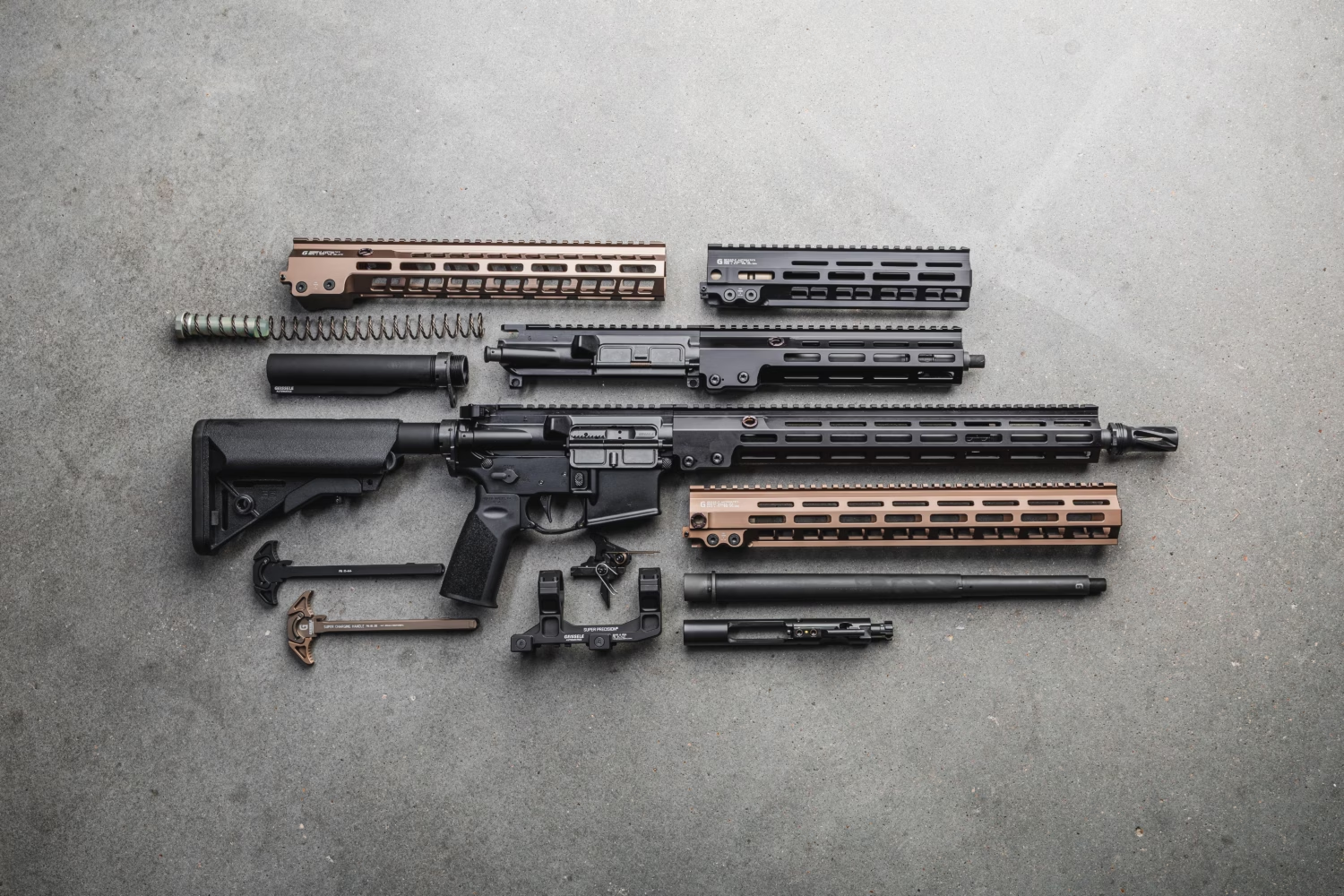
Choosing The Right Configuration
Choosing the right Geissele upper is an exercise in aligning mission profile with the platform’s mechanical characteristics. The variables that matter most are barrel length, gas system length, barrel profile and material/treatment, handguard length and attachment system, and whether a factory complete or stripped upper is preferable.
For a home defense application, the priorities are controllability, maneuverability, and reliable terminal performance. Shorter barrels in the 10–12.5-inch range will maximize maneuverability inside a confined space and also keep overall system length compact. We go into the specifics of barrel length and application in our guide on how to choose the best upper receiver length.
With shorter barrels it is crucial to match a gas system and muzzle device that tame recoil impulses and gas impulse timing to maintain rapid follow-up capability. Geissele offers short Super Duty and URGI configurations that are purposefully built around these tradeoffs; buyers should prioritize a complete upper if they want the manufacturer’s gas tuning and end-to-end validation.
Competition shooters usually have different priorities: accuracy, repeatable ergonomics, and minimal harmonic disturbance from muzzle devices and barrel flex. Here, longer barrels (14.5 to 16 inches depending on the division and rules) often make more sense. Competitive marksmen typically prefer medium to government profile barrels with enough rigidity to avoid their groups opening up during rapid fire and a gas system length that minimizes carrier velocity for flatter recoil impulse.
Geissele’s Super Duty barreled options with cold hammer forged, chrome lined barrels and a mid- or rifle-length gas system are attractive in this context because they emphasize consistency and repeatable zero under heavy use. For highly experienced competitors who want a custom configuration, selecting a stripped receiver and an aftermarket match barrel may be appropriate, but the buyer should be prepared to spend some time tuning the rifle to find the right balance of recoil impulse and function.
For an all-purpose rifle—an upper intended to be a jack-of-many-roles without specialization—the middle ground works best. A 14.5 inch (with a pinned and welded muzzle device or NFA stamp) or 16-inch barrel with a mid-length gas system offers a balance of barrel length for velocity, maneuverability, and bridled recoil impulse.
The Super Duty line often serves as an excellent all-purpose option because its design intent is to be durable and adaptable across missions. The URGI, meanwhile, is suited to those who want a configuration that mirrors military-grade selection and are comfortable with the associated ergonomics and weight tradeoffs.
Practical selection also requires attention to supporting components: rail length for accessory placement, muzzle device threading and legal compliance, and whether you plan to run a suppressor—in which case barrel length and mounting choices should be selected to meet legal and mechanical goals.
For a complete breakdown of the many factors that go in to choosing an upper receiver, check out our AR-15 Complete Upper Shopping Guide.
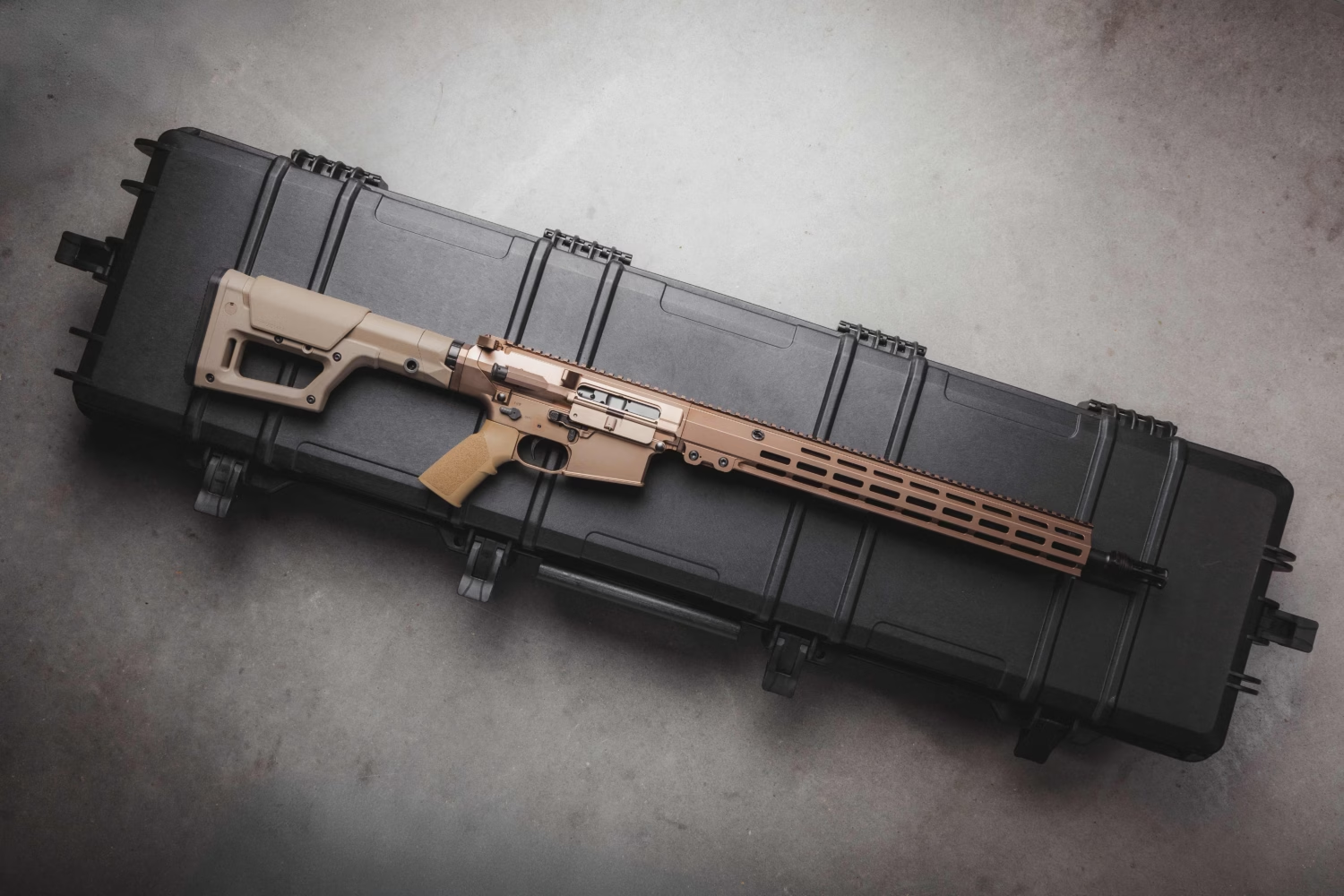
Why Geissele Commands a Premium
Several observable factors explain why Geissele uppers command premium prices and a loyal customer base.
First, Geissele invests in manufacturing processes that favor long service life: barrels are cold hammer forged and finished to resist wear and corrosion and rails and receivers are machined to tight tolerances.
Second, the company designs component interfaces to reduce assembly-level variance—indexed rails, precisely machined feed ramps, and conservative fit tolerances minimize the common issues that produce misfeeds or alignment errors in lesser components.
Third, Geissele emphasizes in-house quality control and assembly for their complete uppers, which reduces the buyer’s assembly risk and time to use. Unlike many other retailers, Geissele is a true manufacturer, making near all of their components in house with full control over their dimensions and tolerances, ensuring optimal interface between parts.
Finally, the brand has earned institutional trust from professional users, which in turn drives civilian demand for the same design characteristics.
Those factors together create a premium product that is perceived as worth the additional cost for many buyers.
Practical Buying Guidance
For most readers who want a dependable, low-hassle solution, a Geissele complete upper is the straightforward path. It delivers a factory-matched barrel and rail package with assembly and installation performed to the manufacturer’s standard; in many purchase scenarios the price difference between buying all the individual parts and buying the complete upper is marginal once you account for assembly time, fitting, and potential gunsmith fees.
If you have a specific ballistic requirement—an uncommon twist rate, non-standard chambering, or special barrel contour—or you enjoy the customization process, a stripped Geissele receiver plus aftermarket barrel and handguard will give you that flexibility.
If accessory compatibility and repeatable zero are particularly important for your application, opt for the MK16/MK16-compatible rail and upper pairings Geissele offers. If you plan on high round counts or extended hard use, consider Geissele’s cold hammer forged chrome lined barrel options. And if weight is the foremost concern and you are comfortable trading some durability, consider lighter contours but be mindful that those choices change harmonics and may require more frequent maintenance or replacement.

Conclusion
Geissele upper receivers are popular because they package engineering discipline with practical, purpose-driven design. Whether it’s the military-inspired URGI or the flexible Super Duty family, Geissele’s products reflect a measured approach to component design: build it well, make connections repeatable, and keep quality as high as possible.
For the end user that values system reliability, component longevity, and minimized assembly risk, Geissele remains a compelling option.