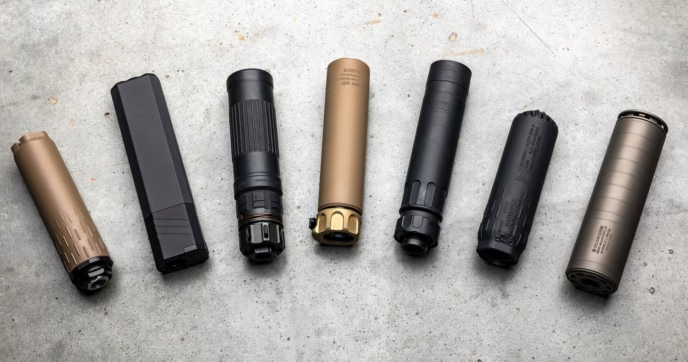
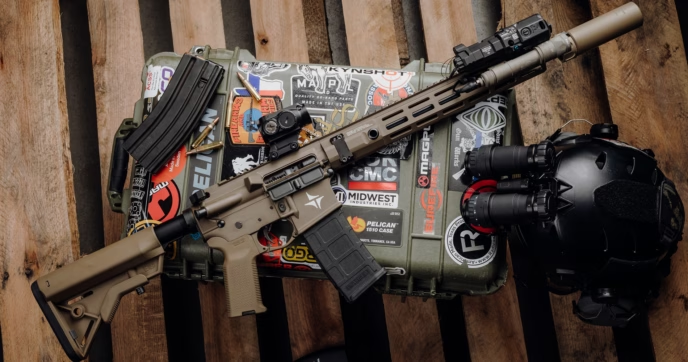
Pistol suppressors have become an increasingly popular accessory among enthusiasts who value reduced report, improved recoil characteristics, and a more refined overall experience at the range. While the suppressor itself often receives the majority of attention, there is a smaller, less visible component that plays a critical role in ensuring reliable operation on most modern pistols. This component is the suppressor piston, also commonly referred to as a Nielsen device or booster. Without a proper understanding of how pistons function and why they are necessary, users may encounter reliability issues that undermine the benefits a suppressor is intended to provide.
Below, we explain pistol suppressor pistons in depth, explaining what they are, how they work, and why they are essential for the majority of handgun platforms on the market today.
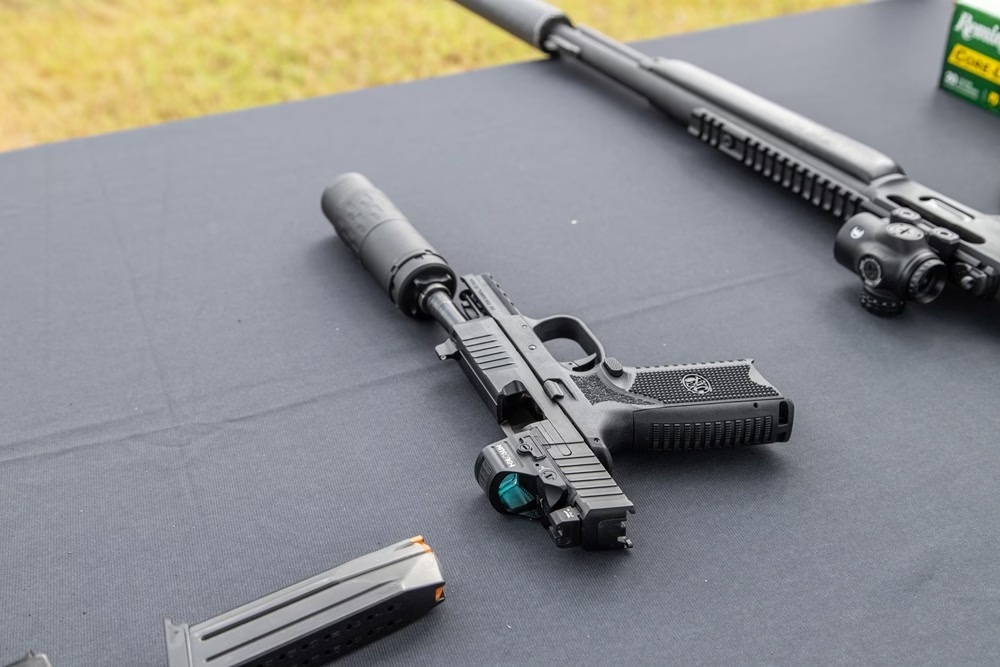
What Is a Suppressor Piston?
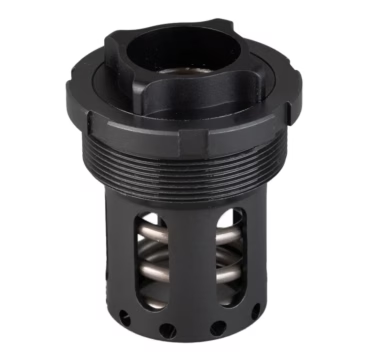
A suppressor piston is a spring-loaded mounting component designed to allow a handgun suppressor to function reliably on pistols that use a Browning-style tilting barrel action. In its most basic form, the piston serves as the interface between the threaded barrel of the handgun and the body of the suppressor. Unlike a simple direct-thread mount, the piston incorporates internal movement that temporarily decouples the mass of the suppressor from the barrel during the operating cycle of the pistol.
Suppressor pistons are also commonly known as Nielsen devices or recoil boosters, terms that reflect their historical development and mechanical purpose. The Nielsen device was originally conceived to address a fundamental incompatibility between traditional short-recoil pistol designs and the added weight of a suppressor.
In a typical Browning-style action, the barrel and slide are mechanically linked during the initial phase of operation. Upon firing, they move rearward together for a short distance before the barrel cams downward or otherwise unlocks, allowing the slide to continue rearward independently. This carefully timed sequence relies on a specific balance of mass, spring tension, and momentum.
When a suppressor is threaded directly to the barrel, its added weight can disrupt this balance. The barrel may no longer move freely enough to unlock at the proper moment, resulting in failures to cycle, failures to eject, or failures to feed. The suppressor piston solves this problem by allowing the suppressor body to momentarily remain stationary while the barrel begins its rearward and unlocking movement.
Mechanically, the piston consists of a threaded insert that screws onto the handgun barrel and fits inside a spring-loaded housing at the rear of the suppressor. When the pistol is fired, rearward force causes the piston to compress its spring, permitting the barrel to move independently of the suppressor’s mass. Once the operating cycle is complete and the slide returns to battery, the spring expands and returns the suppressor to its forward position. This brief, controlled movement happens extremely quickly, but it is essential to maintaining reliable function.
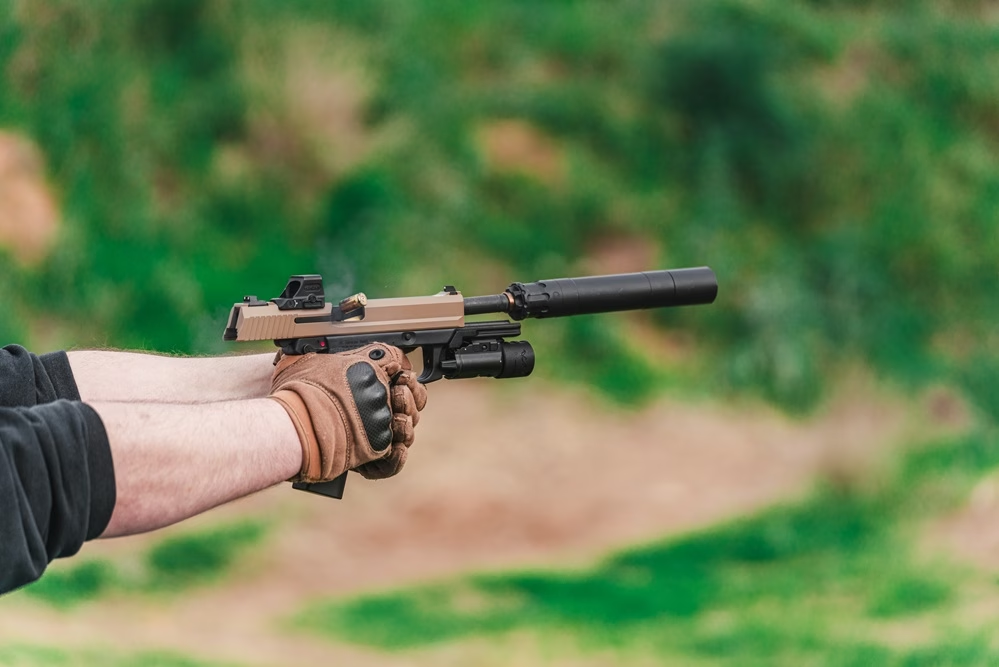
The importance of the piston becomes especially clear when examining the widespread use of Browning-style tilting barrels in modern handguns. From striker-fired polymer pistols to many hammer-fired designs, the overwhelming majority of centerfire service pistols rely on this operating system, including GLOCK, Sig, Springfield Armory, H&K, S&W, and more. Without a piston-equipped suppressor, these firearms are often unable to cycle consistently, regardless of ammunition selection or recoil spring tuning.
In addition to enabling reliable function, the piston also plays a role in alignment and stress management. By allowing controlled movement rather than rigid attachment, it reduces undue stress on barrel threads and suppressor mounting components. This contributes not only to reliability but also to long-term durability of both the suppressor and the host firearm.
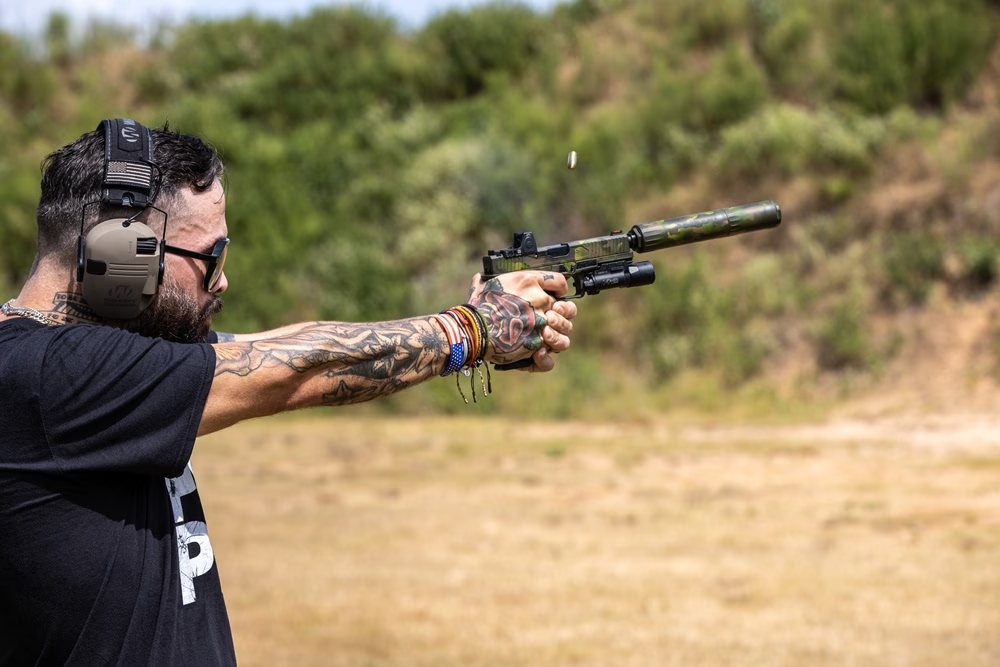
Why You Need a Suppressor Piston on Most Handguns
For most handguns, a suppressor piston is not optional; it is a necessity. The core reason lies in the operating mechanics of short-recoil, tilting-barrel pistols, which dominate the modern handgun market. These designs were engineered to function within specific parameters, and the addition of a suppressor fundamentally alters those parameters unless a piston is used to compensate.
The mass of a suppressor, even a relatively lightweight one, represents a significant increase compared to a bare muzzle. When this mass is rigidly attached, it resists the rearward movement of the barrel during the critical unlocking phase. The result is often inconsistent cycling, manifesting as sluggish slide movement or total failure to complete the operating cycle. A piston-equipped suppressor mitigates this issue by allowing the barrel to recoil and unlock without having to overcome the full inertia of the suppressor.
Beyond its primary mechanical function, the piston also provides a practical advantage in terms of versatility. Pistons are typically available in a wide range of thread pitches, allowing a single suppressor to be used across multiple handguns simply by swapping the piston. This effectively turns the piston into a modular thread adapter, enabling users to move one suppressor between hosts with different barrel threads without purchasing multiple dedicated mounts.
For example, a user might own pistols with common thread pitches such as 1/2×28, 13.5×1 left-hand, or .578×28. By investing in a piston for each thread pitch, the same suppressor can be used on all of them with minimal effort. This modularity not only reduces overall cost but also simplifies logistics and maintenance, as the suppressor body remains constant while only the piston changes.
Reliability benefits extend beyond basic cycling. A properly functioning piston can also contribute to more consistent lockup and return to battery, particularly with service-grade ammunition. While ammunition selection and recoil spring weight still play roles in suppressed handgun performance, the piston provides a mechanical foundation that allows these variables to be tuned effectively rather than fighting against a fundamental incompatibility.
In practical terms, most users who experience frustration with suppressed handguns are encountering issues related to improper mounting or incorrect piston selection. When matched correctly to both the suppressor and the firearm, the piston allows the handgun to operate in a manner that closely mirrors unsuppressed function, preserving the handling characteristics and reliability that the platform was designed to deliver.
What Handguns Don’t Need a Piston?
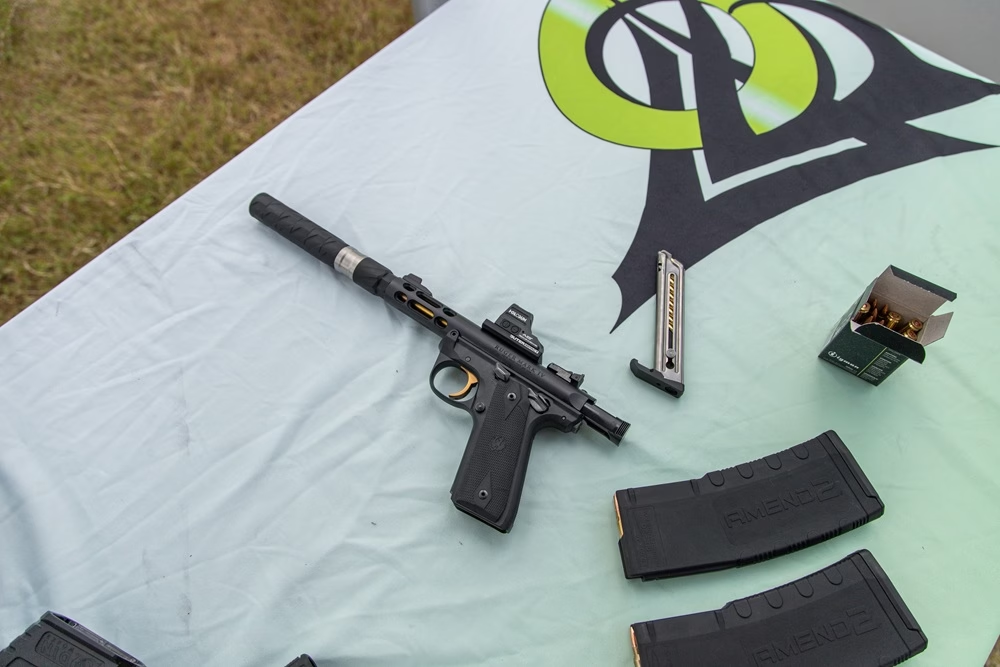
While suppressor pistons are essential for most modern handguns, there are notable exceptions. These exceptions generally fall into categories defined by barrel behavior rather than caliber or size. Any handgun that does not rely on a Browning-style tilting barrel may be capable of functioning with a direct-thread suppressor mount, provided other factors such as mass and ammunition are appropriate.
Fixed-barrel handguns represent the most straightforward case. In these designs, the barrel does not move during the operating cycle, meaning there is no unlocking motion to disrupt. Many rimfire pistols fall into this category, particularly those chambered in .22 LR. Because the barrel remains stationary, a suppressor can be attached directly without interfering with function, and a piston is unnecessary. In fact, using a spring-loaded piston on a fixed barrel can introduce problems rather than solve them.
Sliding-barrel designs, such as the Beretta 92FS and M9 series, also do not always require a traditional piston. Although these pistols do use recoil operation, their barrels move linearly rather than tilting. This design allows them to tolerate the added mass of a suppressor without the same degree of functional disruption seen in tilting-barrel systems. As a result, many users successfully run suppressors on these platforms using direct-thread mounts or fixed mounts.
There are also certain non-tilting barrel handguns and specialty designs that can function without a piston. These may include less-common designs such as gas-delayed systems, depending on the specific engineering and mass distribution. In such cases, manufacturer guidance and empirical testing are especially important, as suppressed performance can vary significantly between models.
Another consideration is suppressor weight. Some ultralight suppressors are engineered to be light enough that, even when paired with certain tilting-barrel handguns, they may function reliably even without a booster. This is typically limited to very specific combinations and should not be assumed as a general rule. While weight reduction can lessen the need for a piston, it does not eliminate the underlying mechanical realities of tilting-barrel operation in most cases.
Understanding whether a handgun requires a piston ultimately comes down to understanding how its barrel behaves during the firing cycle. When in doubt, the safer and more reliable option is to use a piston-equipped suppressor unless the firearm is clearly identified as compatible with a fixed mount.
Choosing a Piston
Selecting the correct suppressor piston involves careful consideration of both the firearm and the suppressor itself. The first and most obvious factor is thread pitch. The piston must match the threading on the handgun barrel precisely. Even slight mismatches can result in damage to the threads of both your piston and barrel, or potentially dangerous conditions such as improper alignment leading to a baffle strike. Common thread pitches vary by caliber and manufacturer, making it essential to verify barrel specifications before purchasing a piston.
Equally important is suppressor compatibility. Pistons are not universally interchangeable between suppressor brands or even between different models from the same manufacturer. While many suppressor piston are compatible with a variety of models, others are limited to specific designs or even proprietary to a single suppressor, as is the case with the SilencerCo Osprey 9 2.0. Choosing a piston that is explicitly designed for the suppressor in question is the safest way to guarantee proper fit and function.
For users who intend to run a suppressor on both tilting-barrel pistols and fixed-barrel firearms such as pistol-caliber carbines, an additional component becomes necessary: the fixed piston spacer. A fixed piston spacer replaces the spring within the piston assembly, effectively locking the piston in a fixed position. This prevents the suppressor from moving back and forth under recoil, which could otherwise cause accelerated wear or damage when used on a fixed barrel.
The importance of a fixed piston spacer cannot be overstated. Using a spring-loaded piston on a fixed-barrel firearm can lead to excessive movement and impact forces that the suppressor was not designed to handle in that configuration. By converting the piston to a fixed mount with a spacer, the suppressor can be safely and effectively used across a broader range of hosts without compromising durability.
Material quality and manufacturing tolerances also play a role in piston selection. High-quality pistons are typically made from hardened stainless steel or similarly robust materials, ensuring longevity under repeated firing and exposure to heat and fouling. Consistent tolerances contribute to better alignment and smoother operation, both of which are essential for accuracy and reliability.
Ultimately, choosing the right piston is about matching components correctly and understanding how each part of the system interacts, not unlike the process of choosing a 9mm suppressor itself. When properly selected and installed, the piston becomes a seamless part of the suppressor system, operating invisibly yet indispensably with every cycle.
Conclusion
Suppressor pistons are a critical, though often overlooked, component of suppressed handgun systems. By allowing the barrel of a Browning-style tilting handgun to operate as intended, the piston ensures reliable cycling, reduces mechanical stress, and preserves the functional characteristics of the firearm. Far from being a niche accessory, it is a foundational element for anyone looking to run a suppressor on the majority of modern pistols.
Understanding what a suppressor piston is, why it is necessary, and how to choose the correct one empowers users to build a system that is both reliable and versatile. From accommodating multiple thread pitches to enabling safe use on fixed-barrel platforms through the use of spacers, the piston plays a central role in the adaptability of modern suppressor designs.
When viewed in this context, the suppressor piston is not merely a mounting option but a carefully engineered solution to a fundamental mechanical challenge. For most handgun owners, investing the time to understand and properly configure this component is essential to realizing the full benefits of suppressed operation.
For more reading on the nuances of suppressor function, check out our article on the science of sound reduction.