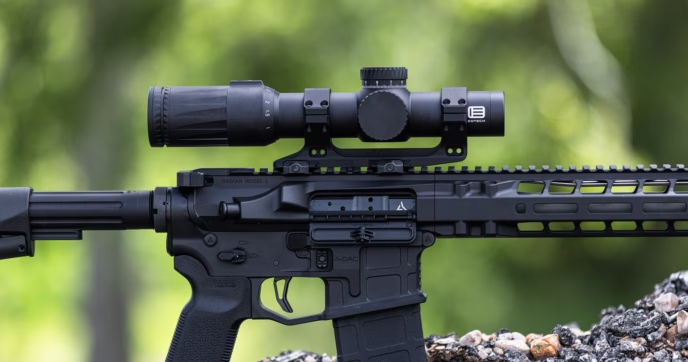
Vortex Optics has spent years building a reputation for making some of the most sought-after optics around. Their lineup includes everything from reflex sights and prism scopes to binoculars and spotting scopes. But they’re most well-known for their rifle scopes.
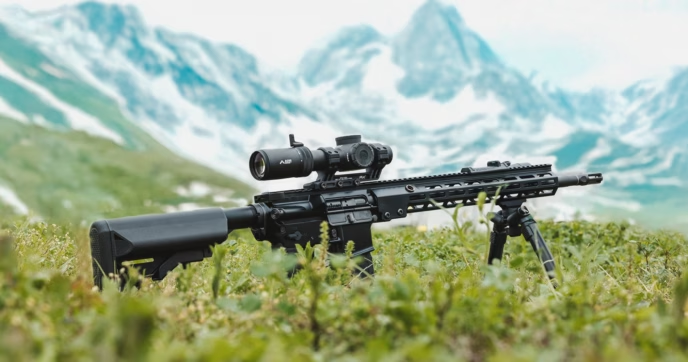
Vortex rifle scopes come in many forms. They have LPVOs for close-range adaptability, high power optics for long-range use, and everything in between. Of the various optic lines they offer, the Razor and Viper PST series consistently rank as some of the most popular.
Both are made up of several outstanding optics made from high-quality materials and components, but this doesn’t mean they’re the same.
Vortex Razor vs. Viper
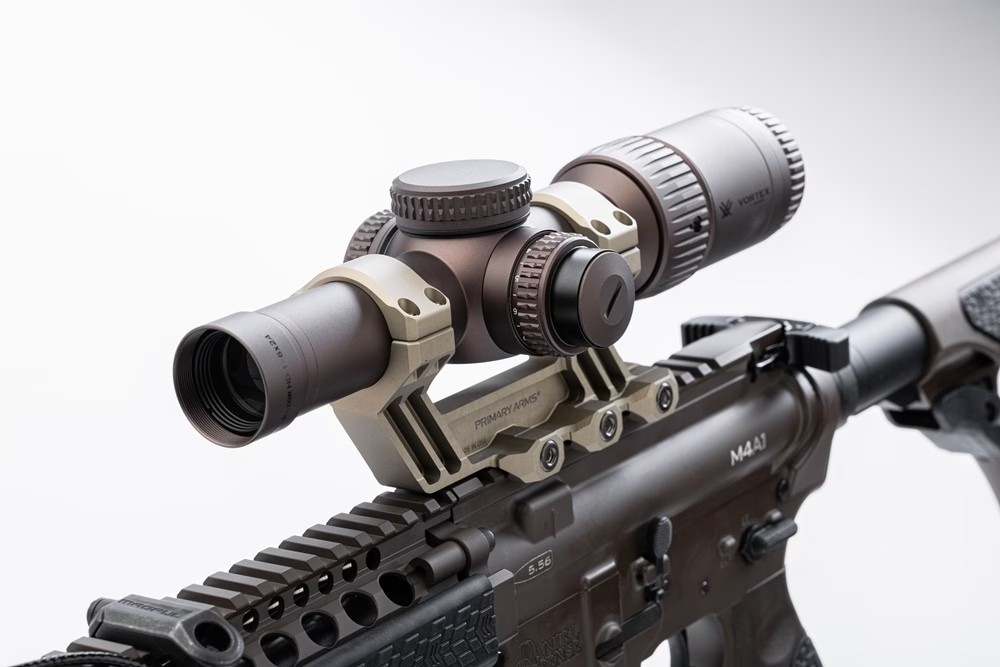
What Defines the Vortex Razor Series?
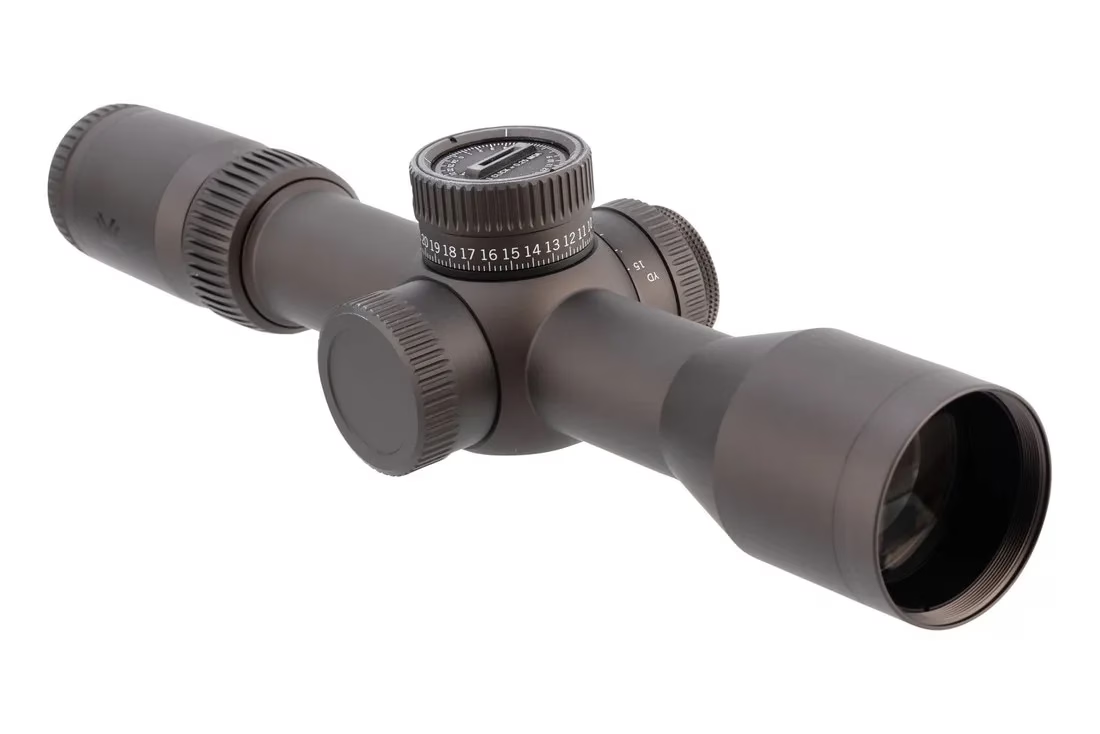
The Vortex Razor series consists of Vortex’s top-tier optics that are designed for peak performance. They use exceptionally high-quality glass and optic bodies. Plus, they come packed with advanced features. Currently, there are many rifle scopes in the Razor line. But the quality of each is exceptional across the board.
Razor rifle scopes offer solid durability, glass clarity, and turret construction. As such, they’re a solid pick for all applications. They’re commonly used by enthusiasts of all experience levels. And they’re great for hunting, long-range precision, and more intense competitive and duty disciplines.
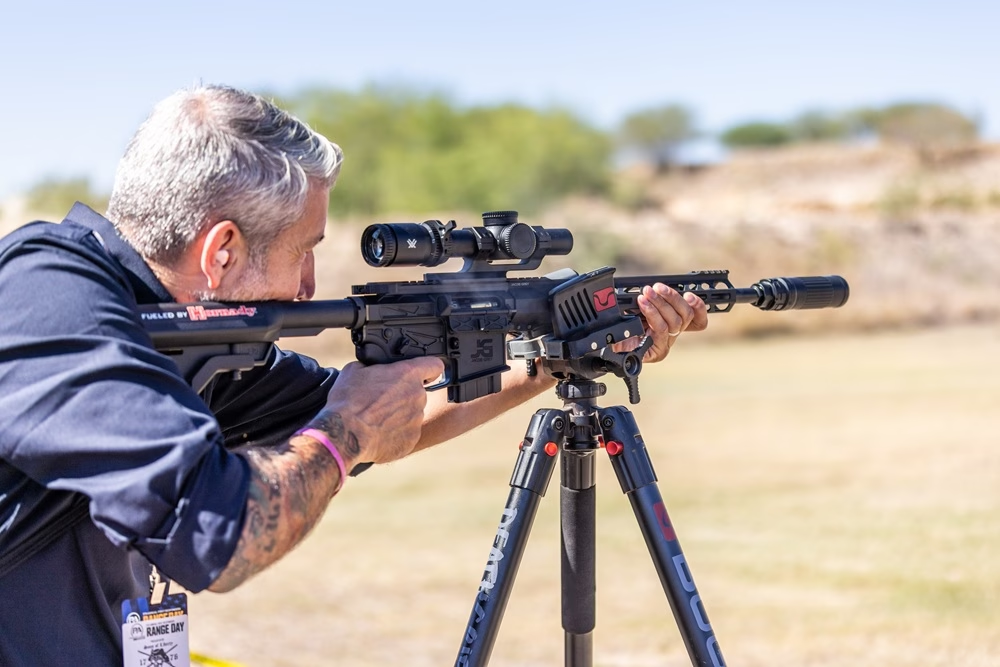
What Defines the Vortex Viper Series?
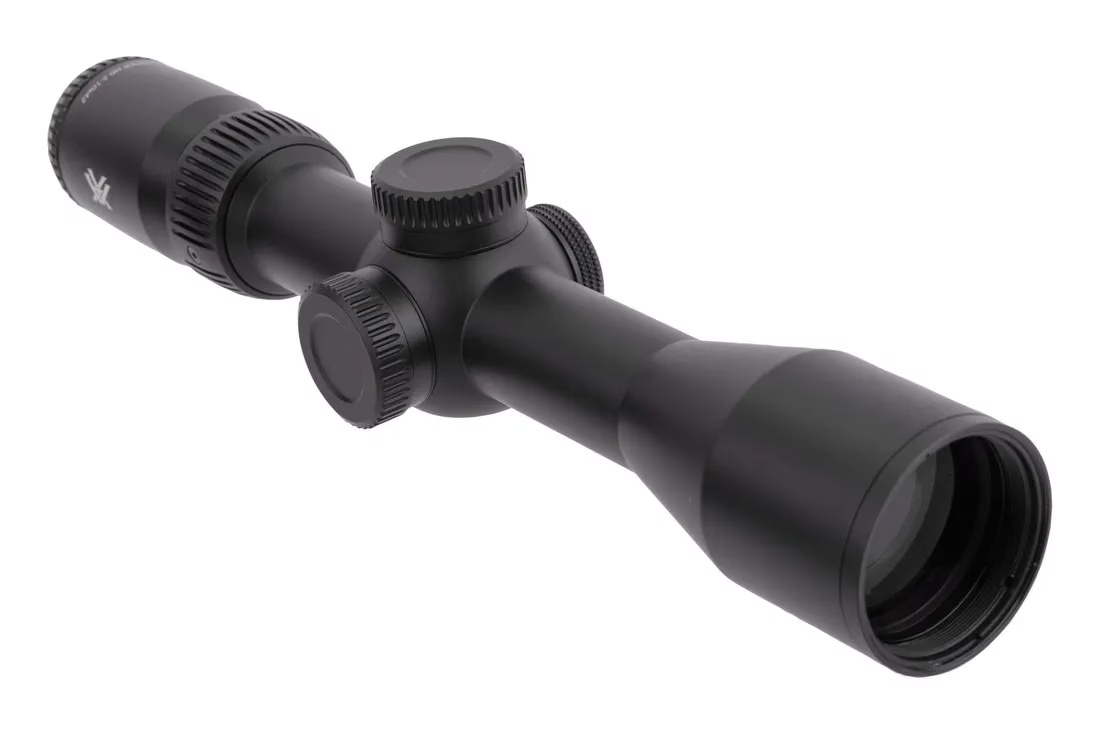
If you don’t have the budget for Razor series scopes, the Vortex Viper PST line is a strong contender. They still boast an elevated level of quality, too. Viper series optics are more of a mid-to-high-tier option. They offer reliable performance and solid durability without an exorbitant price tag. They have clear glass, premium features, and a durable optic body. And although they don’t offer the same high-level of performance as Razor scopes, they certainly don’t disappoint.
Just like the Razor series, you still have several Viper PST scopes to choose from. Viper PST scopes are available in several configurations, ranging from LPVOs to high-power optics. As such, they can excel across a wide range of applications.
Head-to-Head Comparison
Vortex Razor Series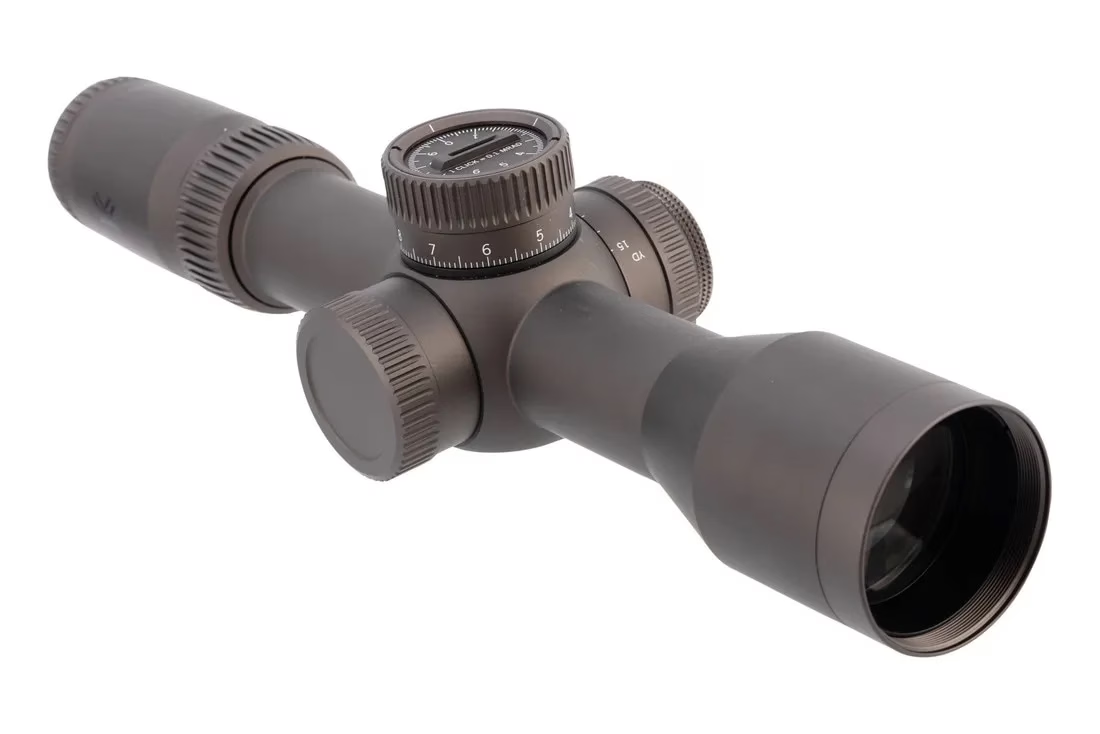 | Vortex Viper Series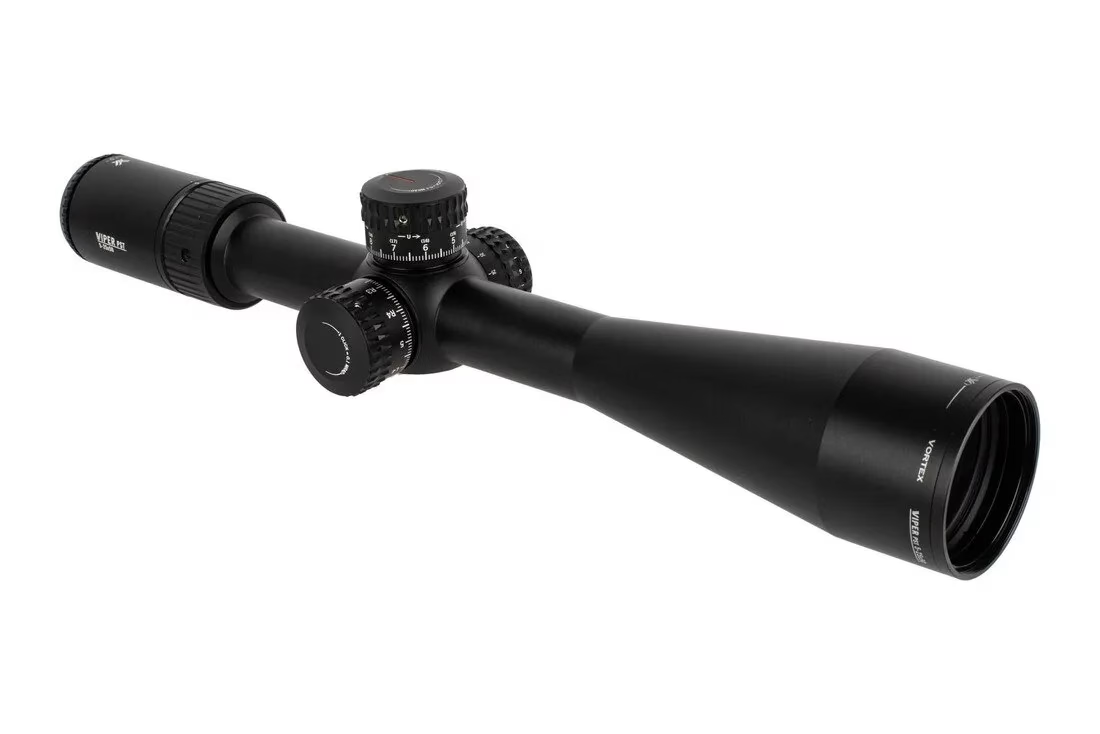 | |
|---|---|---|
| Optic Tier: | Vortex’s most premium optic line | Vortex’s mid-to-high-tier optic line |
| Glass Quality: | Exceedingly high-quality glass; also uses Vortex’s XR™ Plus anti-reflective lens coatings | Uses high-quality glass and anti-reflective coatings; quality isn’t quite on par with Razor scopes |
| Durability: | Offers superior durability in harsh conditions; resistant to water, shock, and fog | Ruggedly reliable in field conditions; resistant to water, shock, and fog |
| Feature Set: | Packed with premium, top-tier features | Equipped with several premium features, though not as many as Razor scopes |
| Price Point: | Around $1,900 to upwards of $4,800+ | Around $700 to upwards of $1,500+ |
Optical Performance: Glass Clarity & Light Transmission
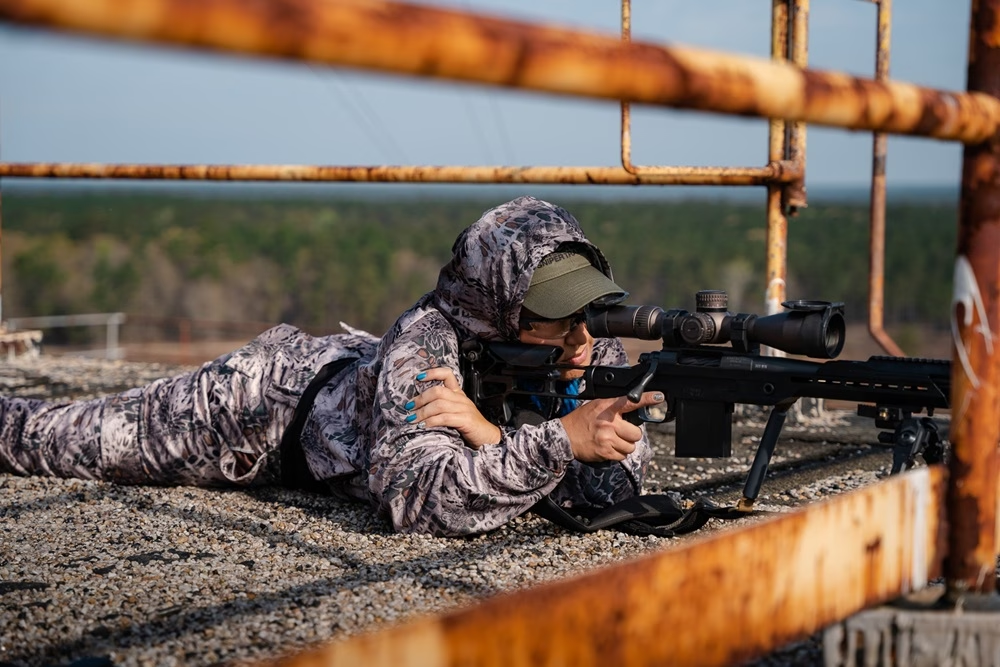
One of the most prominent features an optic can have its glass clarity. Bad glass can ruin an optic’s potential, regardless of how many other features it has. Fortunately, both Razor and Viper optics have exceptional glass. But they aren’t the same.
Razor Glass Clarity
Starting with the Razor series, it has, by far, the highest quality glass of the two. All optics in the Razor line use Vortex’s HD Optical System with extra-low dispersion (ED) glass. ED glass is used in many high performance optics thanks to its overall clarity and light transmission.
By design, they have extremely low refractive index changes, reducing chromatic aberration (a common distortion where colors change around the edges of a lens). Vortex goes a step further and coats their optics with their XR™ Plus anti-reflective lens coating to increase light transmission and contrast, while reducing glare and reflection. This gives Razor optics an edge over lesser optics, which is expected given their pedigree.
Viper Glass Clarity
Viper series optics also use high-quality glass lenses. However, different models use different lens technologies. Standard Viper and Viper PST optics use Vortex’s XD™ glass lenses. The XD Optical System is truly clear, much more so than entry-level optics. It offers solid edge-to-edge clarity and light transmission, making them more than-capable across all applications. Still, compared to Razor optics, they’re lacking a bit. But it’s important to keep in mind that they aren’t built to the same standards.
That said, if you’re wanting higher quality glass without crossing into the price range of Razor Optics, we recommend the Viper HD series. They make use of the HD optical system, providing even more clarity than Viper PST rifle scopes. Still, it’s not on par with the Razor’s HD Optical System, but it’s close—and for the money, they’re hard to beat.

Turrets & Adjustments: Precision vs. Practicality
Razor Turret Overview
Although the construction of Razor turrets varies depending on the model scope you look at, they all offer superb reliability. Vortex’s MPVO and HPVO scopes have exposed elevation turrets that let you keep track of your adjustments when in the field. Their LPVOs don’t have an exposed elevation turret, but they all have capped windage turrets for added protection. Plus, they’re all waterproof regardless of if they’re capped or not. The key difference in each model’s turrets lies in their zeroing system. They either use Vortex’s RevStop® Zero System, or their L-TEC+™ Zero System.
The RevStop Zero System uses both mechanical and shim-style elements in the turrets, allowing you to return to zero after adjusting. By design, it allows you to adjust your turret slightly beyond your initial zero, giving you some added flexibility. However, in doing so, you won’t have a hard-stop at the zero point, which can make fine returning a bit tricky compared to a fully mechanical system.
This is where the L-TEC+ system shines. This is Vortex’s most advanced mechanical zero system. It’s engineered to give you as much flexibility as possible without compromising the optic’s precision of each adjustment. Unlike the RevStop system, the L-TEC+ design is wholly mechanical. The turret will bottom out at your zero once it’s set, so there’s no need to worry about over-rotation. Each click is a firm and tactile, so you’ll have a crisp point of reference as you shift your zero to engage a closer or further target. Being a more premium turret design, it’s reserved for their top-of-the-line optics, with it being most common on Razor HD Gen III scopes.
As to which is better, that’s ultimately up to the user. Both are incredibly dependable, and when used properly, can maximize your setup’s capabilities. If you aren’t planning to make frequent zero adjustments at distance, optics with the RevStop system are more than suitable for most applications. But, if you’re wanting a stronger mechanical locking system, optics with L-TEC+ turrets are where it’s at.
Viper Turret Overview
Vortex Viper optics most often have either capped or exposed locking turrets. Standard Viper rifle scopes come with capped turrets. More rugged Viper PST and HD optics, specifically their MPVOs and HPVOs, have exposed turrets for easier adjustments. Standard Viper scopes use a more simplistic turret design, but Viper PST and HD scopes use specialized ones like the Razor Series does.
Viper PST optics make use of the RZR™ Zero System. Standing for “Rapid Zero Return”, the RZR Zero System has a mechanical lock that works similarly to the more refined L-TEC+ system. In fact, the RZR system was used on early Razor series optics too. With it, you can set your zero, and then the turret becomes mechanically incapable of rotating past that point. As such, you can make an adjustment in the field for a given engagement, and then quickly come back to your initial zero. Meanwhile, FFP Viper HD rifle scopes use the previously mentioned RevStop system. And it has the same features listed earlier.
Overall Durability
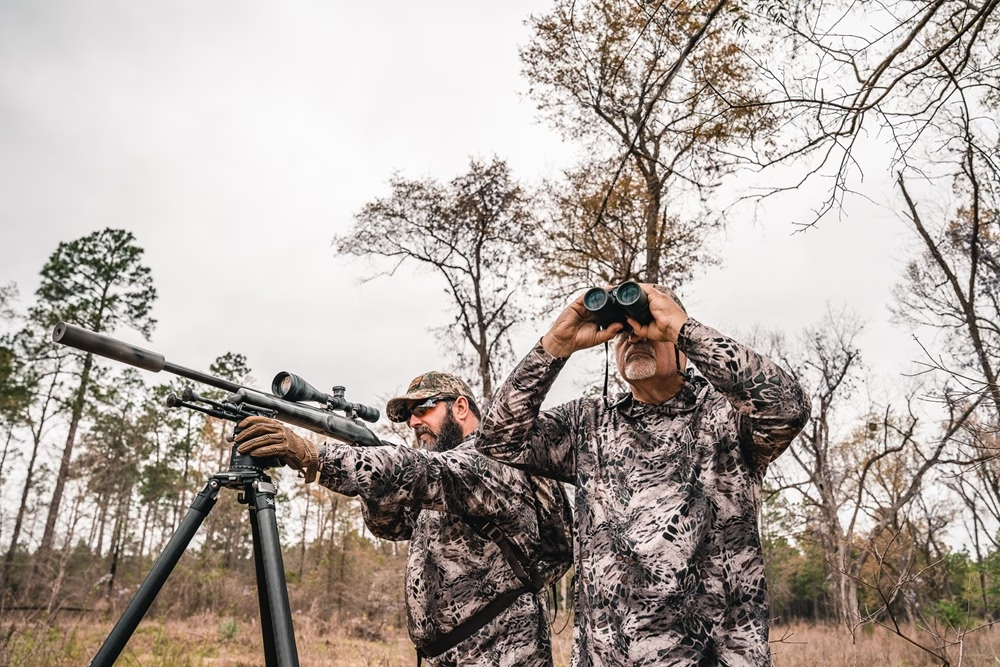
No matter which optic you look at, they’re both designed to take whatever you can throw at them. Making use of rugged aluminum optic bodies, they’re water, shock, and fog resistant. Plus, they can still come with some extra enhancements.
For starters, Vortex Razor rifle scopes offer superior reliability. They have a more robust construction that can handle impact and other environmental conditions a bit better. Plus, they also come standard with Vortex’s ArmorTek® coating, making it more resilient to abrasion, and a touch more resistant to corrosion. However, this doesn’t mean you should immediately discount Viper scopes. They’re immensely durable optics—they’re made from aircraft-grade aluminum and come with ArmorTek coating too. While they don’t offer the same level of durability as Razor scopes, they’re certainly worth considering if you want to spend less than $2,000 on your optic.
Conclusion
The reputation that Vortex Optics has garnered over the years is well deserved. And rifle scopes like those found in their Razor and Viper series have helped push them to the upper echelons of the optic industry.
For those in need of a top-tier optic that’s designed to offer the best across all fronts, the Razor series is the move. They offer peak performance and precision, and they come in a wide range of configurations for different applications. Meanwhile, the Viper series strikes a nice balance between performance and price. Coming outfitted with several premium features, they’re resilient, ultra clear, and rugged enough for field use.
So, no matter what your needs are, Vortex has what you’re looking for.
Frequently Asked Questions (FAQ)
-
What is the difference between Vortex Razor and Viper PST scopes?
The Razor series is Vortex Optic’s most premium optic line with elite glass and precision turrets. Viper PST scopes offer strong tactical performance and value for serious users, but aren’t on the same level as Razor scopes.
-
Which Vortex scope is better for long-range precision?
For ultimate long-range precision and clarity, Razor scopes offer superior optical performance.
-
Is the Viper PST good for hunting?
Yes. The Viper PST is versatile and can be a great choice for hunting at extended ranges on capable platforms.
-
Do both Vortex Razor and Viper PST series have first focal plane (FFP) options?
Yes. Both series include models with FFP reticles suitable though not every model in each lineup has an FFP construction. Some are available only in SFP configurations.
-
Does Vortex offer a warranty on both Razor and Viper PST scopes?
Both Razor and Viper PST scopes are covered under Vortex’s VIP Warranty, which is an unlimited lifetime warranty that is fully transferable and requires no receipt.