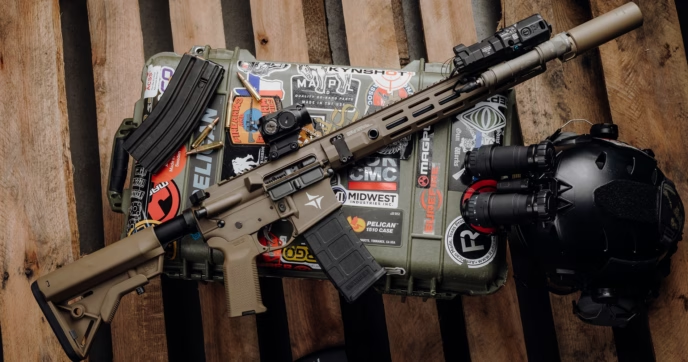
The AR-15 is arguably the most popular rifle system available. It’s well known for its adaptable design, as it can be configured for a wide range of uses. And one thing that sets it apart from other platforms is its two-part receiver system. They’re made up of both a lower and upper receiver.
The lower receiver houses key controls like the trigger and safety selector. But the upper receiver serves as the main backbone of the rifle. It largely influences the way the rifle handles and performs overall. So, whether you’re new to AR-15s or have built many, knowing what to look for in an upper receiver is key to crafting a reliable and durable rifle.
Understanding AR-15 Upper Receivers
The upper receiver is one of the core components of the AR-15. It acts as the main mounting point for the barrel, handguard, and optics. And it also houses two of the rifle’s most important components, the bolt carrier group (BCG) and charging handle. Upper receivers come in four main configurations: stripped, assembled, barreled, and complete.
Types of AR-15 Upper Receivers
| Upper Type | What’s Included | Key Characteristics |
|---|---|---|
Stripped Upper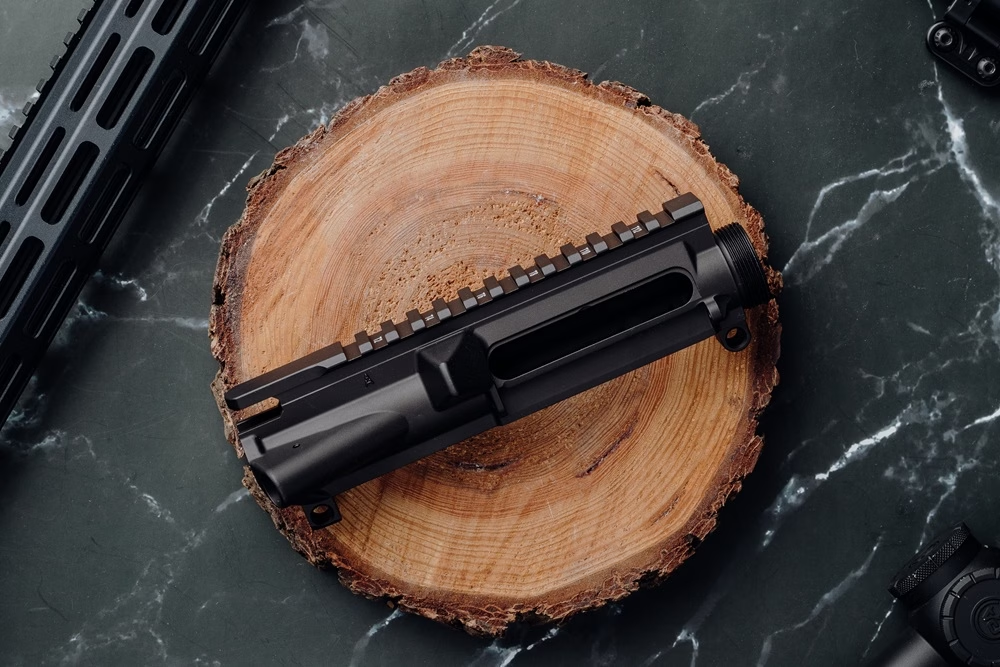 | Upper receiver only; no forward assist or dust cover | Offers full customization; you have total control over the final build, as you’ll be installing everything |
Assembled Upper | Upper Receiver; dust cover and forward assist are already installed | A convenient starting point for custom builds; you’re still able to choose the barrel, gas system, handguard, and other parts of your choice |
Barreled Upper | Upper receiver, barrel, and gas assembly; most include a free‑floating handguard too | Good for those who want something pre‑built and flexibility; you’ll select the BCG, charging handle, and handguard (sometimes) of your choice |
Complete Upper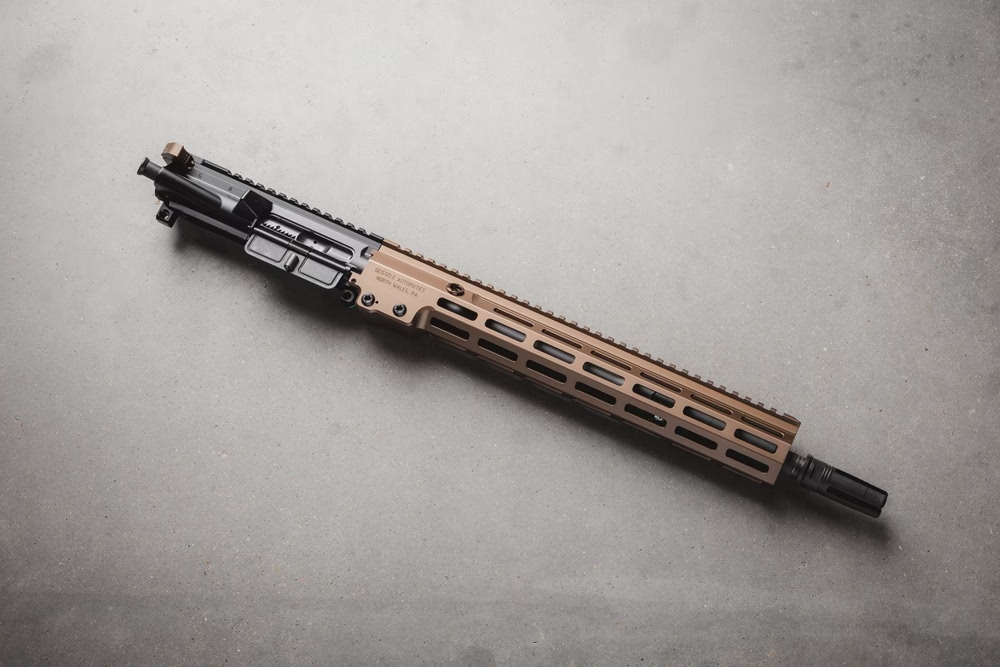 | Fully assembled upper receiver with barrel, gas system, handguard, BCG, and charging handle; select models may include upgraded components | Ready to attach to a lower out of the box; Select models can come with optics and upgraded components |
Factors to Consider When Choosing an AR-15 Upper Receiver
Quality and Material
The material an upper receiver is made from has a direct impact on its strength and longevity. Most uppers are made from 7075-T6 aluminum, a lightweight and highly stress-resistant aluminum alloy. Some older receivers use 6061-T6 aluminum, which is still durable and lightweight, though not quite as strong. In most cases, you should opt for a 7075-T6 receiver unless you’re building something like a clone-correct retro rifle.
They also come in two main variations, those being forged and billet. Forged receivers are, by far, the most common. They’re made by pressing a single piece of aluminum into shape under high pressure, which results in a very strong receiver. Billet receivers are milled down from a solid block of aluminum using CNC machinery. Compared to forgings, it takes more time and costs more to make billet uppers. However, billet receivers can have more unique design features that forged receivers lack. And, if they’re often available in a package with a matched lower, offering the best fitment possible.

Desired Features and Customization
One of the biggest strengths of the AR-15 is how modular it is. Pretty much every part can be swapped out, giving you full control over your build. If you’re building a competition rifle, lightweight parts can improve handling and speed. And for home defense or duty use, you can opt for more durable components built for long-term use in harsh conditions.
Caliber flexibility is another advantage the AR-15 has. A single lower receiver can be paired with multiple complete uppers chambered in different calibers. For example, you can switch between 5.56 NATO and .300 Blackout just by swapping the upper, meaning you won’t need to buy a new rifle.
So, no matter your goals or preferred caliber, there are dozens of quality manufacturers making upper receivers fit for every budget and purpose.

Parts Compatibility
AR-15 upper and lower receivers are built to consistent specifications, which means most uppers will fit most lowers. That said, premium manufacturers tend to hold tighter tolerances, which reduces receiver wobble. Receiver wobble happens when there’s extra space between the upper and lower. It doesn’t really affect reliability in most cases, although the gap can allow debris to enter the action in rough conditions.
For the tightest fitment, matched billet receiver sets are the move. These sets are made for each other, resulting in a precise fit while still being compatible with standard AR-15 parts.
Also, keep in mind that some manufacturers add unique features that can limit compatibility. Aero Precision’s M4E1 Enhanced Upper Receiver features a strong handguard mount that only works with their Enhanced and Quantum handguards. Such uppers are usually complete or stripped anyway. So, there’s not much risk of this when using a barrel upper receiver. Still be sure to check parts compatibility before buying.
Budget Considerations
Upper receiver prices can vary quite a bit. A basic upper with mil-spec parts costs much less than a Daniel Defense upper with a RIS III handguard and a CHF barrel.
Being on a budget doesn’t mean you have to sacrifice quality. Aero Precision and Andro Corp are two well-regarded manufacturers making uppers that don’t break the bank. If you can splurge on premium parts, Sons of Liberty Gun Works, Geissele, and BCM are some of the most popular.
Either way, before making a final decision, think about what you need the rifle to do and what conditions it will be used in. That will help narrow down which options make the most sense for your specific build.

Assembling an AR-15 Upper Receiver
If you choose to build out a stripped upper, you’ll need the right tools for the job. At a minimum, you should have a bench vise, an upper vise block, a proper AR-15 armorer’s tool, punches, and a soft-headed mallet. A full tool kit is a convenient way to make sure you have everything on hand before you start.
And for a step-by-step guide, check out our AR-15 upper receiver assembly guide. It includes tips to help your build go smoothly.

Maintaining your Upper Receiver
Once your upper is assembled, regular cleaning and inspection are key to keeping it running well. An AR-15 cleaning kit will have everything you need, and a cleaning solvent like CLP is all that is needed for routine maintenance.
Start by field stripping the upper. If it is mounted on a lower, first remove the magazine and verify the rifle is unloaded both visually and physically. Then push out the takedown pins to separate the upper and lower, then pull the charging handle to remove it along with the BCG. Once removed, you’ll have access to the barrel and all your other components.
Apply CLP or another solvent to each part to break down carbon buildup. Then use a bore snake and cleaning pads to clean the barrel. Run patches through it until they come out clean. Once everything is clean, apply a light coat of lubricant to the moving parts and reassemble the rifle. Do a quick function check before storing just to make sure everything works properly.
A gun case is the best place to store your rifle. It will protect it from humidity, dust, and debris that can degrade components over time. Also, be mindful of where you keep it. Storing a rifle near a bathroom, for example, can expose it to steam from showers, which may cause it to rust. A cool, dry location is ideal, and using a desiccant pack inside the case will help control moisture.

Conclusion
Your upper receiver is one of the most important parts of your AR-15 build. And understanding the differences between upper types and their key features goes a long way in building a reliable rifle.
Stripped and assembled uppers give you the most control over your components, making them the best choice for a fully custom build. Barreled and complete uppers are great if you want an easier process. They’re perfect for building your first rifle and help reduce the choices you need to make. No matter which path you choose, doing research before you buy is vital. It will help you build a rifle that performs well and lasts.