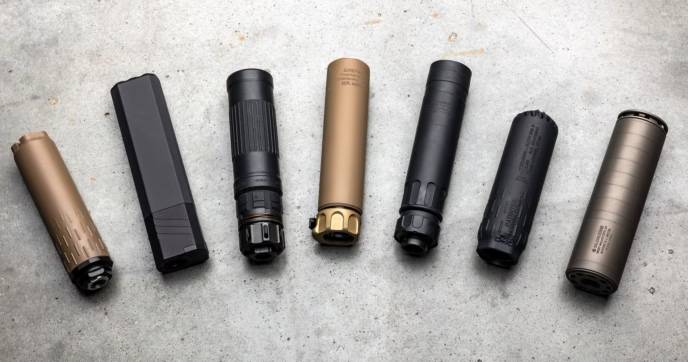
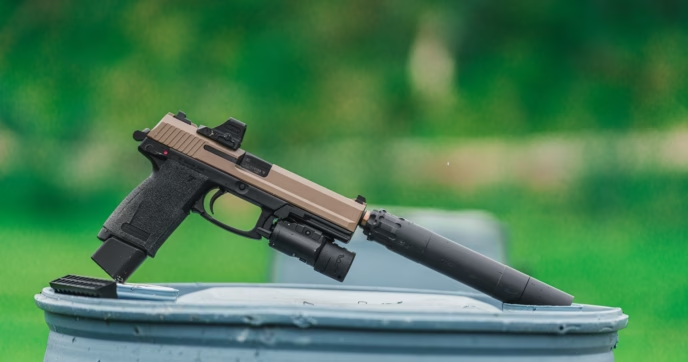
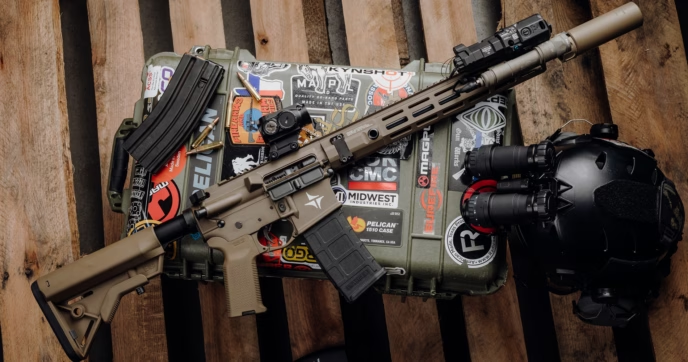
Of all the accessories you can add to your rifle or pistol setup, few are as sought-after as suppressors—specialized muzzle accessories designed to mitigate a firearm’s sound signature and muzzle flash. For the uninitiated, suppressors may seem like an unnecessary expense, but this is far from the truth.
If you’ve ever been to a range before, you’ll know that both rifles and pistols alike are loud, so much so that they can cause serious hearing damage or even permanent hearing loss if you aren’t wearing proper ear protection. And while it’s always recommended to use ear pro, a suppressor is another step you can take to make your setup safer and more practical.
Needless to say, suppressors are cool, that is, until they aren’t. Suppressors work by actively capturing the gases produced from firing a cartridge. As such, they can get very hot, very fast. Now, the speed at which they heat up depends on many factors, such the caliber firearm you’re using to the physical size of the suppressor, as well as the materials it’s made of.
So, while it’s not all that feasible to provide a performance breakdown on every suppressor make and model, we can give you an overview of what kind of temperatures you can expect to achieve when using one after a given number of rounds.
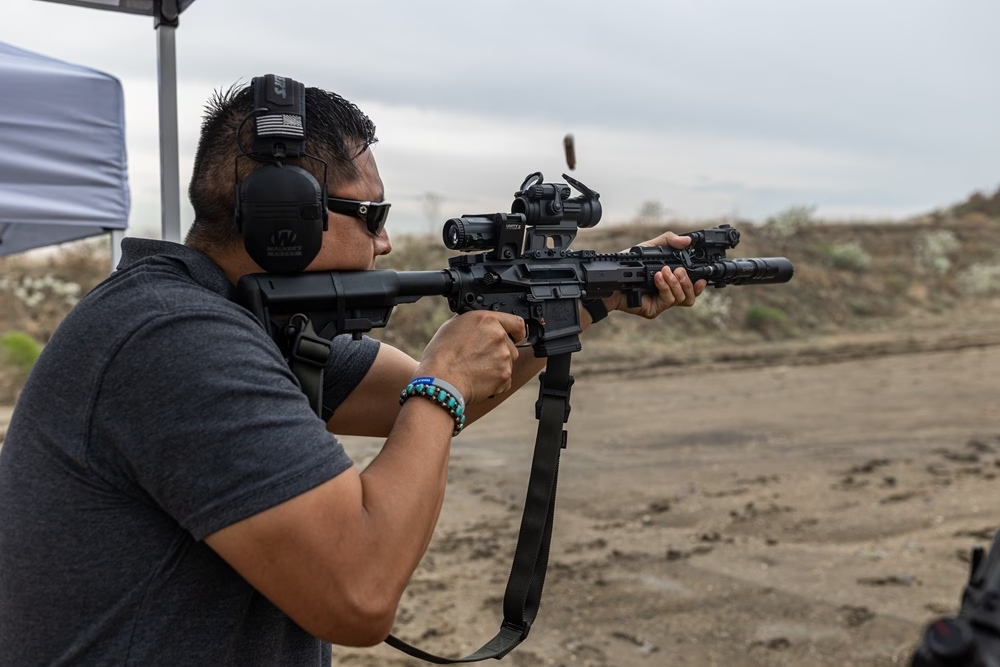
How Suppressors Generate and Retain Heat
As we mentioned above, most suppressors are designed to capture the gas created after firing a cartridge within a series of baffles, slowing them down, and giving them time to cool before exiting out the muzzle. These gases are very hot, and although they cool down to lessen flash and sound, the heat of the gas must go somewhere, and in this case, it’s transferred directly to the suppressor itself.
As such, the more rounds you fire down range, the hotter your suppressor is going to get. Now, for hunting or low volume training, overheating your suppressor isn’t going to be that much of a concern. However, in more intensive training, competitive, or duty applications, overheating is something to be wary of.
Heat-Related Issues for Suppressors
Most, if not all, suppressors are made of metal, and as metal gets hot, it expands, causing its structural integrity to weaken. When overheated, you can cause permanent damage to the outer tube, baffles, and welds of a suppressor, which can dramatically shorten its overall lifespan and making it less effective. Fortunately, many modern suppressors are designed to withstand high heat, and if you’re cautious about its temperature when firing and if you maintain it regularly, your suppressor can last for a very long time.
Additionally, you’ll also want to consider the cleanliness of your suppressor. Since they capture gas and residue after firing, sending multiple rounds through yours can lead to excessive carbon buildup. And, if you run your suppressor hard while there’s a bunch of carbon built up inside it, it can bake onto the baffles and inner walls, which can be a pain to clean, especially if your suppressor isn’t user serviceable.
Lastly, you’ll also want to consider heat transfer. Suppressor heat can transfer to other components of your firearm, including the barrel, handguard (if using a rifle), and any gear that’s attached to it. To be fair, this isn’t strictly caused by suppressors, as this already happens after firing. But it’s something to keep in mind since the rate at which your firearm heats up will be quicker when using a suppressor.
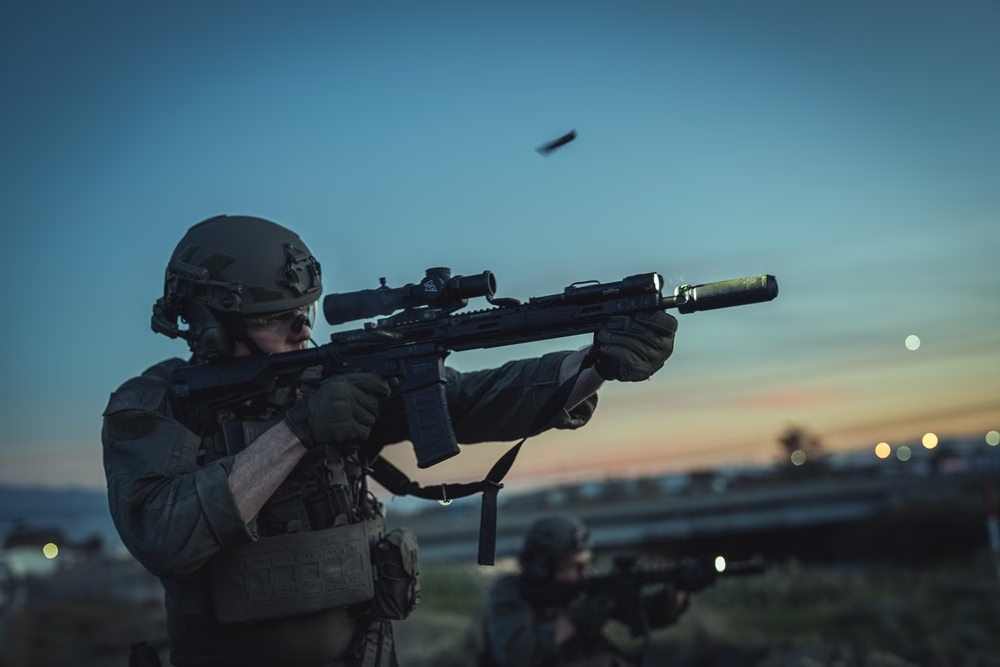
What Happens After 50 Rounds: Warming up
After roughly 50 rounds, your suppressor will have absorbed a fair amount of heat, with it likely being as hot as around 300 to upwards 500+ degrees Fahrenheit. At these temperatures, your suppressor is hot, but you aren’t in the danger zone.
At this point, the suppressor’s body has begun to expand slightly as heat is transferred from the gas to its baffle core and outer tube. Also, any residual oil and solvents within the barrel and suppressor will start to burn off, causing the suppressor to start smoking (rest assured; this is normal). But in addition to this, you’ll also begin to see a heat mirage around it too.
Typically, this isn’t any cause for concern, but precision shooting applications, this can hinder your overall accuracy. As you look down your sights, your sight picture might appear a bit distorted. While this won’t make it impossible to maintain a positive picture of your target, it can certainly pose a challenge. This becomes extremely apparent in long distance applications, but in such applications, it’s unlikely that your suppressor will become that hot enough to cause a significant mirage effect in the first place.
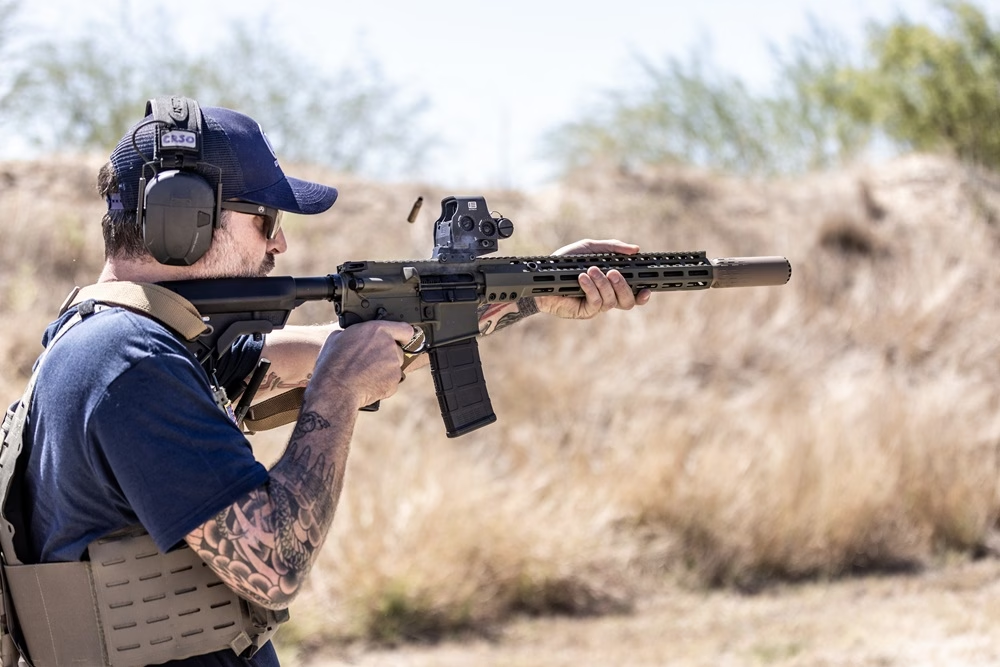
What Happens after 100 Rounds: High Heat
After 100 rounds in rapid succession, your suppressor will be hot, with it likely being around 600 to as much as 850+ degrees Fahrenheit. At this point, the structural integrity of your suppressor is going to be weaker than normal, so it will be best to let it cool down a bit before your next mag, as you’re edging up to the point at which your suppressor reaches critical temperature.
If you don’t let it cool, your suppressor’s coating may begin to discolor, while the baffle core and outer body will gradually weaken, which can potentially lead to a baffle strike if you’re running it hard. Granted, with a semi-automatic rifle or pistol, this is hard to do, but it’s still best to let your suppressor cool down after rapid-fire sessions.
Also, depending on the material your suppressor is made of, you may also begin to reach your suppressor’s peak thermal saturation—the point where it reaches the maximum temperature it can be without altering its physical state. The point at which your suppressor reaches its peak saturation depends heavily on the material its is made of, as well as how fast your string of fire was. Regardless, at this point, managing your suppressor’s heat is crucial, as prolonged heat exposure can speed up the rate at which your suppressor degrades. With enough time between magazines, and with a more restrained firing pace though, you’ll minimize any risk of potential damage.
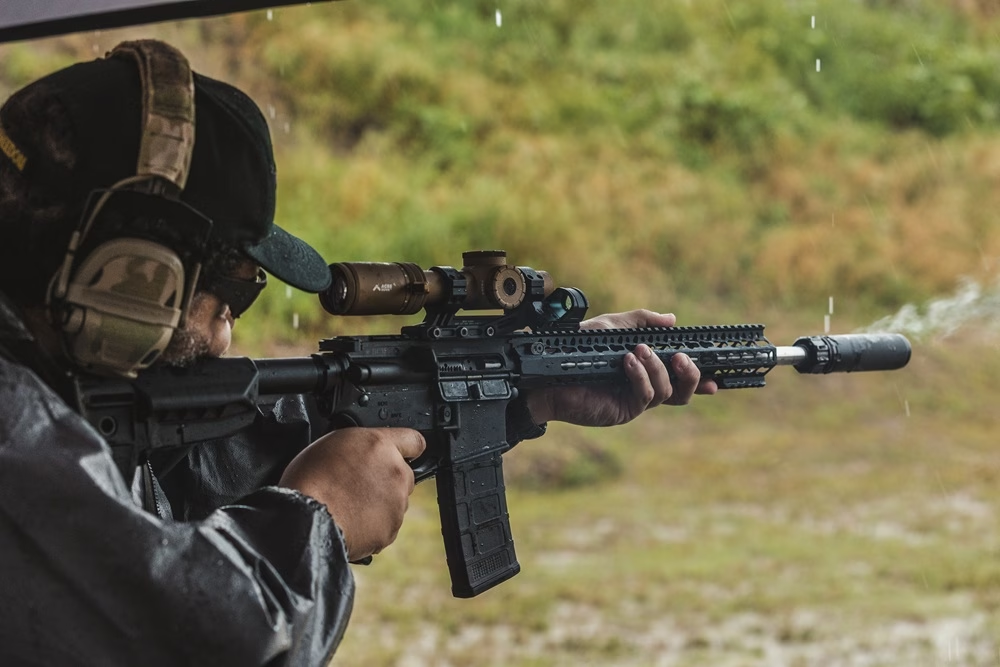
What Happens After 200 Rounds: Extreme Heat
After 200 rounds of sustained automatic fire or back-to-back mag dumps, your suppressor is more-than-likely going to be at the highest temperature it can possibly reach, with it likely being around 900 to 1,200+ degrees Fahrenheit. This is, effectively, the danger zone, and firing again before letting it cool runs the risk of irreparable damage.
Continuing rapid fire at this stage can lead to serious damage and even potential catastrophic failures. Your suppressor will more than likely be at its peak heat saturation point, meaning it won’t be able to effectively disperse heat anymore. And as metal continues to heat up and expand, its structural integrity will weaken even further, increasing the risk of baffle strikes, or in a worst-case scenario, a complete suppressor meltdown.
Now, if your suppressor ever gets hot enough to where it’s glowing or too hot to put back into a case, you may be inclined to pour water on it to cool it quicker. Do not do this. Doing so will cause your suppressor to cool down unevenly and far too quickly, causing it to become brittle, warp, and even crack. As such, it’s best to let it air-cool back to room temperature.
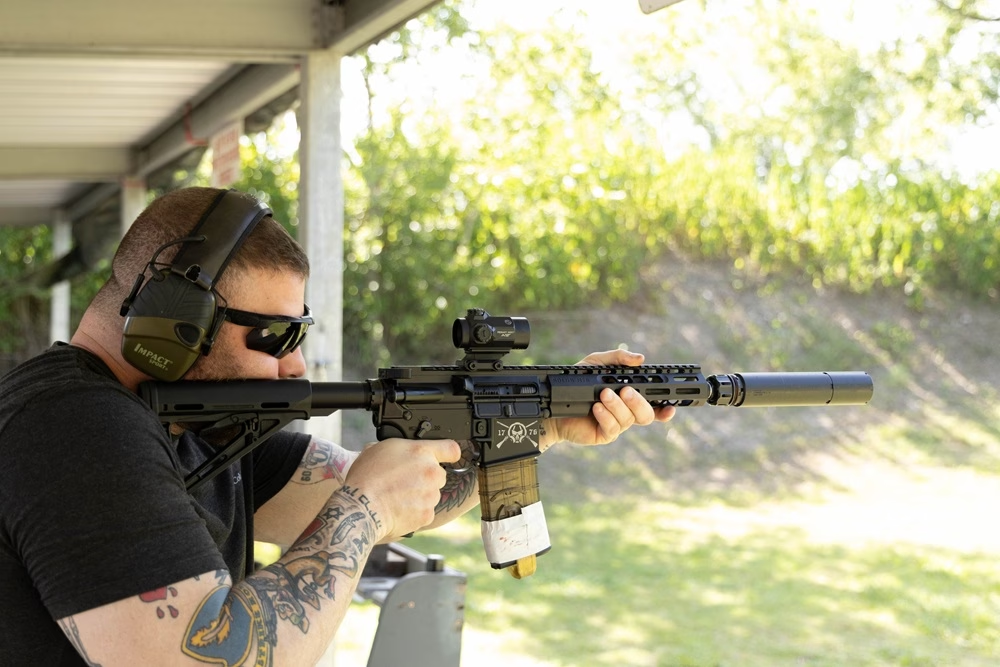
What kind of Heat Can Your Suppressor Withstand?
While looking at the info presented above, you may be thinking that suppressors are a rather fragile accessory, but you’ll be pleased to know that this isn’t true, and that modern suppressors are engineered to be quite durable. However, they aren’t all equal, and they’re all designed to handle different temperatures.
Of all the factors that determine a suppressor’s ability to withstand high heat, the material it’s made of is the largest. Modern suppressors are typically made from either stainless steel, titanium, or more specialized alloys like Inconel and Haynes 282. Of them, Inconel and Haynes 282 are the best, with them boasting incredible durability and heat resilience. This makes them a solid pairing for tactical semi-auto platforms, with them being used for everything from recreational range trips to more intensive training and duty applications. Plus, many rifle suppressors made from these materials are even full auto rated too.
Titanium has a superior strength-to-weight ratio, making them exceptionally lightweight, but this comes at the cost of lower heat tolerance. As such, titanium suppressors are typically recommended for those in need of a lightweight suppressor that isn’t necessarily needed for long strings of fire. Because of this, they’re most often used for long-range shooting applications and hunting.
Choosing a Suppressor
Being a costly investment, it’s easy to get lost in the sauce when shopping for a suppressor. On the one hand, you could opt for one of the many Multi Caliber Suppressors that can be used on multiple platforms, or for peak performance, could go with a caliber-specific model. Regardless of what you decide to go with, there’s a near-endless number of high-quality makes and models to consider.
To make things a bit easier on you though, we’ve compiled a brief list of some of the industry’s most popular suppressor manufacturers below:
Brand Engineering Differences in Heat Management
HUXWRX
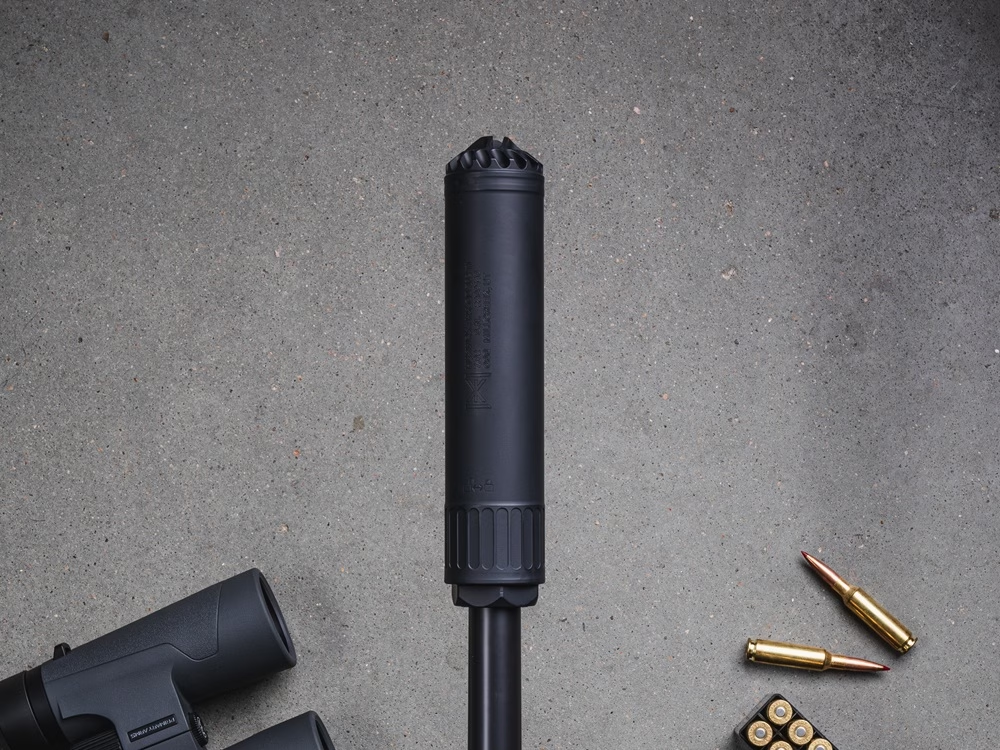
HUXWRX, formerly known as OSS Suppressors, has risen to prominence as one of the industry’s most popular suppressor manufacturers. Their lineup is vast, consisting of several unique suppressor models, with models like the FLOW and Ventum series being some of their most sought-after rifle suppressors.
One of the features that sets HUXWRX apart from other brands is their creation, and use, of flow-through technology. Flow-through designs, as the name suggests, allow gas to flow through the suppressor and out the front. This results in less backpressure, making it great for semi-auto platforms, and they don’t heat up as quickly as traditional suppressor designs. This does come at the cost of marginally less sound suppression. However, with the right setup and gas tuning, they can still do an exceptional job of mitigating sound and flash.
As far as heat management is concerned, HUXWRX’s FLOW series suppressors are available in both a 17-4 PH Stainless steel, and a titanium construction. Between the two, both handle heat well, but for intense applications, the stainless-steel model is best. Similarly, the Ventum also uses a stainless-steel design, and both the FLOW and Ventum are full auto rated.
SureFire
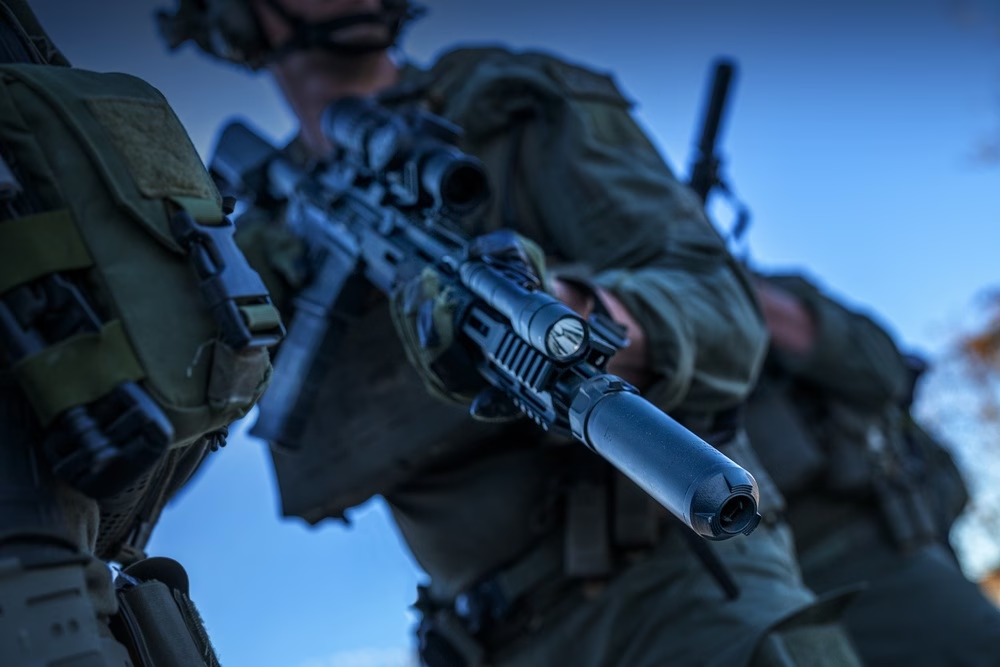
As far as iconic names in the industry go, SureFire is easily one of the most recognizable. For decades, they’ve been crafting some of the industry’s top firearm parts and accessories, including a whole swath of suppressors.
One of the hallmarks that draws so many enthusiasts to SureFire’s suppressors is their sheer durability. Many of their popular models like the SOCOM556-RC3 and SOCOM762-RC2 have been engineered to withstand harsh use in the roughest possible conditions. In fact, these suppressors were tested and selected by USSOCOM for use by the U.S. Military, so they boast incredible durability. These suppressors make use of a stainless-steel outer body and welded Inconel baffles, giving them the ability to withstand some seriously elevated temperatures, making them an excellent choice for rifle builds.
The RC3 even makes use of a newer baffle design that’s similar to HUXWRX’s flow-through design, so they offer solid noise and flash reduction while also being compatible with standard AR builds. Taking it a step further, SureFire’s newer options like their SOCOM556-RC4 make use of their fourth-generation gas flow system, offering a 60% reduction in back pressure. It’s worth noting that SureFire has a lot to offer, and if you’re interested in getting some more insight into their lineup, our SureFire Brand Review has you covered.
Dead Air
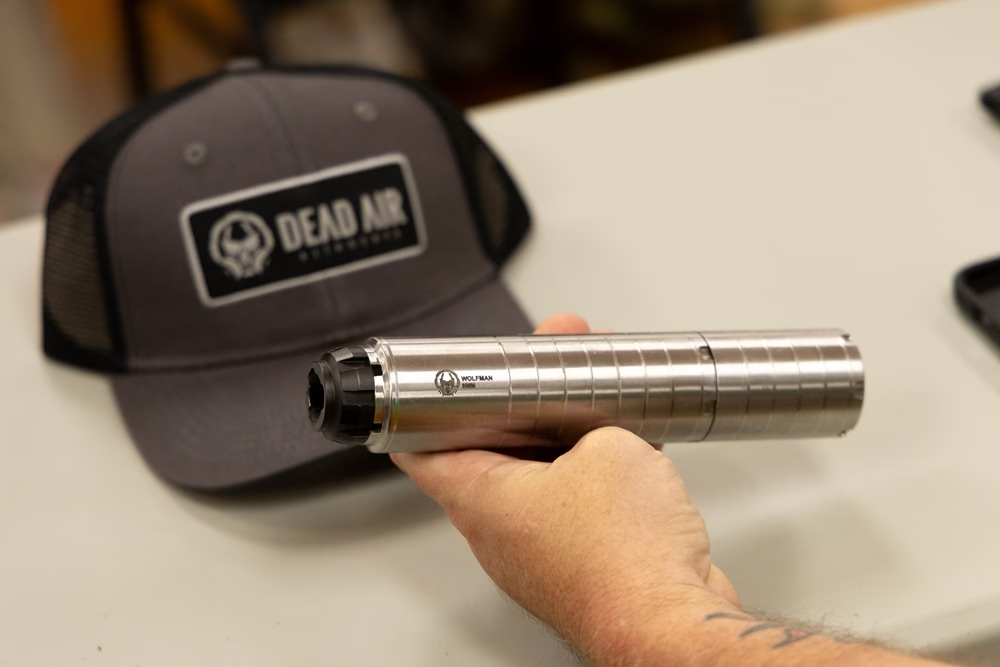
Another excellent consideration is Dead Air. Creators of the popular KeyMo and Xeno mounting systems, they’ve been at their craft for quite some time, developing many excellent suppressor systems. Much like the other brands mentioned thus far, Dead Air has made a lot of different suppressor options, with some of their most popular options being the Lazarus, Sierra, and Sandman Series.
Each one boasts an exceptionally high level of quality, and depending on which model you look at, they can be made from either Stainless Steel, Inconel, or Titanium. Additionally, many of them are user-serviceable, so you can more effectively clean the core components of your suppressor on your own. As such, you won’t have to worry about carbon and other residue baking onto the inside of your suppressor, allowing it to run at peak efficiency while prolonging its lifespan.
SilencerCo
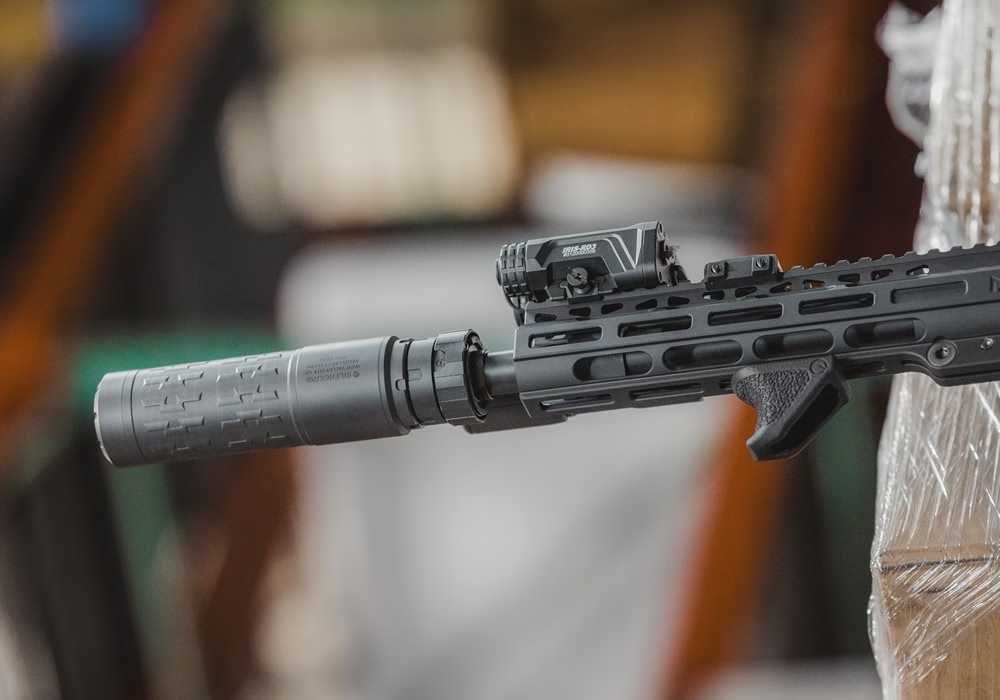
SilencerCo, another industry titan, also offers a vast lineup of highly sought-after suppressors. With several unique rifle and pistol suppressors to their name, their Scythe, VELOS, and OSPREY series are among their most popular.
Their Scythe line is one of their more premium offerings, using a fully welded design, and either a stainless steel or titanium construction. Regardless of which you opt for, they both use modular design that allows you to shorten or lengthen the suppressor at will, making it great for multiple platforms. The VELOS is currently only available in a stainless-steel configuration, and it also has a specialized low back pressure design, making it an exceptional pairing for semi-auto platforms like the AR-15 and AR-10.
Lastly, the OSPREY series consists of SilencerCo’s dedicated pistol suppressors. Compared to the industry’s other popular pistol suppressor options, the OSPREY is unique in that it uses a polygonal design instead of a traditional cylindrical one. Aside from giving it some nice aesthetics, it also increases its internal volume, allowing it to better tame sound and flash. Also, even though the OSPREY is a pistol suppressor, both the 9mm and .45 ACP variants are rated to handle .300 Blackout Subsonic rounds. Just bear in mind that the outer body is made of aluminum, so you’ll need to be a bit more mindful about overheating when using higher pressure ammunition.
Faxon Firearms
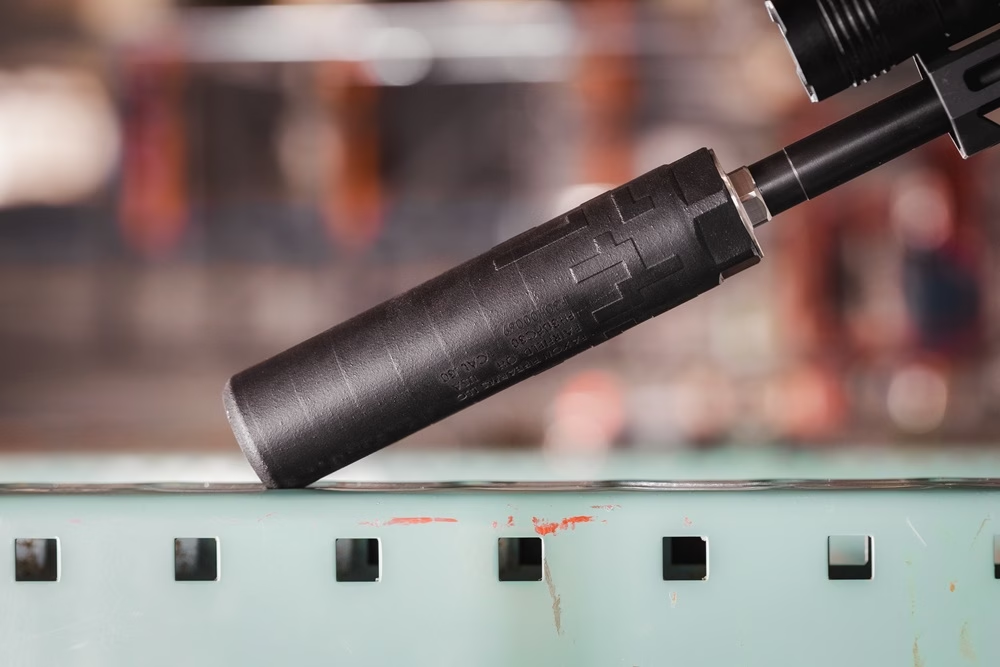
Relatively new to the suppressor game is none other than Faxon Firearms, a well-regarded name in the industry. New to their lineup is their HARMONIX Sentry series suppressors, which are available in an assortment of calibers such as 5.56 NATO, .30 Cal, and even a more unique .36 Cal option, which is currently available in titanium.
What’s unique about these suppressors is they’re constructed of a unique alloy construction—more specifically, they use a Haynes 282 alloy for both the outer body and the internal baffles. A nickel-based alloy, it can maintain its structural integrity at temperatures well above 1,000 degrees Fahrenheit, and its exceptionally corrosion-resistant. As such, they’re great for semi-auto rifle platforms, while their titanium .36 Cal model pairs well with larger caliber bolt-actions and lever guns.
Conclusion
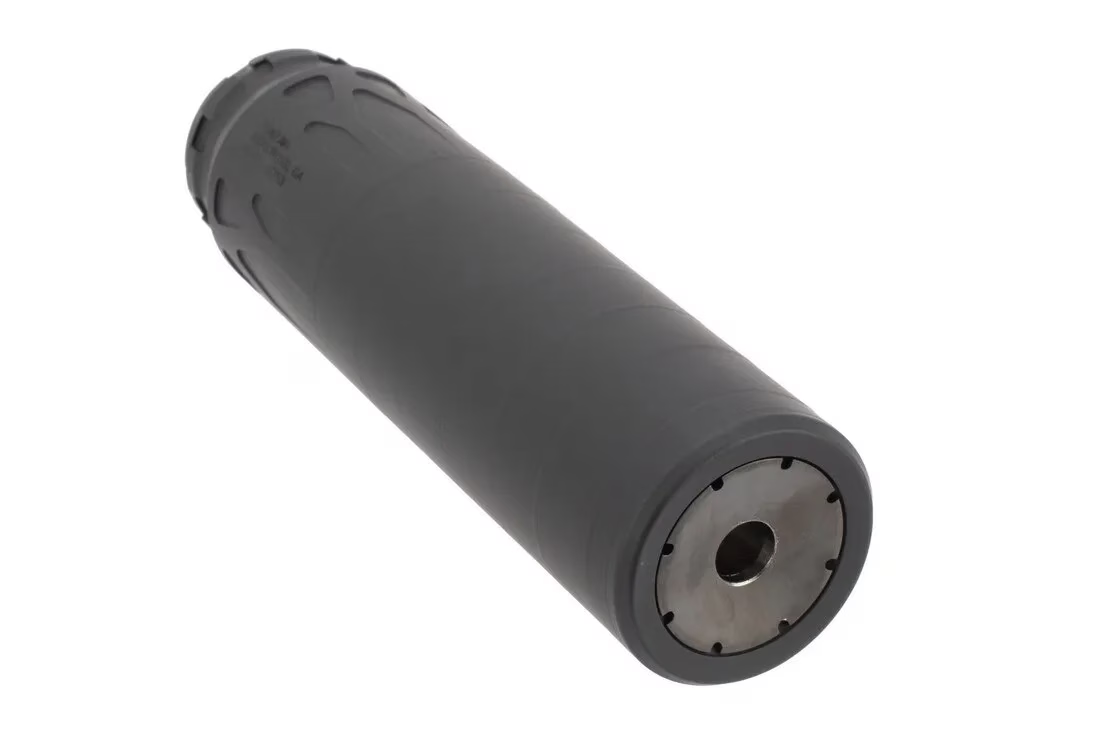
With ‘fire’ being one of the key words in the term ‘firearm’, it should come as no surprise that rifles and handguns can get quite hot after enough use. And if you plan to run a suppressor on any of yours, it’s imperative to understand how excess heat can affect your suppressor. By capturing the expanding gases expelled from firing a cartridge, suppressors heat up quickly, so you’ll need to choose one that can handle the amount of use that your application calls for.
If you’re planning to use your suppressor in a more intensive recreational, competitive, or duty application, it’s best to look for one made from either stainless steel or a specialized alloy like Inconel or Haynes 282. And if you’re planning to use yours for something like hunting, or another less intensive setting, a titanium or aluminum body suppressor can be a solid pick.
At the end of the day, choosing the right suppressor is a matter of finding the one that best aligns with your needs and personal preferences. So long as you consider them before making final decisions, you can rest assured that you have the right model for your setup. However, if you’re on the fence about which is best for you, our guide, “How To Choose the Right Suppressor for Your Needs” breaks down what to look for when shopping for one.