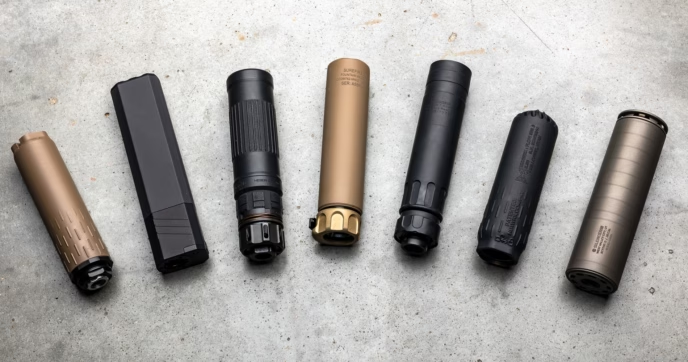
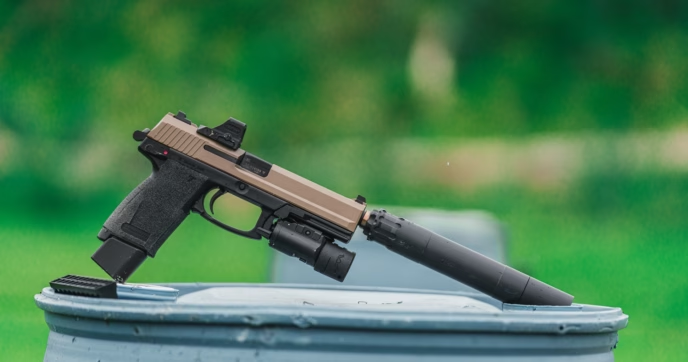
Of all the reasons an enthusiast might choose to own a firearm, personal protection, with an emphasis on home defense is chief amongst them. For such applications, having a rifle or pistol that’s optimally set up for the job is critical. And outside of an optic and weapon light, one of the best accessories you can have is a suppressor.
Suppressors are a seriously advantageous tool, giving you an edge in many regards. For the uninitiated, they’re designed to capture the gases created after firing a cartridge, slowing them down before they can leave the muzzle, to reduce your firearm’s sound signature muzzle flash. As such, they’re easily some of the most sought-after firearm accessories, favored by both professionals and civilian enthusiasts alike.
However, unlike most other accessories, suppressors can’t just be bought off the shelf and taken home—they require their own specific registration process and ATF approval to own. Due to this, and considering how expensive suppressors can be, enthusiasts are sometimes apprehensive about buying one, leading many to question whether they’re truly a necessity for a home-defense gun.
What is a Suppressor?
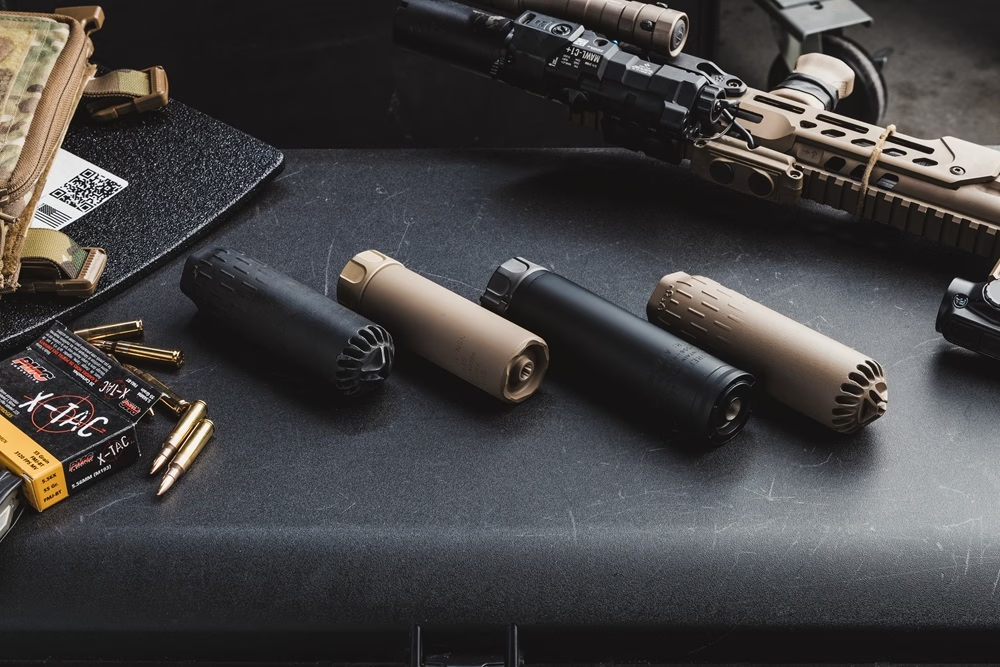
Before we get into the finer details of whether suppressors are necessary for home defense, it’s important to know what exactly they are. As mentioned above, suppressors are tools used to ‘suppress’ the sound signature and muzzle flash put off by your firearm. Though they appear simple on the outside, internally, suppressors house complex baffle chambers designed to capture expanding gases created after a cartridge’s propellant (gunpowder) is ignited. This slows them down, effectively reducing the firearm’s sound signature and muzzle flash. Without ear protection, firearms are more than loud enough to cause severe, potentially irreparable, hearing damage. As such, it’s easy to see why suppressors are so popular.
Suppressors do a great job at overcoming this, but it’s important to note that adding one to your setup won’t make it entirely mute. There’s a lot that goes into The Science Behind Firearm Sound Reduction, and to get the best results, you should ideally match your suppressor to your platform and caliber. And although there are a lot of suppressors to choose from, they’re typically available in configurations designed for either handguns or rifles, respectively.
Pistol Suppressors
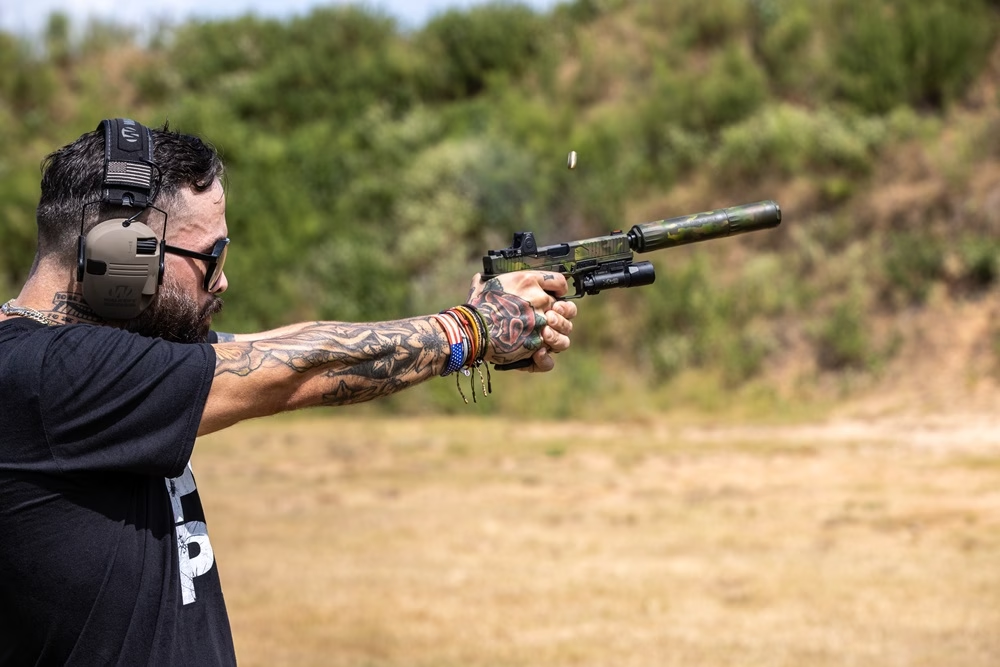
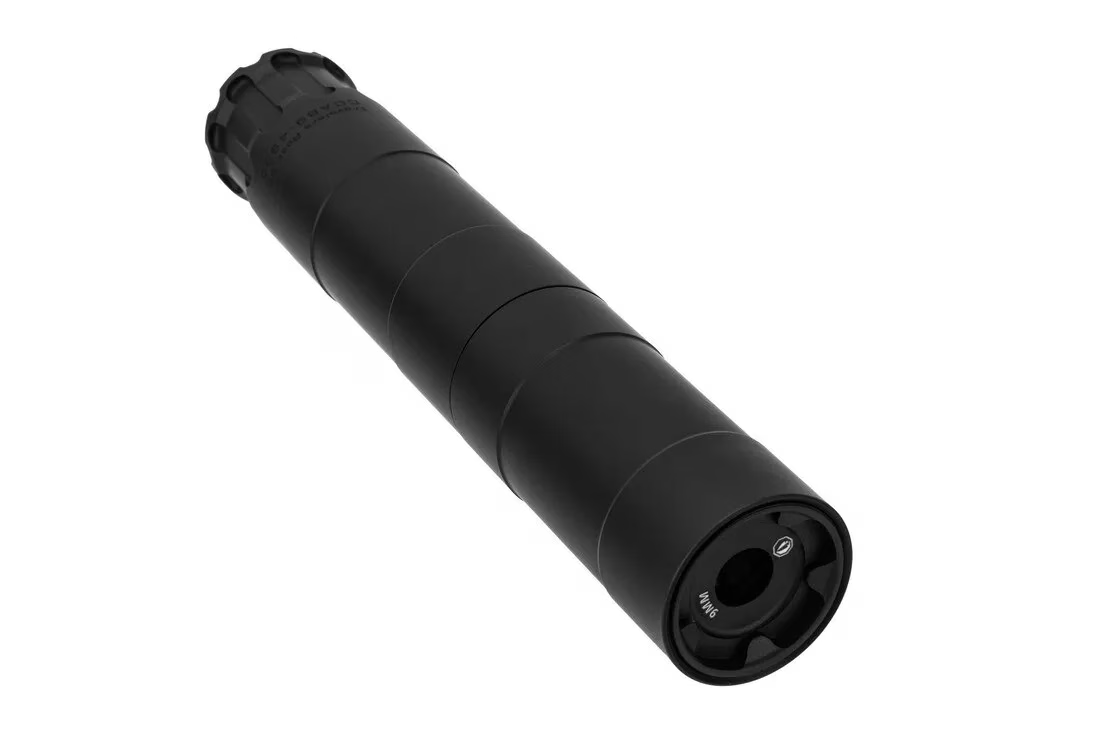
Much as their name would suggest, pistol suppressors are designed for pistol calibers such as 9mm and .45 ACP. However, because of their larger bore diameter, they can effectively be used as a multi-caliber suppressor in some instances. As such, many new enthusiasts will often purchase a pistol suppressor as their first one since they can be used on multiple platforms.
Take the Dead Air Mojave 9, for instance. Despite being a dedicated 9mm suppressor, it’s full auto rated to handle sub-sonic .300 Blackout ammunition and semi-auto rated for both supersonic .300 Blackout and even 350 Legend. The same is true for other pistol suppressor models such as the SilencerCo OSPREY 9 2.0, though it’s only rated for 9mm and subsonic 300 Blackout ammo. Regardless, both can be an excellent choice that can easily be used on multiple platforms.
Something important to highlight is the performance of pistol suppressors. Being designed for pistol calibers, they will suppress them the best. While they can suppress smaller diameter cartridges well at times, the larger bore diameter will allow more gas to escape after firing. As such, pistol suppressors are best for use on handguns or pistol caliber carbines (PCCs).
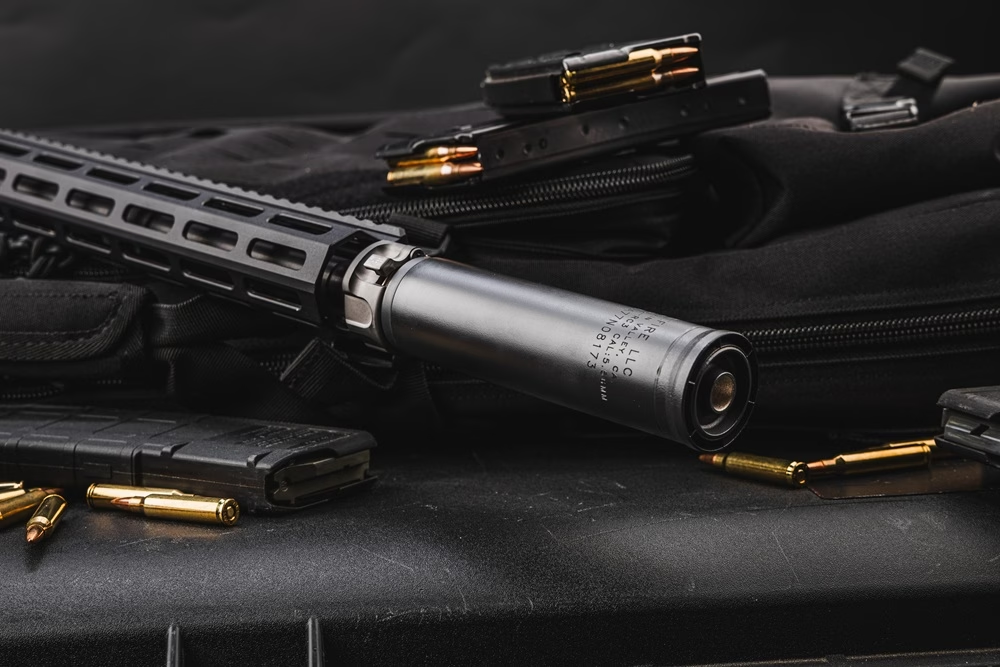
Rifle Suppressors
Rifle suppressors, as their name suggests, are rated specifically for rifle cartridges, such as 5.56 NATO and .30 Caliber cartridges like 300 Blackout and 7.62×39. Because of their narrower bore diameter, they don’t boast the same level of caliber cross compatibility as pistol suppressors, but they offer exceptional suppressed performance for the calibers they’re designed around.
Models like the SureFire SOCOM300 SPS are exceptionally durable, and although they’re designed specifically for 300 Blackout rifles, they can effectively suppress much larger calibers like .308 Winchester and .300 Win-Mag. Even though these calibers are overkill for home defense, if you want the ability to suppress multiple rifles with one can, it’s a solid pick. It even still offers solid performance with smaller calibers like 5.56. Side note: we cover a lot of SureFire’s offerings in our SureFire Brand Review.
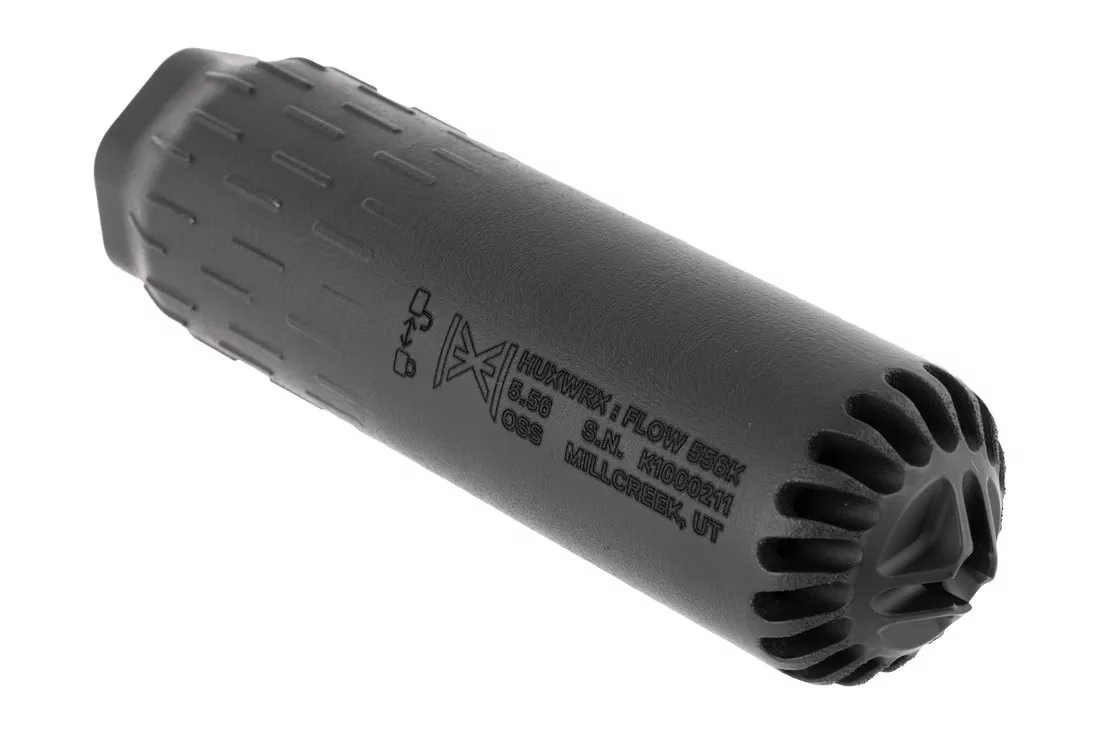
Once you step down to smaller, dedicated 5.56 NATO suppressors like the HUXWRX Flow 556K, you lose out a lot in terms of cross-compatibility. 5.56 NATO is a smaller caliber that uses a .224-inch diameter projectile. Because of this, they’re only compatible with firearms chambered in 5.56 NATO or .223 Remington. You could use it on platforms chambered in .22LR or 5.7×28 since they both have the same bullet diameter. If you plan to use a 5.56 NATO rifle for home defense, a 5.56 suppressor is an excellent choice.
Which do you choose?
Choosing the right suppressor is imperative for maximizing performance. Ideally, it’s best to choose a suppressor that matches the caliber and platform of whatever you plan to use. For example, if your main home defense gun is something like the GLOCK G17—a 9mm handgun—it’d be best to opt for suppressor chambered in 9mm. Conversely, for ARs chambered in either 5.56 NATO or 300 Blackout, it’d be best to have a dedicated 5.56 or .30 Cal suppressor.
Regardless of what your firearm of choice is, or what suppressor you use, there are several advantages to having one on your home defense gun.
Pros of Using a Suppressor for Home Defense
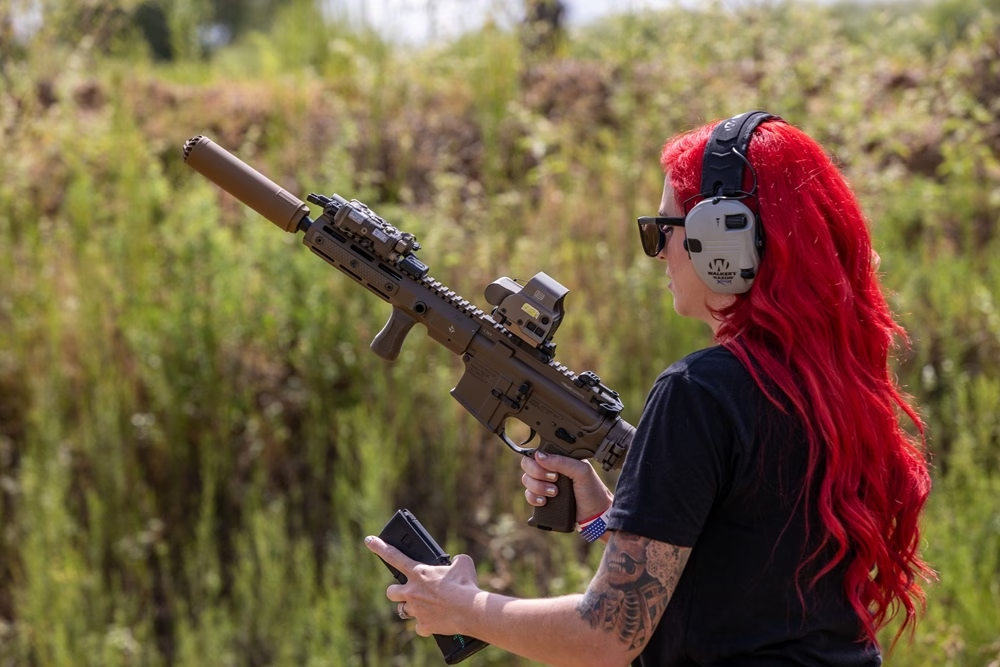
Enhanced Hearing Protection
Your ears are sensitive, and even the smallest caliber firearm can still be loud enough to cause some severe hearing damage. Out at the range, you’d normally have some form of ear protection on, but in a home-defense scenario, hearing protection is probably going to be the last thing on your mind. And as critical as it is to consider your own safety, it’s equally important to think of the safety of your family members, roommates, or whoever lives with or near you.
Firing a rifle or pistol indoors is far louder than doing so in an open space like a flat range. In an enclosed space, soundwaves have more surfaces to reverberate from, making unsuppressed fire upwards 160+ decibels loud, well above the threshold for hearing damage. As such, suppressors can be the difference between hearing damage or no difference in hearing at all. And like we mentioned earlier, if you match your suppressor to your caliber, especially if you opt for a caliber that’s either naturally subsonic or can be made subsonic, you can make your rifle or pistol remarkably quiet
Something to bear in mind is that high-pressure calibers, like 5.56 NATO, will still be quite loud, even when suppressed. This isn’t to dissuade you from using it for home defense, as it’s highly effective for such applications it will still be loud even if you have a suppressor. Still, a suppressed 5.56 AR is still much quieter than an unsuppressed one. And if you tune your gas setting and run the right buffer weight, you can easily optimize the overall performance of your rifle.
Better Communication
If you ever do need to defend your home from an intruder, being able to hear what’s around you, as well as communicate with those who may live with you is incredibly important. Just like we mentioned above, without a suppressor, firing indoors can easily blow out your ears, as well as anyone else if you live with family or roommates.
Doing so can be incredibly dangerous. In any kind of defensive scenario, being able to hear what’s going on around you is critical. You’ll need to be able to listen to see if there’s more than one intruder in your home, and you’ll also need to effectively communicate with those you live with to know where they are, as well as to let them know when your home is safe or not. Additionally, it will make it easier to communicate with authorities after the fact as well, and you more than likely won’t need any emergency medical care for damaged ear drums either.
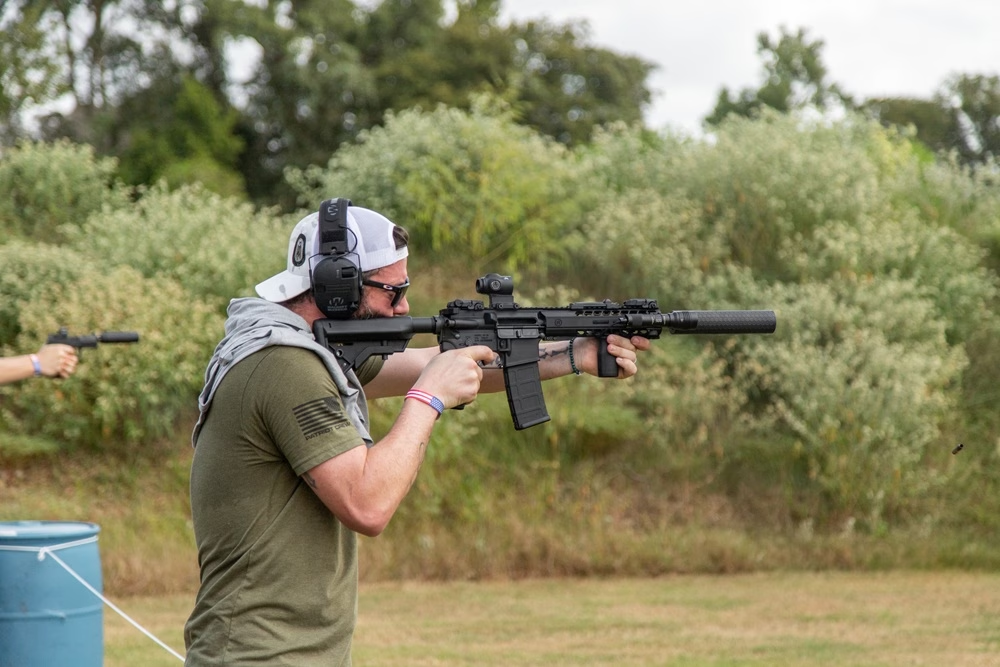
Better Control for Follow-Up Shots
Despite being designed primarily for mitigating sound and muzzle flash, suppressors also do a rather good job at reducing felt recoil. Conventional muzzle devices like muzzle brakes and compensators work by diverting gas after firing instead of blasting it forward to reduce felt recoil. While effective for recoil reduction, this also comes with the caveat of being perceivably louder, as the sound is diverted with the gas, inadvertently directing it back to your ears. And as mentioned above, using such a configuration indoors is beyond ill-advised.
Since suppressors capture these gases, they have time to slow down before exiting the suppressor’s bore, dimming the velocity at which they exit the muzzle. Plus, the added front-end weight a suppressor brings a firearm goes a long way in taming muzzle rise. Even though a suppressor won’t provide the same level of recoil reduction as a specialized muzzle device, it’s still a solid advantage to consider. Plus, since the overall goal is noise reduction, a suppressor is a much smarter choice for indoor/home-defense use.
Considerations of Using a Suppressor
There aren’t many downsides to using a suppressor on your home defense gun, but there are some things to consider before buying one.
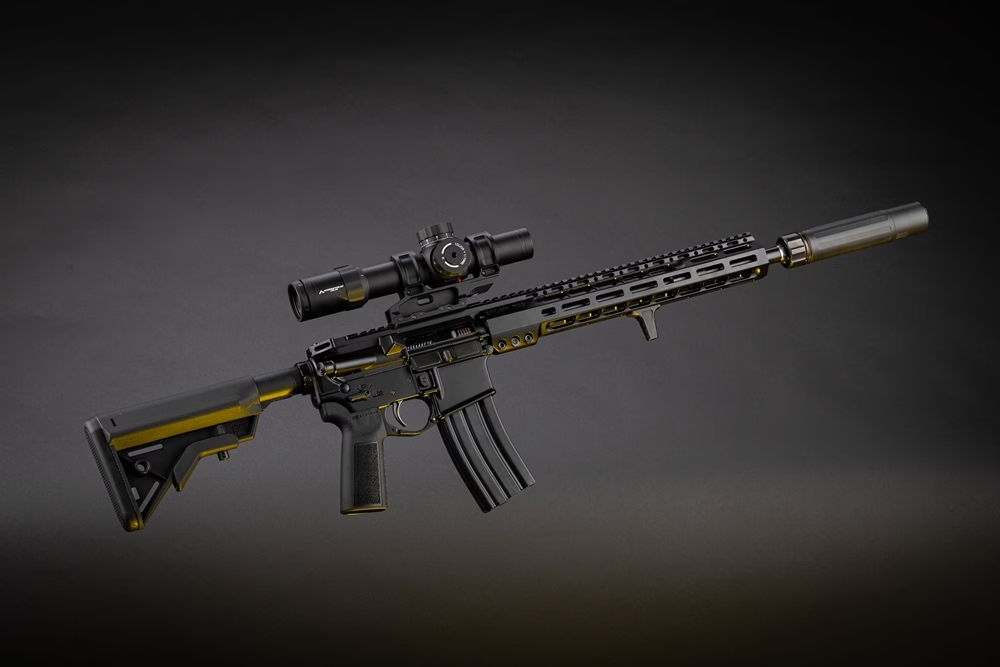
Added Length and Weight
Suppressors both increase the overall length (OAL) and weight to your pistol or rifle, which, depending on your firearm, can have a serious impact on your maneuverability. AR-15s, for example, are available in a litany of different barrel lengths. Something like a 16-inch AR is fairly maneuverable on its own, but with a suppressor, it would handle like a 20+ inch rifle. As such, many opt for either short-barreled rifles (SBRs), pinned and welded 13.9- and 14.5-inch uppers, or even AR pistols to make their setups as compact as possible.
Suppressors can be quite heavy too, with some weighing as much as 15 to 20+ ounces depending on the model. While this might not sound all that bad on its own, once you factor in an optic setup, weapon light, and a loaded magazine, all these ounces can add up, making it imperative that you consistently train with your rifle or pistol to ensure you can use it to its fullest ability. Running dry-fire drills and training to maneuver around corners will go a long way in making you more formidable with a suppressed firearm.
Compatibility with Handguns
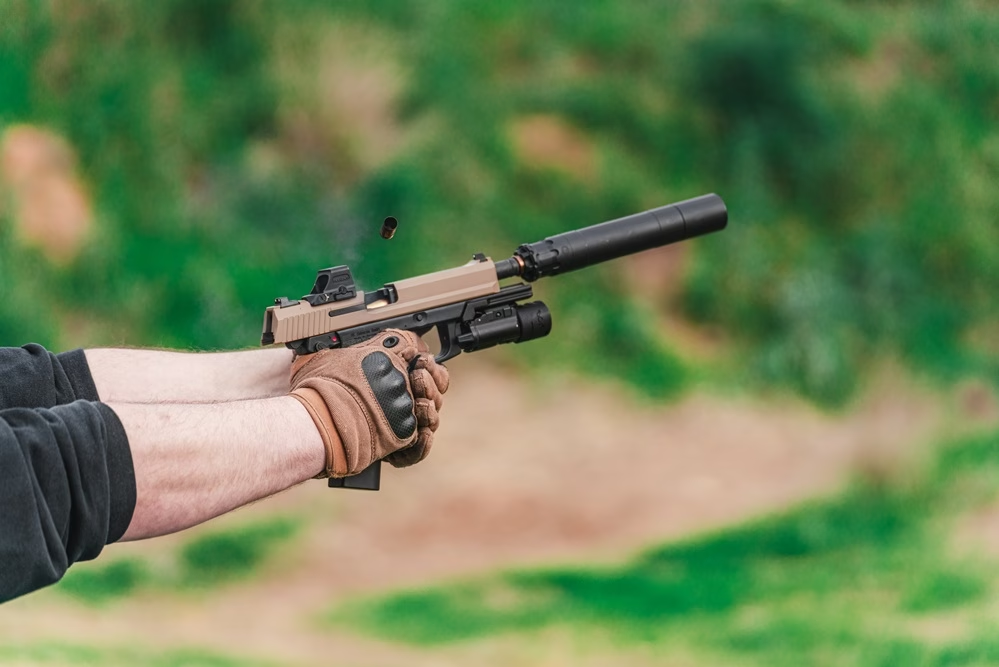
For handguns, the added length doesn’t isn’t as big of an issue, but the extra weight can pose a serious reliability concern. Most, if not all, semi-automatic handguns make use of a tilting barrel design—where the barrel tilts as the slide cycles backward. To properly cycle, the barrel must tilt completely, which can be hindered by the extra weight a suppressor adds. This is where Nielsen devices, better known colloquially as suppressor pistons, come into play.
They allow the suppressor to shift forward slightly, allowing the barrel to tilt fully after firing. Without it, your pistol could suffer malfunctions like a failure to feed or eject. Many pistol suppressors come with these devices, but not all do, so you’ll want to check out the manufacturer’s specifications before making any final decisions.
Greater Backpressure
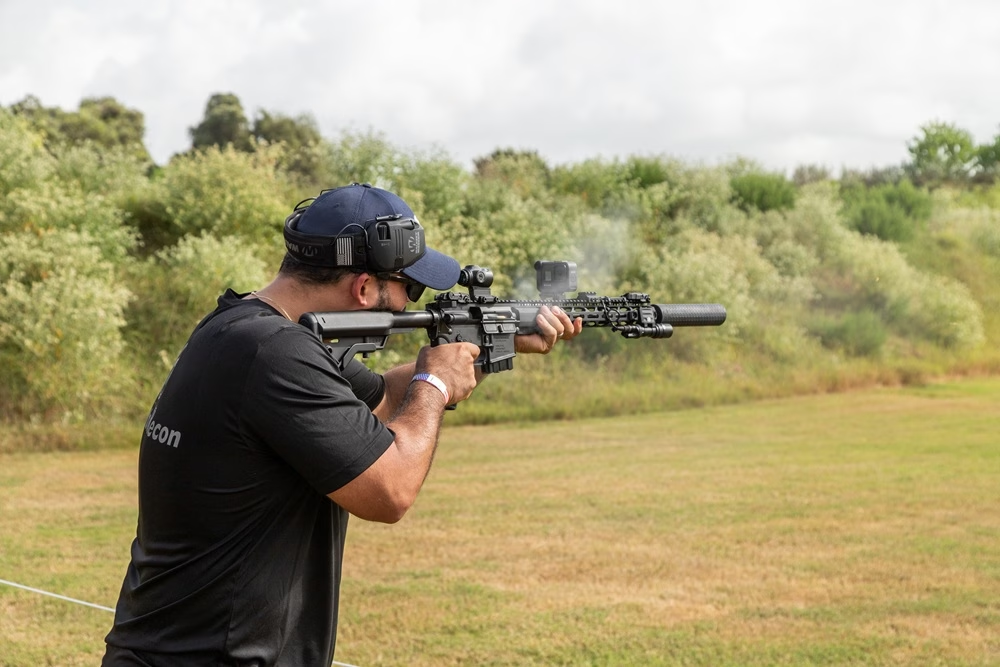
On semi-auto rifles, increased back pressure can be a bit of an issue. By containing the gas created after firing, suppressors can inadvertently force it back through a rifles gas system, causing it to spill out into the receiver. This gas is irritating on both the eyes and nose, making it quite uncomfortable when firing. Fortunately, overcoming this issue is straightforward.
One of the best ways to overcome excessive gas blowback is with a flow-through suppressor. Such models allow gas to flow through the suppressor and out the front, resulting in less back pressure. This keeps you from having to swap out your rifle’s components, allowing you to run a stock AR-15 suppressed with no issues. That said, if you don’t have a flow-through suppressor, aftermarket components such as adjustable gas blocks and gas-busting charging handles let you to tune the amount of gas siphoned from your rifle’s barrel, while also providing vents and channels to deflect excess gas away from your face.
Suppressor Purchasing Process
Suppressors are NFA (National Firearms Act) items, which are regulated by the ATF. As such, the purchase process is a bit more complicated than it is with standard accessories. Once you’ve decided which suppressor you want, you’ll need to fill out paperwork just like you would if you were buying a firearm. However, instead of a Form 4473, you would be filling out a Form 4. Additionally, you’ll need to send a set of your fingerprints on an FD-258 fingerprint card with your Form 4, if you decide to file your forms physically instead of digitally. Afterwards, you’ll pay for your suppressor and wait for approval from the ATF to take it home.
The wait period for approval varies, with it mostly depending on whether you file your forms physically or digitally. Filing physical paperwork can take anywhere from weeks to several months for approval, while the turnaround on digital paperwork can be as quick as days to a couple of weeks. Although you aren’t guaranteed a quick turnaround, filing digitally is the move, as you’ll more than likely receive approval within a week or two.
Something else to make note of is the tax stamp needed to own NFA items. Originally, suppressors, like every other NFA item, required the purchase of a $200 tax stamp for ownership. However, as of January 1st, 2026, the cost of the tax stamp will be reduced to $0, so you won’t need to worry about having to spend an additional $200 on top of the cost of your suppressor.
Conclusion
Suppressors are easily some of the best accessories you can add to your rifle or pistol. The benefits they provide make them more than worth having on your home defense rig, but the question remains: are they necessary? Ultimately, it’s up to you to decide this. If you live by yourself and are aware of the potential damage firing an unsuppressed firearm indoors can do to your ears, you don’t have to use one. That said, we highly recommend having one.
Like we said before, even the smallest caliber rifles and pistols are loud enough to cause permanent hearing damage, and this sound is only amplified when indoors. So, while you may not need a suppressor for home defense, the cost needed to buy one is a small price to pay for living the rest of your life with functional ears.
If you do plan to use a suppressor, you’ll need to think about how you’re going to mount it to your firearm, and if you plan to use a rifle, one of the most common mounting methods is with a dedicated QD mount. We even have a Quick Detach Suppressor Guide that will get you up to speed on all you need to know!