Slide-mounted pistol optics have transitioned from niche competition accessories to mainstream components on defensive, duty, and recreational handguns. As manufacturers refine emitter technology, durability, and optical clarity, the conversation has increasingly shifted toward a less glamorous but critically important topic: mounting compatibility. Behind every optic is a specific mechanical interface that determines how it attaches to a slide, how securely it remains in place under recoil, and how easily it can be swapped or upgraded in the future. Understanding these interfaces is essential for anyone looking to invest intelligently in a modern pistol optic ecosystem.
Red dot footprints are the foundation of that ecosystem. They dictate not only which optics will fit a given slide cut, but also whether adapter plates are required, how robust the mounting solution will be, and how much flexibility the end user retains as new optics enter the market. With multiple standards, semi-standards, and proprietary systems currently in circulation, the landscape can appear confusing.
What Is a Red Dot Footprint?
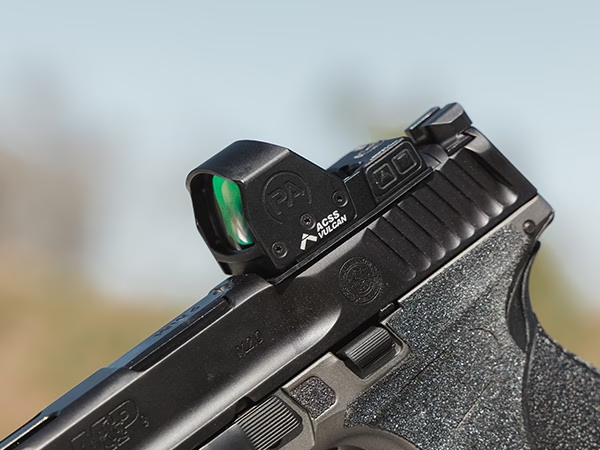
A red dot footprint refers to the specific pattern of mounting features machined into the underside of an optic and the corresponding cut in a pistol slide or adapter plate. This pattern typically includes the spacing and diameter of mounting screw holes, the location and geometry of recoil lugs or bosses, and the overall shape of the optic’s base. Together, these elements ensure proper alignment, prevent shifting under recoil, and maintain consistent zero.
The importance of the footprint cannot be overstated. Even optics that appear similar in size or profile may be mechanically incompatible due to subtle differences in screw spacing or recoil lug placement. Inversely, two optics can share the same screws and recoil lug geometry, but be incompatible with the other’s optic cut due to their external geometry.
Attempting to force compatibility through incorrect screws or ill-fitting plates can compromise reliability and, in some cases, damage both optic and slide. Selecting an optic that matches the slide’s footprint allows for direct mounting, which generally provides the lowest possible height over bore, improved durability, and a cleaner overall installation.
Footprints also influence long-term flexibility. A slide cut for a widely adopted footprint offers access to a broad range of optics from multiple manufacturers, while a niche or proprietary cut may limit future options. An adapter plate system like the GLOCK MOS cut can offer near universal compatibility, but comes with its own drawbacks. For this reason, understanding the dominant footprints on the market is as important as evaluating the optical performance of the sights themselves.
Popular Red Dot Footprints
C-More Footprint
The C-More footprint is one of the earliest standardized mounting patterns in the pistol optic world, with roots in competition handguns. Originally developed for C-More Systems’ slide-ride optics, this footprint features a relatively large base and a pair of vertically oriented mounting screws, typically accompanied by recoil bosses to manage shear forces.
Over time, the C-More footprint became influential well beyond its original application. Several manufacturers adopted variations of this pattern, particularly for full-size open-emitter optics intended for competition or range use. Optics utilizing or closely resembling the C-More footprint have historically included models from C-More itself, as well as early designs from other manufacturers seeking compatibility with competition slides already cut for this pattern.
While the C-More footprint is less dominant in the current duty and concealed-carry market than newer standards, it remains relevant in competitive circles and serves as a historical reference point for how modern footprints evolved. Its larger size and open-emitter orientation make it less common on compact pistols, but it continues to influence contemporary mounting geometry.
Shield RMSc Footprint
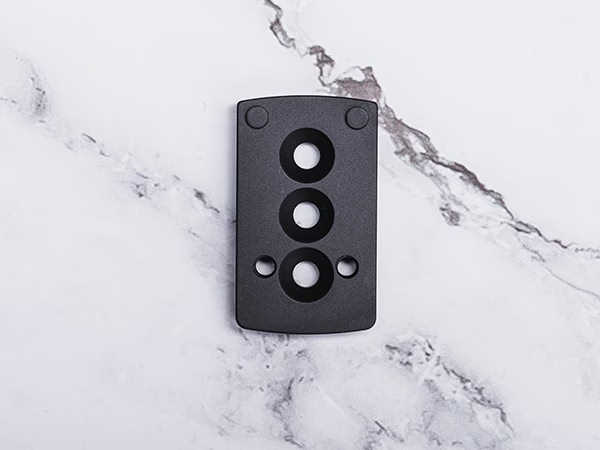
The Shield RMSc footprint has become one of the most prevalent standards in the micro-compact handgun segment. Designed originally for Shield Sights’ compact optics, the RMSc footprint prioritizes minimal size and low mounting height, making it ideal for slim, single-stack pistols and subcompact frames.
Mechanically, the RMSc footprint uses two vertically mounted screws and shallow recoil lugs positioned toward the front and rear of the optic, although some newer optics use a modified RMSc pattern that omits the rear lugs. The pattern is compact and efficient, though it places more emphasis on precise machining and screw integrity due to the reduced contact area. Despite its small size, the RMSc footprint has proven sufficiently robust for its intended role when properly installed.
The popularity of slim, high-capacity micro pistols has driven widespread adoption of this footprint. Numerous optics from Shield, Holosun, Primary Arms, SIG Sauer, and other manufacturers either use the RMSc pattern directly or offer variants compatible with RMSc slide cuts, with the Holosun 407k and 507k becoming particularly commonplace. Many factory-cut slides on modern concealed-carry pistols are designed specifically around this footprint, making it one of the most influential standards in today’s market.
Trijicon RMR
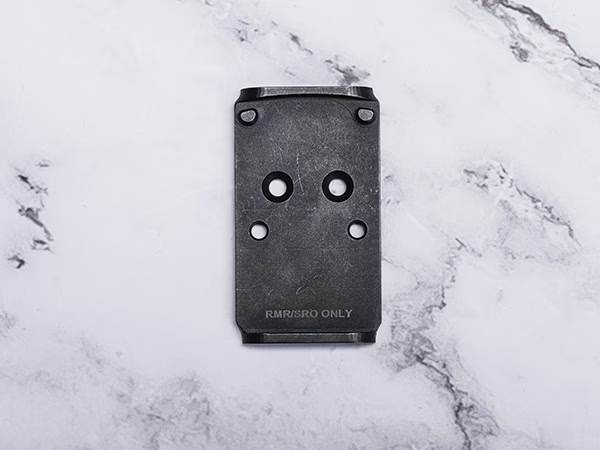
The Trijicon RMR footprint is arguably the most influential and widely supported red dot footprint in the modern handgun optic landscape. Originally developed for Trijicon’s Ruggedized Miniature Reflex optic, this pattern was engineered with durability as a primary design goal. It features two mounting screws combined with substantial recoil lugs that bear the majority of shear forces, reducing reliance on the screws themselves.
This robust design quickly earned a reputation for reliability under hard use, leading to widespread adoption by both civilian and professional users. As a result, many manufacturers chose to make their optics compatible with the RMR footprint, either directly or through closely related variants. Optics such as the Trijicon SRO, Holosun 507C and 407C, Primary Arms RS-10R, and several other models are available in RMR-compatible configurations.
The prevalence of the RMR footprint has also influenced slide manufacturers. Many factory and aftermarket slides are cut specifically for RMR-pattern optics, and even universal mounting systems often include an RMR plate as a default option. While the footprint’s size makes it less suitable for ultra-compact pistols, it remains a benchmark for full-size and compact handguns where durability and optic selection are paramount.
Doctor / Noblex Footprint
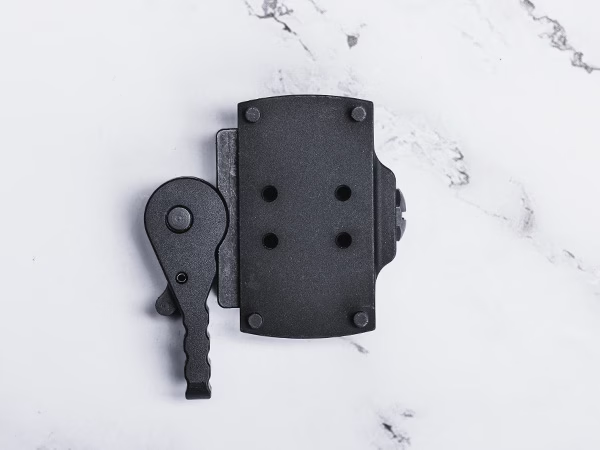
The Doctor, now commonly referred to as the Noblex footprint, occupies an important place in the historical development of slide-mounted pistol optics. Originally introduced with the Doctor Optic sight, this footprint was one of the earliest attempts at a compact, slide-mounted reflex optic suitable for handguns. Its early market entry led to widespread adoption at a time when few alternative standards existed, and as a result, its influence persists even as newer footprints dominate current production.
Mechanically, the Doctor/Noblex footprint utilizes two vertically oriented mounting screws positioned at the rear of the optic, combined with a pair of recoil lugs or bosses located toward the front. This arrangement allows recoil forces to be absorbed primarily by the lugs rather than the screws, a design philosophy that would later be refined and popularized by more modern footprints. Compared to contemporary standards, the recoil lugs on the Doctor pattern are relatively shallow, which places a greater emphasis on precise machining and proper torque during installation.
A wide range of optics have been produced using the Doctor/Noblex footprint or close derivatives of it. Early examples include the original Doctor Optic and subsequent Noblex-branded models, along with popular sights such as the Vortex Venom and Viper, Burris FastFire series, and several legacy offerings from other manufacturers. For many years, this footprint served as a de facto standard for compact open-emitter optics, particularly in competition and recreational applications.
Crossbolt Optic Footprints
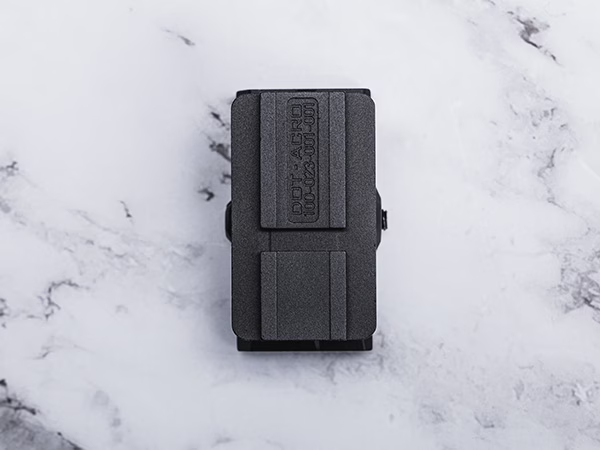
Most traditional pistol optics are secured using screws that pass vertically through the optic body into the slide or mounting plate. However, the rise of enclosed-emitter designs has necessitated alternative attachment methods. Enclosed emitters often feature a fully sealed housing that precludes top-down screw access, leading manufacturers to adopt crossbolt-style mounting systems.
In a crossbolt configuration, the optic slides into a corresponding channel or rail interface and is secured laterally by a transverse bolt. This design can offer excellent resistance to recoil forces and allows for fully enclosed optic housings, but it typically requires a dedicated footprint or adapter plate. As a result, crossbolt footprints tend to be more proprietary than traditional patterns.
Holosun 509T
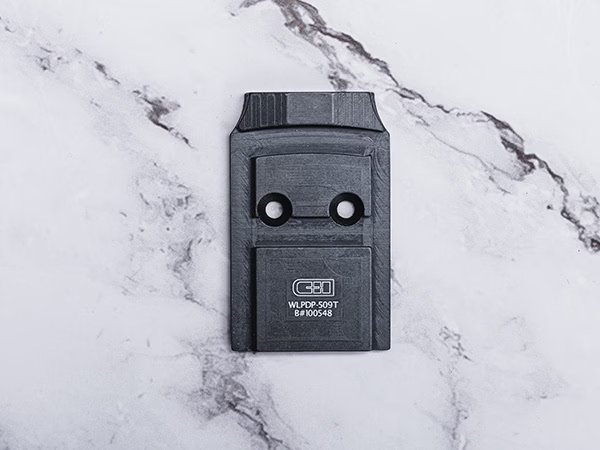
The Holosun 509T footprint is a prominent example of a modern crossbolt mounting system. Designed for an enclosed-emitter optic intended for duty and defensive use, the 509T footprint utilizes a rail-style interface that allows the optic to slide onto a mounting plate or slide cut before being secured by a transverse bolt.
This system provides a strong mechanical lockup and excellent environmental sealing, but it is not directly compatible with traditional vertically mounted footprints. As a result, most users mount 509T-pattern optics via dedicated adapter plates, often designed to interface with more common slide cuts such as the RMR pattern.
Optics utilizing the 509T footprint are primarily limited to Holosun’s own enclosed-emitter offerings, though the footprint has gained significant market presence due to the popularity of enclosed designs. Its strength lies in durability and environmental resistance rather than cross-brand compatibility.
Aimpoint ACRO
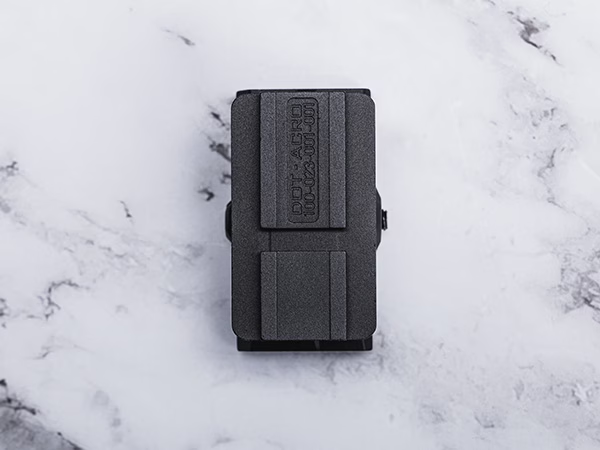
The Aimpoint ACRO footprint represents another influential crossbolt design and is often considered the benchmark for enclosed-emitter pistol optics. Like the 509T, the ACRO uses a rail-based interface with a transverse locking mechanism, allowing the optic to be fully enclosed while maintaining a secure attachment.
The ACRO footprint is characterized by its simplicity and robustness. The optic slides onto a matching dovetail-style cut or plate and is locked in place with a single crossbolt. This design minimizes the number of fasteners and provides consistent return-to-zero when properly installed.
While the ACRO footprint is inherently proprietary, its popularity has led many slide and plate manufacturers to support it directly. Several optics beyond Aimpoint’s own models have adopted ACRO-compatible mounting systems, making it one of the more widely supported enclosed-emitter footprints currently available.
Universal Optic Mounting Systems
As the number of footprints has grown, manufacturers have sought ways to provide flexibility without committing end users to a single standard. Universal optic mounting systems are the result, and they generally fall into two categories: adapter plate systems and proprietary multi-footprint slide cuts.
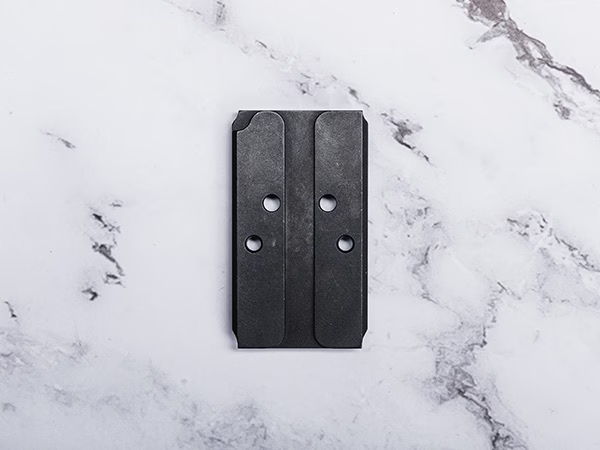
Adapter plate systems, such as the GLOCK MOS, utilize a standardized slide cut paired with interchangeable plates. Each plate features a different footprint, allowing the user to mount a wide variety of optics on the same slide. The primary advantage of this approach is versatility. Users can change optics without re-machining the slide, and manufacturers can support multiple footprints with minimal changes to the base firearm.
The trade-offs include increased mounting height and additional interfaces that can introduce potential failure points if not properly designed or installed. High-quality plates mitigate these concerns, but direct mounting remains preferable when absolute durability and minimal height are priorities.
Proprietary universal systems take a different approach by machining complex slide cuts that accept multiple footprints directly, often without plates. Examples include multi-pattern cuts that accommodate both RMR-style and RMSc-style optics, sometimes through the use of removable recoil lugs. These systems can offer lower mounting height than plate-based designs while retaining a degree of flexibility, though they are inherently limited to the patterns anticipated by the manufacturer.
Both approaches represent attempts to balance compatibility, durability, and simplicity in a crowded market.
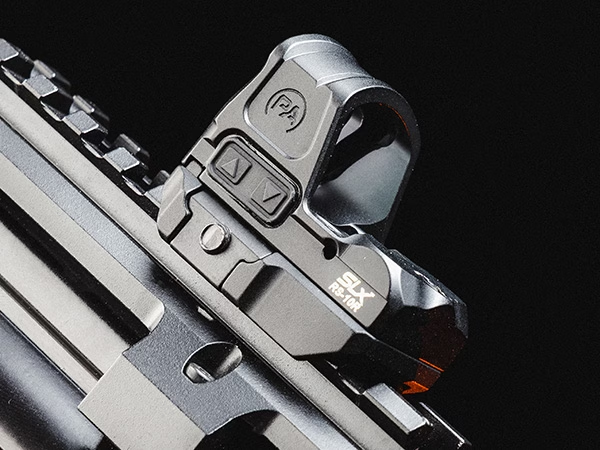
The Ultimate Alternative: Primary Arms PLx HTX-1
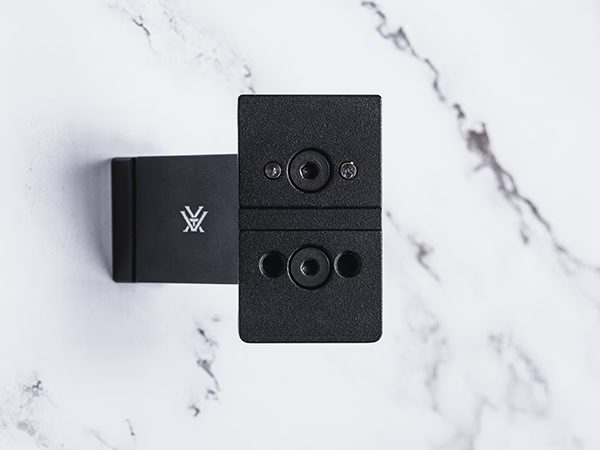
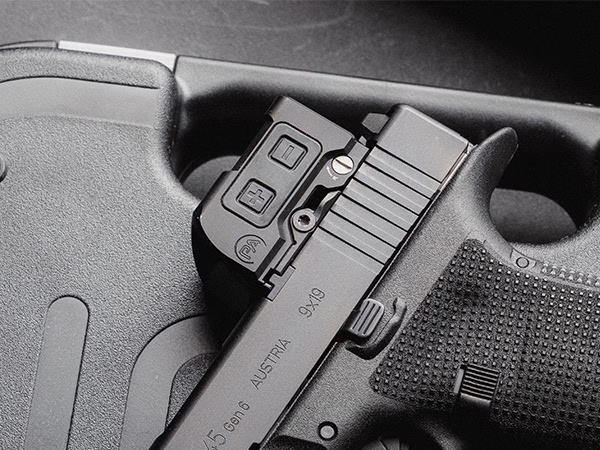
Rather than asking users to adapt their slide to an optic or choose an optic based solely on footprint compatibility, the Primary Arms PLx HTX-1 takes a fundamentally different approach. At the core of the HTX-1 is a modular chassis system that separates the optical housing from the mounting interface, allowing the same optic to be configured for a wide range of slide cuts.
This chassis system uses interchangeable mounting bases designed to match nearly every major footprint on the market, including RMSc, RMR, and various proprietary patterns. The optic body itself remains constant, while the mounting interface is tailored to the slide. This approach effectively decouples optic selection from footprint constraints, offering unprecedented flexibility.
From a mechanical standpoint, the system maintains secure attachment by integrating recoil lugs and mounting features directly into each chassis. This ensures that durability is not sacrificed for compatibility. The result is an optic that can transition between platforms as user needs evolve, without requiring adapter plates or replacement optics.
In a market defined by competing standards, the HTX-1 represents a forward-looking solution that prioritizes adaptability and long-term value. It reflects a recognition that footprints will continue to evolve, and that future-proofing is as important as present-day performance.
Conclusion
Red dot footprints are the often-overlooked foundation of modern pistol optics. They determine compatibility, influence durability, and shape the long-term flexibility of a handgun setup. From legacy patterns like the C-More footprint to dominant standards such as RMSc and RMR, and from enclosed-emitter crossbolt designs to universal mounting systems, each approach reflects a specific set of priorities and compromises.
Understanding these footprints empowers users to make informed decisions, avoiding unnecessary limitations while maximizing performance and adaptability. As the market continues to evolve, solutions that transcend traditional footprint constraints, such as modular optic systems, point toward a future where compatibility is no longer a primary concern. In the meantime, a clear grasp of existing standards remains essential for anyone navigating the modern red dot landscape.
Frequently Asked Questions (FAQ)
-
What Is A Red Dot Mounting Footprint?
A red dot mounting footprint is the specific pattern located on the base of the optic. Each optic has a specific mounting design that has its own screw spacing and recoil lug placement, meaning they’re only directly compatible with matching mounts or pistol slides.
-
What Are The Most Common Red Dot Footprints?
The Trijicon RMR, Shield RMSc, and Docter/Noblex mounting footprints are some of the most common ones used across the industry. The RMR and Docter/Noblex footprints can be found on many of the industry’s most popular optics designed for compact and full-size pistols. Meanwhile, the RMSc footprint is popular for smaller optics designed for slimmer sub- and micro-compact handguns.
-
Are Red Dot Footprints Universal?
No, they are not. Optic manufacturers don’t always make use of the same mounting footprint, so not every optic will be compatible with every pistol slide by default. You either have to use an optic that matches your pistol slide’s optic cutout, or you can use an adapter plate to make it fit.
-
How Do I Know Which Red Dot Footprint My Slide Uses?
To identify your which optic your pistol is compatible with, check your pistol’s included user manual. Most, if not all, modern optic-ready pistols list their mount compatibility, or the specific mounting system they use.
-
Can You Use An Adapter Plate For Different Red Dot Footprints?
Yes, you can. You can use adapter plates to make your pistol compatible with different optic mounting footprints. In fact, many popular pistol manufacturers like GLOCK and H&K use their own specific mounting systems that require specific mounting plates for every optic. Just keep in mind that adapter plates can raise the height of your optic.