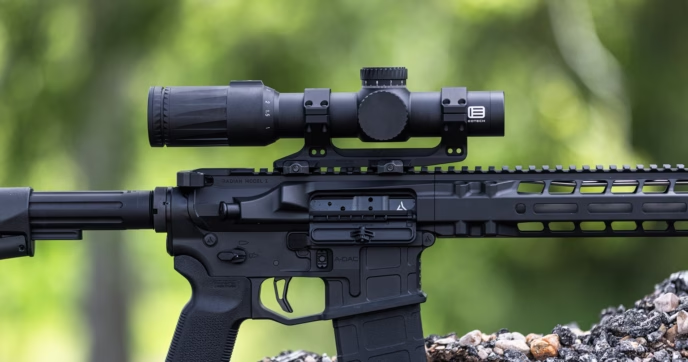
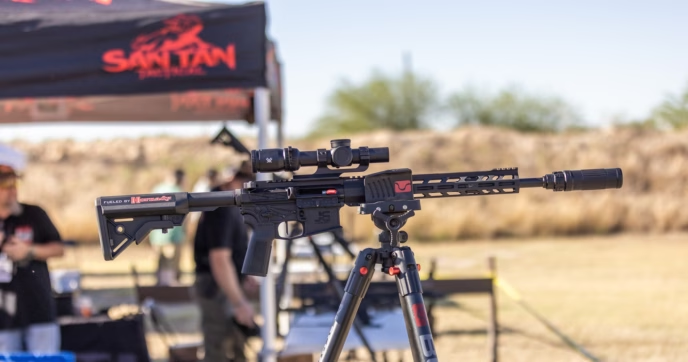
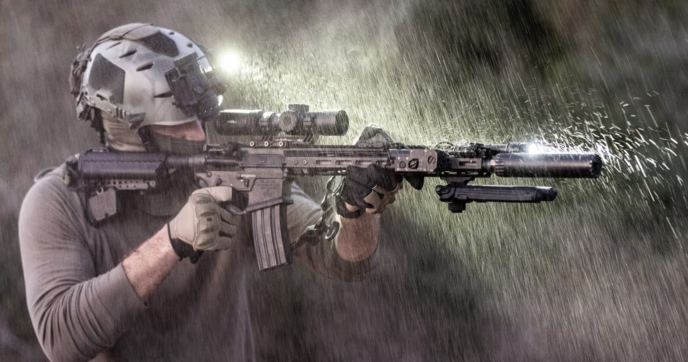
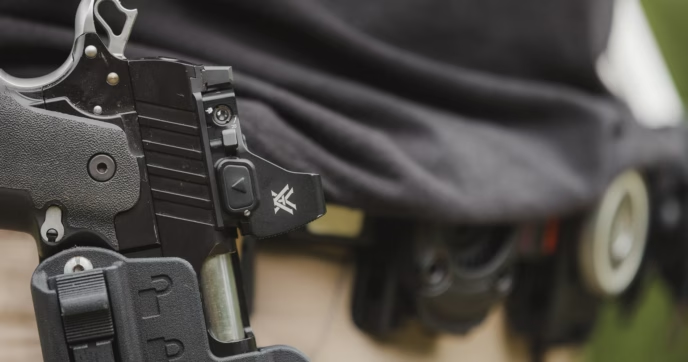
Even if you aren’t well-versed in firearm optics, you likely already know that red dot sights are some of the most widely used optics in the industry. There is a near-endless number of optics to choose from, and there are dozens of high-quality brands making them. So, shopping for one isn’t always easy.
Many new enthusiasts will often try to counteract analysis paralysis by searching for the ‘best’ red dot sight on the market, but this doesn’t really narrow down your choices all that much. So, that begs the question… what is the best red dot?
Like most other firearm accessories, choosing an optic almost always comes down to a matter of personal preference. Factors like the optic’s construction, its size, reticle type, and reticle color, all need to be considered before pulling the trigger on one. And to point you in the right direction, we’re going in-depth on the personalized approach to finding a reflex sight.
Types of Reflex Sights to Consider
Contrary to what many may believe, not every reflex sight is a red dot sight. In fact, the term ‘reflex sight’ encompasses several different types of optics.
Open-Emitter Reflex Sights
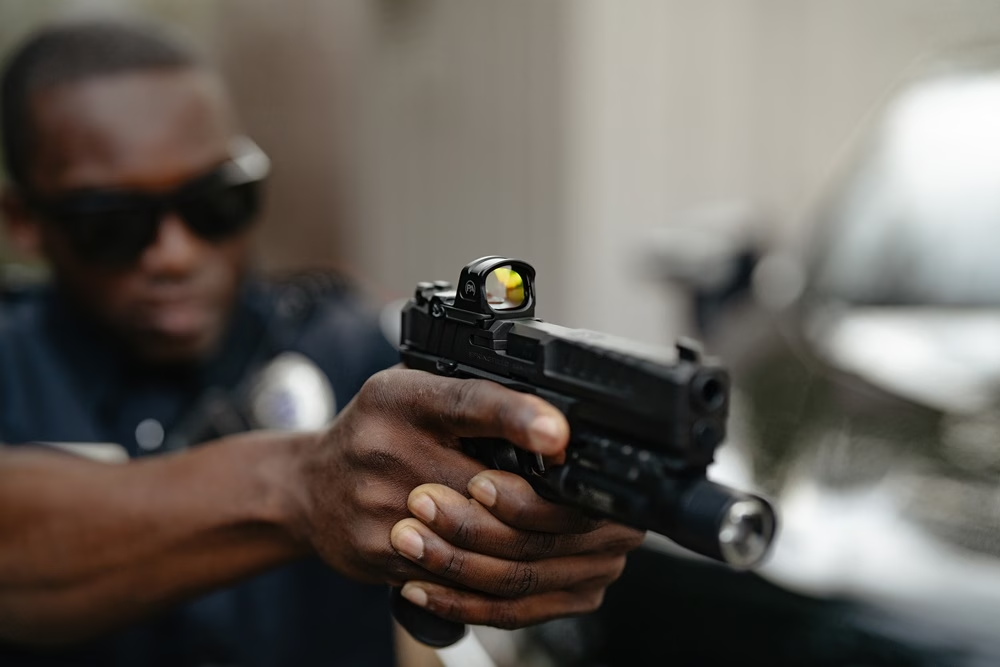
Traditional reflex sights have an open-emitter design and only one lens, and while this seems counterintuitive, such a design gives them a much wider field of view (FOV) than other optics. Still, it’s important to note that this does leave the emitter diode exposed, meaning that if you’re in an area that’s rife with hazards like dirt and any other kind of debris, it could become occluded if you aren’t careful.
For the most part, there aren’t many rifle optics that make use of open emitter designs these days, with the Holosun 510C being one of the only readily available optics with such a design. But this doesn’t mean that they aren’t still popular. Mini-reflex sights are some of the most common pistol optics available, and they can be incredibly affordable too, though there are plenty of premium options to consider too.
Red Dot Sights
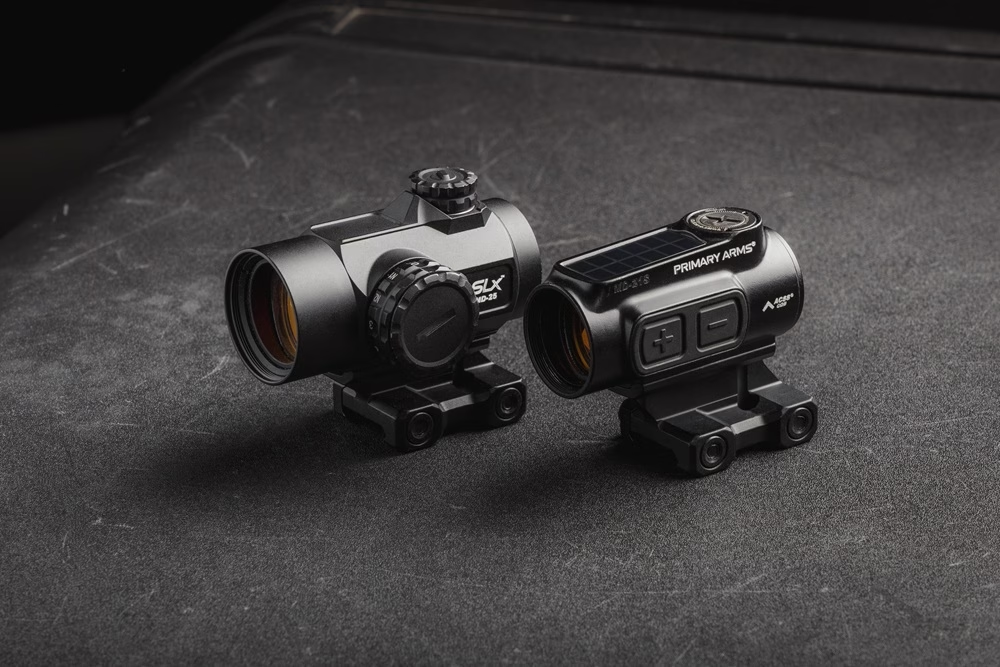
The go-to optic for close-quarters use, red dot sights are, arguably, the most popular reflex sight choice available. Compared to open-emitter reflex sights, red dot sights are fully enclosed. They have a rigid optic body, and two lenses, meaning the emitter diode is always protected from outside elements. As such, red dot sights are typically more durable than their open-emitter counterparts.
Compared to open-emitter optics, red dot sights have more constricted FOV, but they’re still easy to use and quite agile for more dynamic use. And just like with open-emitter optics, red dot sights can be very affordable too.
Holographic Sights
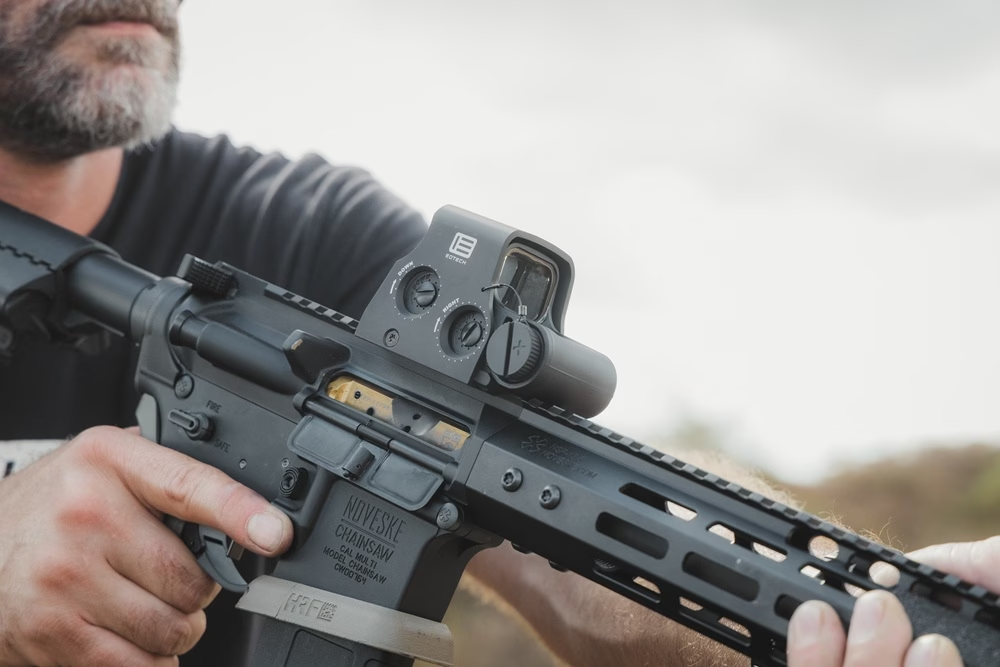
Holographic sights are, by far, the most technologically advanced optics of the bunch. They’re like red dot sights in that they use an enclosed design with two lenses, but instead of collimating light onto the lens, they bounce it several reflective surfaces to create a holographic reticle (hence the name). Because of how advanced these optics are, they’re pricier than other reflex sights, but they work exceptionally well with magnifiers and have other benefits that we’ll go over later.
Also, it’s critical to note that there aren’t many holographic sight options to choose from either, with their being only a few manufacturers producing them for the civilian market. That said, they’re known for their exceptional durability, with them being used for everything from intensive competitive and duty applications to recreational use.
Choosing a Reflex Sight: Subjective Factors
Of the three optics we mentioned above, it’s impossible to declare one as the singular ‘best’ possibility. We go over this in our guide, “Reflex Sight vs. Red Dot”, but choosing an optic is subjective. Depending on how you want your optic to perform, it’s critical to examine the features each option offers before buying. And for reflex sights, there’s a lot to consider.
Reticle Considerations
Dot Size and Pattern
Although the dot reticle is the one that’s most associated with reflex sights, they aren’t the only ones available for them, and even dot reticles themselves have their share of diversity. No matter what reticle you look at, you’ll often see a number and the term ‘MOA’ attached to them. MOA is an acronym meaning “minutes of angle”, and while it can mean multiple things when discussing optics, for reflex sights, it most often refers to the actual size of a reticle.
1 MOA accounts roughly 1 inch at 100 yards, so a 2-MOA dot would cover 2 inches of the target at 100 yards. For rifles, the most common dot size is 2-MOA, though there are both smaller and larger ones as well. 2-MOA dots are large enough to be easy to acquire in fast paced applications, but they’re also small enough so that making more precise shots at further distances isn’t impossible.
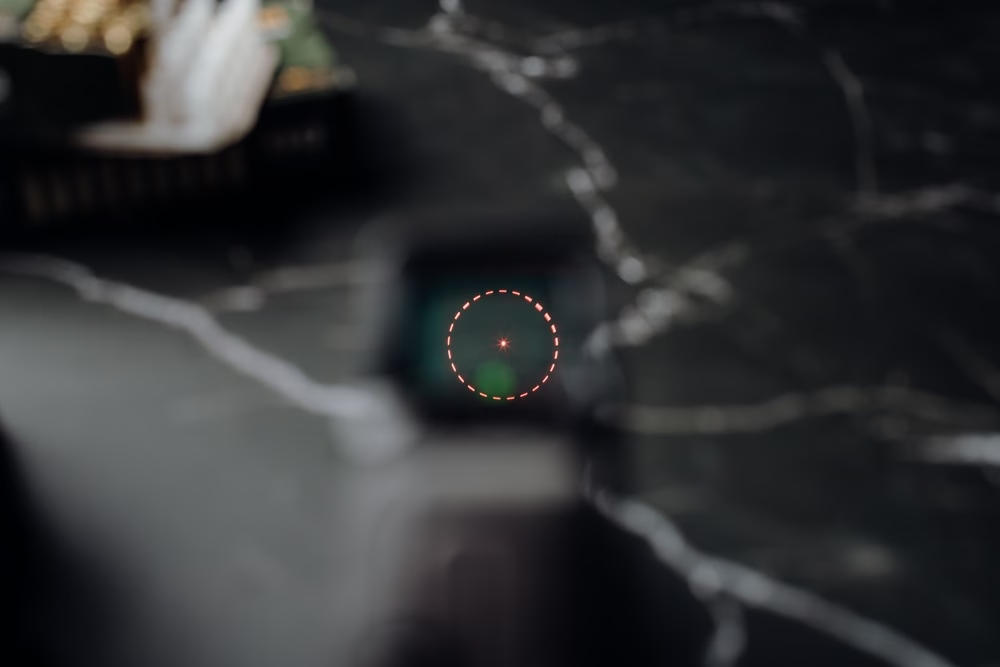
But for some extra adaptability, there are other, more specialized reticles to pick from too. One such is the circle dot reticle, which, as its name suggests, consists of a center dot and outer circle. The outer circle is usually 65-MOA on rifle optics, and around 32-MOA on pistol optics, with both serving as an eye-catching element that can aid in fast target acquisition. Other reticles, like those in the Primary Arms ACSS reticle family, can come with added features such as outer circles and horseshoe elements for faster target acquisition, and holds for bullet drop compensation (BDC).
With pistol optics, reticle size is incredibly important. One of the most common issues people run into is losing the dot. A larger size dot, circle dot, and other specialized reticles can help overcome this with some training. For the most part, pistol reflex sights won’t typically feature larger reticles, simply because they place an emphasis on sight acquisition speed, rather than long-range precision. Still, with all the options available, there’s something for everyone.
Reticle Color
Despite being known colloquially referred to as “red dots”, reflex sights are available in many colors, the most common of which are red and green. Much like with reticle size, choosing a reticle color ultimately comes down to user preference, but there are some performance differences with each one.
Red reticles are easy to see in both low-light and bright conditions, and they generally aren’t too taxing on battery life. Green reticles, on the other hand, are much brighter than red ones. They’re extremely easy to see in all lighting conditions and have a slight advantage since they contrast more with various colors. That said, because green light wavelengths are more intense than red ones, green dot sights tend to have shorter battery lives, but not by much, as optics with either color reticle can have battery lives lasting upwards of 25,000+ hours.
Plus, if you want, some reflex sights can come with other colors too. Blue, yellow, and even gold are all available on such optics, they just aren’t as common comparatively.
Size and Weight Considerations
Just as reflex sights can vary in design, they can also vary in size and weight. We hinted at this earlier, but when you peel back the layers of each reflex sight type, you’ll see that there are multiple subsets of each optic.
Rifle Optics
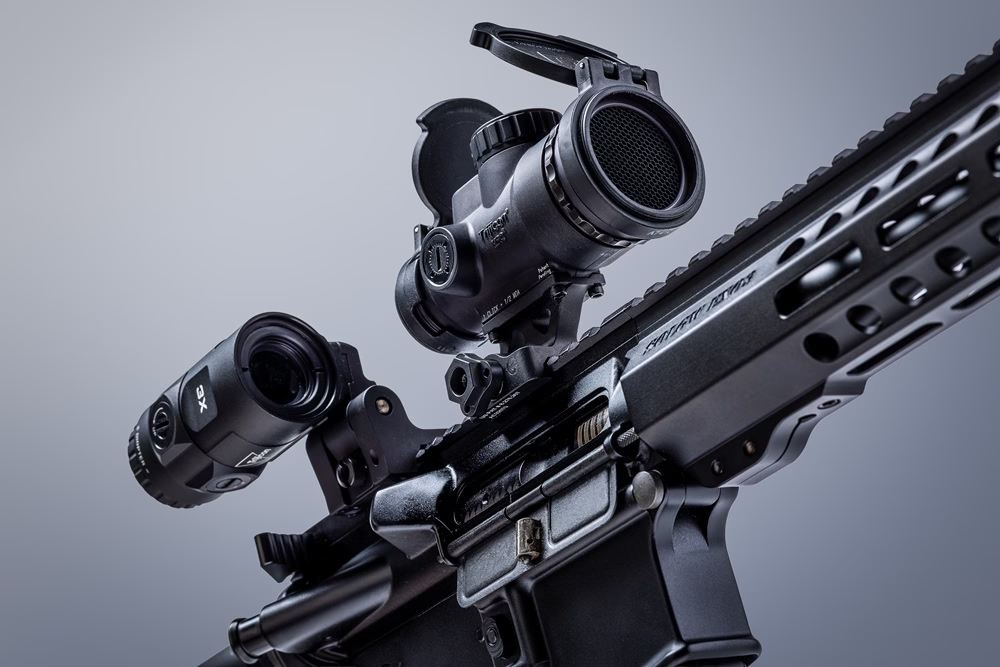
Like we mentioned above, reflex sights are available in all manner of sizes and configurations, with their size and weight varying from model to model. For instance, standard or full-size red dots are great for full-length rifles, but for more compact rifle setups, like PDW-style builds, a micro red dot is the move. Much smaller than full-size dots, they offer similar overall capabilities in a far more compact size. These reflex sights typically don’t weigh more than around 5 ounces, making them ideal for smaller, more maneuverable builds.
It’s also worth noting that of all the reflex sights available, holographic sights are some of the bulkiest around. Like we mentioned earlier, holographic sights are much more complex internally than reflex sights, and all the added internals needed for them to work add a significant amount of weight. For example, red dot sights like the Aimpoint T2 weigh around 3 ounces, depending on the mount it has, but something like the EOTech EXPS3-0, one of the most popular holographic sights, weighs 11.2 ounces. To be fair, despite their added weight, having a holographic won’t immediately make your rifle unwieldy. That said, if you are trying to keep your rifle as light as possible, it’s worth noting.
Pistol Optics
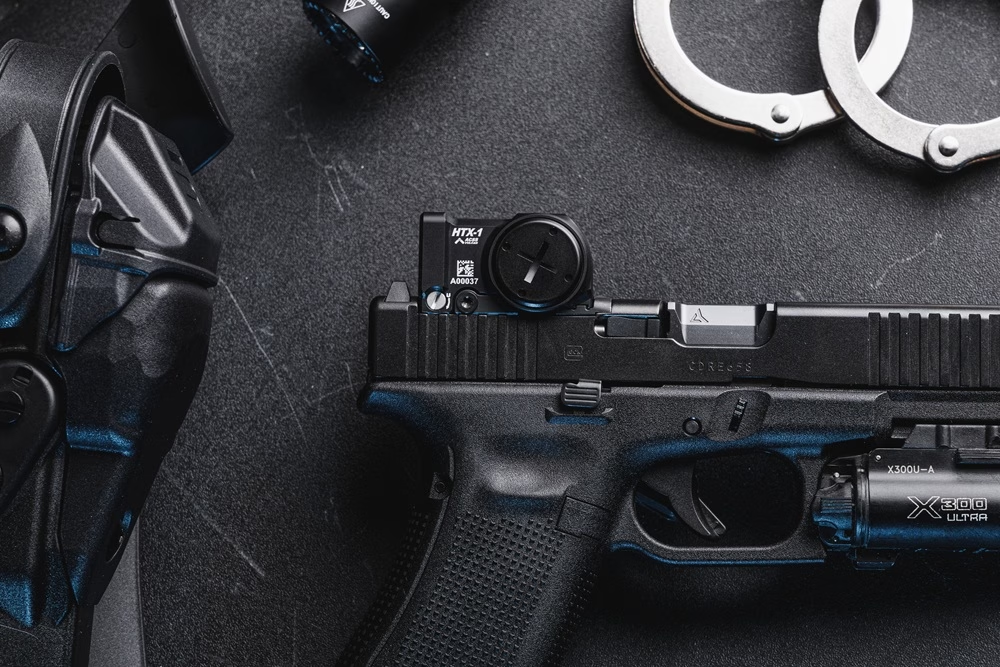
For handguns, you have the choice of using either a mini-reflex sight or pistol red dot sight—and regardless of which one you look at, they’re both incredibly lightweight and compact, though they still vary in size depending on the model you look at. Handgun optics are typically sized to fit different mounting footprints for either full-size handguns or sub-compact ones. So, depending on the handgun you opt for, you’ll need to make sure that your optic corresponds with your pistol’s size and mounting footprint.
With handgun optics, you typically won’t have to worry about weight as much as size, as different size optics are more beneficial across different applications. For duty use, competitions, or recreational use, larger optics typically come equipped with larger lenes, giving you a wider FOV. In contrast, for concealed carry applications, a larger optic can be harder to conceal without printing, making a more compact optic the better choice.
Ultimately, what you’re able to conceal is dependent on many factors such as your handgun of choice, body type, holster, and even the clothes you wear. So long as you dress around your pistol, you’ll be able to conceal it with little to no issues. But, if you’re still on the fence about which optic to go with, our guide on the best pistol red dot will point you in the right direction.
Astigmatism
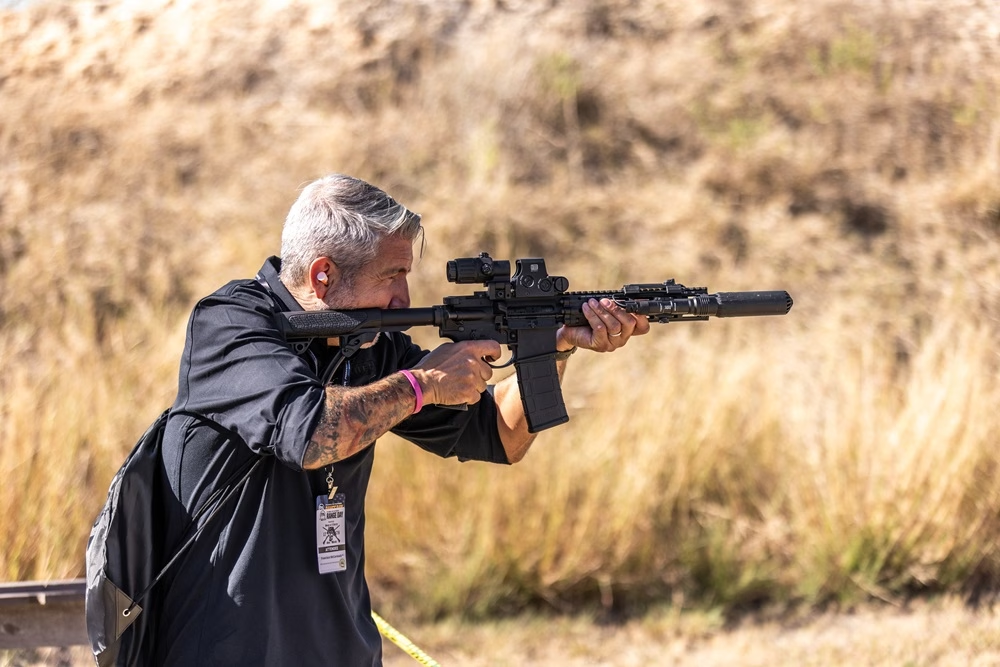
Using a red dot with astigmatism can be challenging, and if you have it, it’s paramount that you take it into proper consideration before buying your next reflex sight.
Astigmatism is known to distort your optic’s reticle, and depending on how severe your astigmatism is, the degree at which you experience distortions can vary—reticle smearing, star bursting, double-dots, and blurry reticles are all possible distortions you can experience, and each one makes it difficult to use your red dot precisely. But, it isn’t impossible to use a red dot sight if you have astigmatism.
Larger 3-, 4-, and 6-MOA dots are less prone to distortion since your eye won’t have to focus on such a fine point. This does come at the cost of being less precise at distance, but it’s important to note that red dots aren’t really designed for long-distance use. That said, if you’re looking to maximize utility, we recommend using a more specialized reticle like a circle dot reticle, or something like the ACSS CQB reticle.
Lastly, holographic sights are a solid alternative to consider too. Since holographic reticles float between the lenses of the optic, they’re largely parallax free, making them less prone to distortion. Of course, your experience may vary since astigmatism isn’t the same for everyone, but for the most part, they’re a great pick.
Conclusion
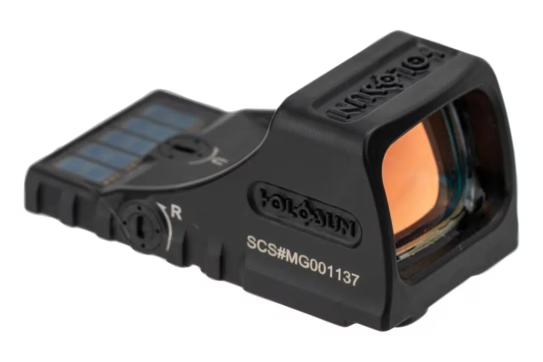
At the end of the day, there is a lot to consider when shopping for your next red dot sight. With the vast assortment of options available, it’s critical to analyze all their features while also taking your own personal preferences into account.
Whether you’re picking out an optic for your handgun, rifle, or shotgun, knowing how the pros and cons of each optic go a long way in helping you choose the best one for your setup. And while there isn’t a single ‘best’ optic available, with all that’s available, there’s something for everyone.