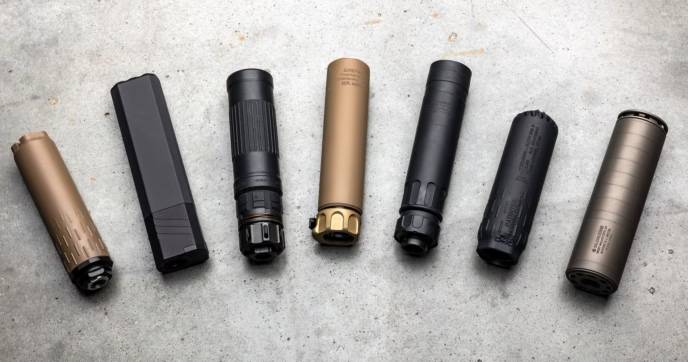
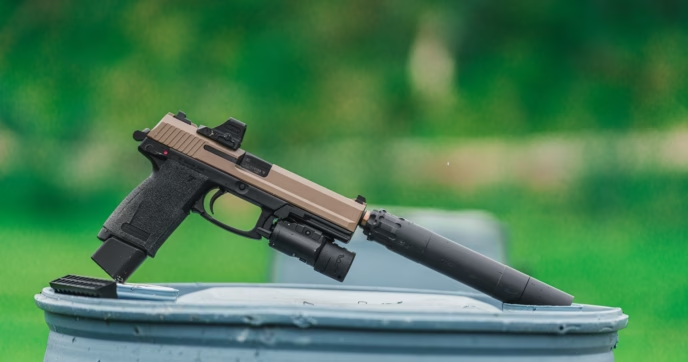
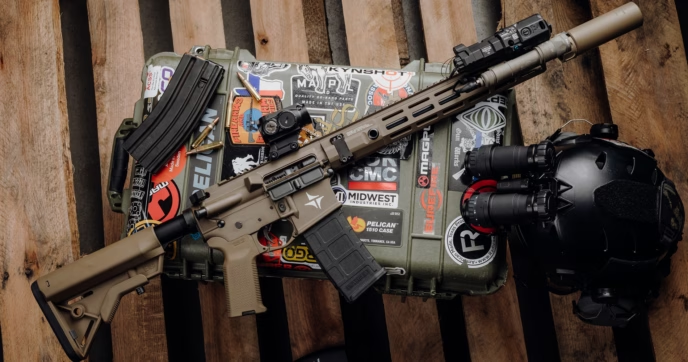
Suppressor technology has advanced dramatically over the past decade, giving firearm enthusiasts more choices than ever before. Those exploring the world of suppressed fire quickly encounter a pivotal decision: whether to invest in a multi-caliber suppressor that can serve across a spectrum of platforms or to select caliber-specific models that are tailor-made for individual cartridges. This decision influences performance, cost, workflow on the range, and the long-term character of an enthusiast’s equipment collection.
The appeal of a single suppressor capable of working across numerous hosts is obvious. With regulations that impose time, expense, and paperwork, the idea of obtaining one device that can fulfill many roles is compelling. On the other hand, serious marksmen, hunters, and precision-focused users often gravitate toward caliber-specific suppressors because these models can be optimized to deliver superior efficiency for a particular cartridge’s pressure profile and ballistic behavior.
Understanding the differences between these two categories is essential for anyone seeking to make an informed investment.
What Is a Multi-Caliber Suppressor?
A multi-caliber suppressor is designed from its inception to operate effectively on a wide array of cartridges and platforms. Rather than focusing on a narrow pressure range or bore diameter, a true multi-caliber design incorporates structural and modular features that enable safe, repeatable, and functional performance whether it is mounted on a compact handgun, a PCC, or a centerfire rifle.
The first distinguishing feature of a multi-caliber suppressor is modularity. Many multi-caliber models include interchangeable endcaps, allowing the user to select a bore aperture that better complements the host firearm. This design reduces sound signature and improves gas control while still keeping the suppressor compatible with larger calibers. Others feature modular baffle sections that can be reconfigured or shortened to accommodate different roles, such as creating a compact setup for a pistol or optimizing volume for a rifle.
Mounting flexibility is another key defining characteristic. Multi-caliber suppressors commonly accept a variety of adapters, including direct-thread interfaces, quick-detach mounts, and Nielsen devices for handguns with tilting-barrel systems. This adaptability allows a single suppressor to move quickly from one platform to another without permanent modifications.
The third key trait is overbore engineering. A smaller bullet can often be used with a suppressor with a larger aperture, but the inverse would obviously be disastrous. Multi-caliber suppressors often feature a bore diameter larger than the projectile of the smallest cartridge they are intended to accommodate. This ensures compatibility and safety, but it also means the baffles and internal structures must be carefully designed to manage a broad range of pressures and gas volumes. The result is a suppressor that performs adequately across many hosts, even if it is not fully optimized for any one of them.
Importantly, not every suppressor capable of handling multiple calibers qualifies as a true multi-caliber design. A .30-caliber suppressor rated for cartridges such as .308 Winchester can indeed be mounted on smaller-bore firearms like 6.5 Creedmoor or 5.56 NATO. However, such a suppressor is not inherently engineered for optimal performance across all those calibers. It is simply strong enough and sufficiently overbored to remain safe. By contrast, a genuine multi-caliber suppressor is built from its foundation to provide practical sound reduction and reliability over a much broader spectrum of chamberings and firearm types.
Nevertheless, buying a .308 suppressor to cover both .308 Winchester and smaller cartridges like 5.56 NATO is a common practice. For those interested in such a strategy, we offer a guide to Choosing a .308 Suppressor.
How Caliber-Specific Suppressors Work
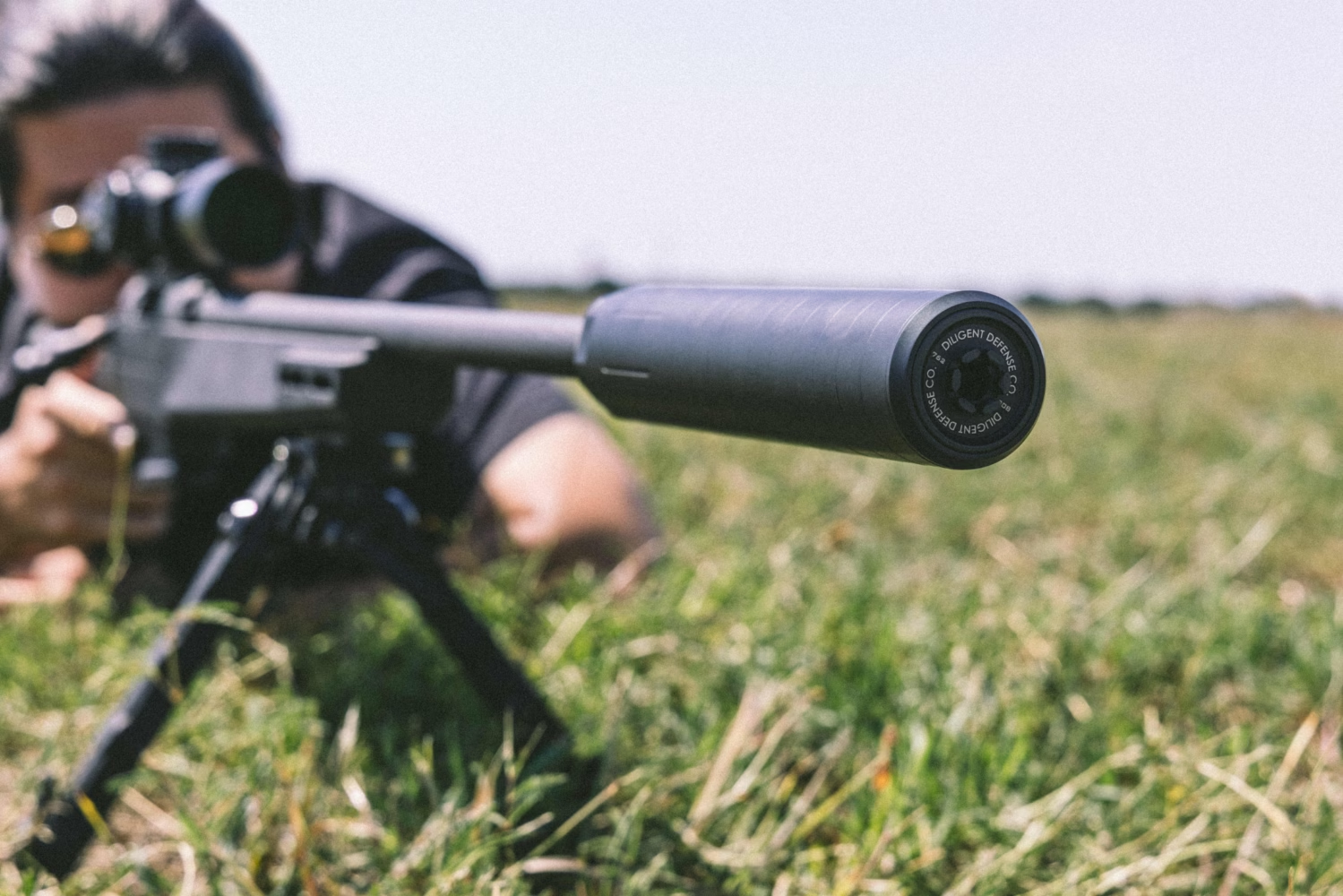
Caliber-specific suppressors take the opposite approach. Instead of striving for broad adaptability, these models focus on maximizing performance for a particular cartridge or narrow family of cartridges. They achieve this through careful attention to bore diameter, baffle geometry, internal volume, and material composition.
The defining trait of a caliber-specific suppressor is its bore size. Because the designers know precisely which projectile diameter will be used, they can make the bore only marginally larger than the bullet itself. The closer the clearance, the more efficiently the suppressor can strip energy from the expanding gases that follow the projectile. This tight tolerance traps the gas within the baffle structure more effectively, extracting heat and pressure and thereby improving overall sound and recoil reduction.
Baffle design is also optimized for the target cartridge. For example, a rifle suppressor intended for 5.56 NATO uses geometry engineered to manage that cartridge’s sharp pressure spike and high gas speed. A suppressor for .300 Blackout, on the other hand, may employ internal features tailored to the drastically different pressure curves of both supersonic and subsonic loads. Some .300 Blackout suppressors are even built exclusively for that cartridge’s relatively low peak pressures and should never be used with higher-pressure .30-caliber rounds such as .308 Winchester or 6.5 Creedmoor.
Unique structural geometries can also define a caliber-specific suppressor. An example is the SilencerCo Osprey pistol suppressor, with its eccentric rectangular profile designed to avoid obstructing the user’s sight picture. Although the Osprey’s overall caliber compatibility is somewhat flexible, its shape and design are optimized primarily for use on handguns in either .45 or 9mm, depending on the model. For more information on 9mm-specific suppressors, we offer a guide to Choosing a 9mm Suppressor.
Caliber-specific suppressors excel because their internal environment is crafted around a single ballistic profile. The designer does not need to make compromises to allow the unit to function across a wide range of cartridges. This specialization is what enables these suppressors to deliver outstanding efficiency, minimal blowback, and excellent signature reduction for their intended hosts.
Advantages of Multi-Caliber Suppressors
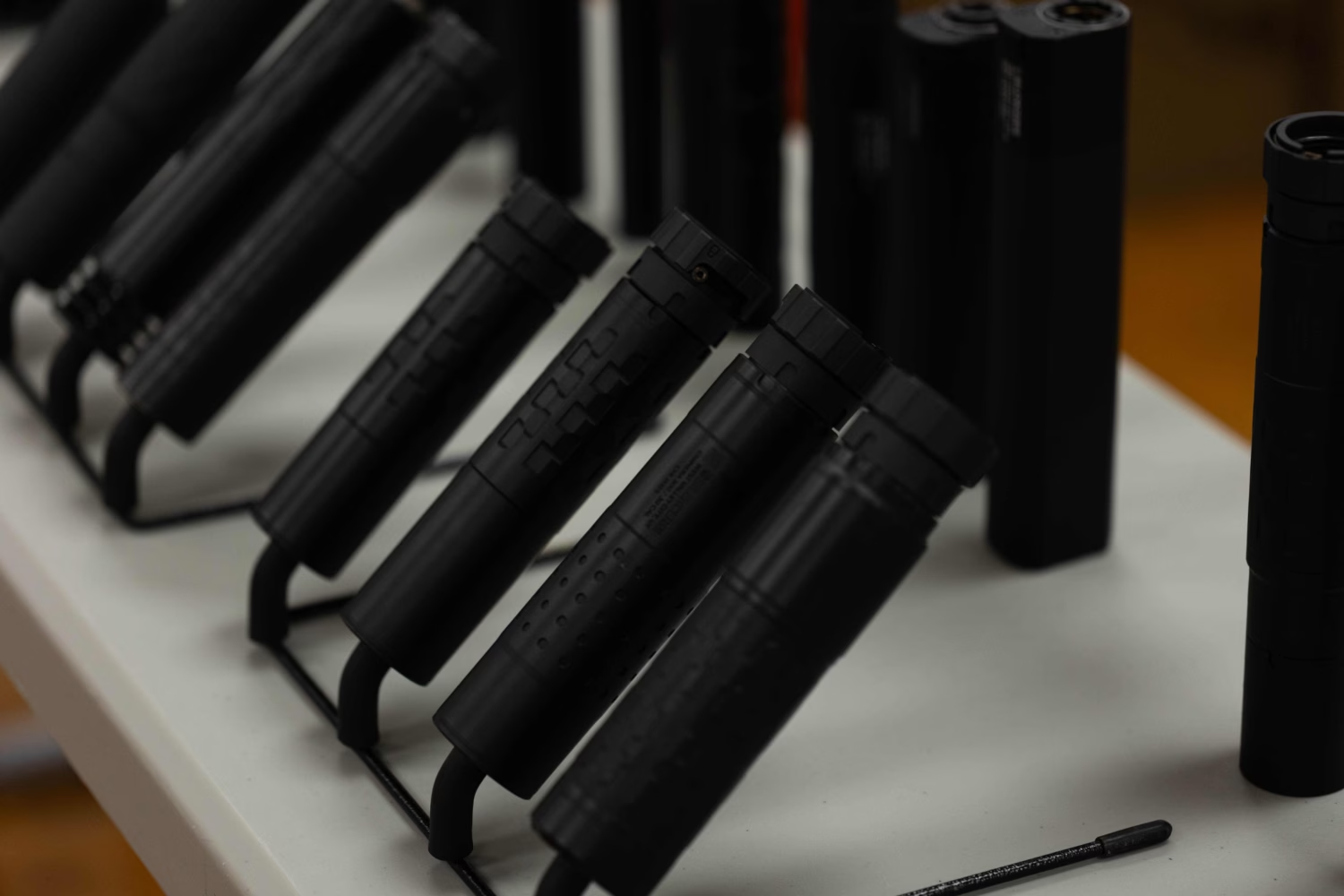
Despite the performance trade-offs inherent in a broad design philosophy, multi-caliber suppressors present numerous advantages that have made them extremely popular among modern enthusiasts.
The first advantage is cost efficiency. For many users, purchasing a single suppressor that can serve a dozen or more firearms is an appealing alternative to acquiring multiple units. With the cost of suppressors, taxes, and approval wait times, the financial and administrative savings of consolidating into a single suppressor are substantial.
Versatility is equally compelling. A multi-caliber suppressor offers the ability to move seamlessly from a long-range rifle to a compact carbine and to a semi-automatic pistol with only minor adjustments. This flexibility ensures that even if a user expands their collection into new calibers or platforms, their suppressor investment remains relevant. It also allows a single piece of equipment to support everything from precision work to range practice without limitation.
Additionally, maintenance becomes simpler when a user relies on one suppressor instead of several. Cleaning routines, parts replacement, and care schedules are all centralized. The logistical burden of monitoring the health of multiple devices is eliminated, making ownership more straightforward.
Multi-caliber suppressors also future-proof the user’s collection. Even if the enthusiast does not currently own a large number of different calibers, a multi-caliber suppressor guarantees compatibility with future acquisitions. This benefit is particularly useful for those who anticipate expanding into emerging calibers or new firearm platforms over time.
Ultimately, the multi-caliber suppressor’s greatest strength is its role as a universal tool. It may not be the absolute best performer on any single firearm, but its ability to serve across many roles with respectable efficiency makes it one of the most practical investments a new suppressor owner can make.
Drawbacks of Multi-Caliber Suppression
Although multi-caliber suppressors offer compelling advantages, they are not free from trade-offs. Their broad design requirements impose limitations that dedicated suppressors do not face.
The most notable challenge is reduced performance compared to caliber-specific designs. Because the bore must accommodate a wide range of projectiles and pressure behaviors, it cannot be optimized to the degree of a single-caliber suppressor. This means the user may experience slightly greater sound and gas output, particularly on high-pressure or small-bore cartridges. While the performance remains functional, it may not be ideal for precision-focused applications.
Multi-caliber suppressors are also frequently larger or heavier than dedicated models. Accommodating a wide pressure range and firearm family demands thicker materials, stronger structural reinforcement, and sometimes greater internal volume, as the suppressor must be capable of handling the pressure created by the largest round it services—making it wildly overkill for the smallest rounds it will accommodate. These factors can affect balance, handling, and portability, especially on compact rifles or handguns.
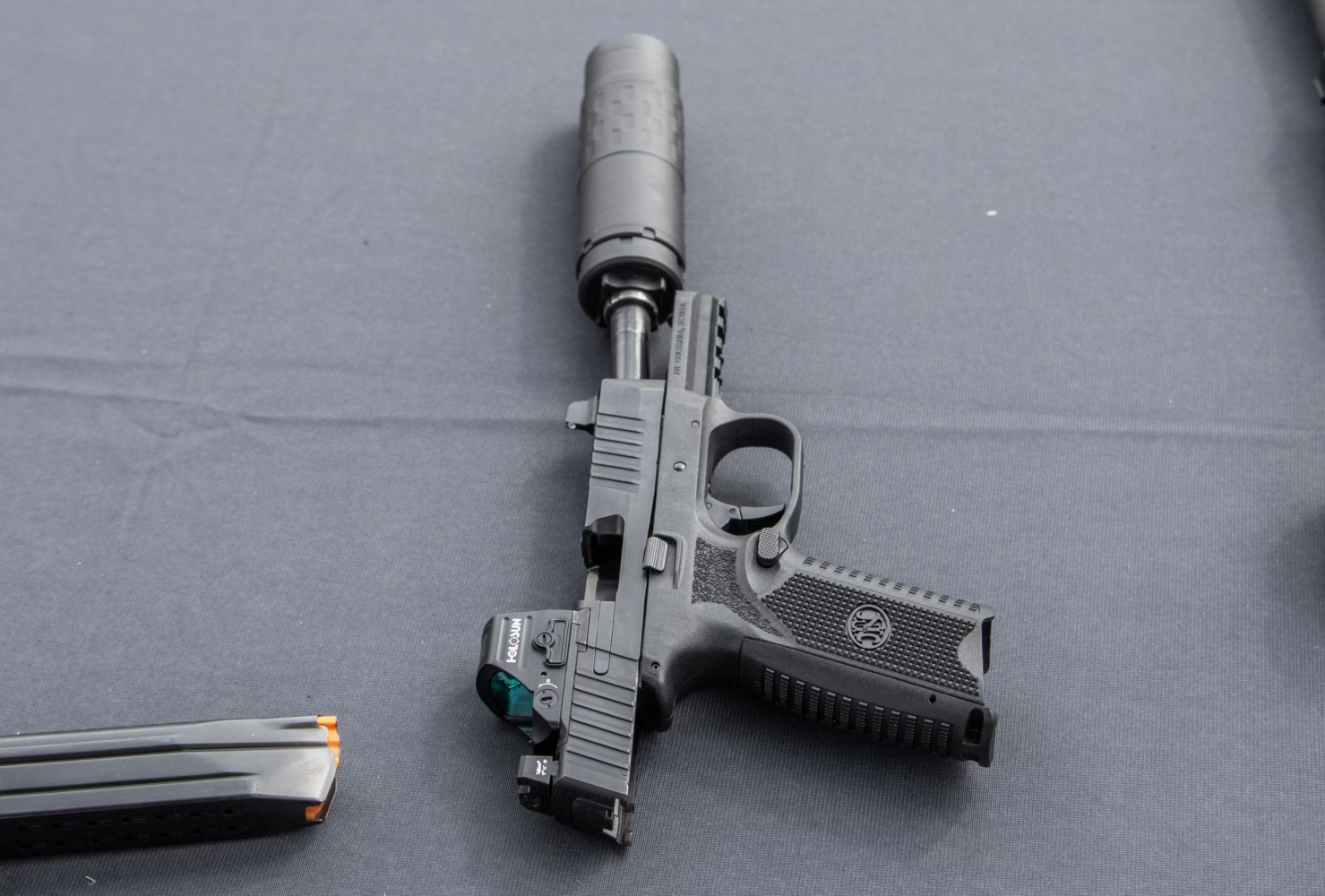
Additionally, frequent platform changes can become a logistical inconvenience. The need to swap endcaps, thread adapters, or mounting devices introduces extra steps each time the suppressor is moved from one host to another. This can be especially cumbersome when alternating between pistols, which require a booster mechanism, and rifles, which do not. Users who change hosts frequently may find the continual adjustments tiresome, particularly during extended range sessions.
Finally, the fact that a single suppressor must cool before being transferred to another firearm can slow down activities that involve multiple hosts. Dedicated suppressors allow simultaneous use or rapid transitions, whereas multi-caliber owners often need to wait for safe handling temperatures. With a dedicated suppressor for each firearm, users can practice with one firearm while another cools, but with a universal suppressor, this would not be possible.
These drawbacks do not invalidate the value of multi-caliber suppressors, but they do highlight the inherent compromises of pursuing maximum versatility.
Advantages of Caliber-Specific Suppressors
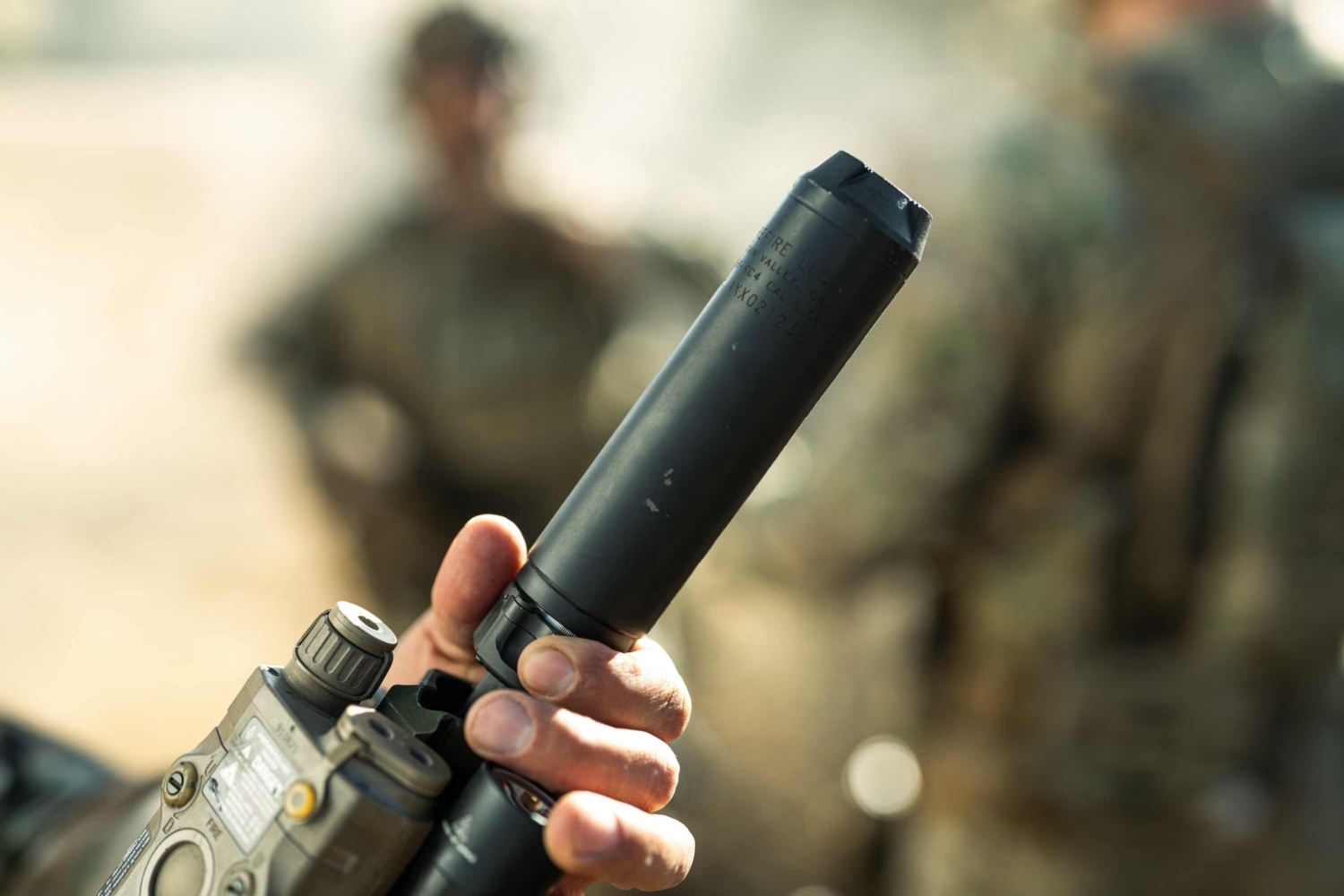
Caliber-specific suppressors excel by focusing on one task and performing that task exceptionally well. This specialization unlocks several meaningful advantages that experienced enthusiasts and professionals often prioritize.
Superior performance is the most compelling benefit. Tight bore tolerances and cartridge-specific baffle geometry enable these suppressors to manage gas more efficiently than multi-cal designs. The result is quieter reports, reduced blowback in some cases, lower concussion, and more refined recoil characteristics. For those seeking the best possible signature reduction, caliber-specific suppressors routinely outperform their universal counterparts.
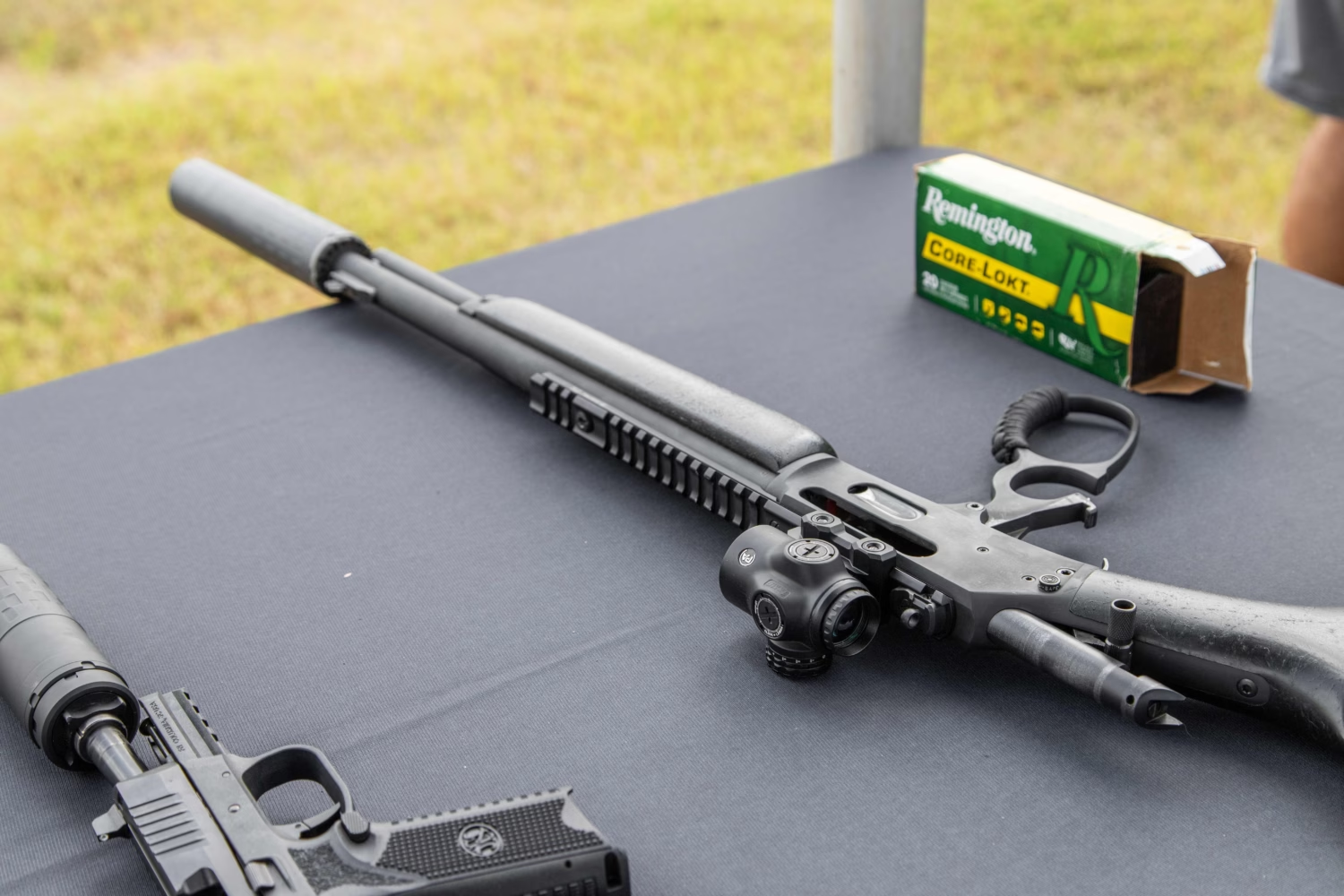
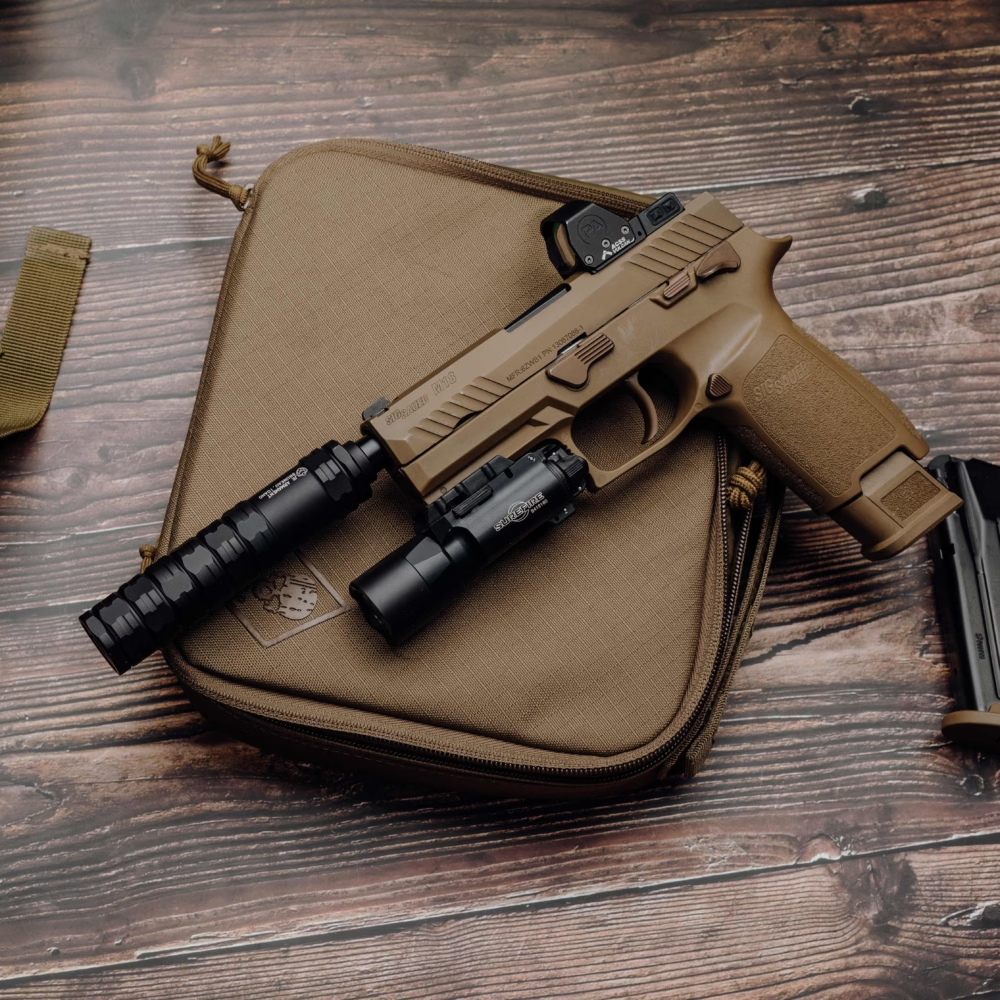
Their design also allows for semi-permanent mounting options. Because a caliber-specific suppressor is usually intended for one firearm or a small group of similar firearms, users can opt for semi-permanent attachment options, such as installing the suppressor underneath a handguard. This creates a sleek, cohesive configuration that is easier to maneuver, less prone to snagging, and allows the user to grip the firearm closer to the muzzle. It can also protect the suppressor body from impacts and maintain an intuitive balance for precision applications. These configurations can be tedious to remove and install, making them impractical for a frequently moved suppressor, but fine for one that only comes off once or twice a year.
Users also benefit from the convenience of having dedicated suppressors for each firearm. This arrangement eliminates the need to wait for one suppressor to cool before transferring it to another host. It also prevents the repetitive process of removing and reinstalling mount adapters, ensuring that each suppressor remains correctly configured for its intended platform at all times.
Caliber-specific suppressors also tend to be lighter than multi-cal models. Because they only need to support the pressures and stresses associated with one cartridge family, they do not require the additional reinforcement that universal suppressors demand. This weight savings is especially beneficial for hunting, competition, and field applications where mobility matters. This advantage is most prominent on smaller-caliber firearms, such as 5.56 rifles, which can be built smaller and lighter than a universal suppressor. On a larger caliber, such as .45-70, the weight savings over a multi-cal suppressor is likely to be minimal or non-existent.
In short, caliber-specific suppressors are the choice for users who value peak performance, seamless integration, and specialized handling.
Drawbacks of Caliber-Specific Suppressors
Despite their impressive performance, caliber-specific suppressors bring challenges that potential buyers must consider.
The most obvious drawback is cost. Each additional caliber or platform requires a separate suppressor, which means multiple purchases and multiple tax stamps. For enthusiasts who regularly use several firearms, this expense grows quickly.
The administrative burden also increases. Every suppressor requires its own serial number, its own paperwork, and its own approval process. Managing several suppressors introduces logistical complexity, from secure storage to transportation compliance.
Maintenance also becomes more demanding when multiple suppressors are involved. Regular cleaning, inspection, and part replacement must be performed for each device, multiplying the workload.
Moreover, caliber-specific suppressors offer little flexibility for future firearm acquisitions. If the user branches into a new caliber, a new suppressor is required. This limitation may discourage experimentation or lead to repeated cycles of research, purchasing, and paperwork.
These drawbacks are by no means prohibitive, but they do frame the dedicated-suppressor strategy as one better suited for experienced enthusiasts or those with defined needs rather than beginners seeking broad capability.

Choosing the Right Suppressor for You
Selecting between a multi-caliber suppressor and one or more caliber-specific suppressors is ultimately a matter of personal priorities. The right choice depends on the user’s needs, resources, goals, and long-term firearm plans.
Those who desire a single device that can support a wide range of firearms, especially across both rifle and handgun platforms, will find the multi-caliber suppressor highly appealing. Its versatility allows newcomers to explore suppressed fire without locking themselves into a specific configuration. It also reduces initial investment and simplifies compliance paperwork. For the enthusiast who wants immediate value, broad compatibility, and a future-proof solution, a multi-caliber suppressor is often the ideal first purchase.
Caliber-specific suppressors are best suited for users who place a premium on peak performance or who prefer to have each firearm configured in a dedicated and optimized manner. Precision-focused marksmen, competitors, hunters, and those who maintain permanent rifle setups tend to appreciate the benefits of tailored suppressor design. Once the initial cost barrier is managed, the convenience and superior performance of dedicated suppressors become difficult to ignore.
A hybrid approach is increasingly popular. Many enthusiasts begin with a single multi-caliber suppressor, gaining experience and enjoying the broad capability it offers. Later, as their collection evolves, they supplement it with caliber-specific suppressors for their most frequently used platforms. Another common strategy is to maintain two multi-caliber suppressors: one configured for handgun use, complete with a booster system, and another set up for rifles with fixed mounts. This method eliminates the need to switch between booster and fixed adapters, streamlining the user’s equipment rotation.
The best choice is the one that aligns with the user’s practical demands, financial considerations, and long-term vision for their equipment collection. Both paths offer substantial benefits, and understanding the trade-offs allows for confident and informed decision-making.
Conclusion
The debate between multi-caliber and caliber-specific suppressors is not defined by a single correct answer. Instead, it reflects a balance between versatility and optimization. Multi-caliber suppressors provide a practical, cost-effective solution for users who value broad compatibility and flexibility. Caliber-specific suppressors offer superior performance and seamless integration for those who desire the best possible efficiency from each firearm.
As suppressor technology continues to advance, both categories will remain relevant and increasingly refined. Enthusiasts who understand the strengths and limitations of each approach are well positioned to build a suppressor strategy that enhances their capabilities and complements their shooting goals.
Whether beginning with a universal suppressor or assembling a collection of dedicated units, the key to success lies in matching the equipment to the user’s needs. With that alignment, suppression becomes not only quieter, but also more effective, more enjoyable, and more capable of elevating the firearm’s overall performance.