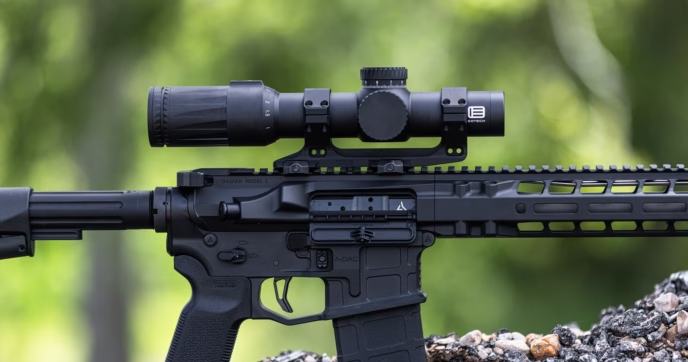
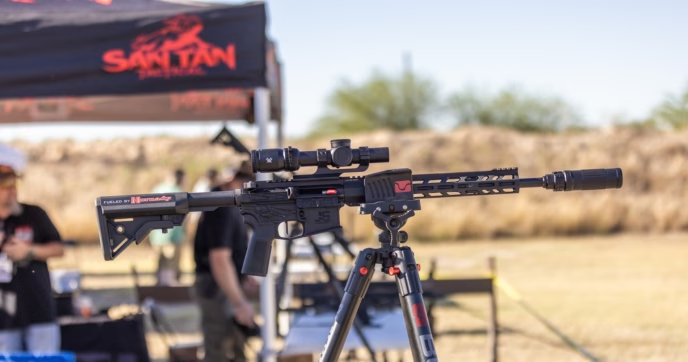
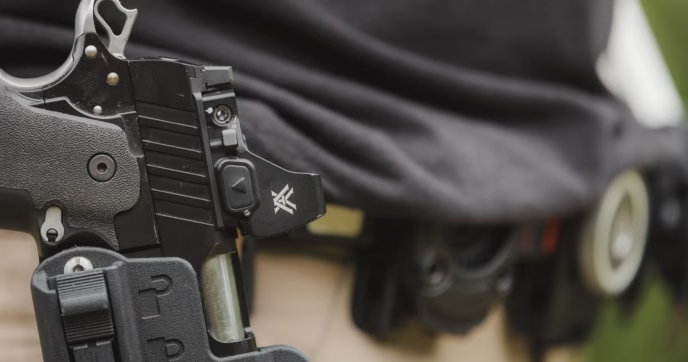
Among the various firearms available nowadays, a unique subset of rifles that has consistently enamored enthusiasts are pistol caliber carbines, better known colloquially as PCCs. If you’re new to the game and don’t already know what they are, they’re a rifle that’s chambered in a pistol caliber like 9mm.
They provide a solid blend of the ergonomics, handling, and control afforded by a rifle, with the low recoil and affordability of pistol caliber rounds. Because of this, they’ve become exceptionally well-renowned, with there being several different 9mm rifle options to choose from—almost all of which can be adapted to fit a multitude of roles.
Whenever you’re building a new rifle, regardless of the type, a question that will inevitably arise at some point is, “what optic should I use on this”? For PCCs, they excel in close-quarters applications, so this eliminates bulky variable power optics. You could use iron sights, but they aren’t necessarily the best choice in terms of target acquisition speed and FOV.
So, what’s left? Well, what’s left are some of the most popular optics in the industry: reflex sights. And some of the best reflex sights for PCCs specifically come in the form of microdots and mini-reflex sights.
Microdot vs. Mini-Reflex Sight: Which is Right For your PCC?
As we mentioned above, microdots and mini-reflex sights are among the more common optics used on PCCs like the CZ Scorpion, Springfield Kuna, H&K SP5, and many more. By design, they have exceptionally small footprints, wide fields of view, and offer excellent agility. Still, while similar, it’s important to recognize that their designs aren’t completely one-to-one.
Microdots
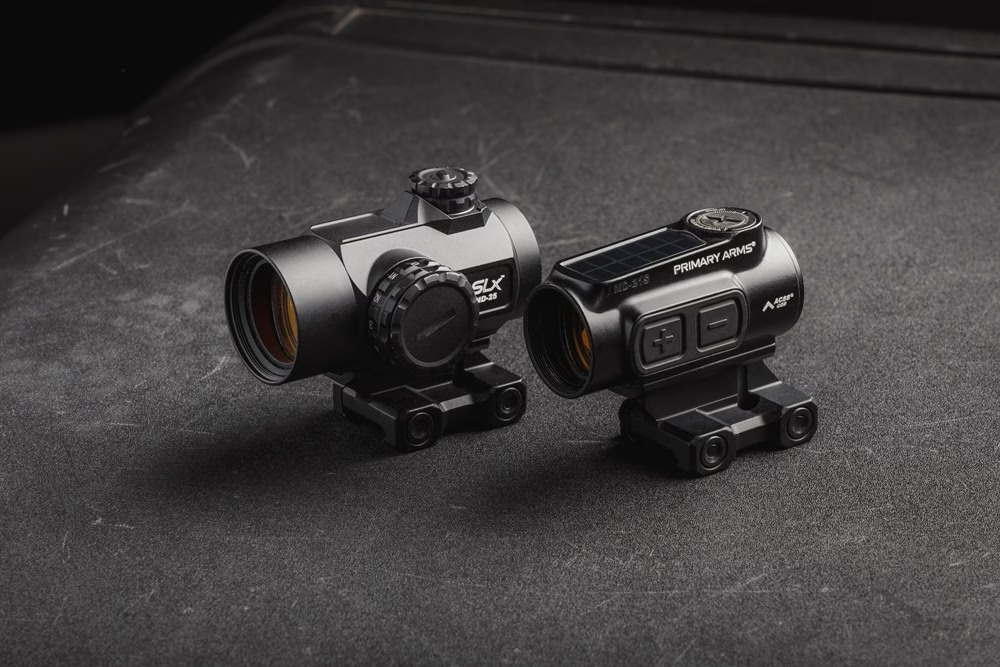
Microdots are, in essence, more compact versions of full-size red dot sights, making use of a fully enclosed design and two lenses. Being designed for use on rifles, they’re often made from exceptionally durable materials, and their enclosed design keeps the optic’s internals well-protected from outside elements. And, as you’d suspect from the name, microdots can be tiny compared to other reflex sights, with them usually weighing no more than a few ounces.
Plus, since they were originally designed for use on rifles, some come standard with 1913 picatinny mounts, making them compatible with most, if not all, PCCs out of the box. Also, there’s a plethora of unique aftermarket mount options to choose from too since many of them use a common mounting footprint. Just keep in mind that some optics use their own proprietary design.
Mini-Reflex Sights
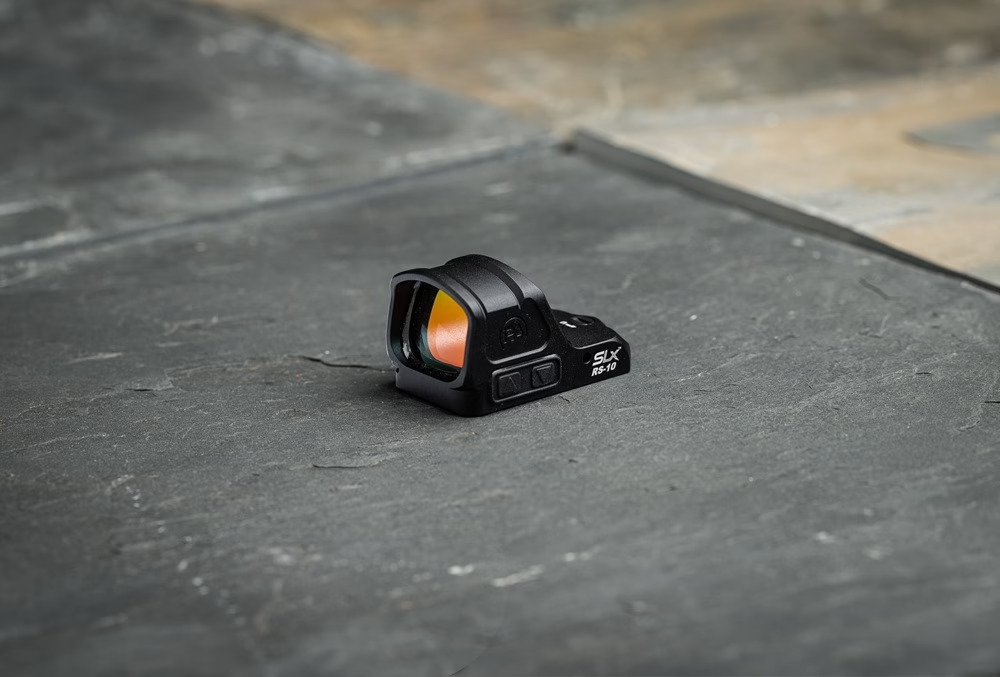
In contrast to microdots, mini-reflex sights are designed primarily for use on handguns, but with the right mount they can be used on PCCs, as well as other compact rifle platforms. Additionally, mini-reflex sights are available in two distinct flavors: open-emitter mini-reflex sights and enclosed emitter pistol red dot sights. They both have their own pros and cons—which we cover in detail in our guide, “Closed vs. Open-Emitter Pistol Optics”—but both can be exceptionally versatile when used on PCCs.
Something to bear in mind is that mini-reflex sights come with the caveat of requiring an added mount to make them compatible with your rifle in most cases. Fortunately, brands like Scalarworks, Unity Tactical, and Reptilia Corp, are just a few of the many manufacturers that make 1913 mounts for mini-reflex sights. With them, you can have an exceptionally lightweight and compact optic setup on your PCC, so you won’t have to worry about it bogging down your setup.
Which is Best?
Ultimately, it’s impossible to declare one option as the inherently better one since they each have their pros and cons to consider.
For starters, microdots are widely considered the go-to choice for many, simply because they’re basically ready to go out of the box, often coming with the necessary mounting hardware for upper picatinny rails. In contrast, mini-reflex sights, being designed for pistols, don’t always come with mounts. There are some options that come with additional 1913 adapters, but the vast majority of them don’t, meaning you’ll need to buy a dedicated mount in addition to an optic.
Despite this, mini-reflex sights, specifically open-emitter ones, still remain a popular optic amongst enthusiasts. Their open design means there isn’t an optic body in the way to constrict their field of view (FOV), giving you a fuller sight picture of your target and its surroundings. Still, open-emitter optics can be less optimal in adverse conditions since their open design leaves the emitter diode at risk of occlusion from environmental debris like dirt and mud. This isn’t to say they aren’t usable in such environments, but it is something to keep in mind before buying.
If durability is an absolute necessity, a microdot is the clear winner, as their enclosed design offers greater structural rigidity, albeit at the cost of marginally more weight and a slightly narrower FOV. Meanwhile, if you want durability and a more compact footprint, an enclosed pistol red dot sight can offer solid durability as well, although not as much as a microdot—as they’re designed specifically for use on rifles. At the end of the day, you can’t go wrong with either possibility, as choosing one comes down to deciding which one best meets your needs and preferences.
Popular Optics and How They Compare
Despite narrowing down your search to only include microdots and mini-reflex sights, a cursory search will still leave you faced with dozens upon dozens of different optics. And while having options is certainly nice, it can still be overwhelming, especially if you’re new to the game.
To alleviate some of the stress that comes with shopping for a new optic, we’ve compiled a list of some of the solid choices to consider for your PCC.
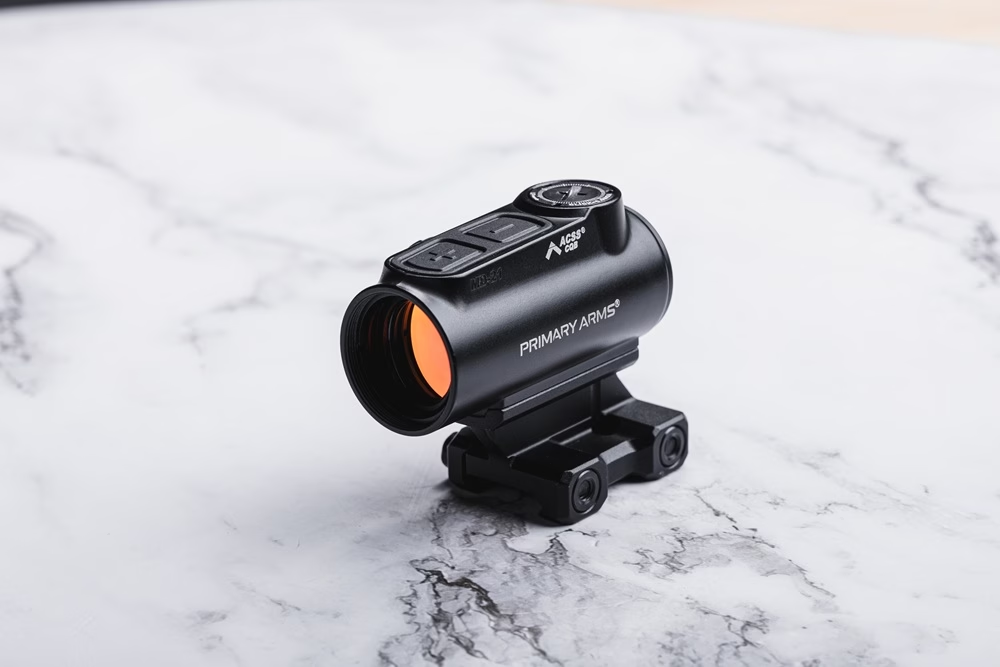
Primary Arms Optics SLx® MD-21 Push-Button Microdot
The Primary Arms Optics SLx MD-21 is, by far, one of the best affordable microdots on the market, offering incredible performance without compromising on reliability or utility. A part of PAO’s SLx line of optics, the MD-21 packs an impressive number of features in a compact package. Built around a durable aluminum optic body that’s both water and shockproof, it comes standard with push button controls, AutoLive® motion-sensing illumination, an automatic shut-off, and fully multicoated lenses for optimal clarity.
Depending on your preference, the MD-21 is available with either a standard 2-MOA dot reticle, or the ACSS-CQB reticle. Instead of a dot, the ACSS-CQB reticle consists of a center chevron, three BDC dots, and an outer horseshoe element. All the elements combined to form an incredibly intuitive reticle. At close range, the outer horseshoe allows for quick target acquisition, while the chevron allows for more fine aiming. And assuming your PCC is chambered in 9mm, the BDC dots can range out to 200 yards (assuming you’re using 115- or 124-grain ammo and have zeroed it at 25 yards). Overall, it’s a solid pick that’s ready to use on your PCC out of the box.

Primary Arms Optics GLx® MD-21s Push-Button Microdot
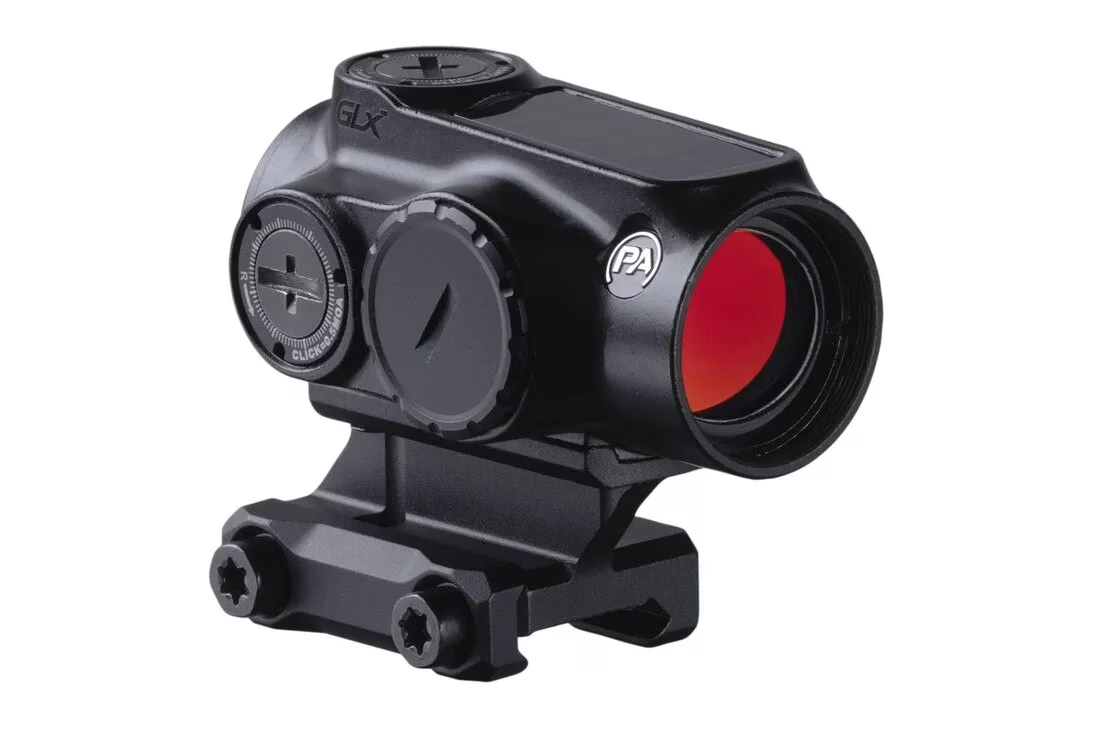
Another solid choice to consider is the Primary Arms Optics GLx MD-21s. Essentially, you can view this optic as a more premium upgrade to the SLx MD-21. It shares many of the same features, such as AutoLive, an automatic shut-off, and fully multicoated lenses. It even comes with either a 2-MOA dot or the ACSS-CQB reticle. Still, despite its similarities, the GLx MD-21s comes equipped with an integrated Solar Failsafe unit.
Powered by a CR2032 battery, this optic already has an immensely long battery life, but its Solar Failsafe and AutoLive features extend it even further. Once the solar cell charges enough, the optic will switch over to run completely off solar power. When the solar cells don’t have enough voltage to keep the optic illuminated, it switches back to battery power, all without dimming or powering off. Plus, once you factor in this optic’s ability to automatically turn off and on to conserve energy, it has a tremendously long battery life.
As mentioned above, this optic is available in two configurations: one with a 2-MOA dot and another with the ACSS-CQB reticle. Being more of a premium choice, they are marginally pricier compared to the SLx MD-21, but they’re still reasonably affordable for most budgets.

Primary Arms Optics GLx RS-15 Mini-Reflex Sight
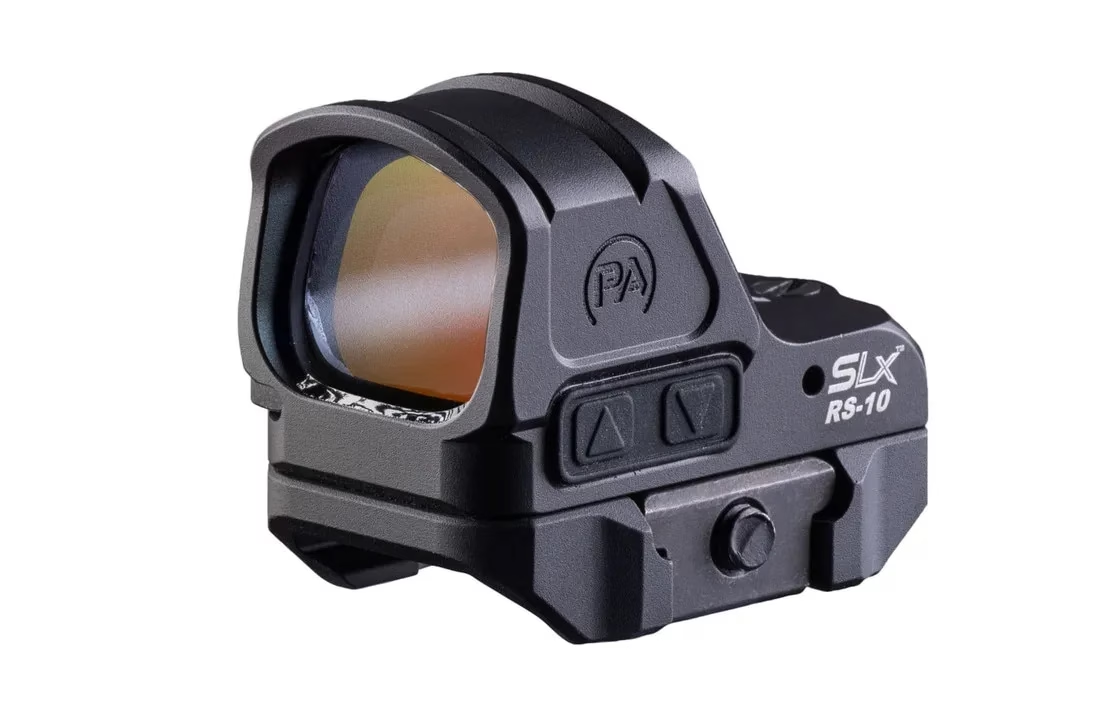
Moving onto PAO’s mini-reflex sights, the Primary Arms Optics GLx RS-15 is an excellent optic for PCCs. Being a part of PAO’s GLx line of optics, it’s built to meet and exceed the standards of routine range trips to competitive and duty use.
For starters, the RS-15 is built around a durable 7075-T6 Aluminum construction, making it not only durable, but also exceptionally lightweight. Like the other optics mentioned above, it also makes use of AutoLive motion-sensing illumination, has a long battery life, and features multicoated lenses for better target image clarity. Being an open emitter optic, it has an incredibly wide FOV, and although it doesn’t come with a 1913 mount, it makes use of the popular C-More mounting footprint, so you’ll have no shortage of choices to consider.
Additionally, one of its standout features is its use of the ACSS Vulcan Reticle System. The Vulcan is the only reticle of its kind—contrary to other circle dot reticles, which always have the outer circle in view, the 250-MOA outer circle of the Vulcan is only visible when your aim is off-center. This gives you the ability to rapidly acquire your dot when under pressure. Granted, this isn’t all that useful when used on a PCC, but fortunately, you can turn off the outer circle to have just the 3-MOA center dot, which has the added benefit of increasing the optic’s battery life too.
Primary Arms Optics PLx® HTX-1™ Pistol Red Dot Sight
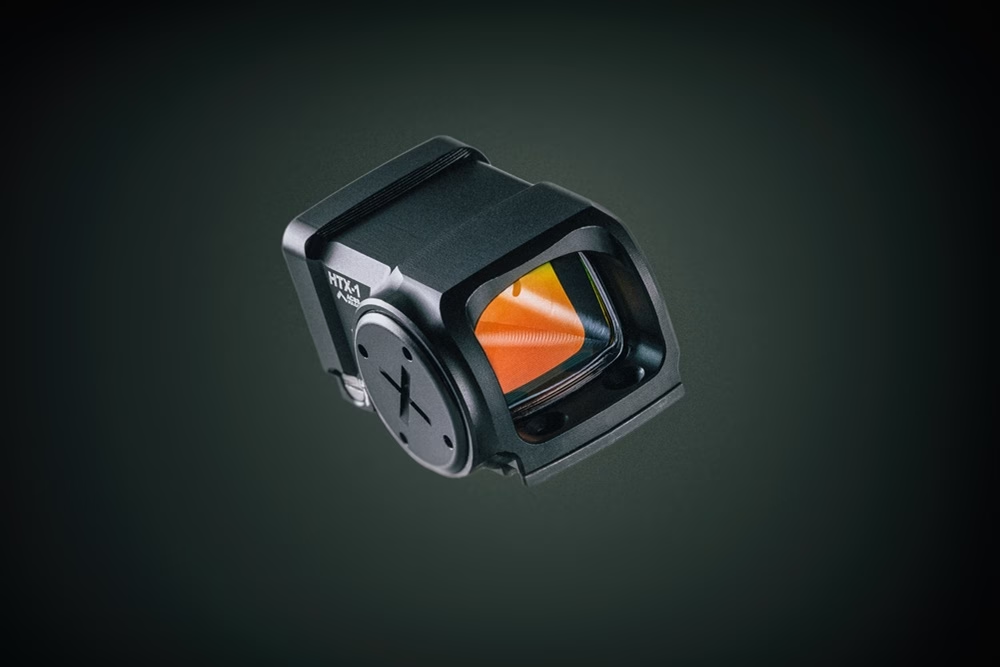
If you’re looking for an optic that offers supreme durability in a sleek, low-profile package, the Primary Arms Optics PLx HTX-1 is where it’s at. One of the newest reflex sights offered by PAO, it’s also their first American-made optic, as well as their first enclosed emitter pistol dot choice. Even further, it’s one of the most premium reflex sights they offer.
Being an enclosed emitter optic, it boasts incredible durability, and with it being a part of their PLx series of optics, it’s designed to survive professional-level use in the harshest conditions. It comes standard with many of PAO’s premium features such as AutoLive, an automatic shut-off, and it even comes equipped with the ACSS Vulcan reticle, though it’s also available with just a 4-MOA dot. Something else that makes the HTX-1 stand out is its unique mounting system.
Rather than being compatible with just one specific mounting footprint like other pistol red dot sights, the HTX-1 is compatible with nearly every currently available mounting footprint thanks to its patented modular chassis system. And since it’s compatible with nearly every mounting footprint, it’s also compatible with most popular 1913 mini-reflex sight mounts. Plus, with its 20,000-hour battery life, and the fact that it only weighs 1.74 ounces, it’s easily one of the top picks if you’re looking for a rugged, reliable, and compact optic for your PCC.
Conclusion
A general notion held amongst most enthusiasts is that a rifle is only as good as its optic. And in the case of PCCs, there are several options that pair well with the platform, with some of the chief options being microdots and mini-reflex sights.
Both reflex sight variants pair exceptionally well with PCCs. Offering the utmost in utility while maintaining a small footprint, it’s easy to understand why they’re some of the go-to optics for such platforms. Still, it’s important to recognize that each possibility offers its own set of advantages.
Microdots, being designed for rifles, are immediately compatible with most, if not all, modern PCCs out of the box since they come standard with 1913 mounts, though they have a comparatively narrower FOV. Open-emitter mini-reflex sights, despite requiring an added 1913 mount, offer a wide FOV, albeit at the cost of marginally diminished durability. And for a nice balance of both light weight and rugged reliability, enclosed-emitter pistol red dots are a solid pick too.
Regardless of which one you opt for, you’ll have no shortage of options to pick from; and so long as you find one that aligns with your own needs and preferences, you’ll be good to go, no matter which one you pick. However, if you find that you’re still on the fence about which optic you should go with, our 9mm PCC Optics Guide is worth giving a read.