Few topics in the firearms world generate as much debate as the role of the short-barreled rifle (SBR) in home defense. As rifles become more common for personal protection, many homeowners find themselves weighing the benefits. They must balance the value of a compact rifle against the reality of strict regulations and costs.
The SBR sits right at the center of this argument. Supporters praise its maneuverability and effectiveness. Critics, however, rightly point out the legal hurdles and paperwork, as well as the physical drawbacks of short-barrel concussion.
To decide if an SBR is a sensible choice, we must examine what these firearms are, why they are popular, and how their pros and cons play out in the real world.
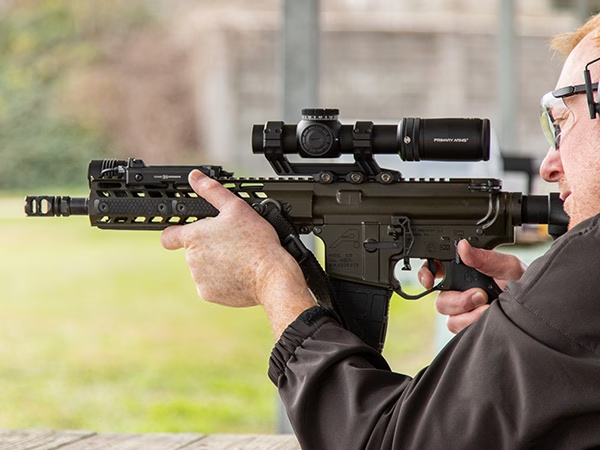
What is an SBR?
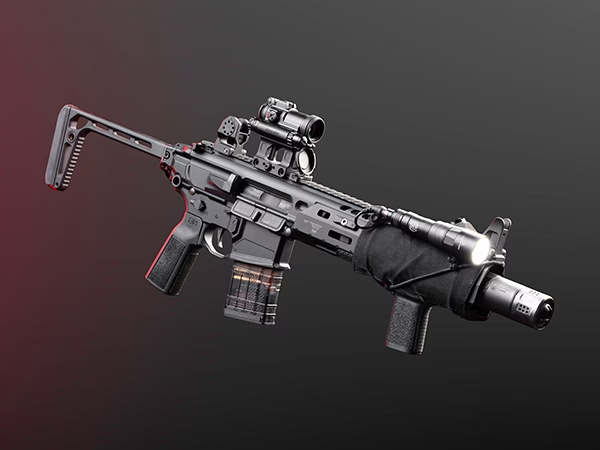
A short-barreled rifle is exactly what it sounds like. It is a rifle with a barrel shorter than sixteen inches or a total length under twenty-six inches. Unlike standard rifles, SBRs fall under the National Firearms Act (NFA). This means they are subject to strict federal regulations.
To own one, you must submit a formal application, pass a special background check, and acquire a tax stamp. While approval times used to take months, the process has recently become faster. However, owning one still comes with ongoing rules.
Mechanically, an SBR functions the same as a standard rifle. The difference is almost entirely in the barrel length. Shorter barrels make the firearm more compact and easier to handle indoors. However, they also reduce bullet velocity and increase noise and concussion considerably. These trade-offs are central to deciding if an SBR makes sense for your home.
Why SBRs Are Popular for Defense
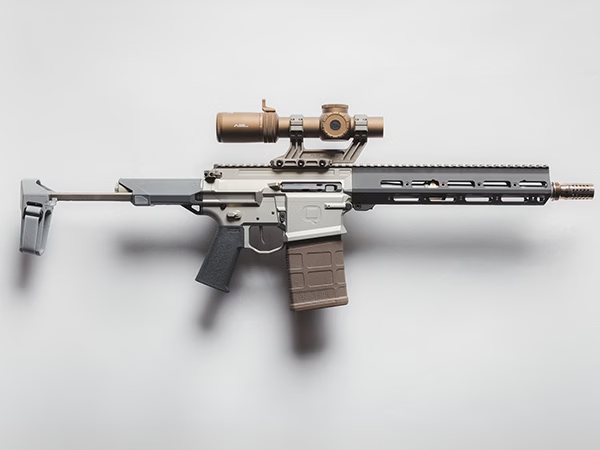
SBRs appear frequently in defense conversations for good reason. Modern defensive strategies focus on control, accuracy, and the ability to move in tight spaces. In this context, the SBR has several advantages.
First, the recoil of common calibers like 5.56x45mm is very manageable. This allows for faster, more accurate follow-up shots compared to pistols or shotguns. Second, the reduced length makes it easier to move through hallways and doorways without bumping into frames.
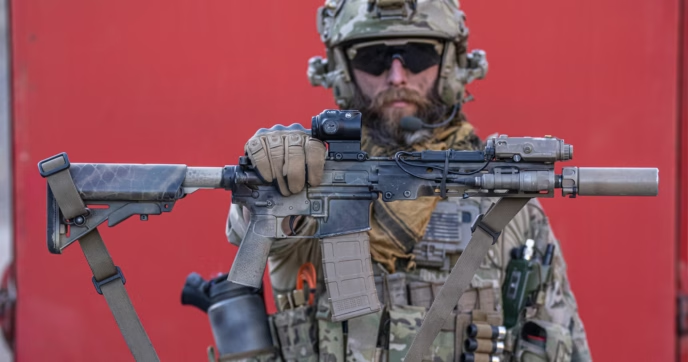
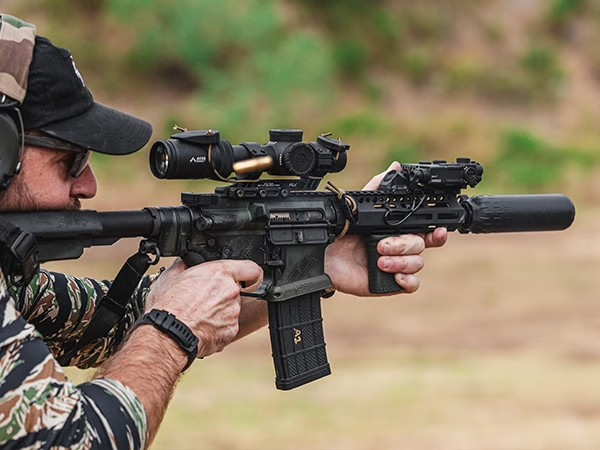
Weight is another key factor. SBRs are typically lighter than full-length rifles, making them less tiring to hold ready. They also work well with sound suppressors. Since the barrel is short, adding a suppressor doesn’t make the rifle too long for indoor use.
However, the drawbacks are impossible to ignore. The legal burden is significant. For many people, the government paperwork is the main reason they avoid SBRs, even if the performance is superior. For others, the sheer noise and concussion of an SBR is its own non-starter, and even though these can be controlled with suppressors, that doubles the amount of NFA items involved.
Why You Should Consider an SBR
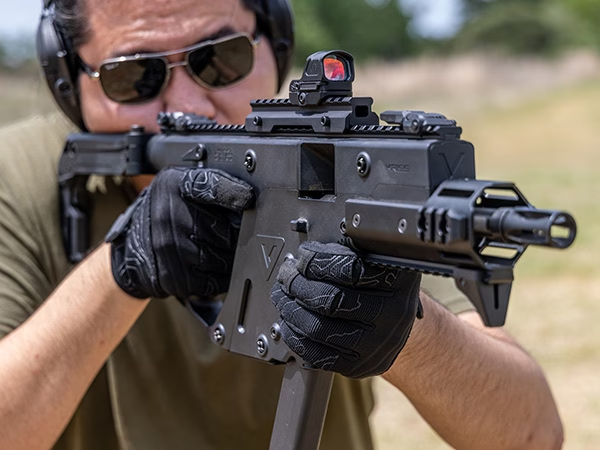
If you look strictly at performance, the SBR offers a great balance of capability and handling. Inside a home, distances are short and angles are tight. You need to bring your firearm on target quickly.
An SBR provides the power of a rifle cartridge, which is generally more effective than a handgun round. Yet, it remains much smaller than a traditional rifle. The shorter length improves maneuverability, making it easier to navigate narrow spaces. This is vital under stress, when fine motor skills often fail.
Furthermore, rifles are fired from the shoulder. This offers greater stability and accuracy than a handgun, especially for those with less training. SBRs also support useful accessories. You can easily mount lights and optics to help identify targets in the dark. Combined with standard capacity magazines, these factors make the SBR a highly capable tool.
Why You Shouldn’t
Despite the advantages, the SBR has meaningful downsides. The most obvious is the law. Acquiring an SBR requires extra paperwork, government approval, and patience. This process alone can be a deterrent for someone seeking a simple solution.
The problems extend beyond just buying the gun. If you use a firearm in self-defense, police will likely seize it during the investigation. Replacing a regulated firearm is slow and complex compared to replacing a standard rifle. You could be left without your preferred defensive tool for a long time.
There is also legal ambiguity regarding family access. Depending on how the firearm is registered, your spouse or roommate might face legal risks if they access the gun when you aren’t there.
Finally, there are physical downsides. Shorter barrels create more muzzle blast and a louder report. This can be disorienting indoors. The natural solution is to pair an SBR with a suppressor, which largely controls that blast. However, adding a suppressor does also increase the cost and ATF paperwork pretty considerably, so take that into consideration.
Best Barrel Length for Home Defense
Choosing the right barrel length is critical. For 5.56mm rifles used indoors, three lengths stand out: 10.3 inches, 11.5 inches, and 14.5 inches.
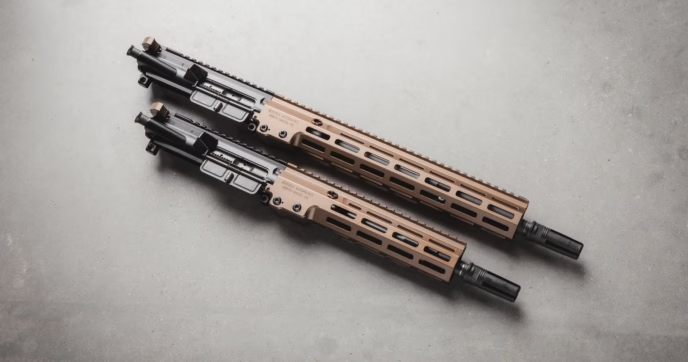
- 10.3-Inch Barrel: This is often viewed as the minimum practical length for 5.56. At home defense distances, it provides enough velocity for the bullet to work effectively while remaining very compact. Because of the popularity of the DD MK18, parts and accessories are easy to find.
- 11.5-Inch Barrel: The 11.5-inch barrel is a popular middle ground. It offers better velocity than the 10.3-inch version. However, inside a home, that extra speed provides little benefit. The added length can hinder movement in tight spaces, especially if you add a suppressor (which you absolutely should).
- 14.5-Inch Barrel: For those who want to avoid extra regulations, a 14.5-inch barrel with a permanently attached muzzle device is a strong alternative. This brings the total length to sixteen inches, avoiding NFA requirements. It is longer than an SBR but still handier than a standard rifle. It also offers more versatility for outdoor use and training.
Factory SBR Options
If you prefer a factory-built firearm, several manufacturers offer high-quality SBRs.
- Noveske N4 Commando (11.5-inch) This rifle is known for premium construction. It features exceptional barrels and robust components. It strikes a balance between maneuverability and performance, making it a strong choice for users who want a refined, reliable SBR.
- Geissele Super Duty SBR (13.9-inch) This option represents a different philosophy. Although longer than traditional SBRs, it offers a softer recoil impulse and great versatility. Geissele focuses on durability, making this platform appealing to those who value long-term reliability.
Conclusion
Is an SBR good for home defense? It comes down to your priorities. From a performance standpoint, the answer is yes. SBRs offer exceptional control and power in a compact package.
However, the legal and logistical realities cannot be overlooked. The regulations, replacement challenges, and access issues introduce complexities that may outweigh the benefits for some.
For those willing to navigate the challenges, an SBR is an outstanding defensive tool. For others, a standard rifle might offer a more practical balance. As with any defensive decision, you must align the trade-offs with your personal circumstances to make an informed choice.
Frequently Asked questions (FAQ)
-
Is an SBR good for home defense?
Yes. SBRs can offer incredible maneuverability, accuracy, and control in confined spaces when set up and trained with properly.
-
What does SBR stand for?
SBR stands for “Short-Barreled Rifle”, which is any rifle with a barrel shorter than 16 inches, or an overall length under 26 inches. SBRs are federally regulated under the National Firearms Act (NFA), and they require ATF registration and approval to own. As of January 1, 2026, the price of tax stamps for NFA items has been reduced from $200 to $0.
-
What is considered an SBR?
As noted above and under U.S. Federal Law, any rifle with a barrel length shorter than 16 inches, or with an overall length under 26 inches, is an SBR. The key distinction is that the firearm must be a rifle designed to fire from the shoulder with a stock. You can opt for a rifle-style pistol as long as your State allows their ownership. Such firearms are prohibited from using rifle stocks and vertical foregrips, but they can use pistol stabilizing braces, angled foregrips, and handstops. As noted by their name, they are classified as pistols, not SBRs.
-
Is an SBR better than an AR pistol for home defense?
An SBR offers better stability and ergonomics thanks to their use of a rifle stock. While rifle-style pistols don’t require NFA registration, the cost barrier for SBR ownership is gone now that the NFA tax stamp price has been reduced to $0 as of January 1, 2026. While there is still a “waiting period” as your ATF registration paperwork is processed for approval, there’s no longer an extra $200 to spend in addition to your rifle’s initial cost.
-
What is the best barrel length for a home defense SBR?
For AR-15 SBRs chambered in 5.56 NATO, 10.3-, 11.5-, and 12.5-inch barrels are some of the most common. A 10.3-inch barrel is the shortest feasible length for 5.56 NATO, offering reliable and maneuverability. 11.5- and 12.5-inch barrels add velocity without increasing length too much. If you don’t want to use an SBR or rifle-style pistol, and AR-15 with a 13.7-, 13.9-, or 14.5-inch barrel is feasible so long as the muzzle device is pinned and welded to extend the overall barrel length to 16+ inches. Doing so meets the ATF’s standard rifle requirements, shorter than a and results in a rifle that’s more compact than a standard 16-inch one.