The AK-47 is one of the most recognizable rifles ever created, with it being well-known for its simplicity and rugged reliability. It’s no surprise that it consistently ranks as one of the most popular rifles on the market.
While its ability to handle the worst that rough conditions can throw at it has certainly made it popular, it’s also perpetuated the idea that AKs don’t need to be cleaned. This notion is simply untrue. Just like any other rifle, the AK, and its many variants, need to be properly maintained if you expect them to run when you need them to.
Before you Start
Before doing anything with your rifle, make sure it’s unloaded and safe. Remove the magazine first, then pull back on the charging handle to inspect both visually and physically that there isn’t a round in the chamber.
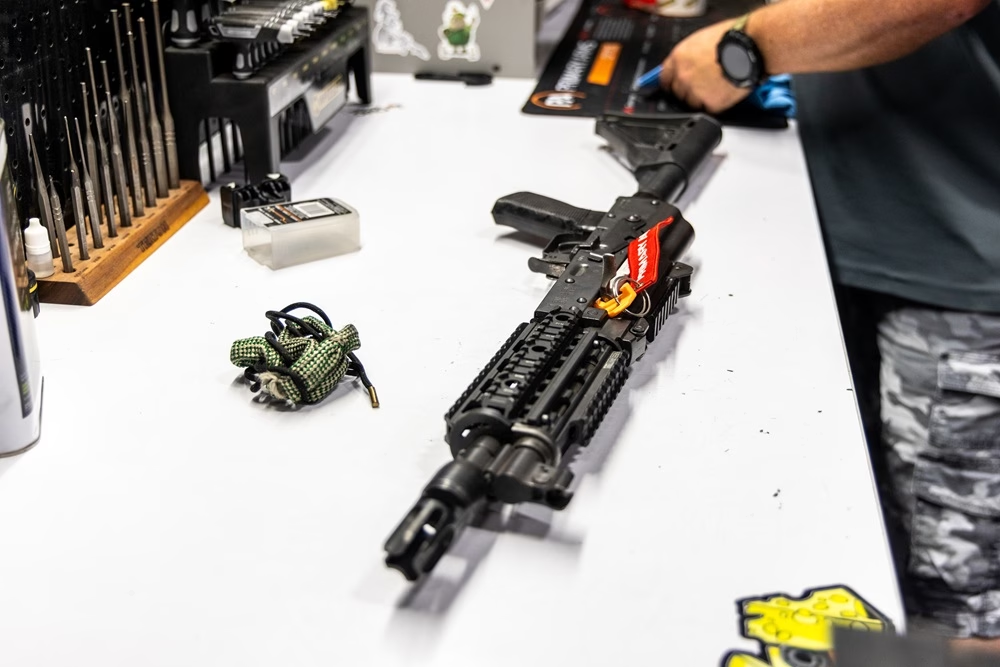
With the rifle cleared, you can set up your workspace. A stable surface like a countertop or table is a great place to clean your rifle. A gun cleaning mat will keep your work surface and rifle protected from abrasion. Plus, if you have one, a tray or container of some kind is excellent for keeping small parts contained in one place.
Finally, you’ll the right tools and gun cleaning supplies to get started. A basic gun cleaning kit will have most of what you’ll need. If you don’t have one, a cleaning rod, brushes, solvents, gun oil, gun lube, cotton cleaning patches, and gun cleaning wipes are all you’ll need. That said, it doesn’t hurt to have a set of tools like pliers and punches on hand for disassembly.
Field Stripping your AK
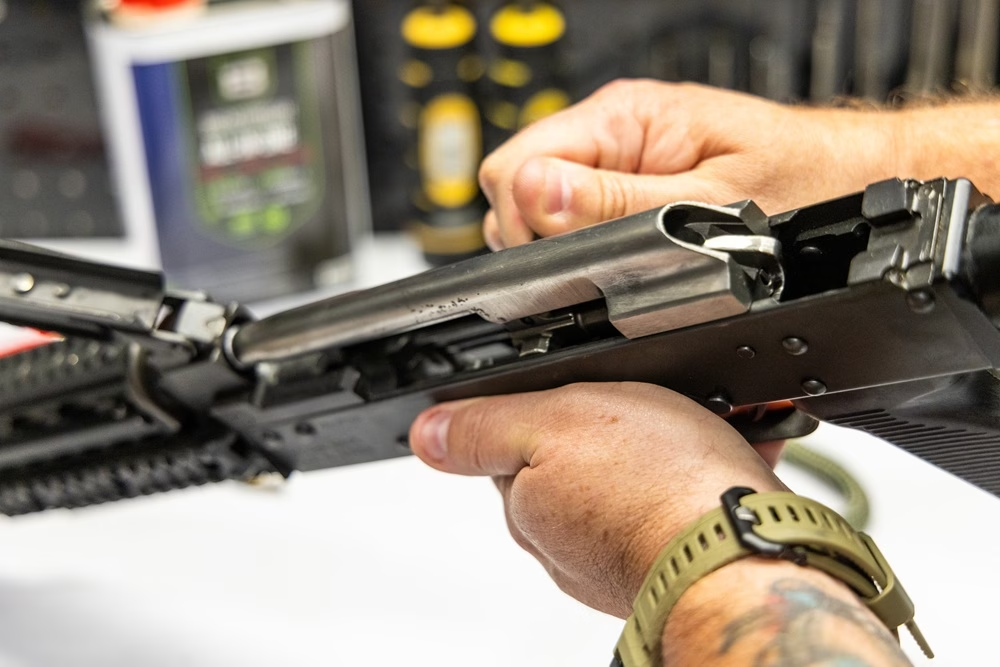
The AK is one of the easiest rifles to field strip. Before doing anything though, double-check to make sure that the magazine has been removed, and that there isn’t a round in the chamber. Once you’ve made sure it’s clear, you can start by removing the dustcover.
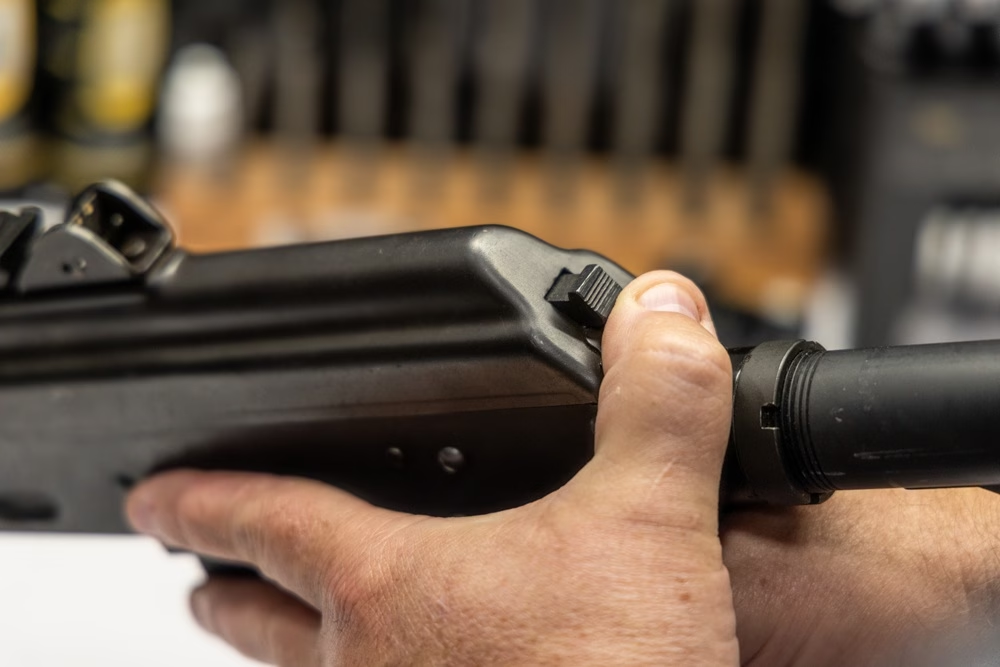
On a standard AKM, the dust cover is held in by a button that’s attached to the recoil spring. Simply push it in, and the dust cover can lift out of place. If you have a Yugoslavian/Serbian pattern AK, like the Zastava M70 and M90, there’s an extra button on the left side of the receiver that locks the recoil spring in place. Aside from this, the process is the same, and the recoil spring and bolt carrier can be removed next.
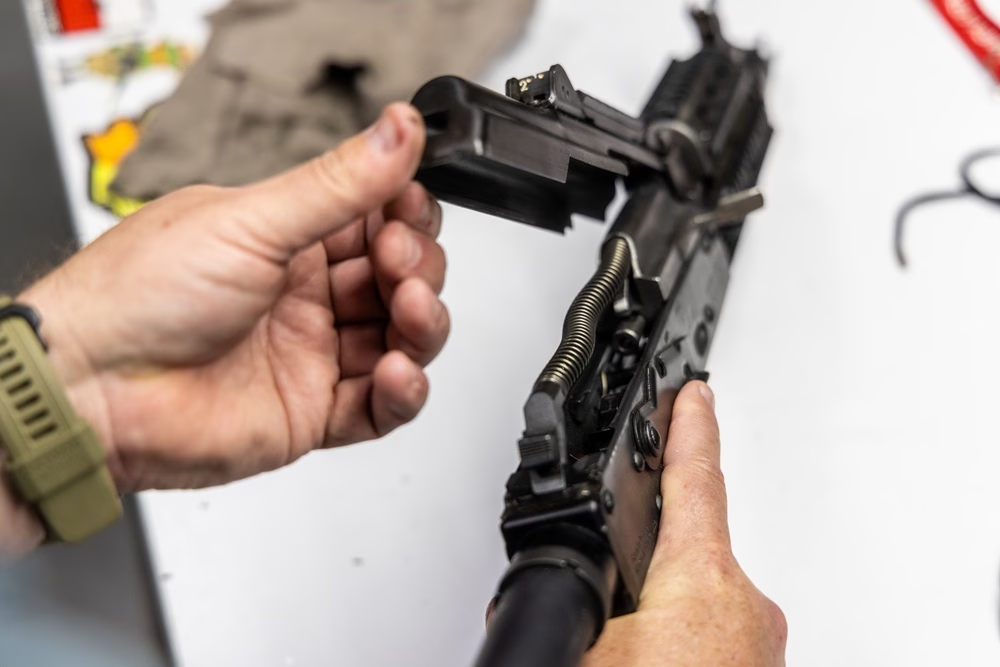
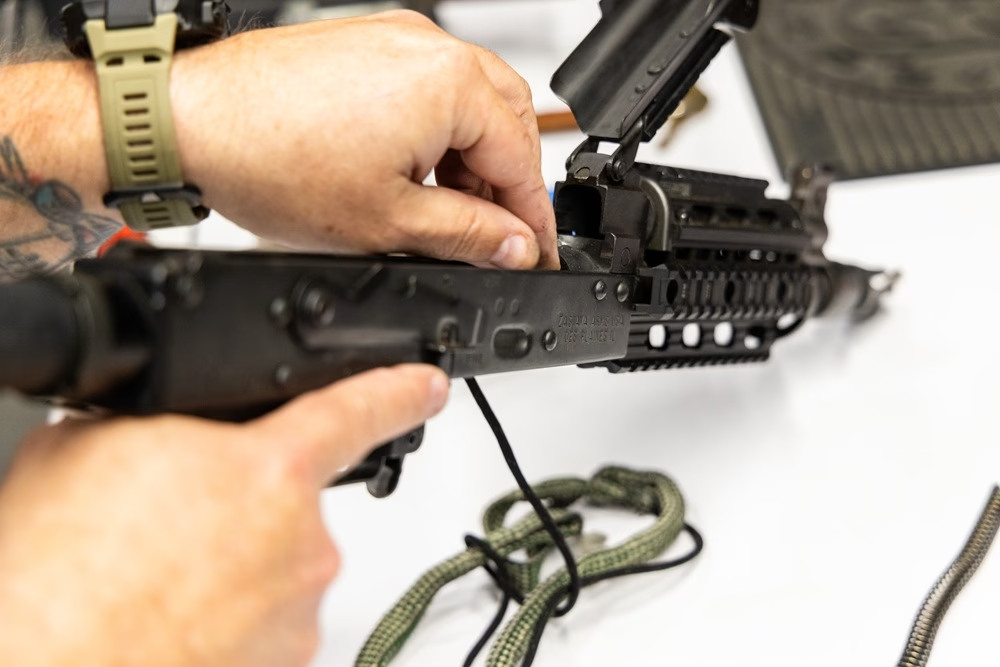
Simply push and lift the spring out of its catch point and pull it out. Now, the bolt carrier can freely pull back to the rear and be lifted out of the receiver. With the spring and bolt carrier removed, the gas tube and lower handguard can follow suit. On most AKs, the gas tube is held in by a small lever on the rear sight block. These levers can be stiff, but you can use something like a screwdriver or even the bolt carrier for some extra leverage. Lastly, the lower handguard is held in by a retainer—simply lift the lever on the retainer to move it, and the lower handguard can be removed.
At this point, if you’re just doing a basic rifle cleaning, you’re rifle is ready. That said, you can go a step further by removing the rest of its components for a deep clean. Removing the safety selector is easy—just lift it to a vertical position and then pull it out of the receiver. Making sure your hammer is forward, not primed, use a pair of needle nose pliers to the lift the trigger spring arms up and around the hammer to hold them in place. These springs are strong, and if they slip, they can easily injure your hand or fingers, so be careful.
Depending on your rifle, it will have either a retainer plate or a shepherd hook holding the trigger and hammer pins in place. If yours has a retainer plate, use some needle nose pliers to pull it out of place. If it has a shepherd hook, use a punch to remove the trigger and hammer pins as far as they’ll go. Once they’re started, use your punch or a flathead screwdriver to push down on the hook to relieve the tension. Then, you can pull the pins out, along with the trigger and hammer. Lastly, remove the grip, stock, and muzzle device, and your rifle will be fully disassembled.
Additional Disassembly Differences in Different Pattern AKs
AKs aren’t all built the same. We highlight this in-depth in our guide on Regional AK Patterns, but different model/pattern AKs have distinctive design features. As such, the disassembly process can be slightly different depending on your rifle’s make and model. These design changes are typically found in the dust covers, muzzle devices, and stocks.
Earlier, we mentioned the extra dust cover button on Zastava/Yugo pattern rifles, but they aren’t the only models with unique dust covers. Rifles based on the AKS-74U/Krinkov have a hinging dust cover that isn’t freely removable. They can be removed, but it requires extra work and isn’t necessary for cleaning.
In the same vein, muzzle devices don’t necessarily need to be removed either. But, if your rifle uses a detent to hold it in place, the looser fit can allow carbon, dirt, and other moisture to gather in the threads. Standard AKMs have an M14x1 Left-Hand thread pitch, while rifles based on the AK-100 series have an M24x1.5 Right-Hand thread pitch. Lastly, select Yugo pattern rifles, like the Zastava ZPAP92 and ZPAP85, have a unique M26x1.5 Left-Hand thread pitch. Either way, their removal is simple—just push and hold the detent back, and thread the muzzle device off.
Finally, removing the stock can vary too, and isn’t always necessary. In most cases, a quick wipe down or spot check is all they need. Still, AKs often have a fixed, side-folding, or under-folding stock. Of the three, fixed stocks are the easiest to remove. Standard AKM stocks are held in by two screws and mount in the tang of the rear trunnion. Yugo pattern AKs have a different rear trunnion design, and instead use a singular, long bolt to hold the stock in place. Lastly, select milled rifles, like Arsenal’s SAM series, have an extra lower tang to mount the stock.
Sidefolder AK stocks are fairly simple to remove too. With the stock folded to the side, you can punch its 4.5mm or 5.5mm pin out from the bottom. Once out, the stock can be removed. Removing an underfolder stock is a bit complicated. We don’t recommend removing them unless it’s necessary. If you keep the mechanism lubed and free of debris, it will work with no issues.
Still, to remove one, there’s a hole on the bottom of the rifle, where the grip would normally be. In it, there’s a small pin that holds the main button and spring. The button and spring are under pressure, so brace the button to make sure it doesn’t fly out inadvertently. Once removed, punch out the second pin holding in the lock nut. Thread the nut off to access the third pin, punch it out, and the rest of the stock can be removed.
Cleaning the Barrel and Gas Tube
Cleaning the Barrel
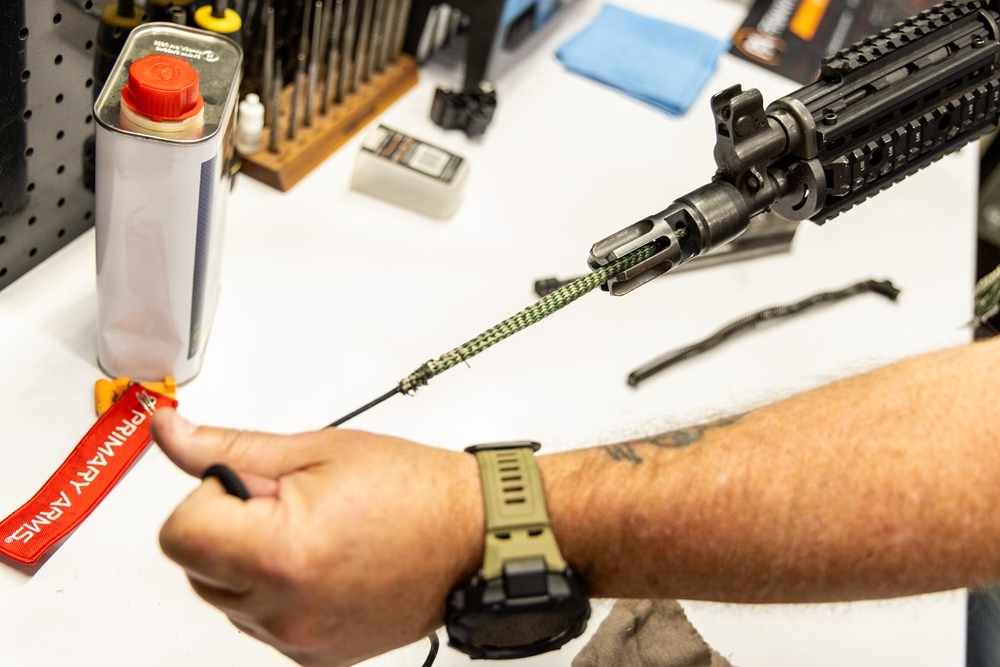
Your rifle’s barrel is one of its most important features, and on the AK, cleaning it can be more critical than with other firearms. AKs most often come chambered in 7.62×39. Although there’s a lot of new-production ammo available, there’s still a lot of surplus ammo and other Eastern European ammo in circulation. This ammo can be very corrosive and can wreak havoc on your AK’s barrel if left unclean for too long. As such, proper cleaning is paramount. All you need is your cleaning rod, cotton cleaning patches, solvents, and gun oil.
Push the cleaning rod through the muzzle of the barrel until it comes out on the other side. Attach one of the cleaning patches to it and saturate it with a good cleaner like CLP. Pull it straight through to loosen soak and loosen any built-up carbon or other debris. After soaking it, swap out the patch for your rod’s brush attachment, lube it with CLP, and run the brush through the barrel. Switch back to cotton patches and repeat this process until your patch comes through clean.
If the carbon is stubborn to remove, we recommend using switching to a solvent instead of CLP. Apply the solvent with a patch just like you would with CLP, but pull the rod through the barrel slowly so the solvent can contact as much of the carbon as possible. Do this a few times and then take a step back to let the solvent soak in for a few minutes. Next, run patches through the barrel until they come out clean. Finally, run a final patch with CLP through the barrel to keep it lubricated and protected from rust.
Cleaning the Gas Tube
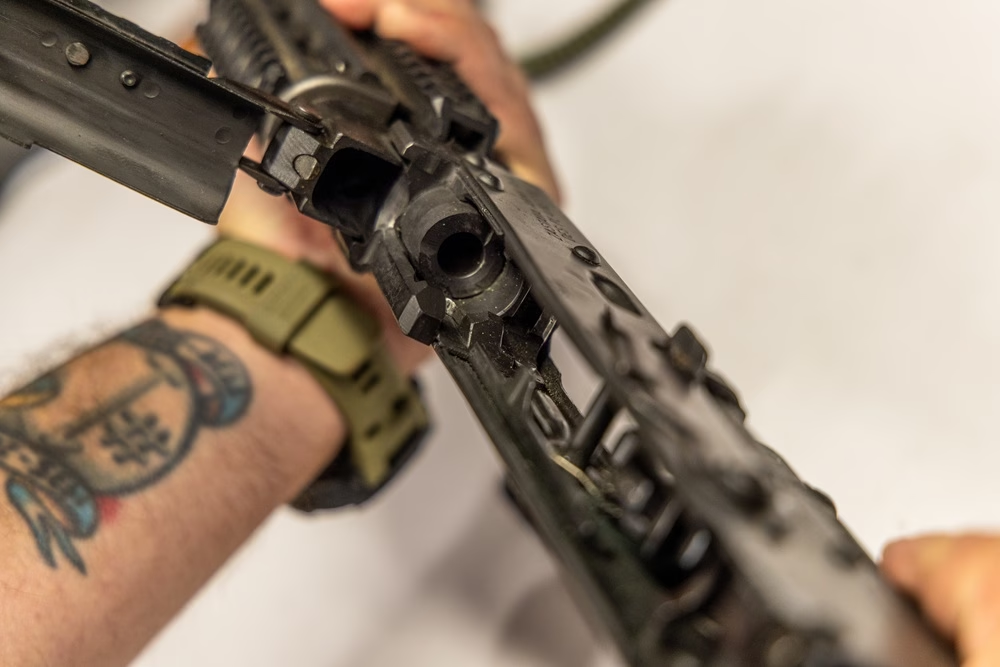
Cleaning the gas tube is like cleaning the barrel. AK gas tubes are short, and they have a much larger diameter than the barrel. So, your cleaning rod won’t be all that effective, but a handheld brush, cleaning patches, and the same cleaning agents can be used effectively. Just like with the barrel, apply some CLP to break down any carbon built up inside the tube. Use a larger brush to break it loose and repeat until your patches come out clean. Don’t forget to clean the outside of the gas tube. The fitment between the gas block and tube isn’t super tight, so gas can vent out and around it.
To clean the gas block, use your patches, brush, and CLP to clean up any fouling until it’s clean. Also, be sure to clean out the piston channel that’s under the rear sight block. It cleans just like the gas tube, and it’s another area where a lot of carbon can build up over time.
Cleaning the Bolt Carrier and Piston
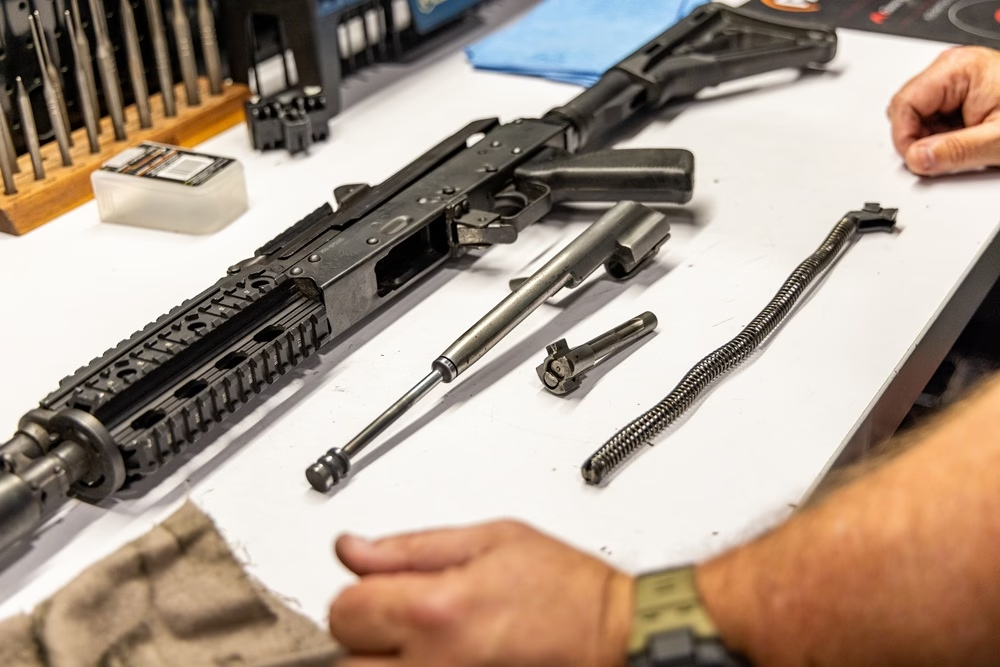
Being a long-stroke gas piston system, the bolt carrier and pistol are directly connected to each other. Because of this, both get fouled up with carbon after firing. And although the AK can run dirty for a long time, cleaning these components will ensure they stay in working order for a long time.
Start by separating the bolt from the carrier by rotating it out if the cam groove. Push the bolt rearward, rotate it, and then pull it out of the carrier. Using cleaning wipes with some CLP or solvent, wipe down the surface of the bolt carrier, as well as the bolt and bolt face. At this point, you’ll also want to check for any wear on the cam groove, while cleaning any fouling in or around it.
The piston takes the brunt of the gas needed to cycle the action, so there’s usually quite a bit of carbon fouling accumulated onto it. Apply some CLP to the piston and scrub it with your brush to loosen the carbon, focusing on the piston’s face, and the grooves underneath it. If necessary, soak it with some solvent to break down the carbon deposits, scrub it clean, and finish by applying some gun oil.
Cleaning Everything Else
If you’re just doing a basic cleaning of your rifle, you can call it quits here. But if you’ve disassembled your rifle further for a deep clean, it’s time to move onto everything else.
Cleaning the smaller components like trigger assembly, safety, stock screws, etc., cleaning isn’t too involved. A quick wipe down with a cleaning wipe, CLP, or a solvent is all that’s needed to get any carbon, dirt, or other debris off them. And while it’s disassembled, now is a suitable time to clean the inside of the receiver. While not as bad as the carrier and piston, gas can still spill into the receiver after firing. So, using a cleaning rag, wipe down the inside of the receiver to clean out any debris or carbon buildup.
Not much more than a simple wipe down is needed for the stock, grip, and handguard, in most cases. It’s possible for dirt to get packed into the grip texture of aftermarket components, so you may need to use a soft-bristled brush to clean it out. Aside from this, not much else is necessary. We can’t stress the importance of keeping small parts together during this stage. Any stock pins, screws, and other small parts can be easily lost—especially if you’ve disassembled an underfolding stock—so be sure to keep them in a tray or container of some kind.
Lastly, look at the muzzle threads and muzzle device. Like we mentioned earlier, stock AK muzzle devices tend to fit loose. So, give the threads a quick once-over to check for any rust or corrosion. If there is, clean it off with a wire brush and CLP. The muzzle device can be wiped down with gun cleaning wipes.
Reassembling and Lubricating your AK
With everything clean, it’s time to start reassembling your rifle. Before doing anything, give everything a quick spot-check to make sure that you didn’t miss anything when cleaning. If everything’s good to go, you can start reassembling your rifle. And while you’re putting everything back together, you can use this time to lubricate some of your rifle’s core components. You don’t have to go overboard with whatever lubricant you’re using, but there are some specific points to focus on.
Start by reinstalling your stock, grip, lower handguard, and gas tube onto the rifle. We recommend applying a light amount of gun oil, or grease, to moving parts such as the gas tube lever, handguard retainer, and any moving parts on your stock assembly. Afterwards, you can reinstall your safety selector and trigger. To keep it running smoothly, it’s good to lubricate your trigger pins with a little bit of grease.
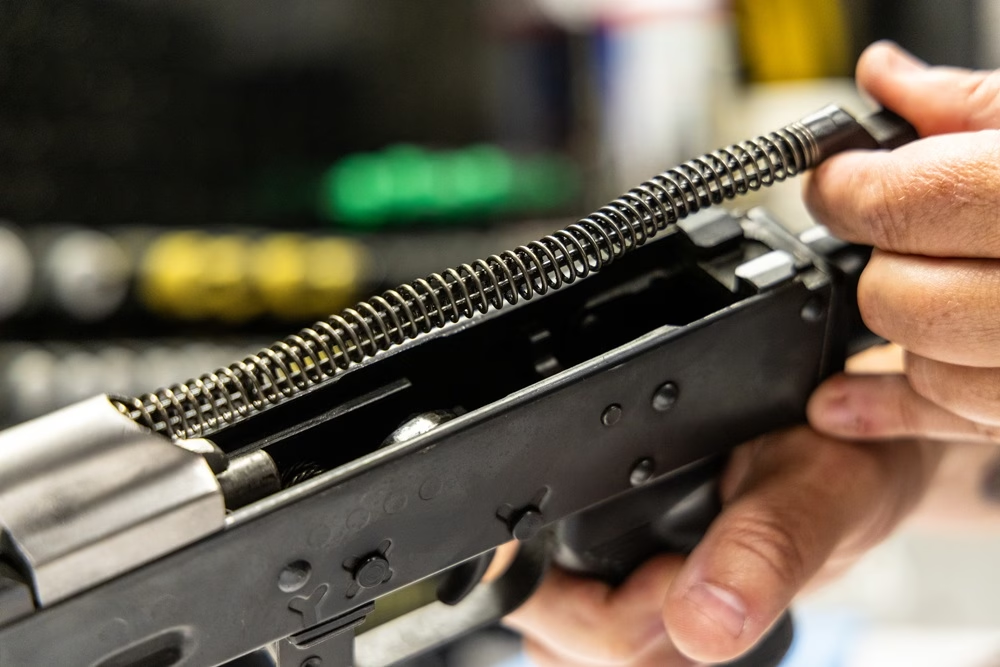
When reinstalling your bolt carrier, there are a few key areas to keep lubricated. The cam groove (where the bolt sits within the carrier), the flat edges that ride along the receiver’s internal rails, and lastly, the bottom of the carrier that contacts the hammer. Once the carrier is installed, apply a light amount of oil to the recoil spring, and then you can place the dust cover back into position. Last is the muzzle device, and when installing it, it’s beneficial to apply a small amount of anti-seize/high temperature grease onto the muzzle threads. This will prevent it from getting carbon-locked in the future.
Once everything has been reassembled, do a quick function check to make sure everything is working properly. Without placing a magazine into the rifle, rack the charging handle a few times, checking to see if it hangs up or binds anywhere. Pull it back one more time to ensure both visually and physically that there isn’t a round in the chamber, and once it’s been cleared, dry fire the rifle to test the trigger. Keep holding the trigger back, pull the charging handle, and slowly let off to test its reset. If everything works normally, you’re all done.
How Often Should You Clean Your AK?
Cleaning your AK comes down to several factors such as how hard you train with your rifle, the type of ammo you use, and the environment you use it in.
Generally, we recommend doing a basic cleaning of your rifle after every range trip, especially if you’re using corrosive ammo. If you let your rifle sit for too long without cleaning after hitting the range, you risk damaging the barrel. You don’t have to deep clean your rifle every time, but it’s good to take care of the barrel, gas tube, bolt carrier, and piston after each range trip.
When storing your rifle, it’s good to wipe it down with a light coating of gun oil. AKs are primarily made of steel, and they can rust easily, depending on the finish. It’s good to take such precautions if you’re going to store your rifle for a long time. If your rifle does sit for extended periods of time, it’s good to take it out and inspect it every so often to check for rust, and to reapply oil when necessary.
Conclusion
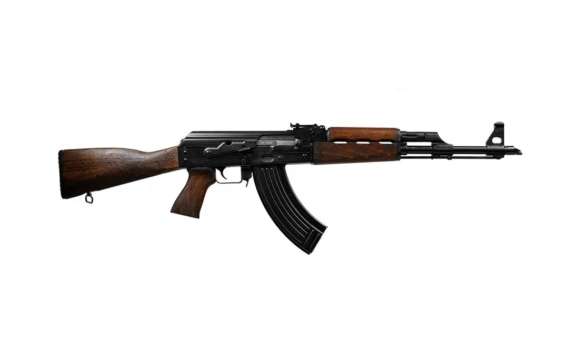
The AK-47 is, without a doubt, one of the most ruggedly reliable rifle systems ever designed. And while they’re widely believed to be the rifle that never fails, that doesn’t mean they don’t need to be cleaned.
Maintenance is, and should always be, a fundamental part of firearm ownership, regardless of the platform. Despite being designed to withstand the worst that your environment can throw at, the AK can only do so for so long. As such, it’s imperative to take time to adequately maintain your rifle. If you do, it’ll be ready to run whenever you need it to.