Long-range precision is one of the most demanding shooting disciplines around. It tests the quality of your rifle build, your ability to read the environment, and marksmanship skills. And those with experience know that there are a lot of variables to manage in such scenarios.
Bullet drop, windspeed, and wind direction are some of the first that usually come to mind, but temperature is often overlooked—especially by newcomers. Air temperature can have a massive impact on your rifle’s ranged performance. It affects muzzle velocity and bullet trajectory, so knowing how to overcome its effects is critical.
How Temperature Impacts Your Zero and Ballistics
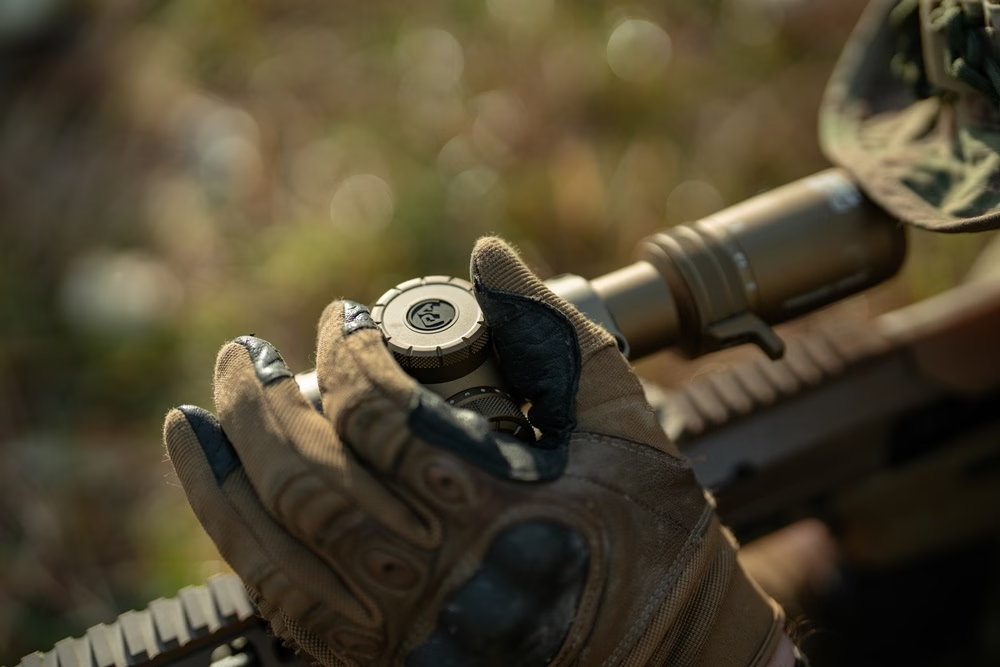
Zero Shift
Temperature directly affects air density, or closely packed air molecules are. As temperature rises, air molecules spread out, making the air thinner and less dense. Conversely, as temperatures drop, air molecules pack closer, making it thicker.
This change in density has a noticeable impact on your bullet’s flight path. Warmer, thinner air creates less drag, allowing it to keep more of its velocity, giving it a flatter trajectory. Colder, thicker air increases drag, slowing the bullet down, and causing it to drop quicker.
If your rifle was zeroed on a warm day and later used on a slightly colder one, you’ll lose a bit of muzzle velocity. If it’s just a few degrees colder, this change in velocity could be incredibly subtle—even around 1 to 3 FPS depending on your caliber and load. Within 100 yards, it’s barely noticeable, but at distance, it’s enough to make you miss your target if you aren’t careful.
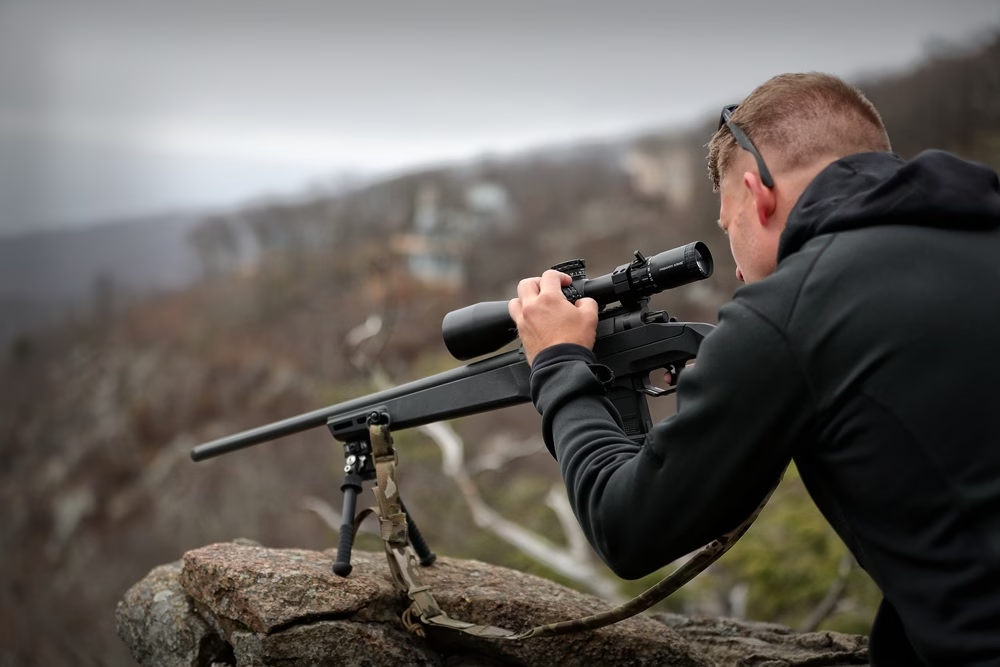
Altitude
While altitude isn’t directly related to temperature, it affects air density in a comparable way. At high altitudes, the air is thinner, and at lower altitudes, it’s denser.
This complicates things a bit, as altitude and temperature rarely balance each other out. The temperature could be the exact same at ground level and at higher elevation, but your bullet trajectory and velocity would be different since the air is thinner at higher altitudes. Combining high altitudes with low temperatures isn’t always predictable either.
Ideally, it’s best to zero your rifle in the conditions that you intend to use it in. But this isn’t always possible, especially for those who travel to hunt or compete. Fortunately, proper preparation goes a long way in getting you ready for whatever conditions you may face.
DOPE Sheets
DOPE stands for “Data on Previous Engagements”. While a ballistic chart offers a general overview of how certain ammo performs, a DOPE sheet is much more specific. It’s a record of how your rifle and ammo combo performs under real-world conditions.
The only downside of using a DOPE sheet is that you must make it. Fortunately, it’s a simple process—all you’re doing is recording your rifle’s performance. And, a DOPE sheet’s layout can be as simple, or as detailed, as you’d like. Below is an example you can use to get started.
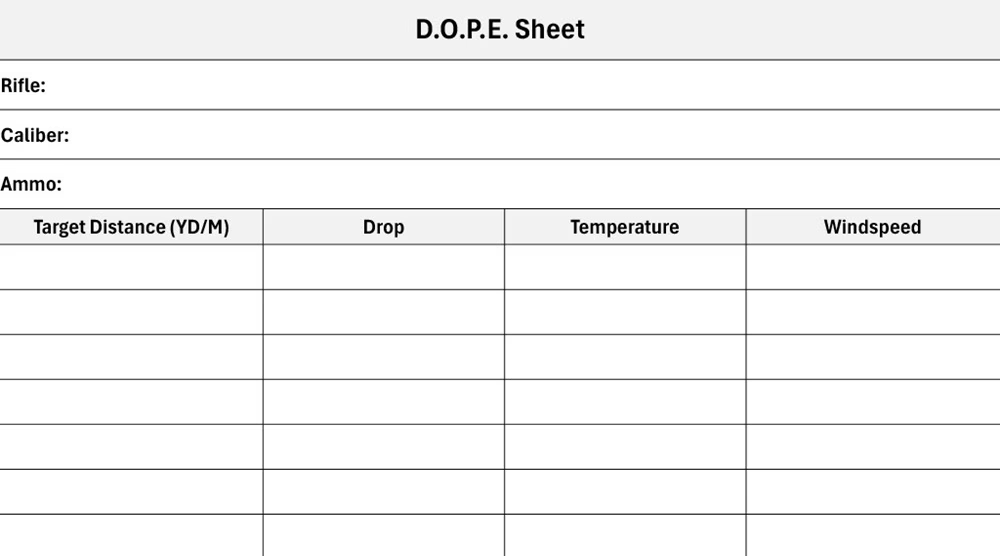
Tracking your rifle’s baseline performance gives you data to quickly make confident adjustments in the field. For instance, if you need to hold 8 MILs at 1,000 yards in normal conditions, you can reference this to adjust your aim in other conditions. Plus, you can always gather new DOPE when you’re in the field. And including the ambient temperature, wind speed, and wind direction, will only set you up for success.
Now, however you decide to format your DOPE, be sure to stay as consistent as possible. Use the same ammo and the same rifle. Different setups perform differently, even when under the same conditions. But if you stay consistent, you can use your DOPE with no issues.
Observation Tools: Seeing Conditions Before They Beat You
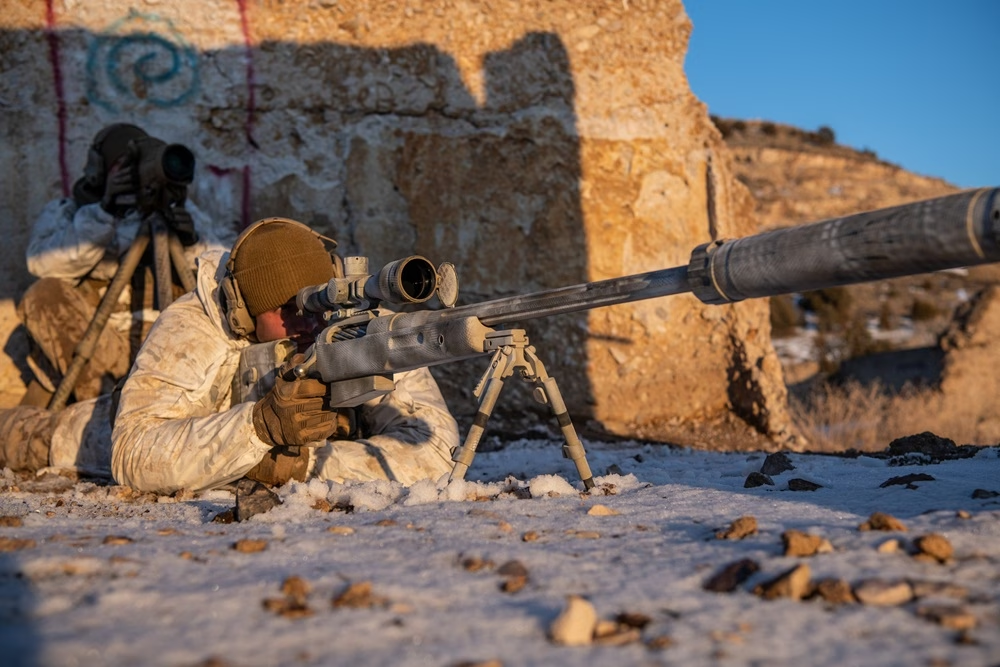
Rifle Scopes
Rifle scopes go beyond serving as your primary point of aim. They can provide you with crucial information needed for accuracy at distance. We have several guides that cover what to look for in a quality scope, but for long-range shooting, a scope’s reticle type, glass quality, and turret construction are especially important.
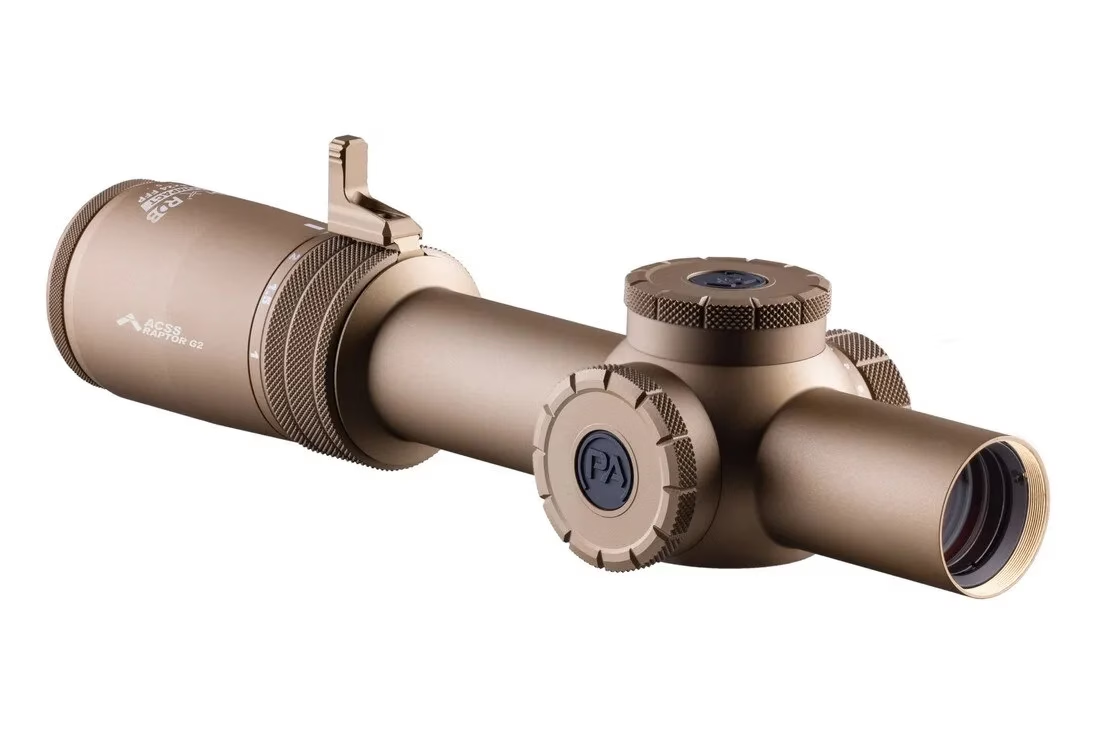
Scopes like the Primary Arms Optics SLx® 4.5-27x56mm FFP Rifle Scope is a great example of what to look for in an optic. Being capable of zooming in to 27x magnification, it offers a great sight picture of far-off targets. And to complement its magnification range, this optic can house several utilitarian reticles, such as the ACSS® Athena BPR MIL reticle. A MIL based reticle, it offers a plethora of data for engaging distant targets. On top of this, these scopes boast incredible glass clarity, as well as a durable aluminum construction. Plus, their turrets come equipped with PAO’s Easy Stop® Technology for proper, repeatable adjustments when needed.
Another solid pick is the Vortex Strike Eagle 5-25×56. It has an impressive magnification range, high-quality glass for a clear sight picture, and it uses their specialized EBR-7C MRAD reticle. Using MIL-based measurements, you can estimate your target’s range, make holds for wind and target movement, and compensate for bullet drop. Being an FFP (First Focal Plane) optic, the reticle’s fine details stay visible and accurate when zoomed in. Lastly, its turrets have a reinforced locking mechanism and a return to zero feature for easy field adjustment.
Solid optics like these have all the features you need to stay precise at long-range. Regardless of whether you’re facing a temperature shift or another environmental change, you’ll have all the tools needed to overcome it.
Spotting Scopes
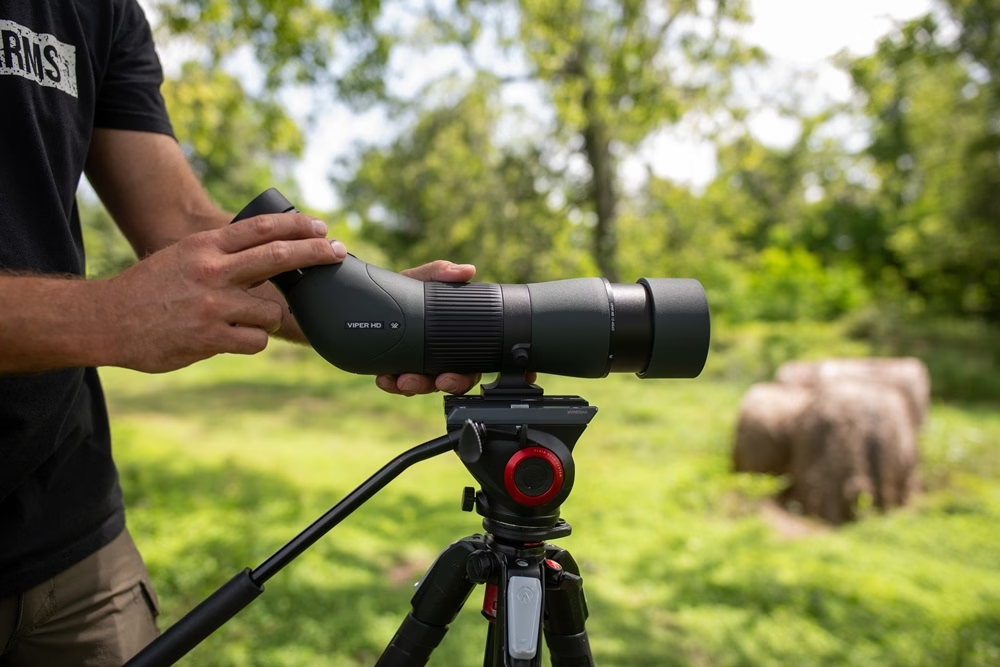
Even if you have a top-tier rifle scope, it isn’t always easy to get an unobstructed view of where your shot lands after firing. But, with a dedicated spotter set up on a spotting scope, you can focus on target while your spotter sits off to the side to call out your hits, letting you know how to adjust your aim.
Spotting scopes have a much more powerful magnification range compared to rifle scopes. For instance, the Vortex Crossfire HD has a 16-48x magnification range, giving you, or your spotter, a detailed view of your target and its surroundings.
If you miss your target, you need to look for where the dirt splashes around it. This isn’t always easy to do when you’re on your own. You can use a spotting scope on your own, but you won’t be able to track your bullet’s impact in real time. If you have a spotter, you won’t have anything to worry about.
Binoculars
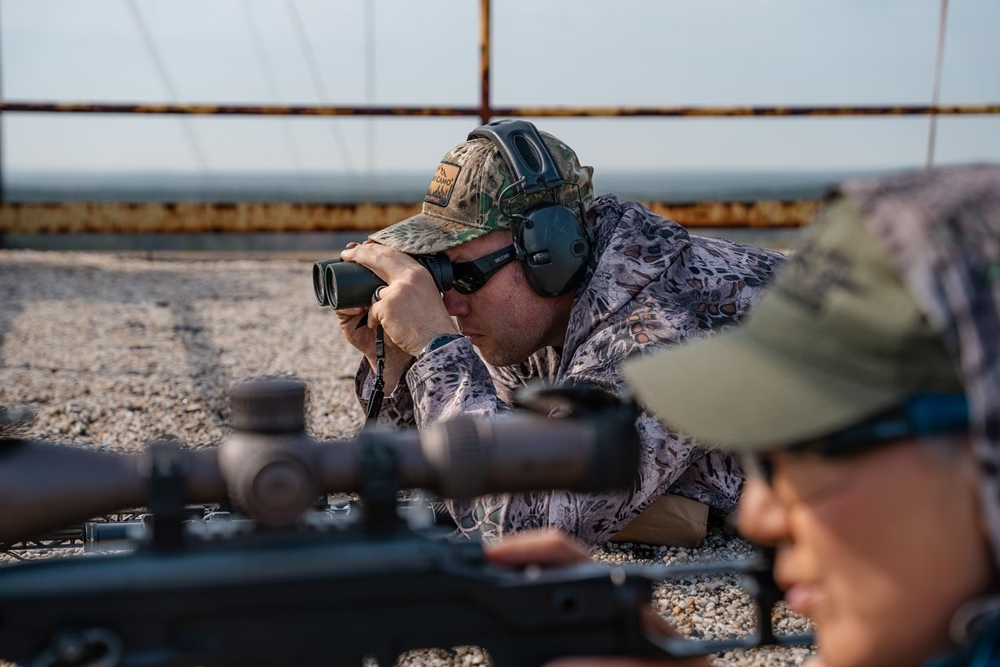
Binoculars are compact, versatile optics that are perfect for getting a read on wind speed and your target’s surroundings. Models like the Vortex Viper Binoculars are a solid pick that can be easily stowed in a bag or pouch, giving you quick access to them whenever they’re needed. Plus, they don’t require any setup to use—spotting scopes require a stand or tripod, while rifle scopes obviously require your rifle to be set up, which isn’t always practical.
Still, binoculars are nowhere near as powerful as most rifle and spotting scopes. They typically have a lower, fixed zoom that ranges anywhere from 10x to 20x, though most readily available ones having either a 10x, 12x, or 15x zoom. As such, they aren’t necessarily the best choice for target spotting or ranging, but for getting a quick read on your environment before setting up your rifle, they’re hard to beat.
Conclusion
As you step into the long-range precision scene, understanding how your rifle performs across various conditions gets increasingly important. And knowing how your environment—especially temperature—affects your ballistics is equally as crucial.
The ambient temperature’s effects on air density can seriously alter your projectile’s trajectory, causing it to have far more, or far less bullet drop than your initial zero conditions. While you can zero your rifle in the conditions you intend to use it in, this isn’t always possible. Ultimately, staying precise at distance is all about being prepared.
Recording DOPE and having the right optics for aiming and observation are the best ways to overcome temperature and other environmental changes. And if you show up prepped to go the distance, you’ll be ready for whatever conditions you might face.