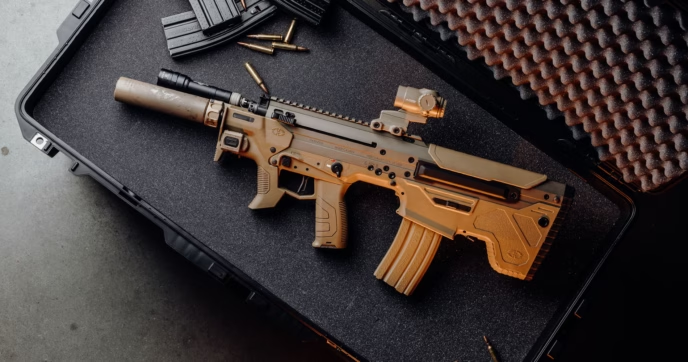
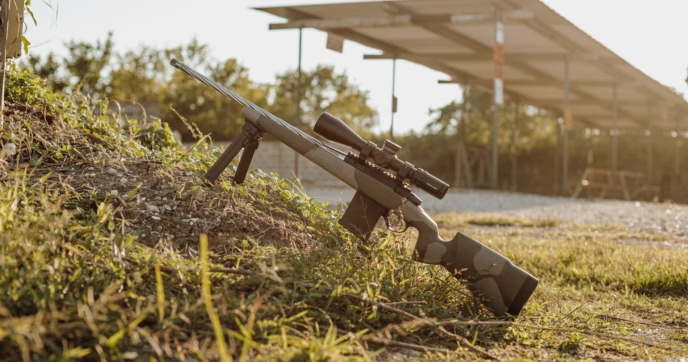
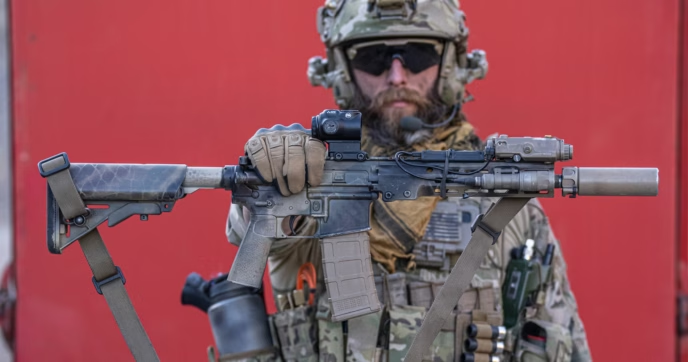
Rifle performance is shaped by many interrelated variables, but few exert as much influence as barrel length. Whether the goal is defensive readiness, tactical capability, or ethical harvest in the field, understanding how barrel length shapes velocity and terminal effect is essential for informed decision-making. Barrel length determines how efficiently a cartridge burns its propellant, how fast the bullet accelerates, and how consistently the projectile behaves downrange. These technical details ultimately manifest in real-world performance, from the handling characteristics of a compact carbine to the extended reach of a precision-oriented rifle.

Why Barrel Length Matters
Barrel length is far more than an aesthetic or ergonomic consideration. It sits at the center of a rifle’s ballistic identity. When a cartridge ignites, propellant gases expand rapidly, pushing the bullet forward. A longer tube gives these gases more time to accelerate the projectile, generally producing higher muzzle velocities. A shorter tube reduces that dwell time, limiting acceleration and yielding lower velocity. Because velocity underpins external and terminal performance, barrel length becomes a foundational design choice in any rifle build.
Beyond ballistic considerations, barrel length shapes handling characteristics. A shorter system is easier to maneuver in confined environments and quicker to bring to target. A longer system delivers greater stability and better sight radius for iron sights while increasing the potential for higher velocity. Every rifle represents a compromise between these traits, and barrel length plays the central role in defining that balance.
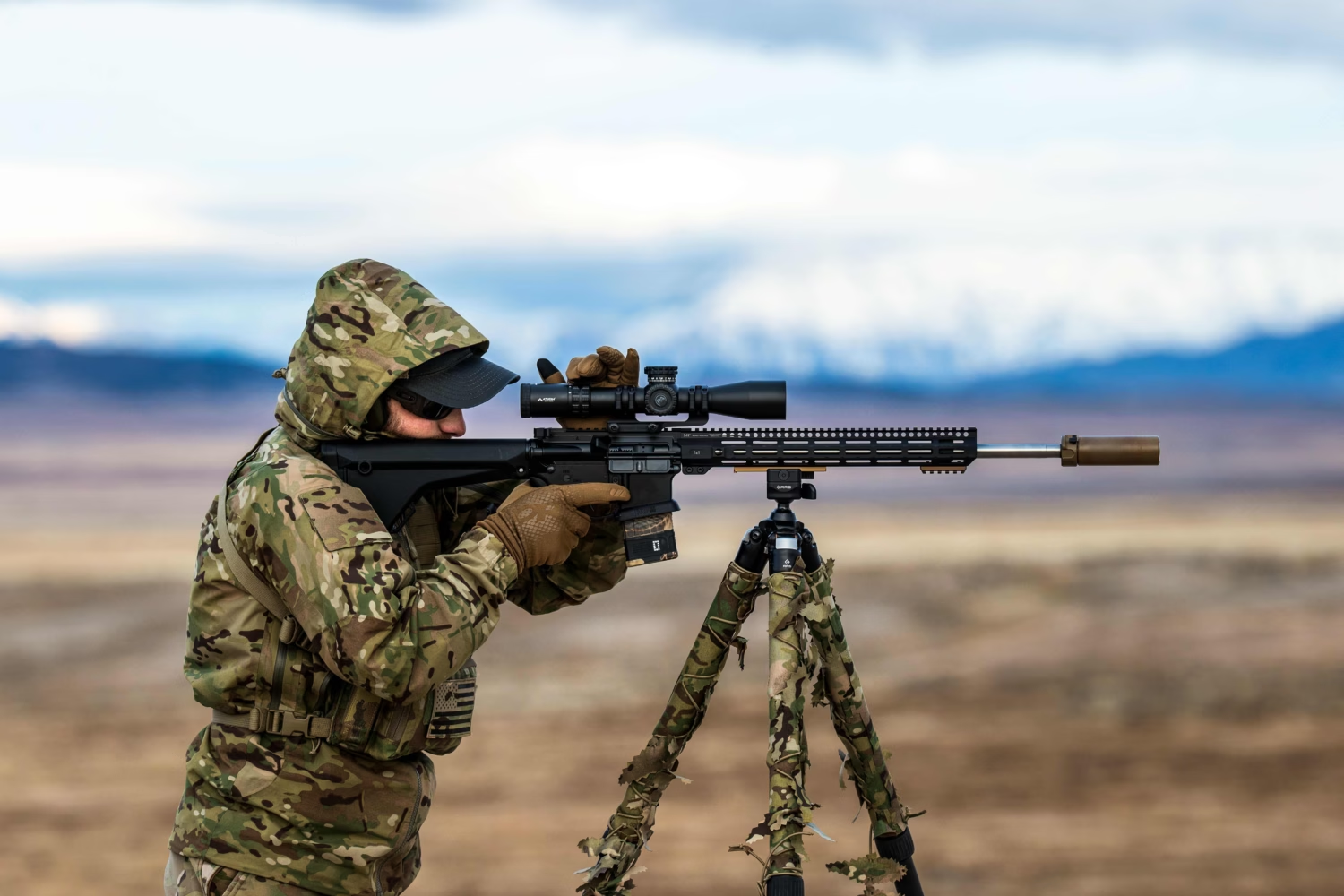
The Science of Barrel Length and Velocity
The relationship between barrel length and velocity begins in the chamber. Upon ignition, rapidly expanding gases exert pressure on the base of the bullet. This pressure accelerates the bullet until it leaves the muzzle. Most modern propellants are optimized for efficient burn within a particular pressure curve, and the barrel provides the space and time required for that burn to translate into velocity.
In general terms, a cartridge such as 5.56 NATO gains velocity from increased barrel length until it reaches a point of diminishing returns. Once all usable propellant energy has been transferred to the bullet, additional barrel length offers little advantage and can even introduce drag. Conversely, when the barrel becomes too short, the propellant fails to reach optimal burn efficiency, dramatically reducing velocity and increasing blast and flash as the propellant combusts outside the barrel.
Velocity directly shapes external ballistics. A faster projectile experiences less drop over distance, reduces wind drift, and provides a flatter, more predictable trajectory. This contributes to greater hit probability at mid- to long-range. The benefits continue into terminal performance. Higher impact velocity increases energy transfer into the target and allows expanding or fragmenting projectiles to operate within their intended design thresholds. When impact velocity falls below those thresholds, bullet behavior becomes less consistent, reducing terminal effectiveness.
For many 5.56 loads, reliable fragmentation or expansion requires a minimum impact velocity. Barrel length therefore becomes a proxy for effective range: shorter barrels reduce the distance at which the projectile can be expected to perform as designed, while longer barrels extend that range. Although terminal performance is multifaceted and influenced by bullet design, construction, and target interaction, velocity remains one of its most influential factors.
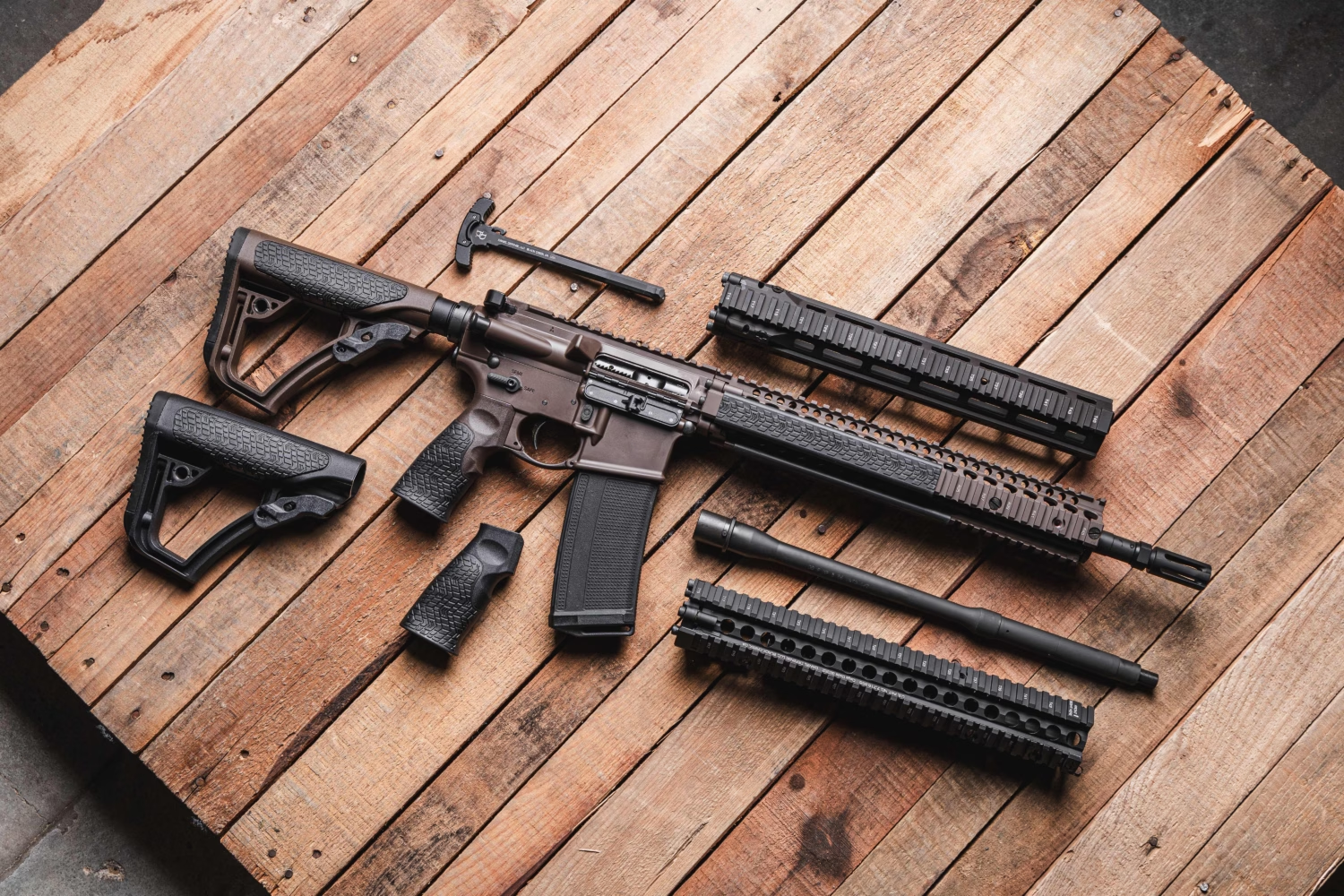
Common AR-15 Barrel Lengths and Their Performance Profiles
The relationship between barrel length and velocity is direct but not perfectly linear. Short barrels lose velocity rapidly because they fail to provide adequate dwell time for the propellant to accelerate the bullet efficiently. Long barrels continue to provide velocity gains, but those gains become marginal beyond a certain point, especially when compared against the penalty to handling and weight. Most AR-15 barrel lengths fall within a proven performance window, but each length carries its own advantages and limitations.
10.5″ Barrels
A 10.5-inch barrel represents the lower edge of practical performance for 5.56. While compact and agile, it yields significant velocity loss compared to longer barrels. Many 5.56 projectiles struggle to meet their minimum impact velocity thresholds beyond relatively short distances when launched from a 10.5-inch system. This does not render the configuration ineffective; instead, it shifts its optimal role toward close-range engagements where terminal requirements can still be met. The reduced velocity also increases sensitivity to wind and drop, limiting practical reach. Despite these constraints, 10.5-inch barrels remain popular for their maneuverability and effectiveness in close-quarters environments.
11.5″ Barrels
The 11.5-inch configuration offers meaningful advantages over the 10.5-inch format with only a modest increase in length. The slight extension provides a more efficient pressure curve, increasing velocity and improving reliability across a wider range of ammunition types. This length also balances compactness with smoother gas operation, resulting in a configuration that handles extremely well while offering improved ballistic consistency. Although still a short-range system compared to longer barrels, the 11.5-inch format represents a refined compromise for users who prioritize mobility but desire better external and terminal performance than the 10.5-inch alternative.
14.5″ Barrels
The 14.5-inch barrel has been a longstanding choice for military carbines and remains a proven standard. This length delivers a substantial velocity boost over the short-barreled configurations and increases effective range for most 5.56 ammunition types. The 14.5-inch barrel also provides a balanced blend of handling and ballistic capability. While less compact than 10.5- or 11.5-inch setups, it remains maneuverable enough for confined environments while providing enough velocity for mid-range reliability. When paired with a pinned and welded muzzle device to meet the 16-inch legal requirement, the 14.5-inch option offers excellent performance without the regulatory burden associated with shorter rifles.
16″ Barrels
A 16-inch barrel is the most common civilian AR-15 configuration. It provides a slight velocity increase over the 14.5-inch length, though the difference is generally minimal. What truly sets the 16-inch length apart is its regulatory simplicity, as it avoids the NFA classification without requiring permanent muzzle devices. The added length contributes to smoother gas operation and marginally better long-range performance. Many consider the 16-inch configuration the ideal general-purpose length, providing a capable blend of handling, velocity, and legal convenience.
20″ Barrels
The 20-inch barrel represents the traditional full-length rifle configuration for 5.56 NATO and remains the benchmark for maximizing velocity. This length allows the cartridge to achieve peak performance, delivering the flattest trajectories, best wind performance, and highest retained energy downrange. While less agile than shorter configurations, the 20-inch barrel is well suited for precision-oriented applications where stability and velocity take precedence over compactness. With the ability to maintain reliable terminal performance at greater distances, the 20-inch system remains the preferred option for users seeking to stretch the limits of 5.56 capability.
Short-Barreled Rifles
Any rifle with a barrel shorter than 16 inches, unless paired with a permanently attached muzzle device that brings it to legal length, falls under the definition of a short-barreled rifle and is regulated by the National Firearms Act. Prospective buyers must account for these regulations, which require additional paperwork, wait times, and legal considerations. While shorter barrels offer specific advantages, such as maneuverability and compactness, these legal requirements are an important factor in determining whether they are appropriate for a given role.

Choosing the Right Barrel for Your Role
The optimal barrel length is not universal; it depends on context. Each application presents distinct priorities, and barrel length should align with the desired performance envelope.
Home Defense
For interior environments and close-range engagement distances, a compact rifle excels. Barrel lengths in the 10.5- to 11.5-inch range deliver excellent handling while providing adequate velocity for purpose-built defensive loads within realistic engagement distances. The primary value in these shorter configurations lies in maneuverability, rapid presentation, and ease of use in confined spaces. Since engagement distances are short, the reduced velocity compared to longer barrels carries little practical disadvantage. Users must, however, weigh the legal considerations associated with short-barreled rifles.
Duty and General Purpose
A general-purpose or duty-oriented rifle benefits from a balance between velocity and handling. Barrel lengths in the 14.5- to 16-inch range meet this need well. They provide sufficient velocity for reliable terminal performance across a broad spectrum of ammunition types while maintaining an agile overall profile that performs effectively in diverse environments. The additional velocity beyond the 11.5-inch class broadens the rifle’s effective range and improves terminal consistency at intermediate distances. These lengths also avoid the administrative burden of NFA regulation, although a 14.5” barrel will require a pinned and welded muzzle device, making them particularly attractive for users seeking versatility without additional legal constraints.
Precision
Although the AR-15 platform in 5.56 NATO is not a dedicated long-range system, it can perform effectively at distances from 400 to 800 yards when configured appropriately. A 20-inch barrel maximizes velocity, which reduces drop, mitigates wind drift, and maintains downrange energy more effectively than shorter configurations. For users who prioritize extended reach, consistency at range, and improved ballistic performance, the full-length barrel offers a meaningful advantage. Its increased stability and velocity retention allow skilled marksmen to push the envelope of what the 5.56 cartridge can accomplish.

Conclusion
Barrel length plays a decisive role in shaping the ballistic performance, handling characteristics, and practical application of an AR-15. Longer barrels provide increased velocity, improved external ballistics, and enhanced terminal consistency at distance. Shorter barrels deliver unmatched maneuverability and remain highly effective within the close-range envelope for which they are best suited. The relationship between length, velocity, and performance is rooted in the physics of propellant burn and acceleration, and understanding that relationship empowers users to align their equipment with their intended purpose.
Whether selecting a compact configuration for home defense, a balanced system for duty use, or a full-length rifle for extended-range precision, the key lies in matching the barrel to the mission. When chosen intentionally, barrel length becomes more than a specification; it becomes a decisive factor in achieving reliable, predictable, and effective real-world performance.