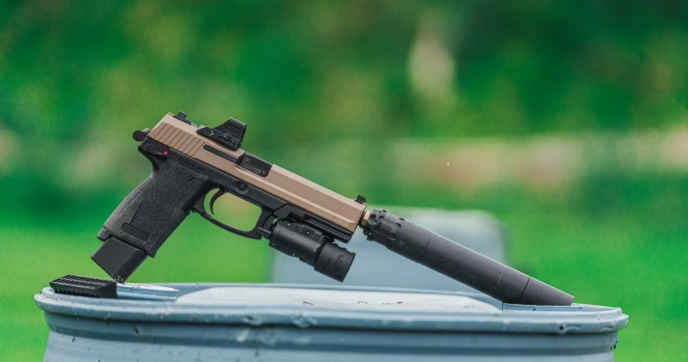
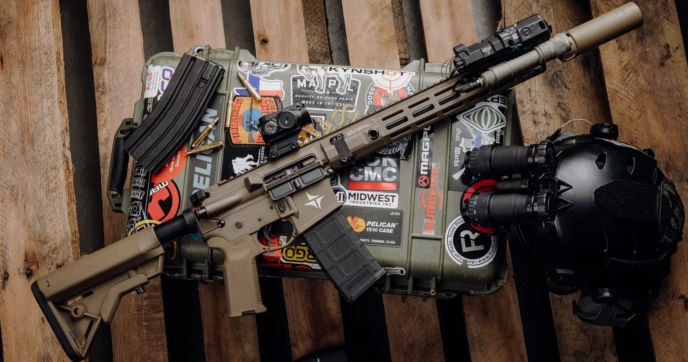
The topics on nearly every firearm enthusiast’s mind nowadays revolve around suppressors—and honestly, we can’t blame them. Suppressors are, by far, some of the most advantageous accessories one can add to their rifle or pistol setup, making it not only safer to use, but also more aesthetically pleasing too. If you’ve followed The Primary Source for any amount of time, you’re more than likely aware that we’re serious advocates for suppressors.
The sheer number of benefits they provide is incredible, and while there’s certainly a lot to discuss regarding their performance, it’s also important to look at how they came to be in the first place. And their history, unfortunately, often goes overlooked.
Just like many other popular firearm accessories, suppressors weren’t always the ultra-high performing muzzle they are today, and in their early days there weren’t dozens of brands to choose from when shopping for one. So, how exactly did they come about?
What is a Suppressor
Before getting into the rich history of suppressor development, it’s important to have a good understanding of what they are in the first place.
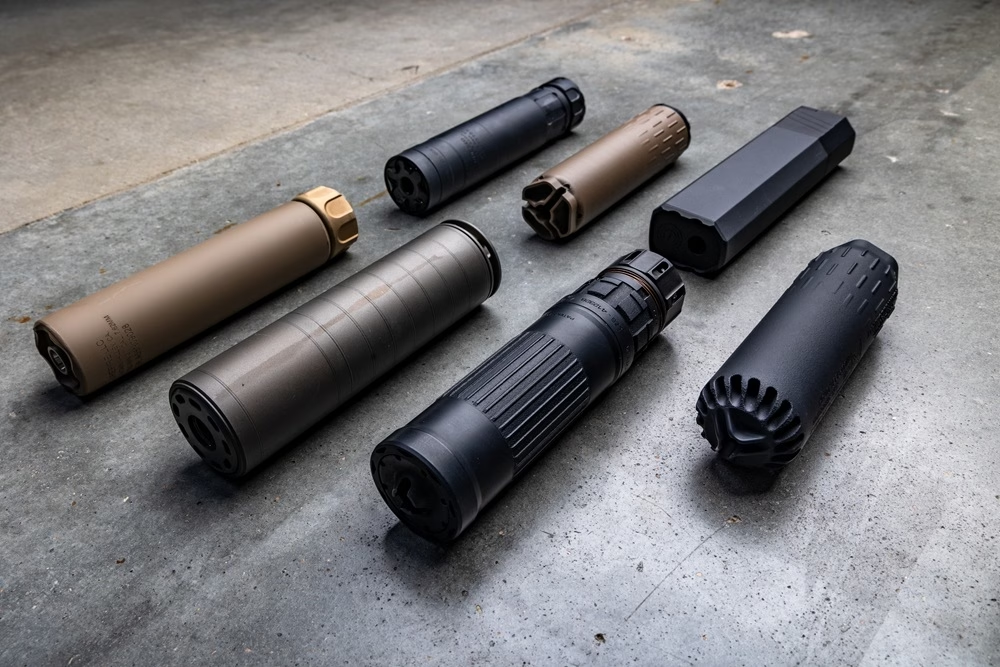
Suppressors, often referred to as ‘silencers’, are a specialized firearm accessory that attaches to the muzzle end of your rifle or pistol’s barrel. There are several different types of suppressors available today, but they all work to achieve the same goal of slowing the expansion of gas created after a cartridge is fired. By doing so, they effectively lessen the sound and flash that’s associated with firearms, making them quieter and safer to use.
For the most part, suppressors are separated by the platform and caliber they’re designed for. As such, they’re most often designated as either a pistol, rifle, or multicaliber suppressor.
Pistol Suppressors
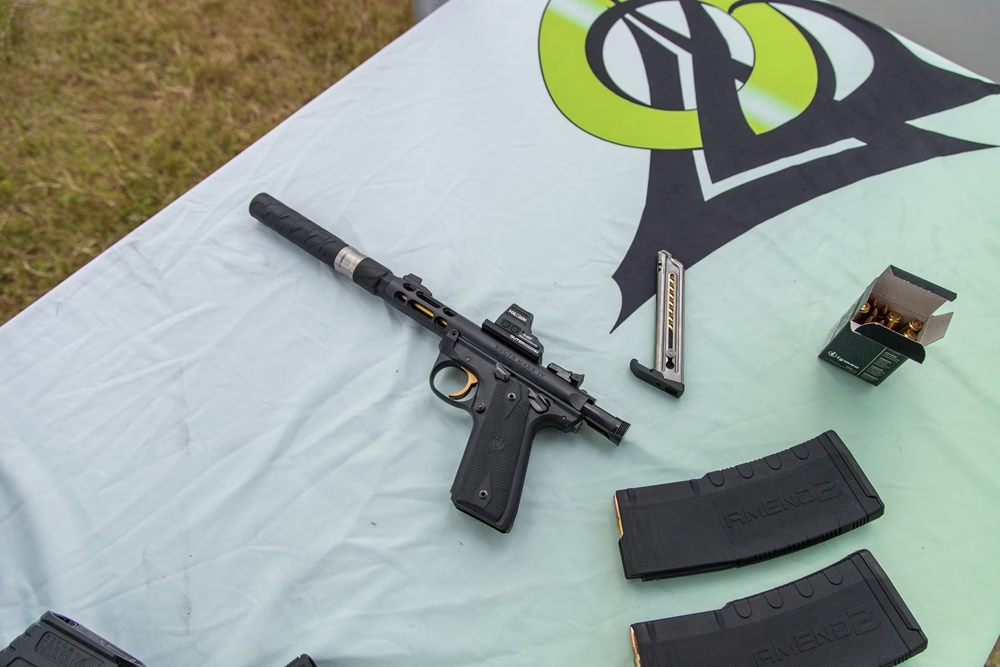
Designed primarily for handguns, pistol suppressors are most often designed for common bore diameters like 9mm and .45 ACP. They can come equipped with multiple mounting bases to fit different thread pitches and often come with Nielsen devices/suppressor pistons to make them compatible with most handgun models. Depending on the model, some can even be rated to handle rifle calibers too, though it’s important to note that this isn’t true of every pistol suppressor.
Rifle Suppressors
Rifle suppressors are designed to handle the higher pressures of intermediate and full-power rifle cartridges. They’re usually constructed with more durable materials such as Stainless Steel, Titanium, or specialized alloys like Inconel and Haynes 282. There isn’t as much cross-compatibility as there can be for pistol suppressors, but with the sheer variety of different options available, you’ll have plenty to choose from. There are several rifle suppressor options available, ranging from rimfire suppressors for .22 LR and .17 HMR, to much larger .46-inch diameter models designed for beefier calibers like .458 SOCOM.
Multi-Caliber Suppressors
Often the first suppressor new enthusiasts opt for, multi-cal suppressors are designed to be compatible with multiple calibers. They can either have a larger bore diameter that allows them to be used with different caliber firearms, or they can come with interchangeable end caps to maximize suppression across calibers. Between the two, models with interchangeable front caps typically offer better performance since they let less gas escape out the front of the suppressor after firing, but with the right ammo and suppressor combo, you can’t really go wrong with either one.
Are they Necessary?
Ultimately, suppressors aren’t ‘necessary’ for every setup, but they’re certainly worth having. By mitigating sound and flash, suppressors can make your rifle much safer to use and more advantageous across a multitude of applications.
For instance, in defensive scenarios, they allow you to use your firearm without blowing out your ears, giving you the ability to effectively communicate with others around you, while also being able to hear what’s going around you. And if you plan to use them for recreational activities like simple training or competitive use, their ability to reduce muzzle rise is certainly an advantage.
Regardless, we have several articles that highlight the advantages suppressors bring to the table, like our guide, “Choosing a 9mm Suppressor”.
Origins of the Suppressor
It’s difficult to pinpoint the exact point in time that suppressors came to be, but ever since the creation of firearms, there has seemingly always been a desire to minimize the noise they produce. That said, it wouldn’t be until the 1890s that the first ‘modern’ suppressor designs would be created. And, although this stretches the parameters of the title “The Evolution of Suppressor Technology over the Last 50 years”, understanding how they came to be is rather important.
Swiss inventors, Jakob Stahel, and C. A. Aeppli are credited as the first individuals to ever patent suppressor designs, though they weren’t strictly created for firearm use, at least in a defensive sense. Stahel’s design, patented in 1892, was primarily designed for reducing sound signatures when slaughtering cows, and the 1894 patent from C. A. Aeppli worked, but didn’t really take off as a mainstay design.
However, not much longer after these innovations, suppressor designs would change forever. In 1902, Hiram Percy Maxim, son of the legendary firearm designer Hiram Stevens Maxim, created the first commercially successful suppressor model. Its design utilized an outer tube that housed a series of internal baffles designed to slow the rate of gas expansion. Being made of more basic steel and iron, their performance wasn’t on par with the suppressors of today, but at the time, it was revolutionary. Eventually, this design would be tailored to be compatible with various rifles and handguns, effectively setting the stage for what was to come. And in 1909, Maxim would patent this design as the Maxim Silencer.
As far as firearm suppressors go, they would go on to be used, albeit sparsely, by various militaries in World War 1. They wouldn’t see major field-use until World War 2, but they were still used sparingly, with them being most common on integrally suppressed pistols like the High Standard HDM and the Welrod. Following the war, suppressor R&D (Research and Development) would continue, and they grew in popularity on the civilian market as well.
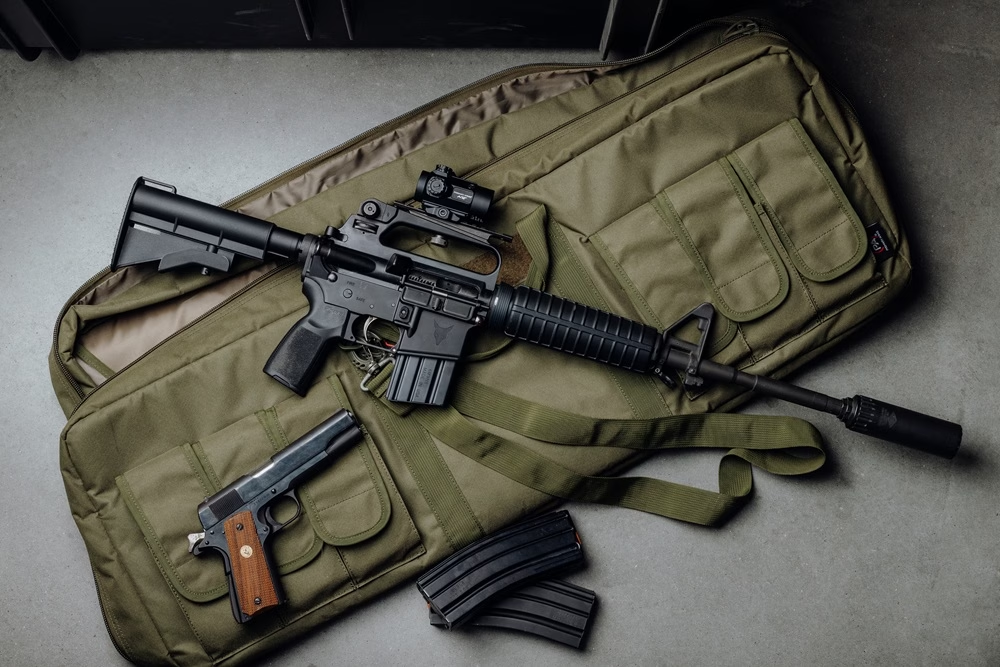
1970s to 1990s: Early Modern Suppressor Designs
Despite the success of Maxim’s suppressors in the early 1900s, there wouldn’t be many ‘groundbreaking’ innovations in suppressor technology until the late 1960s. Prior to this, many suppressors used rather simplistic designs that really only worked well with low pressure rimfire and pistol caliber cartridges. In the 1960s, however, SIONICS would develop a suppressor for the MAC-10 with Gordon Ingram, its creator. This newer design had a two-stage helical baffle system, featured a suppressor cover that allowed it to be used as a foregrip of sorts, and its extra weight tamed a lot of the MAC-10’s recoil.
Sionics also developed suppressors for the M14 as well, and several were sent to be tested in the U.S. Military’s combat trials. However, these suppressors weren’t adopted, and they wouldn’t see widespread use like their MAC-10 suppressors.
During this time, various manufacturers would also begin field testing suppressors for rifle systems as well. This testing would also highlight a flaw that affected their overall capabilities and performance. Many of these suppressors were made of aluminum and lower-grade steels, making them prone to overheating, and less-than-ideal for use in harsh conditions. Many of these early suppressors used wipes as well, which, while effective, are made of materials that would degrade fast, especially when exposed to high heat.
As such, many manufacturers would spend much of the 1970s researching ways to improve their capabilities, and by the 1980s there was a boom in suppressor development. New to the scene were enhanced suppressor and baffle designs made from stronger materials. One such was the K-Baffle, which looks like the letter K when viewed from its cross-section (hence the name). K-Baffles not only lasted longer than suppressor wipes, but they did a better job at capturing gases made produced by lower pressure cartridges.
Multiple new manufacturers began developing their own suppressors, and by the 1990s, modern industry titans like Knight’s Armament Company and Gemtech threw their hats in the ring as well.
Overall, the 1970s through the 1990s were a pivotal point for suppressor development. Several up-and-coming manufacturers made a name for themselves, and a plethora of new suppressors were being fielded by various Military and Law Enforcement Agencies.
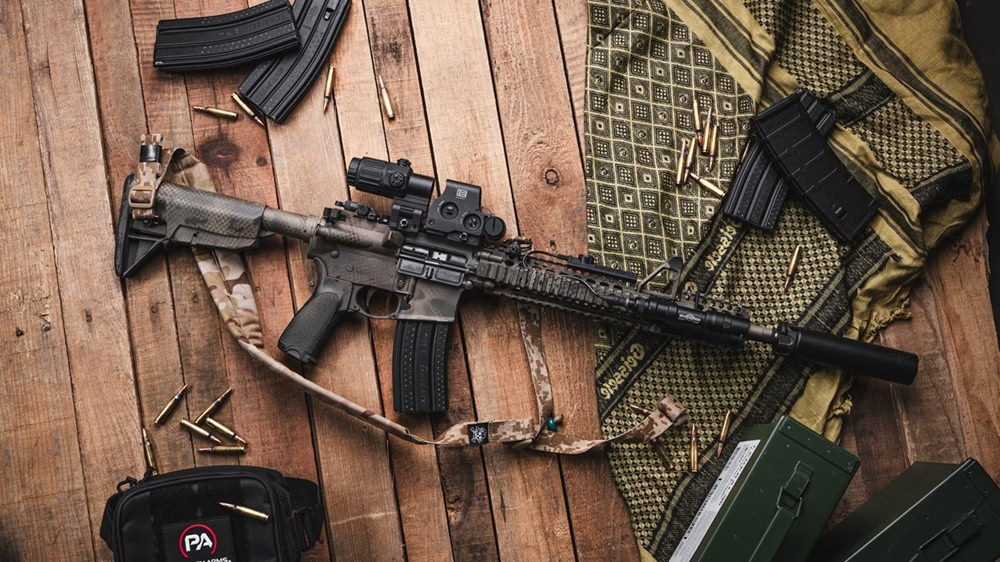
The 2000s: Diversification and Precision Engineering
Entering the new millennia, one of the most widely fielded suppressors was the Allen Engineering M4 Delta Suppressor, which is made of welded 300-series stainless steel. While not bad by any means, they were heavy, weighing as much as 25 ounces at times—about 1.5 pounds of extra weight. Additionally, there weren’t that many baffles in these suppressors, as most of the suppressor’s body acted as a barrel shroud to maintain alignment when firing. Fortunately, this wouldn’t be the standard for long.
New Manufacturers and Technologies
Throughout the 2000s, suppressors saw a serious increase in popularity amongst both civilians and professionals alike, leading to multiple manufacturers, both established and new to the scene, to begin developing suppressors. Companies like SureFire, OSS Suppressors (now known as HUXWRX), SilencerCo, and Yankee Hill Machine, are just a few of the dozens of manufacturers that began making suppressors during this period.
For suppressors, one of the greatest technological advancements made during this time was CAD (computer-aided design) machinery and software. With it, manufacturers could essentially create a 3D mockup of their suppressor designs, allowing them to get a better idea of how their baffle geometry would affect gas flow and cooling. While this didn’t eliminate the need for physical suppressor tests, it allowed engineers to further optimize and refine their designs before having them prototyped, lowering the development costs.
As a result, internal baffle structures became exceedingly advanced, fast. Plus, newer alloys and materials were starting to be used as well. Manufacturers began using more refined stainless steel, titanium, specialized alloys like Inconel, and more. This greatly improved the performance of suppressors, making them even more effective in field conditions, as well as quieter with the right setup and ammunition.
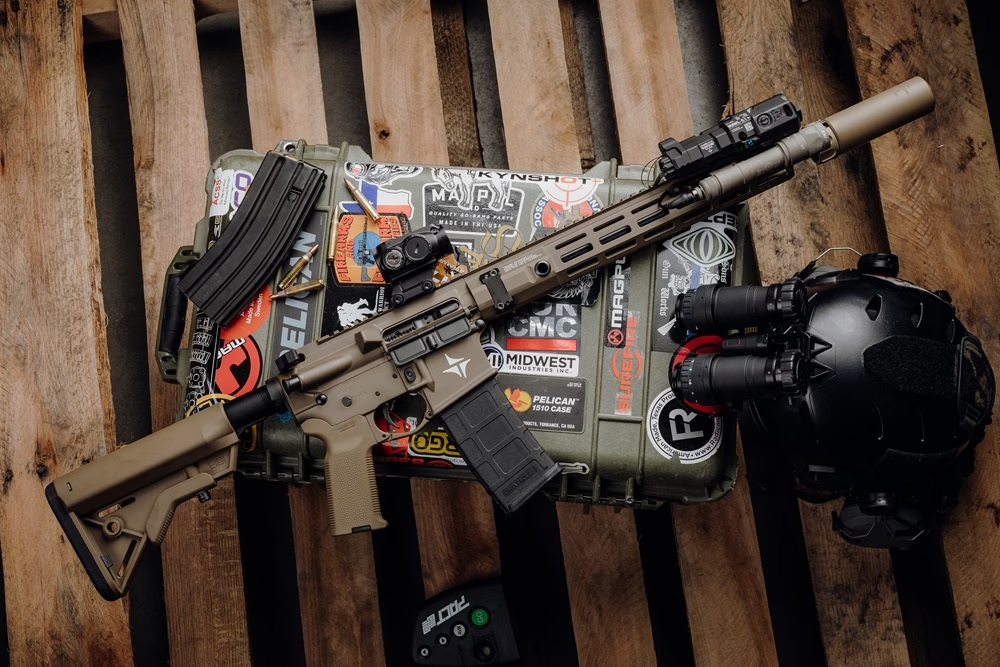
The 2010s to Present Day: Brand Innovation and Cutting-Edge Technology
Entering the 2010s, suppressor R&D ramped up immensely. There were now multiple manufacturers producing a plethora of high-quality suppressors, and their respective lineups offered something for everyone. Among them, some of the most notable names were SureFire, SilencerCo, Dead Air, HUXWRX, and Q LLC.
SureFire
SureFire’s became some of the industry’s most popular, a quality they still hold to this day. Notably, their SOCOM556-RC and later RC2 suppressors were selected by USSOCOM for use on military service rifles. Rather than threading directly to the muzzle threads of the barrel, they mounted directly to a dedicated muzzle brake. While suppressor accessories like these weren’t unheard of prior to their SOCOM series suppressors, they’re certainly noteworthy for helping to standardize the design.
SureFire didn’t stop here either. Available now are their newest models such as the SOCOM-RC3 and RC4, both of which improve the original RC design. These newer suppressors are designed to be more durable, lighter, and produce lower back pressure. Plus, they now offer multiple, more specialized suppressors designed to accommodate various calibers and firearms too, with one of them being the SOCOM300-SPS, arguably one of the best suppressors for .300 Blackout AR-15s.
SilencerCo
It’s also worth noting that SilencerCo was one of the first truly successful commercial suppressor manufacturers. Early on, they specialized in creating a multitude of unique suppressors, capitalizing on the void that was in the market at the time. This ranged from their smaller rimfire suppressors to their more unique options, such as their OSPREY series of pistol suppressors. They even created the Salvo 12, one of the first commercially successful shotgun suppressors too.
In doing so, they solidified their status in the industry, becoming one of the most prominent names around. Today, they still offer a wide array of unique suppressors designed for multiple platforms and calibers.
Dead Air
Dead Air would also rise to prominence during the 2010s. Founded in 2014 by Mike Pappas and Todd Magee, Veterans and former SilencerCo employees, they combined their knowledge and experience to begin crafting their own suppressor designs. In a stroke of innovation, they took note of the biggest barriers to entry for suppressor ownership: the $200 tax stamp needed to own one.
While this isn’t as big of deal anymore, since the stamp price has been reduced to $0 as of January 1st, 2026, at the time, it made it very expensive to own multiple suppressors. So, seeing this, Dead Air, alongside other manufacturers, brought to market some of the first true multi-caliber suppressors to the market in the form of their Sandman series. Not only is this still one of their most popular suppressor models, but they even pioneered their own KeyMo and Xeno muzzle devices too which have gone on to become some of the most popular QD suppressor mounting options.
HUXWRX
HUXWRX, formerly OSS Suppressors, has long been one of the mainstay brands in the suppressor industry. And like many of the other brands mentioned thus far, they’ve done a lot to change the landscape of the industry. More specifically, they pioneered the Flow-Through suppressor design, which is utilized on their FLOW and Ventum series suppressors.
Suppressors are known to increase back pressure, which causes gas to spill out of the receiver and back at your face when using something like an AR-15. Although you can modify your rifle to make it more compatible with such suppressors, flow-through suppressors don’t require such modification. Instead of using a traditional baffle stack, flow-through suppressors make use of specialized channels, allowing gas to slow down, cool off, and vent out the front of the suppressor. This allows enough of the gases to be captured to reduce your rifle’s sound signature, but keep in mind that they aren’t usually as quiet as suppressors with a standard baffle core. Regardless, they’re a solid pick for high-pressure calibers like 5.56 NATO.
Q LLC
Q is another leading suppressor manufacturer that was founded by Kevin Brittingham, the founder of Advanced Armament Corporation, better known as AAC. Prior to starting Q LLC, AAC was making some serious moves in the firearm industry. They created .300 Blackout, easily the second most popular cartridge available for the AR-15, and they also began work on the Honey Badger, a specialized PDW-style AR platform rifle.
After leaving AAC and starting Q, Brittingham picked up where he left off, and began developing a new suppressor for various firearms. Q suppressors utilize rather unique designs. For example, their Erector series is almost entirely modular, allowing you to alter the length and number of baffles it has depending on your preferences. Additionally, their Jumbo Shrimp suppressor has a fully welded design that results in tubeless construction. Despite sounding like not a huge change, this design goes a long way in maximizing the suppressor’s internal volume, allowing it to better reduce noise and flash without needing more baffles. Plus, it reduces the suppressor’s overall weight too.
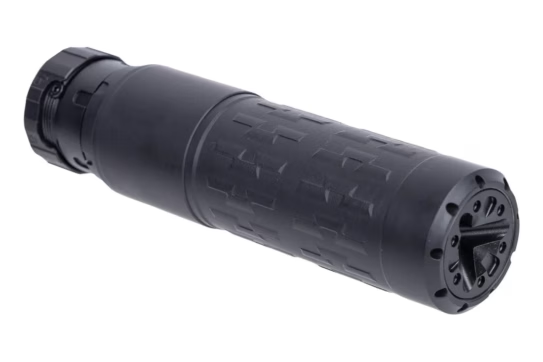
Conclusion
With suppressors being some of the most technologically advanced firearm accessories on the market, it’s easy to overlook their beginnings. Just like firearms themselves, they’ve gone from being simply constructed, rather rudimentary muzzle accessories, to extremely advantageous tools that can overhaul your rifle or pistol’s performance.
Simply put, suppressor technology and manufacturing processes have come a long way, so much so that a simple search for ‘suppressors’ will leave you faced with a litany of unique options, each with its own unique features.
And since they’ve continued to get better, there’s no telling what the future has in store for suppressors. One thing that’s certain is that suppressors aren’t going anywhere anytime soon, and if you don’t already have one, we can’t recommend them enough. That said, if you don’t know where to start, our Quick Detach Suppressor Guide will get you pointed in the right direction.