Reflex sights are some of the most widely used optics today. Offering faster target acquisition speeds than iron sights and other optics, they’ve become the go-to optic for handguns and carbines. And in recent years, they’ve been increasingly popular on shotguns too.
But mounting a red dot on a shotgun isn’t always that straightforward. Mounting an optic often requires some careful consideration, and at times, creativity, depending on the make and model you’ve chosen.
Just like every other firearm, shotguns come in multiple configurations, and not all of them are immediately optic ready out of the box, or at all. As such, understanding the mounting capabilities of different shotguns is critical. And you’ll need to know how optics can affect their performance as well.
Common Red Dot Mounting Positions Explained
Mounting an optic to your shotgun looks different depending on the model you have. In general, shotguns have two practical optic mounting positions: on top of the receiver, and on top of the barrel if it has a vent rib.
Receiver Mounting
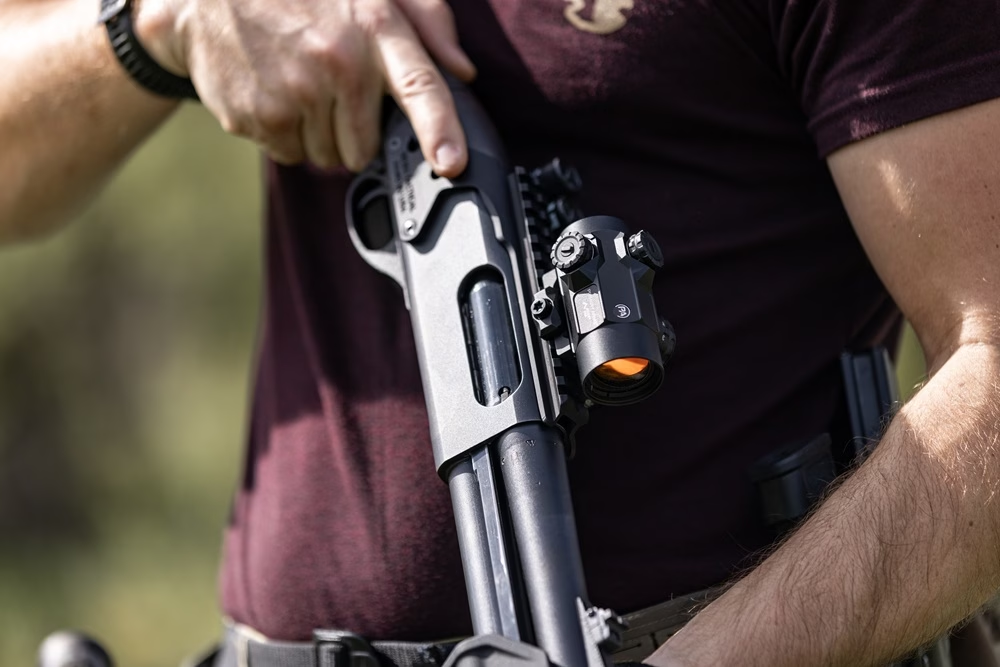
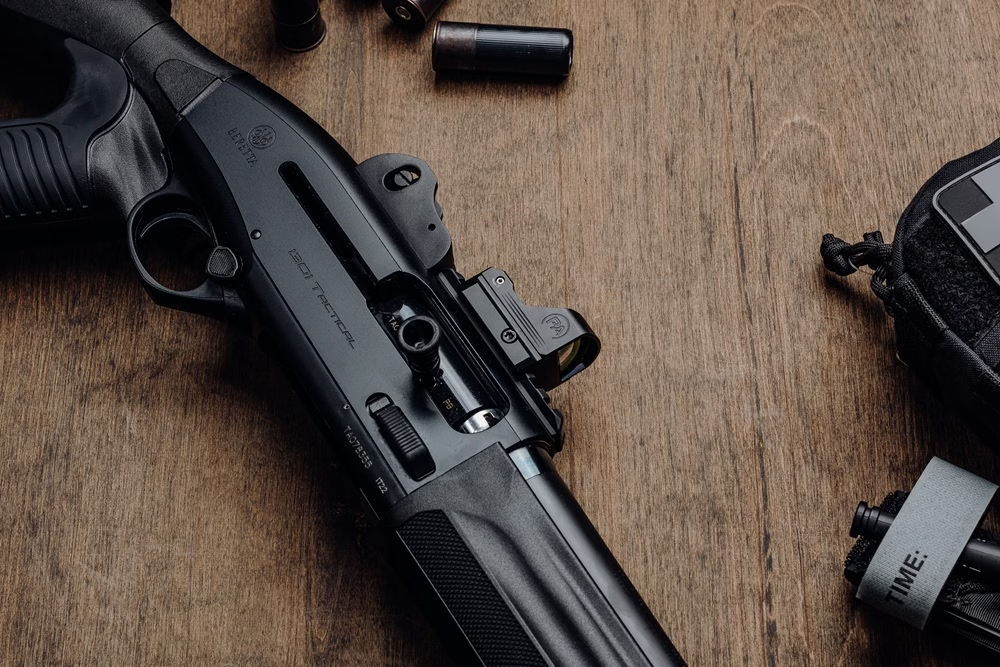
The receiver is the most rigid part of the shotgun, and it’s ideally the best place to mount an optic. Most tactical semi-auto shotguns, like the Beretta A300 Ultima Patrol, come with a picatinny rail on the receiver specifically for optics. And if they don’t, they are likely threaded inserts on top designed to accept various mounts. Plus, receiver mounting keeps most of your setup’s weight closer to the center of the shotgun.
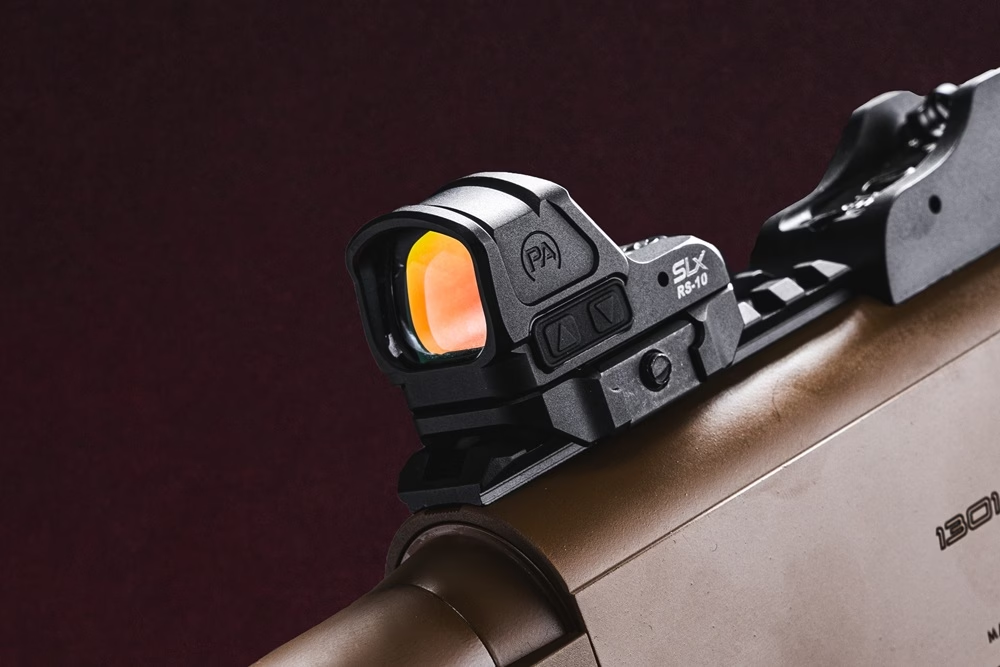
Having a dedicated picatinny rail also allows you to run several types of reflex sight as well. Nearly all reflex sights, aside from mini-reflex and pistol red dots, are designed to mount onto a picatinny rail. As such, you can mount just about any optic you want to them. While mini reflex sights are still preferred by many due to their wide FOV and light weight, if you wanted, you could opt for a full-size red dot or even a holographic sight.
Vent Rib Mounting
If your shotgun doesn’t have an upper picatinny rail on the receiver, mounting an optic can be tricky, but you aren’t entirely out of luck. Many semi-auto and pump action shotguns designed for hunting have vent ribs that span the length of the barrel. For such shotguns, there are specialized mounts that clamp onto the ribs, allowing you to run optics. While effective, they have their considerations. By design, rib mounts force you to mount the optic further away from the receiver. Because of this, you have to be careful about the weight of the optics you use. Having your optic mounted further forward can seriously shift your shotgun’s balance, affecting its handling and maneuverability.
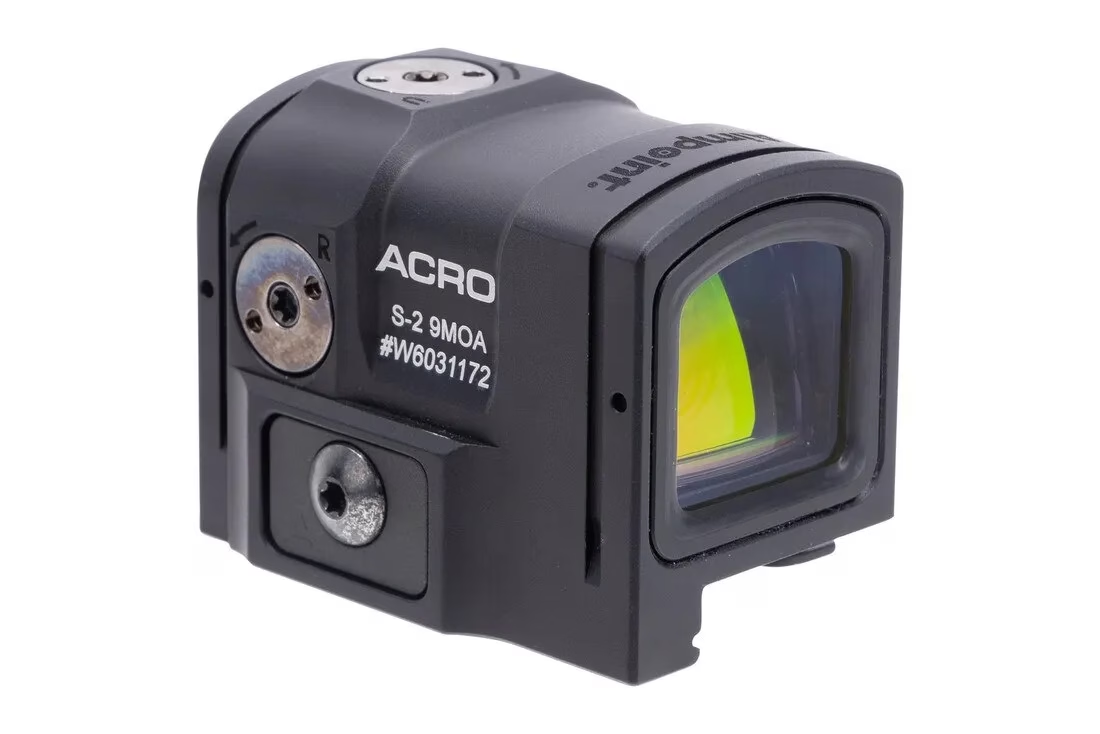
Most of the rib mounts you’ll find are designed for specific optics, with most of them being made for mini-reflex and pistol red dot sights. There are picatinny options available too, but they aren’t the best option per se. On the surface, they appear like the better pick since they give you more freedom of choice. But, once you factor in how excess weight can severely diminish your shotgun’s handling, they aren’t always the right call. As such, mini-reflex sights and pistol red dots are where it’s at if you’re mounting to a vent rib. In fact, pistol red dots like the Aimpoint Acro S-2 are made specifically for vent ribs.
Finally, proper placement is key. We recommend mounting your optic as close to the receiver as possible to maintain good balance. Even though mini-reflex sights usually don’t weigh more than ounce in most cases, added weight towards the muzzle can still throw off your shotgun’s maneuverability.
What is a Red Dot Sight?
Like we said earlier, red dot sights are some of the most popular optics available. So much so, that the term “red dot” is often attached to just about every unmagnified optic that projects an illuminated reticle. But red dots are just one of many reflex sights.
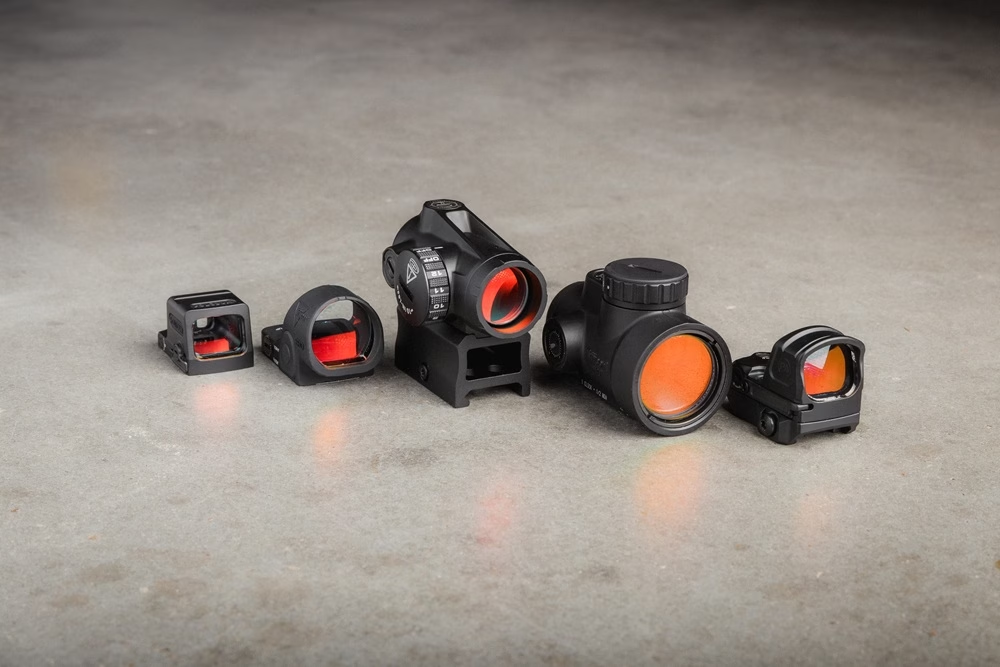
Reflex sights can take many forms. The term ‘reflex sight’ is often (and mistakenly) used to solely describe open-emitter optics with one lens. Though they aren’t as popular for long guns like they were in the past, open-emitter reflex sights are far from obsolete. Smaller open-emitter mini-reflex sights, which are designed for pistols, are some of the most popular optics on the market, and they’re widely used on long guns too. Even though their open construction looks like a design flaw at first glance, it gives them a far wider field of view (FOV) than other reflex sights. Still, it’s critical to be mindful of your environment if you use one. Debris can occlude the emitter diode if you use it in rougher conditions.
Red dot sights are a lot like open-emitter reflex sights, but instead of an open design, they’re fully enclosed and use two lenses. Aside from this, their functionality is largely the same. Both collimate light onto the lens to form a reticle picture. Being enclosed, they offer more protection for the emitter diode, making them better suited for use in adverse field conditions. This design does, however, come at the cost of a narrower FOV. They’re still perfectly viable for use on a shotgun, it’s just that they lose out a touch comparatively. Also, with red dot sights being so common, there’s far more full-size options to consider, though smaller pistol red dots are available too.
Lastly, there are holographic sights. Compared to the other two, these are by far the most technologically complex. Whereas open-emitter reflex and red dot sights bounce light off one surface—the lens—to form a reticle, holographic sights bounce light off several internal reflective panels. This creates a floating, holographic reticle (hence the name). This allows them to perform better when magnified, and they’re typically less prone to astigmatic distortion too. While you most likely won’t be using a magnifier on your shotgun, they can still be an excellent choice to consider. Just keep in mind that they’re some of the heaviest and bulkiest reflex sights around.
Best Red Dot Choices for Shotguns
On their own, every optic mentioned above can be a solid fit for shotguns. Each one offers practically unlimited eye relief, faster target acquisition compared to basic iron sights, making them all great for high-stress scenarios like competitions and duty/defensive use. That said, picking one can be a challenge.
Still, context is important when buying an optic. Does your shotgun have a picatinny rail on the receiver for mounting optics, or does it have a vent rib? Will you be using your shotgun for defense, competitions, or hunting? Knowing the answers to these questions will go a long way in helping you narrow down which optic is best for your setup.
For instance, most defensive and competitive shotguns come with a picatinny rail mounted to the receiver. With it, you can mount whatever reflex sight you want, though open-emitter reflex and red dot sights will keep your setup light. If durability is more of a concern, a duty-grade red dot or holographic sight is a better pick. Meanwhile, if you have a hunting shotgun, it likely won’t come with any type of picatinny rail, as they most often use bead sights for snapshooting. But it likely will have a vent rib, and there are several vent rib mounts to choose from. In such cases, your best bet is going to be a mini-reflex or pistol red dot sight to keep its forward weight light.
So, which is the best?
For most applications, a mini-reflex or pistol red dot will suffice. They’re lightweight, offer a wide FOV, and they can be plenty durable for use in most environments, depending on the model. Unless you plan to do some intensive training in a duty or competitive capacity, they’re a solid choice. Plus, they give you some of the most flexibility in terms of their mounting position.
There are two models that stand out: the Primary Arms Optics Classic Series 24mm Mini-Reflex Sight, and the Holosun HS507C-X2.
Primary Arms Classic Series 24mm MRS
The Primary Arms MRS Mini Reflex Sight is a well-rounded optic that’s great for nearly all applications. Built around a 6061-T6 aluminum optic body, it’s remarkably durable for its size, and with it weighing just .98 ounces, its weight is hardly noticeable once it’s mounted. It also has an impressive sight window. As denoted by its name, it has a 24mm lens (specifically 24x17mm). This gives it ample surface for light to collimate, making it easy to find the dot without the optic body obstructing your FOV.
Reticle-wise, it can come with either a red or green 3-MOA dot, and regardless of which one you look at, they come equipped with AutoLive® motion-sensing illumination. With it, these optics have an impressive battery life that can last up to 50,000 hours. Plus, they make use of the RMR mounting footprint (arguably the most common mounting footprint). As such, you won’t be hard-pressed to find a picatinny or vent rib mount if you opt for it. Finally, this is an extremely budget-friendly optic that’s usually priced around $150, but it often goes on sale for less.
Holosun HS507C-X2
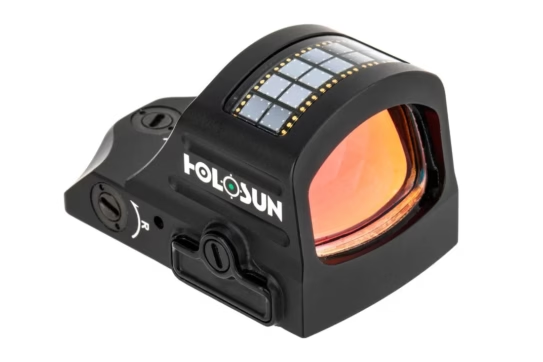
Another solid option is the Holosun HS507C-X2. Now, Holosun needs next to no introduction, as they’re easily one of the most recognizable names in the industry. And although they have many unique optics to their name, the HS507C-X2 is one of the most prominent ones in their lineup.
Much like the PAO 24mm MRS, the HS507C is an open-emitter mini-reflex sight that’s designed to maximize utility and durability. For starters, this optic is built around a 7075-T6 aluminum body, making it highly resistant to shock, and exceptionally light (1.5 ounces). It also has a large lens that measures 23.1x16mm. It comes standard with either a red or green 2-MOA dot, though some models can come with circle dot reticles. Regardless, they’re all packed with top-tier features.
One of the hallmark features on this optic is its solar failsafe unit. Rather than relying solely on the battery for illumination, the 507C has a built-in solar unit that takes the load off the battery when in bright environments. And once you factor in this optic’s automatic shut-off and Shake Awake™ feature, it has an impressively long battery life. Plus, these optics use the 507C/RMR footprint, so finding a mount isn’t going to be an issue.
Conclusion
On their own, shotguns are incredibly versatile firearms that can be used for everything from hunting to sport shooting and defense. And just like carbines and handguns, their performance can be enhanced with the addition of a red dot sight. Offering quicker engagement speed and a wide FOV, they are an insurmountable upgrade over stock iron sights.
For shotguns though, mounting a red dot can look a bit different depending on your make and model. Although some models have either integrated rails or mounting points on their receivers, others have vent ribs that require their own careful optic selection to not throw off the shotgun’s balance.
However, given the popularity of shotguns, you’ll have no shortage of optics and mounts to choose from. So long, as you take some time to match the mount to your model, and choose an optic that compliments your intended purpose, you’ll be good to go.