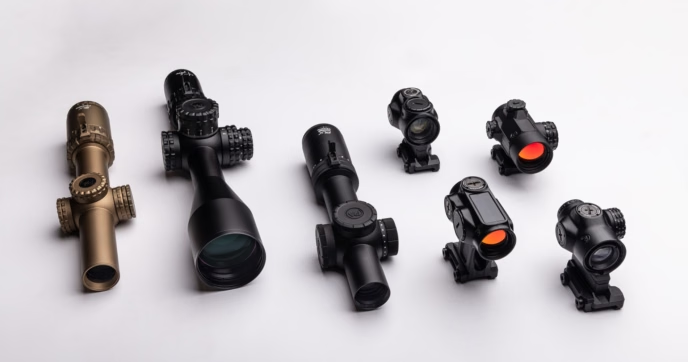
If you’ve followed The Primary Source for a while, you’ll know we’re no strangers to talking about reflex sights. And while we’ve gone in-depth on many of the uniquities of various reflex sights over the years, there’s still more to cover. One topic that’s been on our minds recently revolves around the increasingly popular gold dot sight.
With the landscape being dominated by optics with either red or green reticles, gold dot sights can seem a bit out of place. Nonetheless, they’ve remained a popular choice. Despite sounding like just another reticle color option, gold dot sights have a lot of utility.
The Basics: What are Reflex Sights
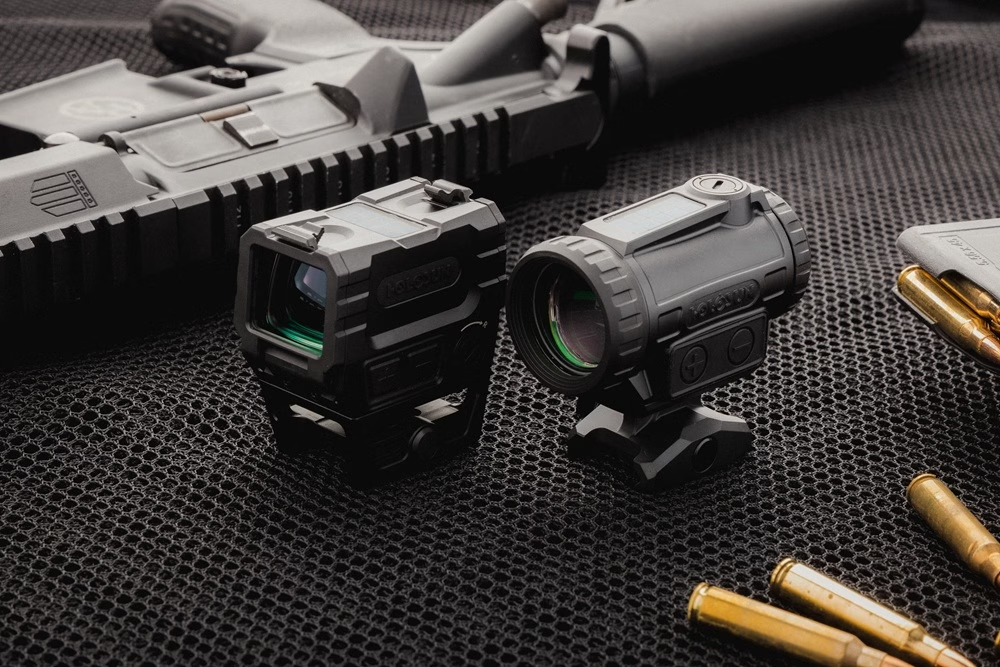
Before breaking down the benefits, understanding the optics of discussion is always beneficial. The term “reflex sight” is often used as a descriptor for every dot sight on the market. But the term encompasses several different optics rather than a singular type. We recommend checking one of our earlier guides, “Reflex Sight vs. Red Dots”. It has a great discussion on the differences of each type of reflex sight. To get you up to speed on them, below is a brief summation of their characteristics:
- Open-Emitter Reflex Sights make use of an open-body design and just one lens. Though they aren’t as commonly available for rifles like they were back in the day, they’re one of the primary pistol optic designs. Their open optic body gives them an immensely wide field of view (FOV), and it reduces their weight by quite a bit. Still, this comes at the cost of having an exposed emitter diode and marginally less durability.
- Red Dot Sights are what most enthusiasts think of when hearing the phrase “reflex sight”. Red dot sights are a tube-style reflex sight that makes use of an enclosed design and two lenses rather than one. With this design, the emitter, and other internals, are safe from debris and other outside elements. Their more rigid structure gives them some added durability compared to open-emitter optics. That said, since they’re enclosed, they have a slightly narrower FOV compared to open-emitter optics. Lastly, despite being called “red dot sights” as you’d likely suspect given the title of this article, the reticles aren’t always red.
- Holographic Sights are the most complex reflex sights, technologically speaking. Open-emitter reflex and red dot sights function nearly identically. They collimate light from the LED emitter diode onto the lens to form the create the reticle. Rather than bouncing light off one surface, holographic sights bounce the light off several internal reflective panels. This creates a holographic reticle that floats between the two lenses. Their use of more powerful laser diodes does result in a lower battery life. Still, their design gives them very little parallax shift. As such, they have impressive night vision and magnified performance. Plus, they’re some of the most durable reflex sights available.
Reticle Selection
All the optics outlined above can make use of several different reticle patterns. These can range from the standard dot reticle to more complex circle dot reticles. Regardless of their design, nearly all of them make use of either a red or green reticle color.
Red and green have long been the dominant colors for most reflex sights. Occasionally, manufacturers have used other colors like blue and amber. But, they haven’t necessarily become mainstay colors like red and green. In recent years though, the gold dot, from Holosun, has been introduced. And it’s remained very popular ever since.
Gold Dot Sights
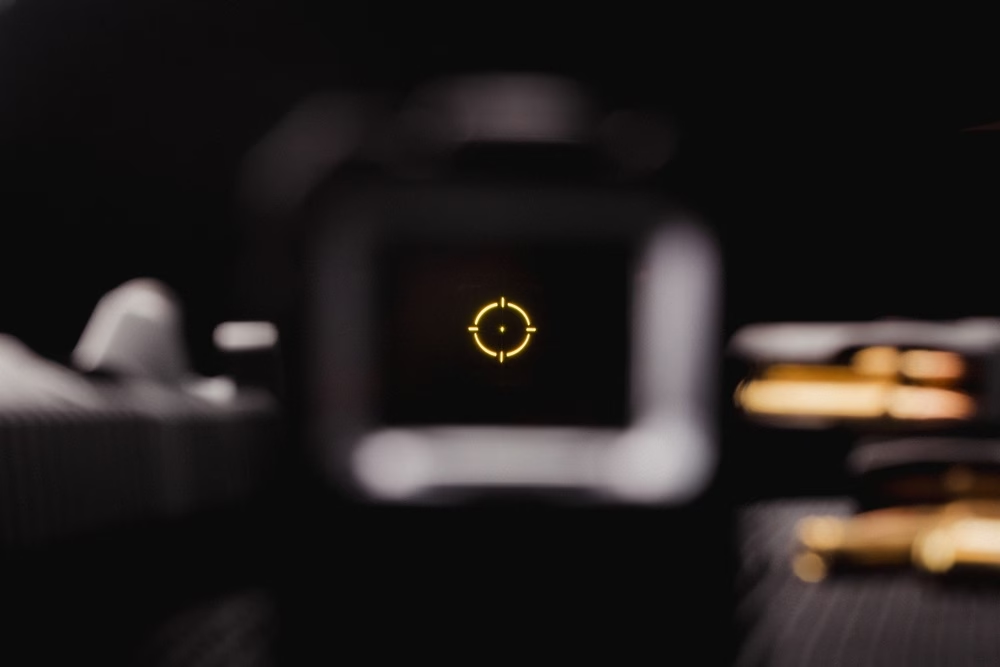
Getting in the crux of this article, gold dot sights, as their name suggests, use a gold-colored reticle. For the uninitiated, a gold reticle doesn’t immediately seem to be all that special. But, by researching them a bit, it’s easy to see why they’ve become so sought-after.
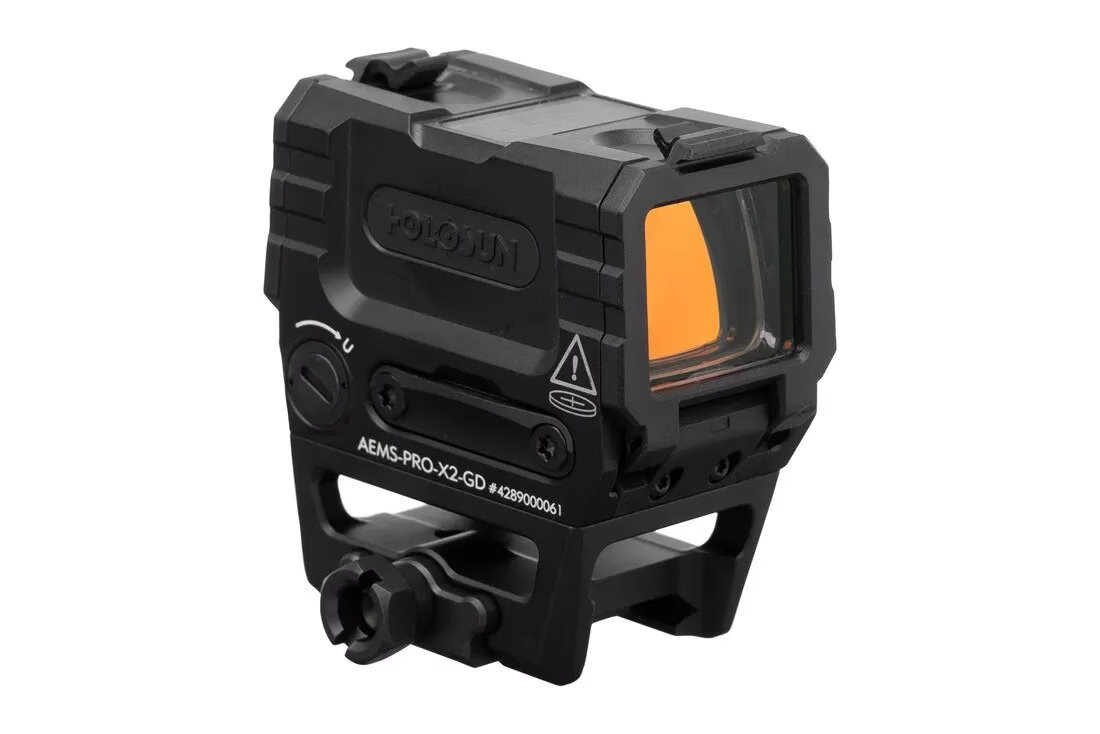
The first ever gold dot sights were introduced in 2019 by Holosun. And currently, Holosun is the only manufacturer of such optics. Much like their other optics, their gold dot sights make use of their more efficient Super LED diodes. This gives them a long battery life and much higher brightness than their previous optics. As such, they offer basically the same level of performance as their red and green dot offerings. So, that begs the question: why gold?
Advantages of Gold Dot Sights
Put simply, the gold/yellow color wavelength sits nicely between red and green. Red dots typically use a wavelength of around 620 to 750 nm, while green dots most often have a wavelength between 495 to 570 nm. Meanwhile, Holosun’s gold dot sights have a wavelength of around 590 nm. As such, they do a decent job of blending the benefits of both red and green dot sights.
Additionally, gold dots contrast nicely against most target backgrounds. Like any other reticle color though, there is always a chance that your reticle can become washed out. For gold dot sights, this is especially apparent when aiming at anything that’s close to yellow on the color spectrum. Take sand and other desert-type environments, for instance. But just like with red and green dots, you can crank up the brightness to compensate for this, giving you a visual of your reticle with no issues.
Also, gold dots have a similar wavelength compared to green dots. One of the reasons many enthusiasts opt for green dots instead of red ones is because of how bright they are. And since gold dots are so similar to green ones, enthusiasts can experience a higher perceived brightness when using them. Now, this does vary from person to person, but for those wanting a more intensely bright optic, a gold dot can be an effective choice.
Gold Dot Usage with Vision Conditions
Gold dots have another distinct advantage in that they’re easier for enthusiasts with red/green color blindness to see.
Red/green colorblindness is one of the most common types of colorblindness, affecting an individual’s ability to see red and green color wavelengths. With it, using a red or green dot sight can be quite challenging. Though they aren’t unusable, using them with such an impairment is less than ideal. Fortunately, gold/yellow color wavelengths are largely unaffected by red/green colorblindness. So, if you have it, you’ll still be able to use a gold dot with little to no change.
Plus, gold dot sights can be a better alternative for shooters with astigmatism as well. Although astigmatic distortion will almost always be present to some degree when using a reflex sight, high contrast reticle colors are good for limiting its effects. Similar to how those with astigmatism may prefer a green dot sight, gold dots can be a suitable alternative too. If you have astigmatism, we recommend checking out our guide on Using a Red Dot with Astigmatism to get a better idea of how to best use your optic.
Comparing Your Options: Red vs. Green vs. Gold
Given the many advantages of gold dot sights, it’s easy to see why they’ve been a popular offering from Holosun. But, looking at the optic landscape, many of the industry’s most sought-after optics still make use of either red or green reticles. So, which one is best?
Red vs. Green vs. Gold
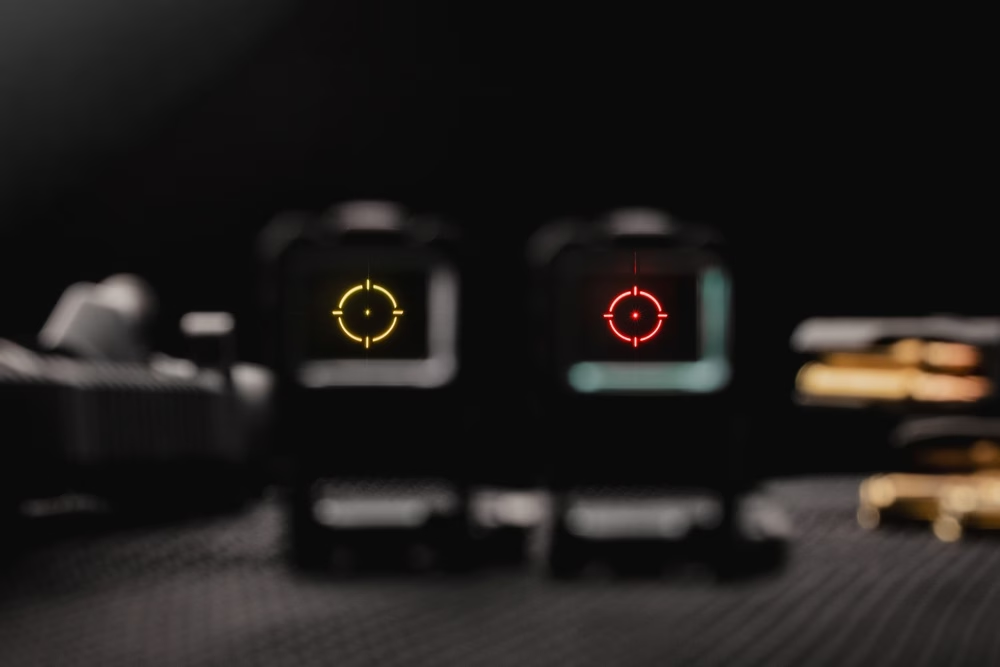
Red has long been the standard reticle color for reflex sights. It contrasts well against most target backgrounds, and red LEDs also require little power to run. As such, most standard red dot sights can have a battery life of up to 50,000 hours. That’s over five years of continuous run time, granted this depends on the brightness setting you use, as well as the optic. That said, red wavelengths don’t get picked up by the human eye as easily as other colors. While still suitable for most enthusiasts, they require marginally more effort to acquire.
Green dot sights have long been one of the primary reticle colors for reflex sights. Green is naturally easier for the human eye to acquire, and as mentioned earlier, they have a higher perceived brightness. This does, however, comes at the cost of power consumption. Their diodes draw more power than their red counterparts, giving them a slightly shorter battery lifespan. With the modern advancements in optic technology, green dot sights can have an immensely long battery life, but this varies from optic to optic.
Finally, gold dot sights offer unique advantages compared to red and green dot sights, as listed above. They’re a solid pick for those with red/green colorblindness, and they can be a better possibility for those with astigmatism since they perform similarly to green dot sights. The only real disadvantage they have is their limited availability. Gold dot sights are only offered by Holosun. And while Holosun has several gold dot sights to choose from, you’re still limited to just Holosun products. Meanwhile, red and green dots are manufactured by several optic manufacturers, giving you far more options to choose from.
Which should you go with?
Ultimately, it’s impossible to declare one reticle color as the objective best choice. Like with any other optic, the best one is always the one that best meets your individual needs. Still, if you don’t have any vision impairments and want a simple, utilitarian optic, a standard red dot sight is a good pick. If you want something that’s brighter, a green or gold dot sight is a better choice. And finally, if you have red/green colorblindness, Holosun’s gold dot sights are the superior choice.
Conclusion
Reflex sights have long been some of the industry’s most popular optic systems. Offering fast target acquisition speeds, intuitive use, and precise aiming, they’re a staple for both rifles and pistols alike. And although red and green reticles have dominated the landscape for quite some time, they aren’t the only reticle colors to pick from.
Ever since their creation, Holosun’s gold reticles have been a popular choice. Performing on par with green dot sights and having the distinct advantage of being easier to see with red/green colorblindness, they’re a solid pick. Even though there aren’t as many options to consider when shopping for one, you can’t go wrong with a gold dot sight.
Frequently Asked Questions (FAQ)
-
What is a gold dot sight and how is it different from red or green?
A gold dot sight uses an yellow/gold-colored reticle instead of the traditional red or green. Holosun popularized this option with their “Gold Super LED” (GD) models, and it is now available across several of their rifle and pistol optic lines including the AEMS, ARO, and SCS series. The gold reticle sits between red and green on the light spectrum, which makes it a potential compromise for shooters who find red too dim in daylight and green too harsh in low light.
Gold dots are also a practical solution for shooters with red-green color blindness, since the amber wavelength is distinct from both red and green. The trade-off is that gold reticle optics are typically more expensive than their red equivalents, and the selection of models is still more limited. Battery life tends to be comparable to green dots—marginally shorter than red dots.
-
Is a green dot sight better than a red dot sight for someone with astigmatism?
For many, yes. Astigmatism causes red dots to appear smeared, starburst-shaped, or comma-like instead of a crisp and defined dot. Since the human eye is more receptive to green color wavelengths, green dots often appear sharper. This allows users to run their optics at lower brightness settings without as much risk of distortion. That said, astigmatism affects everyone differently, so what works for one person may not work for another.
If you have astigmatism, try looking through both a red and green dot at a store or range before buying. Many users find that holographic sights are less prone to distortion thanks to their use of higher power laser diodes and floating reticle.
-
Does dot color affect battery life on a red dot sight?
Yes. Red LED emitters are the most energy-efficient, which is why red dot sights consistently have the longest battery life. Many red dot optics advertise 50,000 or more hours of continuous runtime on a single battery. Green dots require more energy to produce the shorter wavelength of light, so battery life is typically shorter, though high-end models from manufacturers like Holosun and Aimpoint have narrowed the gap significantly.
Gold/amber dots fall roughly in line with green in terms of power consumption. If you plan to leave your optic on continuously with a shake-awake feature or for duty use, red gives you the longest interval between battery changes. For recreational or range use where you turn the sight off between sessions, the battery life difference between colors is less meaningful in practice.
-
Which dot color is best for low light, night vision, and home defense?
All reticle colors are effective in low-light and nighttime applications, but red is widely viewed as the standard. Red light is less disruptive to your eyes in low light, unlike green and gold. So, a red dot at a low brightness setting lets you maintain better peripheral night vision.
For use with night vision goggles (NVGs), red is strongly preferred since many NVGs have a green tinted display. A red dot creates high contrast against that green image, while a green dot can blend into the display and become hard to distinguish at certain brightness levels.
For home defense where you may be going from a dark bedroom to a lit hallway, a red dot on a moderate brightness setting with a shake-awake feature gives you the most versatile and reliable option. But a green or gold dot will still work just fine.
-
Can I switch between red and green on the same sight, or do I have to pick one?
Some optics offer switchable reticle colors, but most do not. The majority of dot sights come in a single color that is fixed at the factory: you buy a red model, a green model, or (in Holosun’s case) a gold model. A few budget and mid-range optics from brands like Holosun, Sig Sauer, and others offer dual-color options that let you toggle between red and green. The Holosun 510C, for example, is sold in separate red and green versions, but not a switchable model.
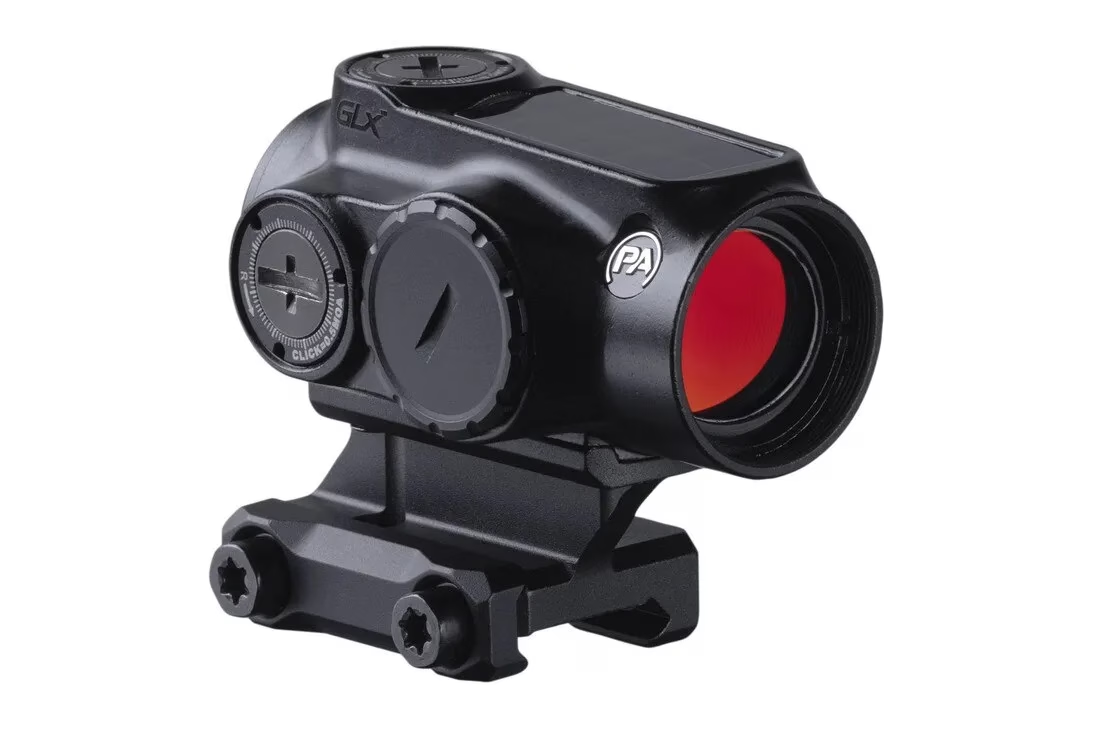
On the other hand, some brands like Primary Arms offer optics with selectable illumination colors. If you are unsure which color works best for your eyes, a dual-color optic lets you test both on the same platform. Just be aware that dual-color models may have slightly shorter battery life than a single-color equivalent, and the model selection is narrower. Generally, picking one color and sticking with it is the move.