Gun safety is something that cannot be stressed enough. For hundreds of years, firearms have been used for sport, hunting, and personal defense. And in the modern age, they’re still used widely for the same purposes.
With interest in firearm ownership becoming increasingly widespread, we’d be remiss if we didn’t emphasize the importance of safety. A single moment of recklessness can have severe, potentially life-threatening consequences. So, whether you’re new to firearms or have owned them for a while, knowing how to handle and act around firearms is a must.
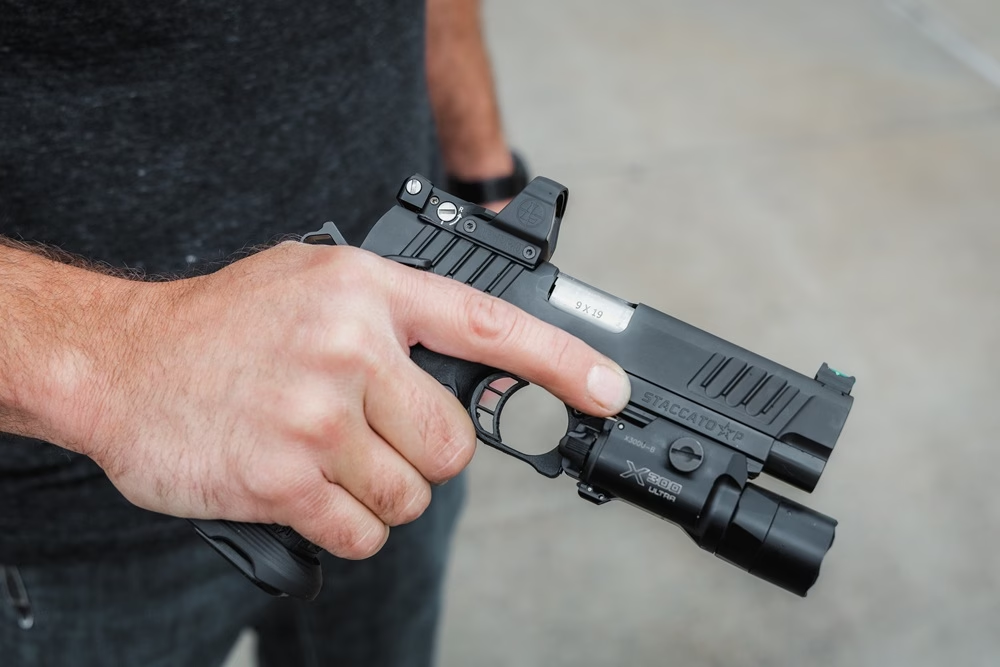
The Four Rules of Firearm Handling
Firearm safety revolves around these four fundamental rules:
- Handle all firearms as if they were loaded
- Always keep your firearm pointed in a safe direction, away from anything you aren’t willing to shoot
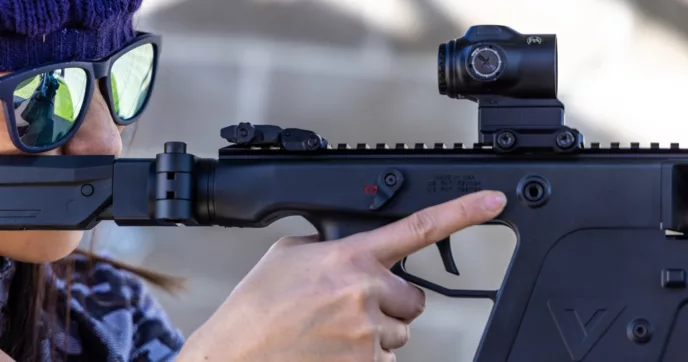
- Keep your finger off the trigger until you’ve made the conscious decision to fire at a target
- Always be certain that your target and its surrounding area are safe before firing
Why Follow These Rules
Following these rules is non-negotiable. Just about every negligent discharge and other firearm-related accident is a result of not following the rules listed above. Although they seem like common-sense rules, many enthusiasts can get complacent after a while. This can become a serious issue in the long run. So, by practicing good gun safety consistently, and strictly, you’ll gain more confidence while simultaneously building the muscle memory needed to always handle guns safely.
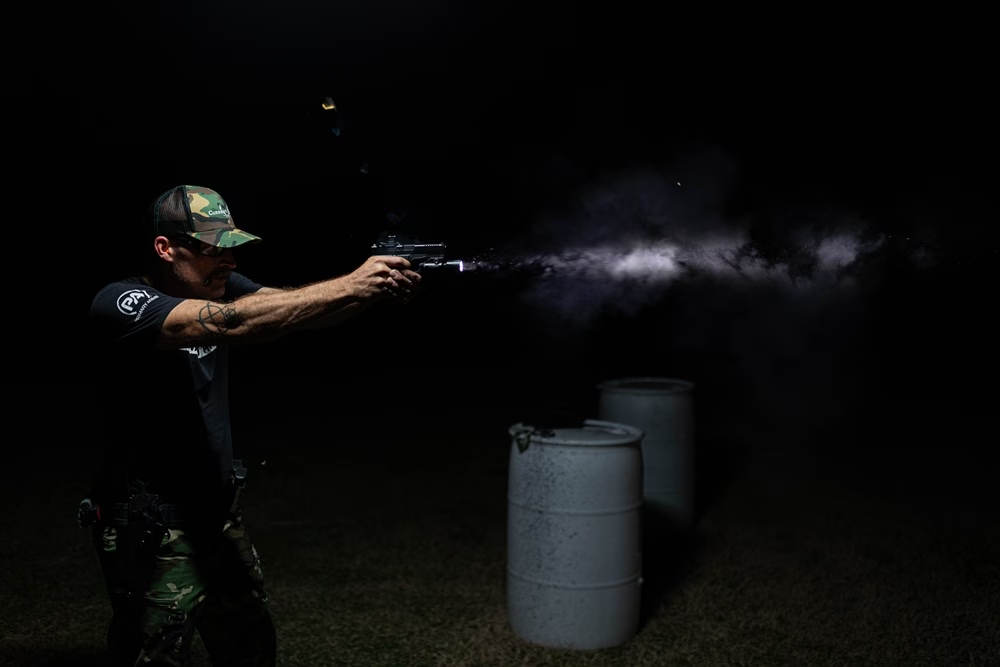
Safe Handling in Practice
Following rule #1, before you even touch a firearm, treat it like it’s loaded. If you’re at home, remove the magazine if it’s semi-automatic, and pull back on the slide or charging handle to eject any chambered rounds. If it’s a bolt-action, work the bolt, and if it’s a revolver, open the cylinder if it’s loaded. Confirm both visually and physically that it’s unloaded, and afterwards, continue to treat it as if it is loaded. Doing so reinforces good muscle memory, keeping you, and those around you, safe. Plus, it serves as a reminder of the other core safety rules too.
Moving on to rule #2, part of treating firearms like their loaded means never pointing it at anything you don’t intend to shoot. A “safe direction” can look different depending on where you are. This is especially crucial when considering negligent discharges. Generally, keeping your rifle or pistol pointed at the ground is a safe option, but again, this depends. If you live in an upstairs apartment or a two-story home, you need to be mindful of those around you. Conversely, if you’re at the range, aiming at the ground or downrange is typically safe. This still requires some discernment though, as outdoor ranges go ‘cold’, meaning no one is allowed to shoot, to let people walk down range to grab their targets.
Rule #3 is one of the most crucial. No matter what, keep your finger off the trigger until you’re ready to fire. Good trigger discipline is a must if you plan to own firearms. Whenever your finger is on the trigger, the chances of you accidentally pulling it increase dramatically. Cycling the action and working the trigger is only acceptable when you’ve confirmed the firearm is unloaded—something that’s reserved for maintenance and dry fire training. Any other time, keep your finger off the trigger.
And finally, in any scenario, it’s imperative to follow Rule #4 and identify your target, what’s around it, and what’s behind it. Modern ammunition can have some serious power at times. Depending on what caliber you use, your projectile can carry more than enough energy to punch through targets, walls, and flooring. Even smaller rounds can have enough muzzle energy to penetrate through multiple layers of drywall. And when shooting outdoors, you need to make sure that you aren’t firing towards anything beyond your target. Because even if you were hit your intended target, you still run the risk of hitting something else behind it unintentionally.
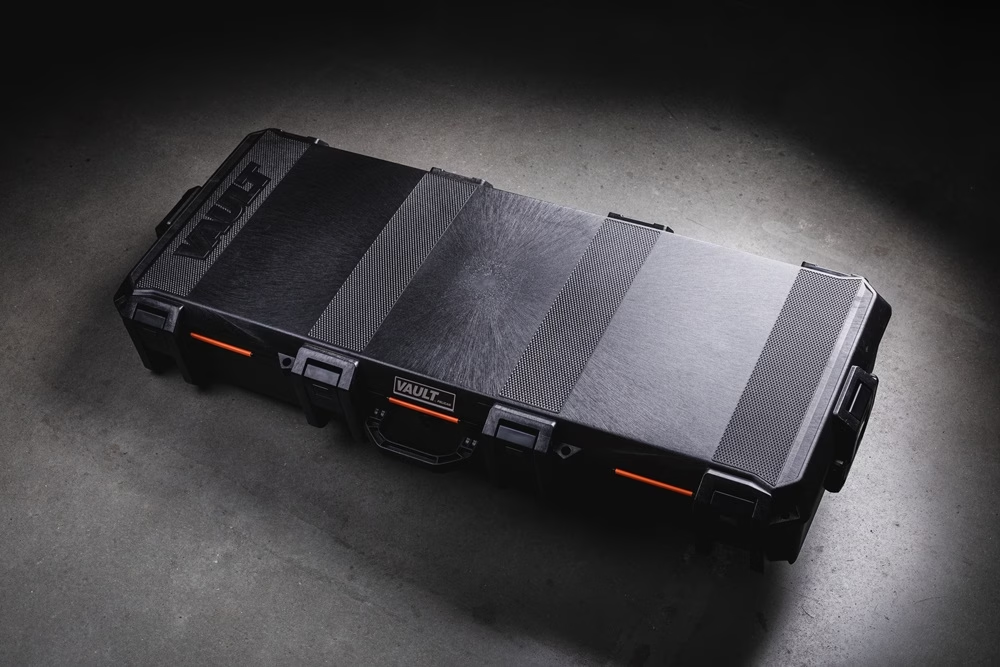
Safe Gun Storage
Another part of staying safe with firearms is being safe in the way you store them. Your firearms need to be kept in a secure location that’s only accessible by you.
Ideally, it’s best to store rifles and handguns in a dedicated gun safe. Gun safes are a heavy-duty storage system designed to keep your firearms secure. They often have built-in combination locks and highly durable steel locking systems. However, they aren’t always a feasible option for everyone. Safes can be very large, heavy, and expensive, making them best for those living in homes rather than apartments. Fortunately, they aren’t the only option to consider.
Instead of a gun safe, you can always opt for a lockable gun case. Many hardcases, and even some soft range bags, come with, or are compatible with key locks. With them, you can store your firearms in a closet, while keeping them under lock and key for some added security. This is especially beneficial if you have kids. With your cases locked, they won’t be able to get a hold of a firearm unsupervised.
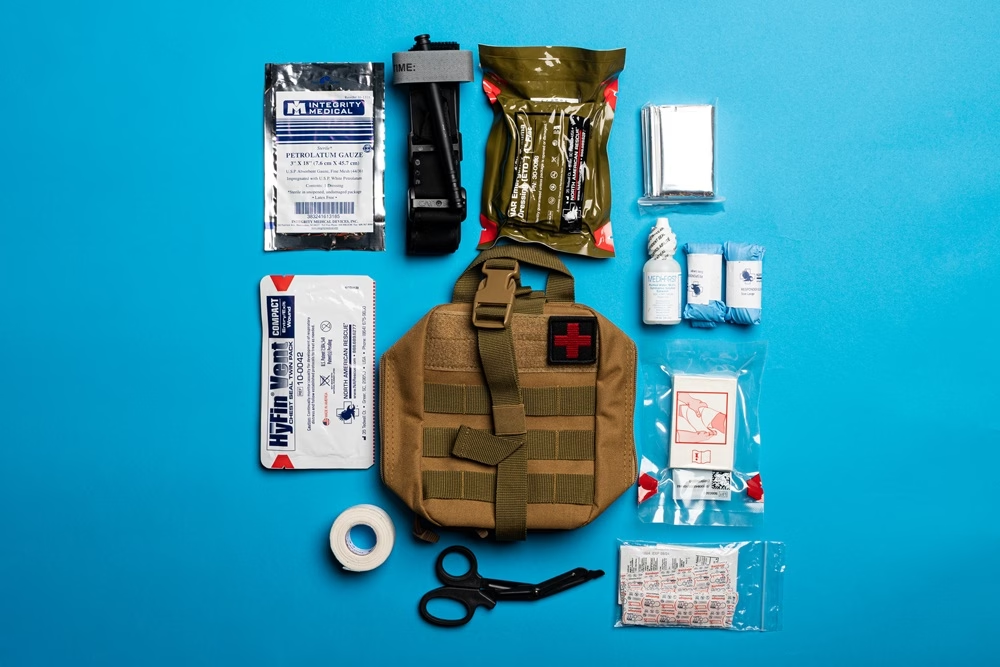
General Preparedness: First Aid Supplies
As we’ve noted throughout this article, owning firearms is a major responsibility. And part of owning guns means that you’re now responsible for both your own safety, as well as the safety of others around you.
Having a first aid kit is arguably one of the best ways to stay prepared, both for firearm-related accidents and for everyday general preparedness. We recommend getting a good first aid kit, like those from North American Rescue. They have all the essentials you’ll need and often come pre-packed in their own pouch or case. If you can’t afford a full kit, you’ll want to make sure you at least have a tourniquet, a sharpie, pressure bandages, compressed gauze, trauma shears, and some various bandages.
Tourniquets and Sharpies
Tourniquets are some of the most important medical kit you can have on hand. They’re available in many variations, but they achieve the same goal of cutting blood circulation to a specific limb. One of the most commonly available tourniquets is the Combat Application Tourniquet, or CAT. CATs have an intuitive design. They can be easily tied around a limb, and they have a windlass that can be tightened with one hand, if needed.
If you’re ever in a situation where you need to use a tourniquet, having a sharpie or some other kind of marker is a must. Once tightened, no more blood will flow to the affected limb, and having a tourniquet on for longer than two hours can cause permanent nerve damage. Because of this, most tourniquets have a label somewhere on them where you can record the time of application. And once you’ve done all of this, contact emergency services right away.
Pressure Bandages and Compressed Gauze
Pressure bandages are another method for controlling bleeding wounds. Unlike normal bandages, pressure bandages have some elasticity to them. They can be stretched out and around a limb to keep pressure on it, hence the name. While effective, they work best when paired with something like compressed gauze. Compressed gauze is a specialized material used for packing wounds. It’s often compressed into a small form factor for easy storage, but it’s able to absorb a serious amount of fluid. And since it’s easy to compress, a lot of it can be packed into a wound cavity when needed, helping to control hemorrhaging. Together, they’re tremendously effective at controlling bleeds.
Trauma Shears
Depending on where the injury you’re trying to treat is, there’s a chance that clothes might get in the way. This is where trauma shears come into play. Essentially, you can think of trauma shears like heavy duty pair of scissors. They’re designed to be strong enough to cut through layers of thick cloth to get access to a wound to treat it. In fact, many professionals often test them by cutting pennies in half. They are sharp, so you’ll need to be mindful about how you use them if you ever need them. But, in a pinch, they’re an especially useful tool to have.
Generic Bandages
It’s worth mentioning that not every injury you sustain is going to be life-threatening or require trauma tools to overcome. Something that’s far more likely to happen are minor cuts and scratches, which can happen when using punches and other tools to disassemble your firearms for maintenance or upgrade purposes. When this happens, you won’t need to grab a full trauma kit, so having some basic bandages and disinfectants on hand will be all you need.
Conclusion
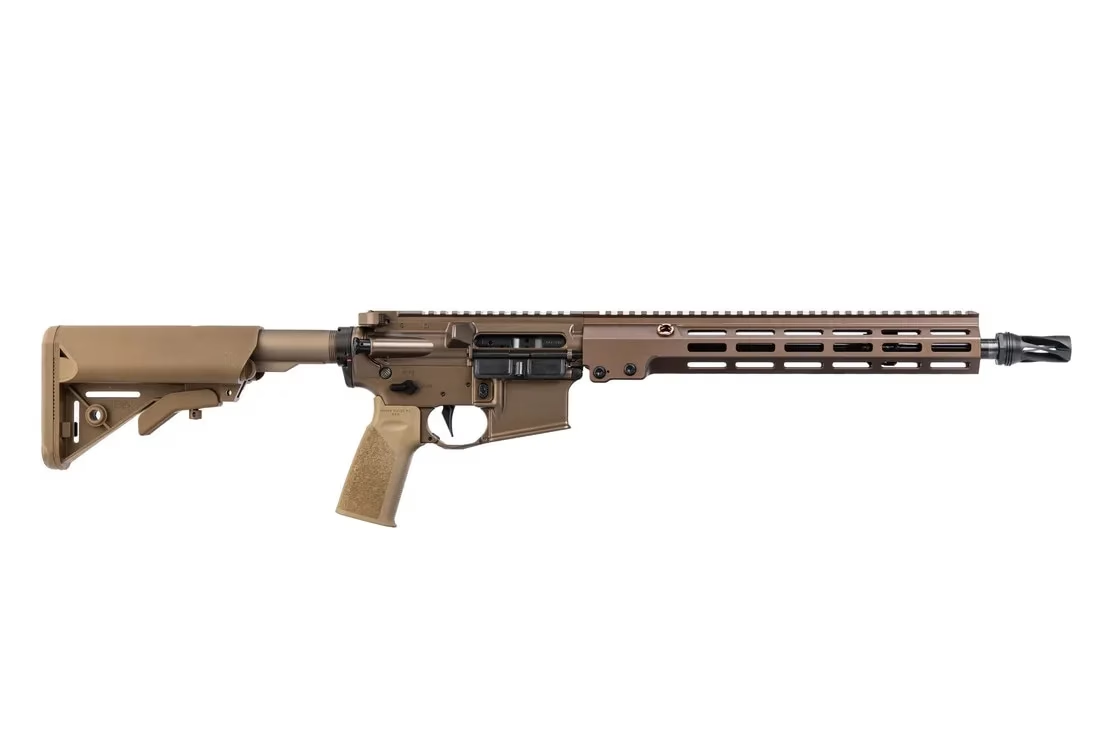
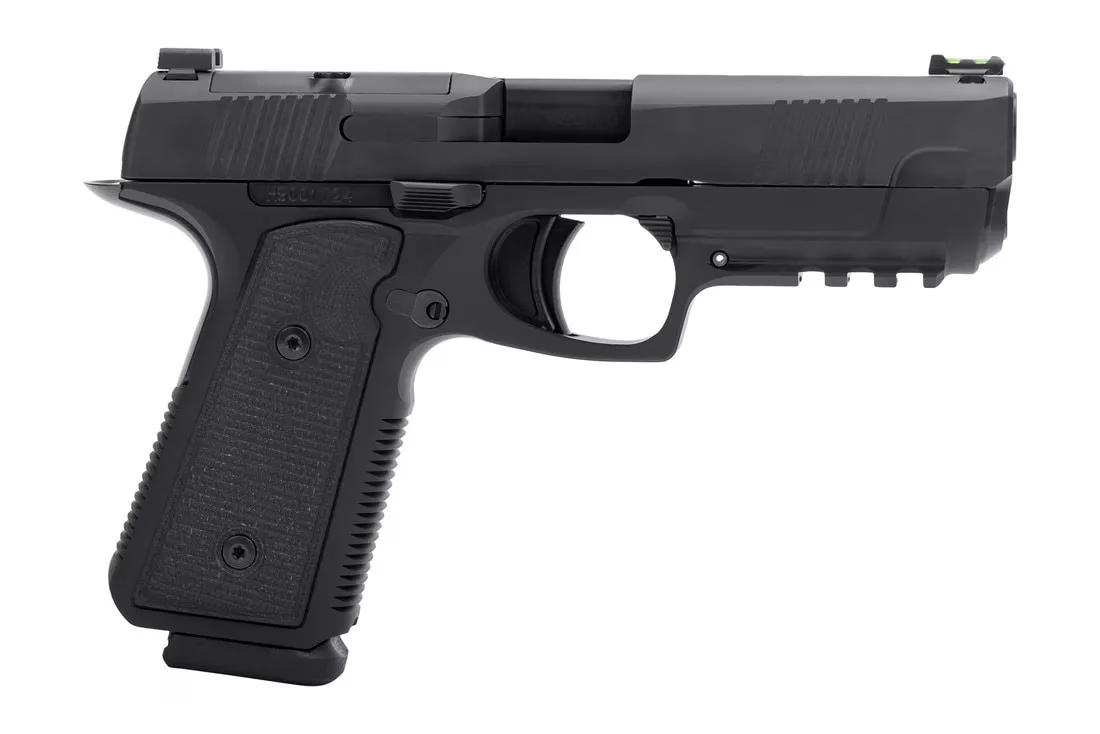
If owning firearms is new for you, the responsibility of ensuring you’re safe around them can be a bit intimidating. There’s a lot to consider when owning a rifle or pistol. And while safety is certainly not something to take lightly, taking the proper precautions when handling guns is a hard requirement of gun ownership.
This isn’t meant to scare you out of owning firearms. It’s to raise awareness of the personal responsibility it takes to properly do so. Firearm-related accidents can have dire consequences, and most occur because one of the fundamental rules was broken. Practicing strict gun safety will, in time, become a good habit.
And as long as you abide by those rules, don’t get complacent, and stay prepared for whatever might happen, you’ll be able to safely handle all of your firearms.
Frequently Asked Questions (FAQ)
-
What are the four rules of gun safety?
The four rules, commonly credited to firearms instructor Col. Jeff Cooper, are:
1. Treat every gun as if it’s loaded.
2. Never let the muzzle point at anything you aren’t willing to destroy.
3. Keep your finger off the trigger until your sights are on the target and you’ve decided to fire.
4. Be sure of your target and what lies beyond it. -
How do you safely check that a firearm is unloaded?
For a semi-automatic, remove the magazine first by pushing the magazine release button, then pull the slide or bolt back, then lock it in place with the release lever or bolt catch to inspect the chamber. For a bolt-action, open the bolt by lifting up and pulling it back to look into the chamber. For a revolver, open or swing out the cylinder and check every chamber in it. Regardless of the type, verify the gun is empty both visually and physically, then keep handling it as though it’s still loaded, and always keep it pointed in a safe direction.
-
What’s the safest way to store a gun at home?
Ideally a dedicated gun safe with a steel body and a combination or electronic lock. If gun safe isn’t practical, a lockable hard case, or a lock box kept in a closet is a reasonable alternative. The key principle is keeping firearms secured from anyone who shouldn’t have access to them, particularly children or intruders. Several states also have specific safe-storage laws, so be sure to confirm and abide by your local laws and statutes regarding firearm storage..
-
What is a negligent discharge, and how is it different from an accidental discharge?
A negligent discharge is an unintended firing caused by operator error, such as leaving a finger on the trigger or failing to confirm an empty chamber. This isn’t to be confused with an ‘accidental’ discharge, which refers to a firing caused by a mechanical malfunction with no fault on the shooter’s part. Most unintended discharges are negligent rather than accidental, and they almost always trace back to breaking one of the four safety rules.
-
What should be in a firearm first aid or trauma kit?
A solid trauma kit should include a tourniquet such as a CAT (Combat Application Tourniquet), compressed gauze for packing wounds, a pressure bandage, trauma shears, a marker for recording tourniquet application time, and assorted adhesive bandages for minor cuts. Pre-assembled kits from makers like North American Rescue arrive stocked with these essentials. These tools only help if you’re trained to use them, so hands-on instruction is strongly recommended, and you should always call 911 in case of any serious injury.