Vortex Optics is a name that needs practically no introduction. For over two decades, they’ve been one of the most recognizable names in the industry, known for crafting a myriad of top-tier optic systems.
Despite being most well known for their rifle scopes, Vortex has diversified their lineup over the years. On top of variable power optics, they offer everything from binoculars and spotting scopes to prism scopes and reflex sights.
Some of their most popular optics have been their reflex sights, especially their mini-reflex sights. Over the years, Vortex has rolled out a wide range of mini-reflex sights. Classic models like the Viper and Venom were immensely popular when they were first released. And today, they’ve served as the foundation for Vortex’s new Defender line.
The Vortex Defender series is their flagship line of pistol optics. And there are a plethora to choose from, each one with its own unique features. And if you’re planning to use one on your next pistol build, it’s imperative to know how they differ.
What is a Mini-Reflex Sight?
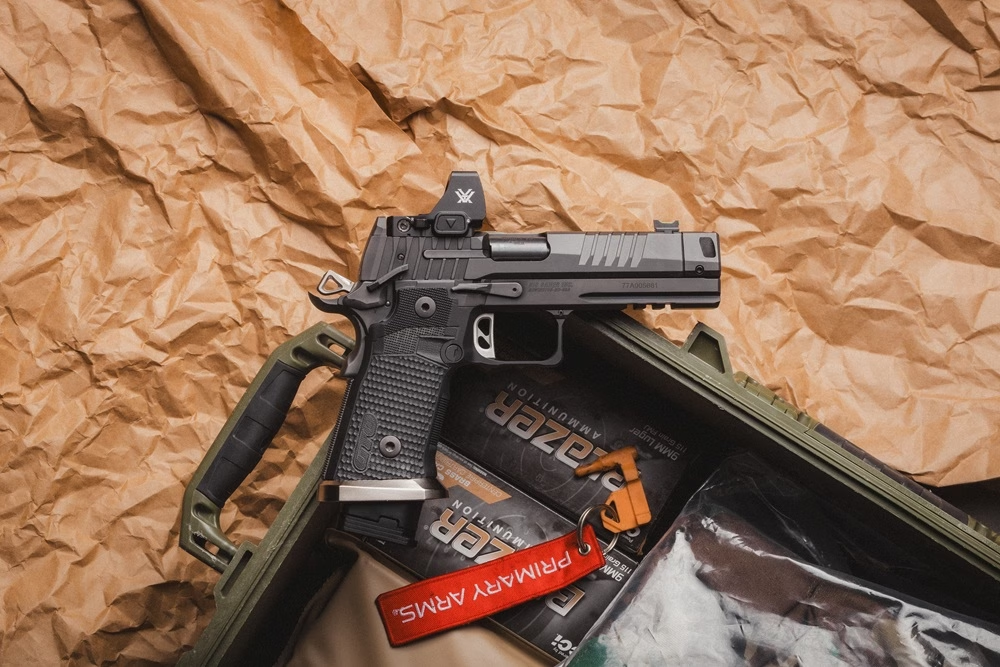
Before getting into the nitty gritty on the Defender series, it’s important to know what mini-reflex sights are in the first place. A mini-reflex sight is, in essence, a small reflex sight designed primarily for use on handguns. They use an open-emitter design and only one lens, so they’re remarkably lightweight. Although this does leave the emitter diode exposed to dirt and debris, if you’re mindful of your environment, it really isn’t much of an issue.
If the idea of an open optic bothers you, you can always opt for a pistol red dot sight instead. Pistol red dots are a lot like full-size ones—they’re fully enclosed, use two lenses, and are very durable. Their added durability does lower visibility a bit. They have a slightly narrower field of view (FOV) because of their optic body, but they’re still suitable for most applications. They aren’t technically mini-reflex sights since they use an enclosed design. However, since they’re small dot sights made for handguns, they’re all grouped together.
Why are they so popular?
Simply put, they’re quicker than iron sights. Standard iron sights aren’t bad by any means, but to be used effectively, you need to focus on the sights to line them up, taking your focus off the target. Once zeroed, a reflex sight allows you to place your full focus on the target—there’s nothing to line up, you simply place your dot on the target you’re good to go.
As such, they save a considerable amount of time when aiming, making them popular for just about every conceivable application. Manufacturers today have taken note of this, creating many optics. When using compact or micro-compact handguns, you opt for smaller optics designed for concealed carry. And for competitive or duty use, larger ones are available too.
Vortex Optics is no different. Their defender line consists of optics for all scenarios. While this is great in that it gives you plenty of options to choose from, it can be difficult to pick one if you don’t know exactly what to look for.
Vortex Defender Series
There are a lot of optics in the Defender line, but each one falls into one of three categories: the Defender-CCW, Defender-ST, or the Defender-XL. Each one offers its own unique set of advantages. Below is a general overview of how they compare with each other.
Defender-CCW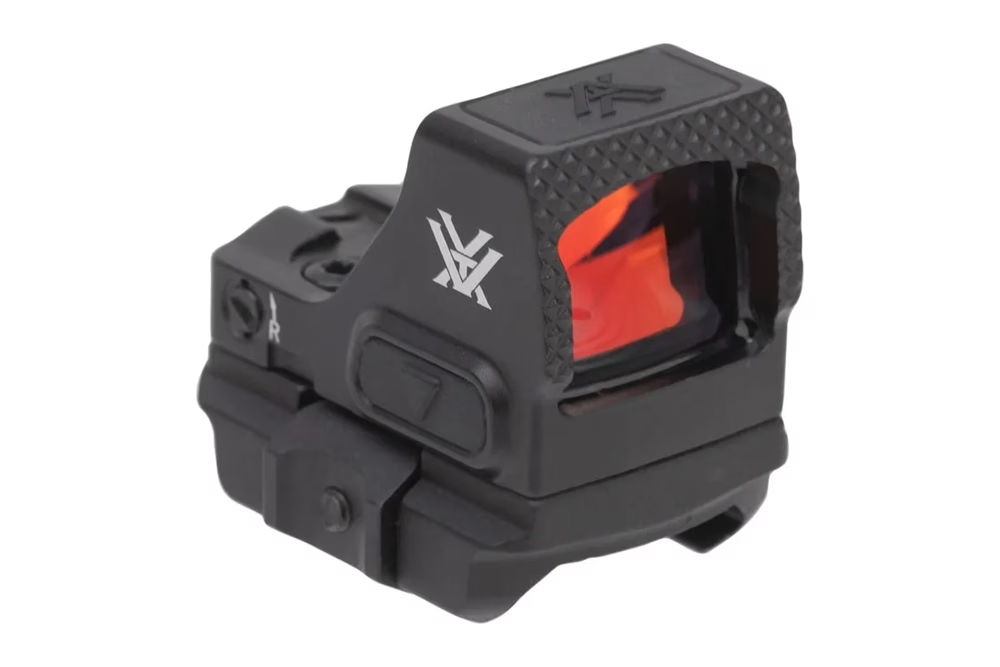 | Defender-ST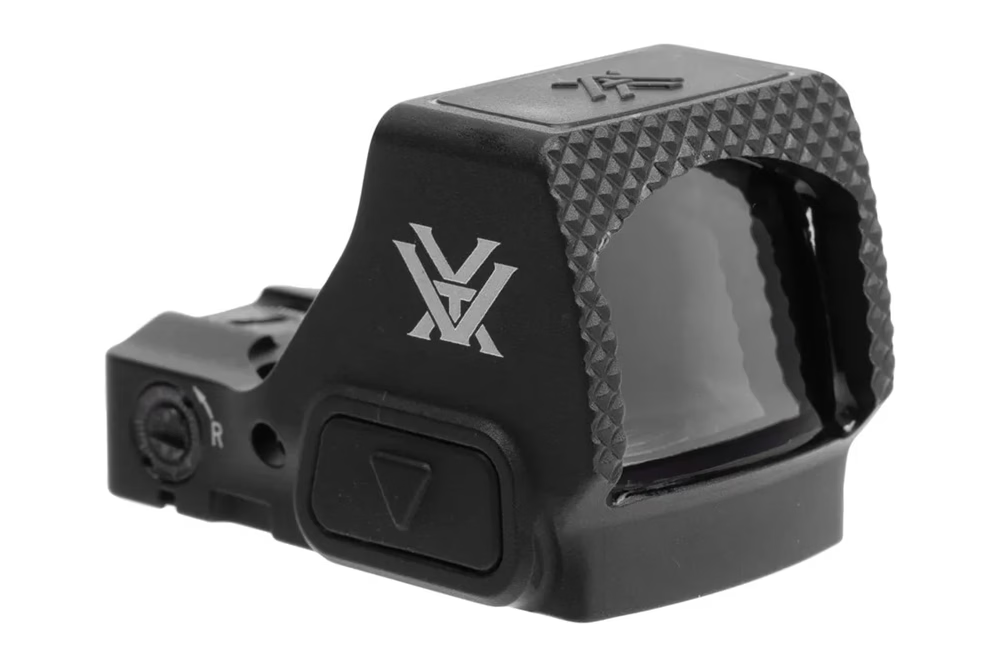 | Defender-XL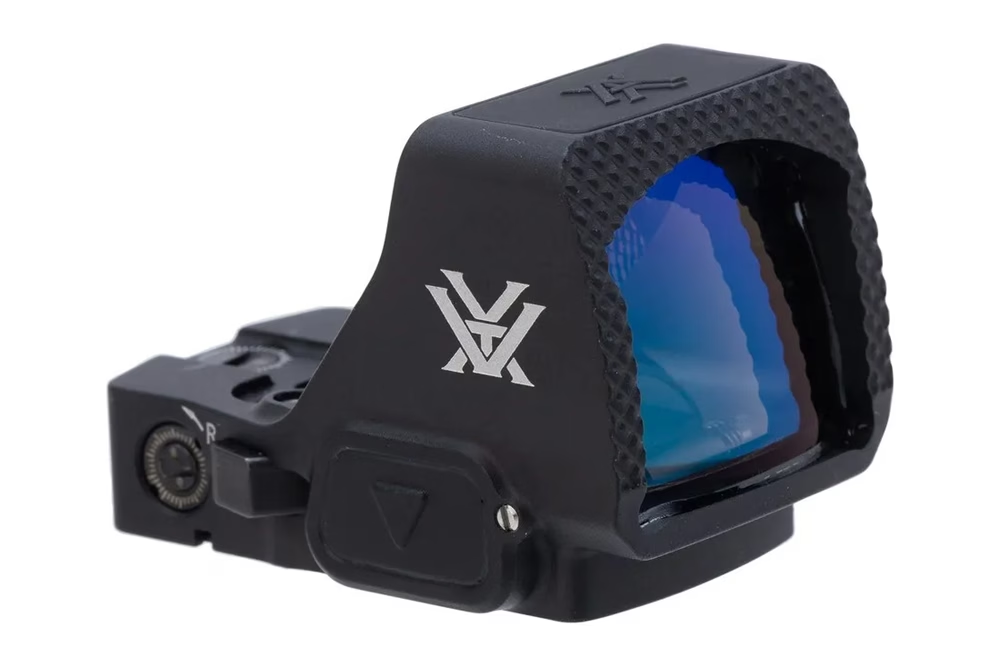 | |
|---|---|---|---|
| Enclosed Version Available? | Yes | Yes | No |
| Reticle Type/Color | Standard: Red: 3- or 6-MOA Red Dot; 3-MOA Green Dot Enclosed: Red multi-reticle | Standard: 3- or 6-MOA Red Dot; 3-MOA Green Dot Enclosed: Red multi-reticle | Standard: 2-, 5-, or 8 MOA Red Dot; 3-MOA Green Dot |
| Window Size | 20x16mm | 23x20mm | 25.5×23.3mm |
| Weight | Standard: 0.95 Ounces Enclosed: 1.3 Ounces | Standard: 1.48 Ounces Enclosed: 1.62 Ounces | 1.93 Ounces |
| Battery Life | Standard: Up to 9,500 Hours Enclosed: Up to 125,000 Hours | Standard: Up to 25,000 Hours Enclosed: Up to 150,000 Hours | Up to 25,000 Hours |
| Best For | Concealed Carry on Sub- and Micro-Compact Pistols | General Use (Everyday Carry, Competition, Duty) | Competitive Shooting |
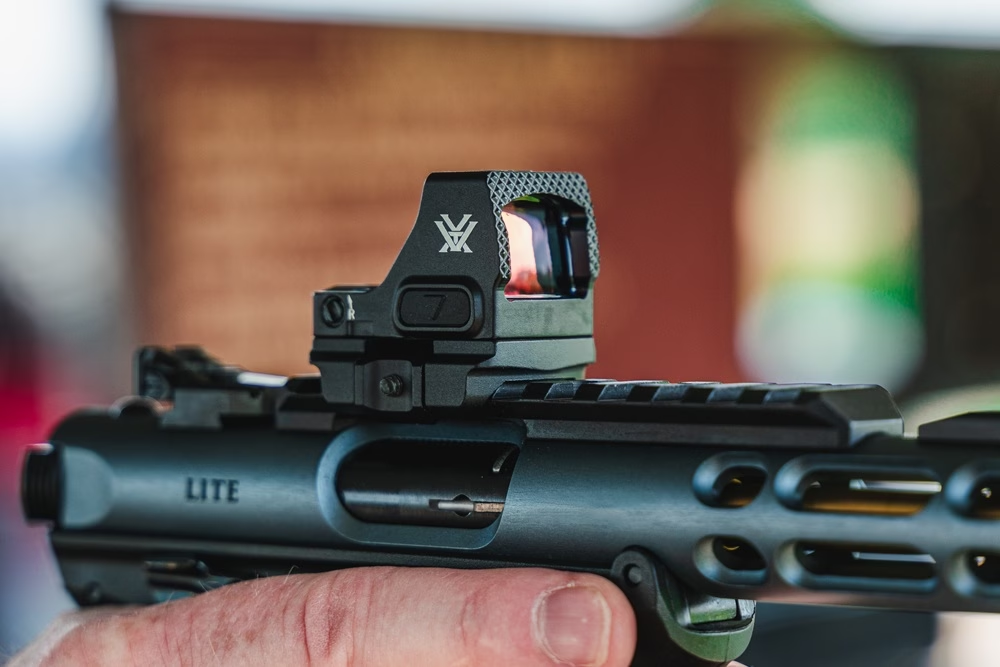
Vortex Defender CCW: Compact & Carry-Ready
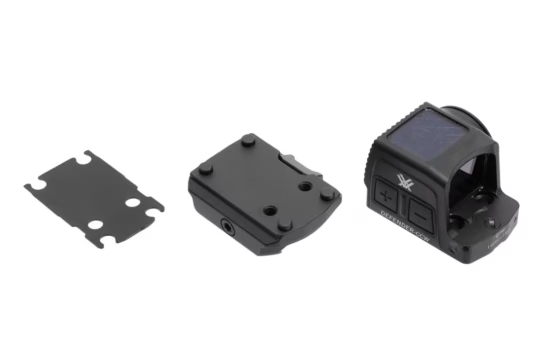
For concealed carry use, the Defender CCW is a top pick. It’s impressively powerful, despite its compact size, and it’s available to enough variants to offer something for everyone.
Using the RMSc mounting footprint, they can mount to many pistols, including the GLOCK 43x/48 MOS, SIG P365, and Springfield Hellcat OSP. As noted in the table, you can get this optic in either an open- or enclosed-emitter construction. Both options have a good-sized viewing window relative to their size. But the enclosed version has a built-in Solar Unit with Vortex’s Auto D-TEC technology. This gives these optics a 9,500- and 125,000-hour long battery life, respectively. Plus, they both offer a wide FOV, making them perfect for concealed carry guns.
Compared to their other models, they aren’t the best for other applications. But it’s important to recognize that they were designed specifically for concealed carry use. Regardless, they still come equipped with the Defender series’ hallmark features. They have high-quality glass, a knurled front face for easy slide racking, and a durable optic body. Plus, all its reticle options are large enough for easy acquisition. That said, if you’re wanting something with larger reticle, the Vortex Defender CCW – 6 MOA is where it’s at.
Vortex Defender-ST: Balanced Performance
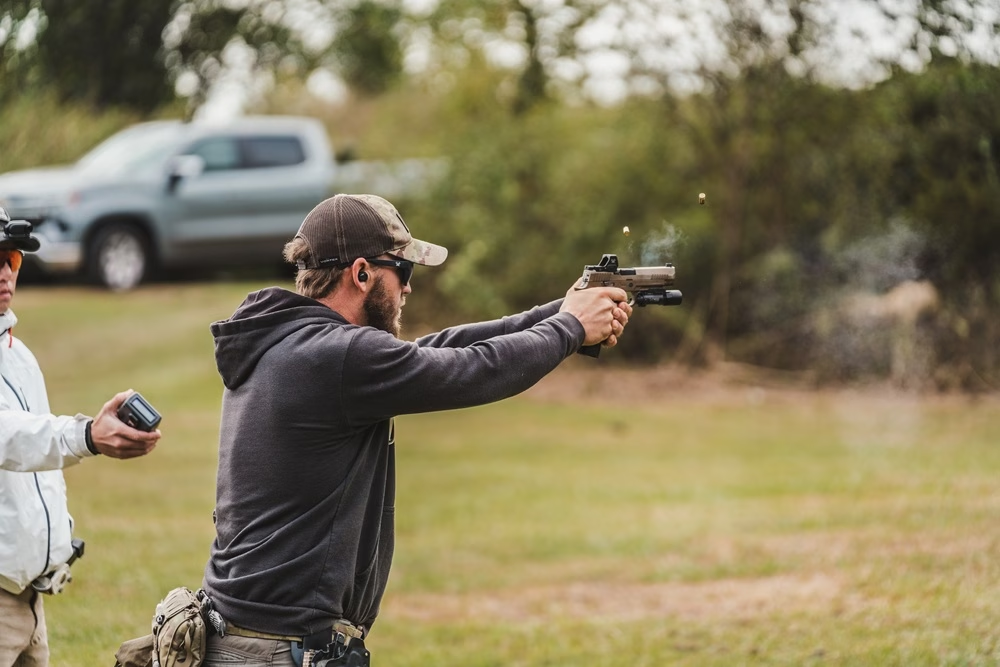
The Defender-ST is Vortex’s mid-sized option. It’s a reliable optic made for both compact and full-size pistols, and it excels in multiple applications.
The Defender-ST is an excellent do-all optic. Using the common DPP mounting footprint, it’s compatible with multiple handgun models. And although it isn’t compatible with every pistol model, there’s almost certainly adapter plates available that make it so. Being a larger optic, it offers a wider FOV than the CCW variant, but it’s still compact enough to be a practical for EDC use.
Much like the CCW variant, the Defender-ST is built to last. It has a durable aluminum optic body that’s waterproof, shockproof, and fog proof. It uses high-quality glass for optimal clarity, and it runs on CR2032 batteries, giving it a long battery life. Finally, these optics are available as an enclosed optic as well. These optics come equipped with Vortex’s Solar Unit and Auto D-TEC Technology. By switching to solar power, these optics can have a long battery life, lasting up to 150,000 hours. And finally, they’re available in a multitude of options, with the Vortex Defender-ST – 6 MOA being among the most popular.
Vortex Defender-XL: Big Window, Fast Aiming
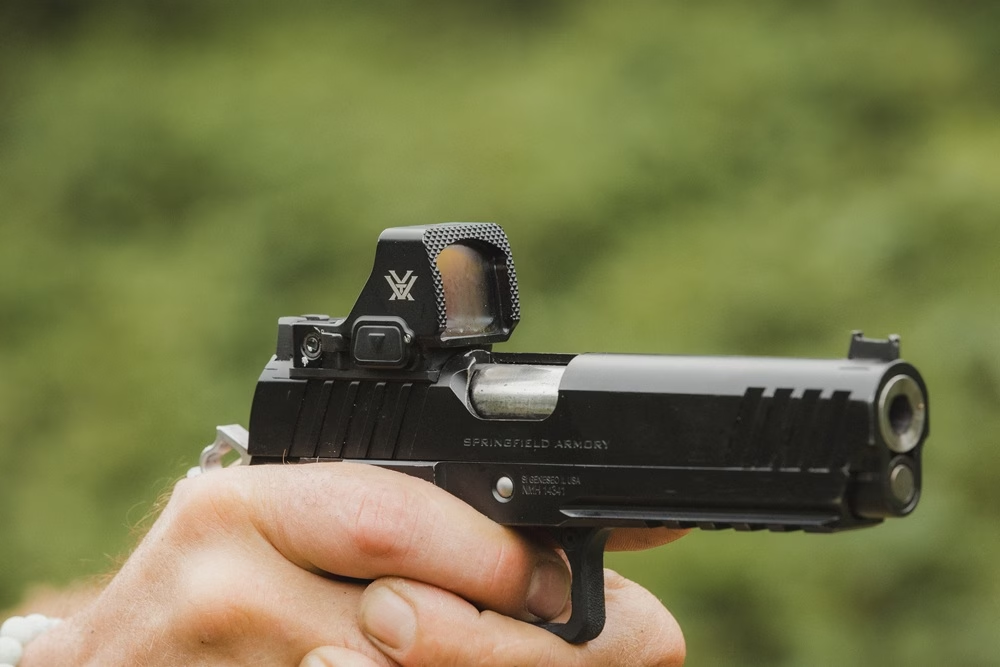
The largest optic of the bunch is the Vortex Defender-XL. Designed to accommodate a larger lens, these optics are built for speed, making them a great optic for the competitive scene.
Essentially, you can view this optic as a scaled-up version of the Defender-ST. It’s built to the same standard, so it has a durable construction that’s water, shock, and fog proof. It has exceptional glass quality, and it has a 25,000-hour long battery life. The greatest advantage this optic has is its window size.
Simply put, this optic is designed to give you as wide an FOV as possible. Its large, 25.5×23.3mm lens is excellent for quick target acquisition, which is perfect for competitive shooting. On top of this, the Vortex Defender XL – 8 MOA has an 8-MOA red dot reticle, hence the name. This allows you to find your dot faster, and if you prefer a smaller dot size, they offer them too. Plus, it uses the DPP footprint as well, so it’s compatible with a ton of different handguns.
How to Choose Between Them
Choosing an optic in the Vortex Defender line is ultimately about finding the optic that best fits your own needs. Each optic can be a smart choice, but they aren’t all made the same. So, depending on the pistol you run, as well as how you intend to use it, you’ll be better off if you choose the right one.
To recap, the Defender-CCW is designed for micro-compact pistols. In contrast, the Defender-ST is meant for larger, standard-sized models. Meanwhile, the Defender-XL was made to shine in a competitive role, and it has the large size and glass to match it. Now, if you’re planning to use your pistol for concealed carry, the XL isn’t the best choice. Likewise, the ST isn’t as conducive for competitive use, and neither of them will fit on micro-compacts like the CCW can.
As cliché as it sounds, the best optic is the one that best fits your needs. As such, it’s best to take time to evaluate your options carefully. If you do, you’ll be fine, no matter which one you pick.
Conclusion
With Vortex Optics being one of the premier names in the industry, there is a lot of hype surrounding their optics. And their pistol dots, specifically the defender series, are easily worth considering for your next build.
Whether you’re looking for a new optic optimized for concealed carry, a duty-grade optic, or something for competitions, the Vortex Defender line has what you need.
Frequently Asked Questions (FAQ)
-
What is the Vortex Defender series?
The Vortex’s Defender series is a line of mini-reflex and pistol red dot sights designed for EDC, duty, and competitive use. Models include the CCW, ST, and XL variants.
-
What’s the difference between Defender CCW, ST, and XL?
Defender CCW is the smallest, designed for concealed carry. The ST is the mid-sized option for duty and everyday use. And the XL is the largest optic, housing the largest window for rapid target acquisition. All are available with multiple reticle sizes and colors, including 2-, 5-, and 8-MOA red dots and 3-MOA green dots.
-
Are Vortex Defender red dots good for pistols?
Yes. Vortex Defender red dots are rugged, high-visibility pistol optics suitable for defensive use, range practice, and competition.
-
What size dot is best for a pistol red dot sight?
Smaller dots (2- to 3-MOA) offer more precision, while larger dots (5- to 8-MOA) are easier to acquire. For defensive carry, many enthusiasts tend to favor a 3- and 6-MOA dots, as they strike a nice balance between precision or speed. For competitions, larger 5-, 6-, and 8-MOA dots are favored since they’re easier to acquire in a dynamic scenarios.
-
Can I use a Vortex Defender red dot on an everyday carry pistol?
Yes, both the Defender CCW and ST models are well suited for everyday carry use. And with the right mounting plate, they can be used on several pistol models.