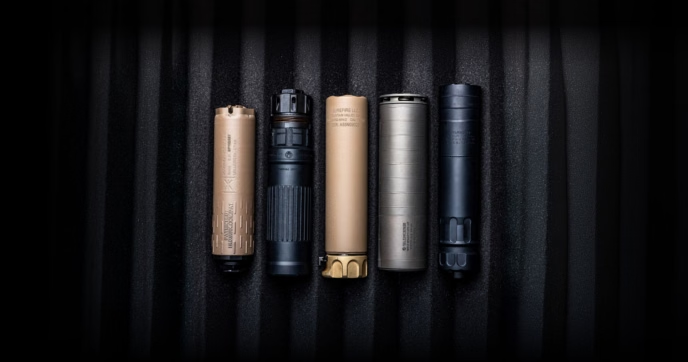
As we’ve mentioned throughout some of our more recent articles, suppressors are easily some of the best accessories you can add to your rifle. They lessen both the sound signature and muzzle flash created after firing, and they even do a solid job of taming recoil too. Despite their inherent benefits though, they still have one major consideration.
Suppressors can add some serious bulk to your rifle, with many popular models adding anywhere from around 4.5 to as much as 8+ inches to your rifle’s overall length. And considering they can weigh as much as 15 to 20+ ounces, they can put a serious damper on your rifle’s maneuverability.
Because of this, many enthusiasts often opt for short-barreled rifles (SBRs) instead of full-length. Despite having a more involved approval process to own them, SBRs pair exceptionally well with suppressors, providing you with superior ergonomics, handling, and performance.
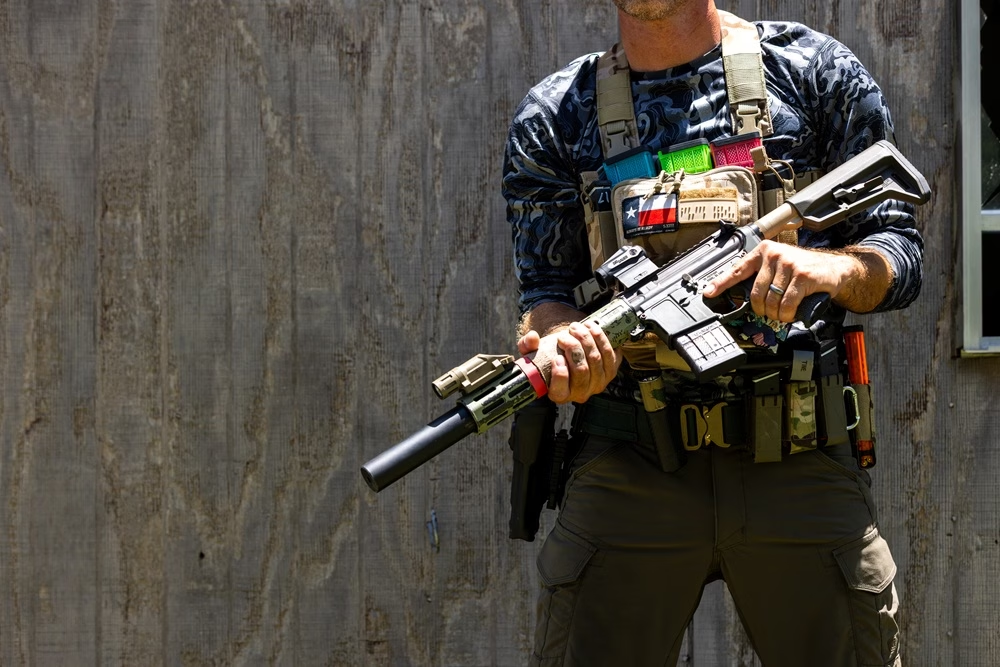
What is an SBR?
In simplest terms, an SBR is a rifle with a barrel shorter than 16 inches—the minimum barrel length needed for regular civilian ownership per NFA (National Firearms Act) regulations. It is critical to note that if you intend to build or buy an SBR it must be registered with the ATF, or else it would be an illegal SBR, but not every AR-15 with a shorter barrel an SBR by default.
For instance, you could have a 14.5-inch or even a 13.7-inch barrel on your rifle, and so long as it has a pinned and welded muzzle device that brings its length up to 16”, it’s legally a standard rifle. Conversely, you could opt for a stock-less AR pistol, which can sport a shorter barrel because it’s legally classified as a pistol, not a rifle. We cover this in depth in our AR Pistol Buyer’s Guide, but AR pistols with shorter barrels and aren’t an NFA item like SBRs.
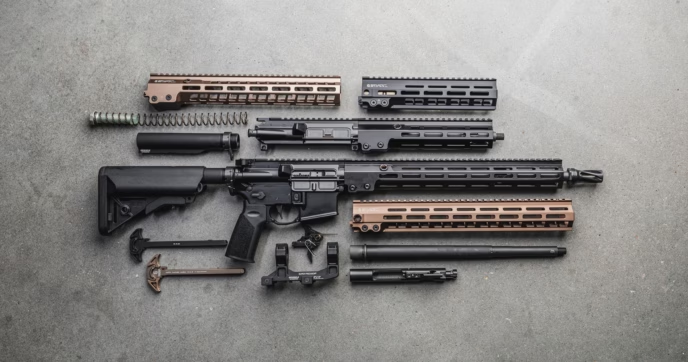
Of course, if you want a true rifle that’s still relatively light and balanced when suppressed, an SBR is the move. Factory built rifles are available in a smattering of barrel lengths, with some of the most popular being 10.3, 11.5, and 12.5 inches for 5.56 NATO rifles, and you can go even shorter when using calibers like .300 Blackout too. And since SBRs are rifles, you can customize the same as you would with a standard AR, allowing you to take full advantage of the AR-15’s near-endless parts aftermarket.
SBR Purchase Process
Being an NFA item, the process of buying or building an SBR isn’t the same as it is with a standard rifle. With standard rifles, all you need to do is fill out a Form 4473, pass a federal background check, pay for the rifle, and take it home (assuming your state doesn’t have any additional processes or waiting periods). SBRs, however, require you to fill out a Form 4 in addition to the 4473, and you’ll also need to submit a set of your fingerprints on FD-258 fingerprint ID cards along with it.
And, once you’ve done all this, you can’t just take your rifle home immediately. Being an NFA item, you’ll need to wait for the ATF’s review and approval. Just like with suppressors, the wait time for approvals can vary. Sending in physical paperwork can take several weeks to months to be approved. That said, if you opt to digitally file these forms, while you aren’t guaranteed a quick turnaround, they generally get processed much quicker, with wait times being as short as a couple of days in some instances.
Alternatively, you can build an SBR instead of buying one. Like a factory-built SBR, you must register it with the ATF, but the process of doing so is a bit different. Instead of a Form 4, you’ll need to file a Form 1. This lets you take a lower you already own and convert it into an SBR. Once approved, you’ll need to have your lower engraved with your name, as well as the city and state you live in per the ATF’s requirements. While this sounds daunting, there are a plethora of custom shops that will engrave your lower rather inexpensively. And, while you’re waiting for your Form 1 approval, you can still use your AR in a pistol configuration.
Choosing an SBR Configuration
With the AR platform, the sky really is the limit. As noted above, they’re some of, if not, the most adaptable and customizable rifles available, so they can easily be tailored for just about any purpose. And while you can build a rifle, we understand that doing so isn’t everyone’s forte. As such, you might be more inclined to shop for one of the many factory-built SBR options, of which, there’s no shortage to pick from. And although we can’t highlight every single rifle offered today, we can provide you with some of the most popular.
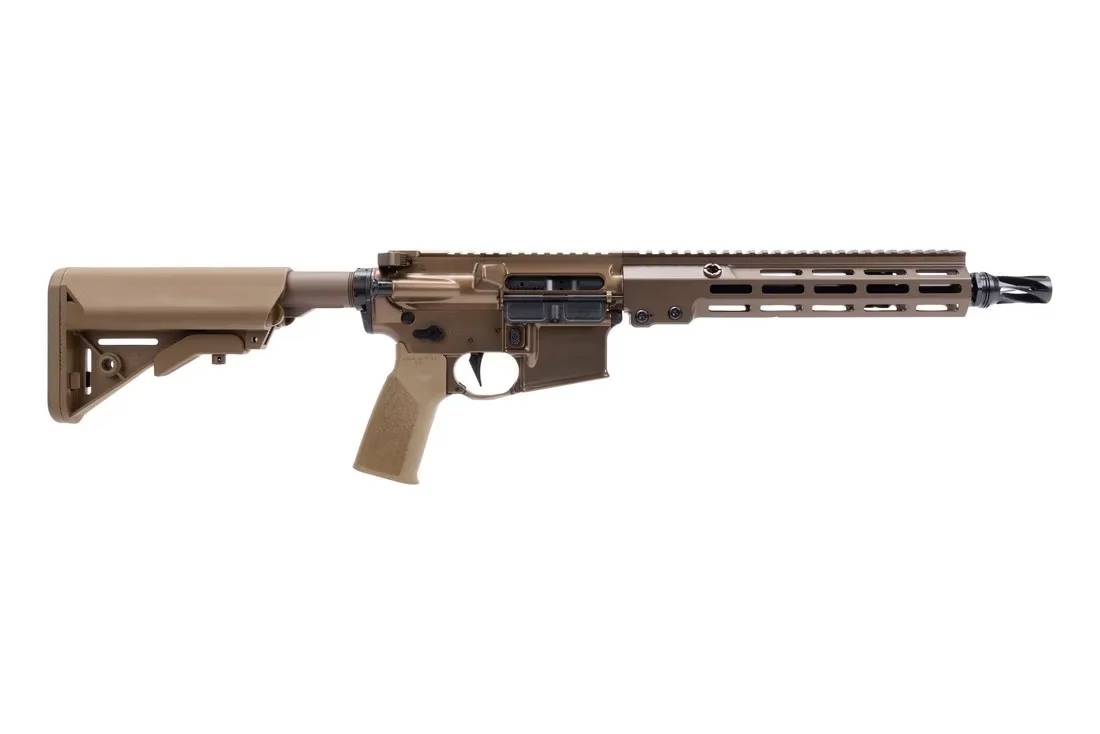
Geissele Automatics 11.5 Super Duty Mod 1
Geissele Automatics is a name that’s synonymous with high-quality, and the Geissele Super Duty MOD 1 5.56 NATO AR-15 SBR is a perfect example of this. Their Super Duty line of AR-15s is designed for complete reliability. They come equipped with many of Geissele’s premium parts like their 11.5-inch cold hammer forged and chrome lined barrel, enhanced BCG, an upgraded buffer assembly, their Ultra Duty lower parts, and one of their SSA-E X triggers.
Chambered in 5.56 NATO, it offers solid performance across multiple applications. And since these rifles come standard with a tuned gas port, they’re exceptionally reliable without being over gassed. Lastly, coming standard with a HUXWRX QD muzzle device, they’re a solid candidate for your next suppressed SBR build.
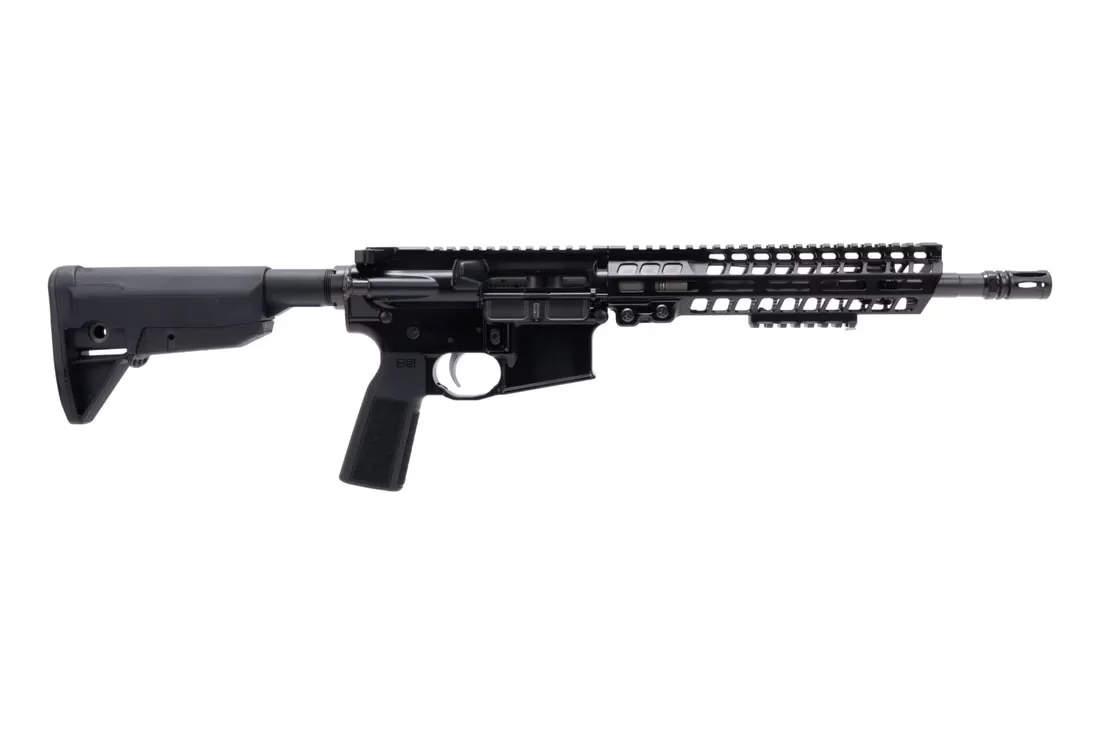
Geissele Automatics Border Patrol 11.5 AR-15
A more budget-friendly rifle from Geissele Automatics, the Geissele Border Patrol 5.56 NATO AR-15 SBR is essentially a civilian clone of their rifle developed for the U.S. Department of Homeland Security. Boasting many of the same features, it’s a very formidable and utilitarian rifle, designed to blend rugged reliability with maneuverability. And with it being a Geissele rifle, it’s absolutely packed to the brim with quality features and components.
Much like the Super Duty SBR mentioned above, it comes outfitted with an 11.5-inch cold hammer forged and chrome lined barrel and a carbine length gas system. It also makes use of Geissele’s skeletonized MK20 M-LOK handguard, an ALG Advanced Combat Trigger, BCM furniture, and a mil-spec BCG. It does lack the suppressor-readiness of the Super Duty SBR, but there is a plethora of QD muzzle devices to choose from.
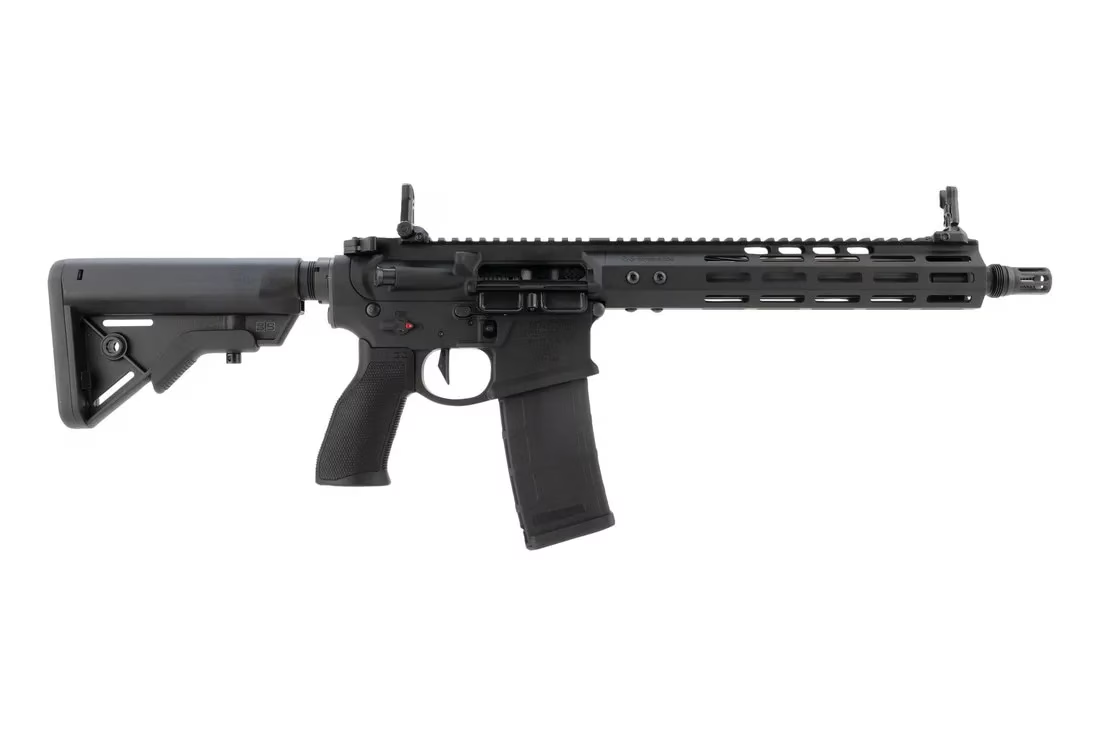
Noveske N4 Commando
Few names have the same level of renown as Noveske Rifleworks. Known for crafting immensely high-quality AR-15 rifles and components, they have a plethora of unique options to consider, with one of the most sought-after models being the Noveske N4 Commando 5.56 NATO DDF AR-15 SBR.
As one of the more premium rifles in this lineup, there are a lot of features that make it stand out. For starters, it features one of Noveske’s premium 416R stainless steel barrels with their Disruptive Deep Flutes for optimal heat mitigation. They also make use of Noveske’s Gen 4 billet receiver design, which comes with ambidextrous controls, including an ambi bolt release. Lastly, they come standard with a full-auto rated BCG, a 10.75-inch M-LOK handguard, and their Pig Pen Muzzle Device, which is compatible with a plethora of rifle suppressors.
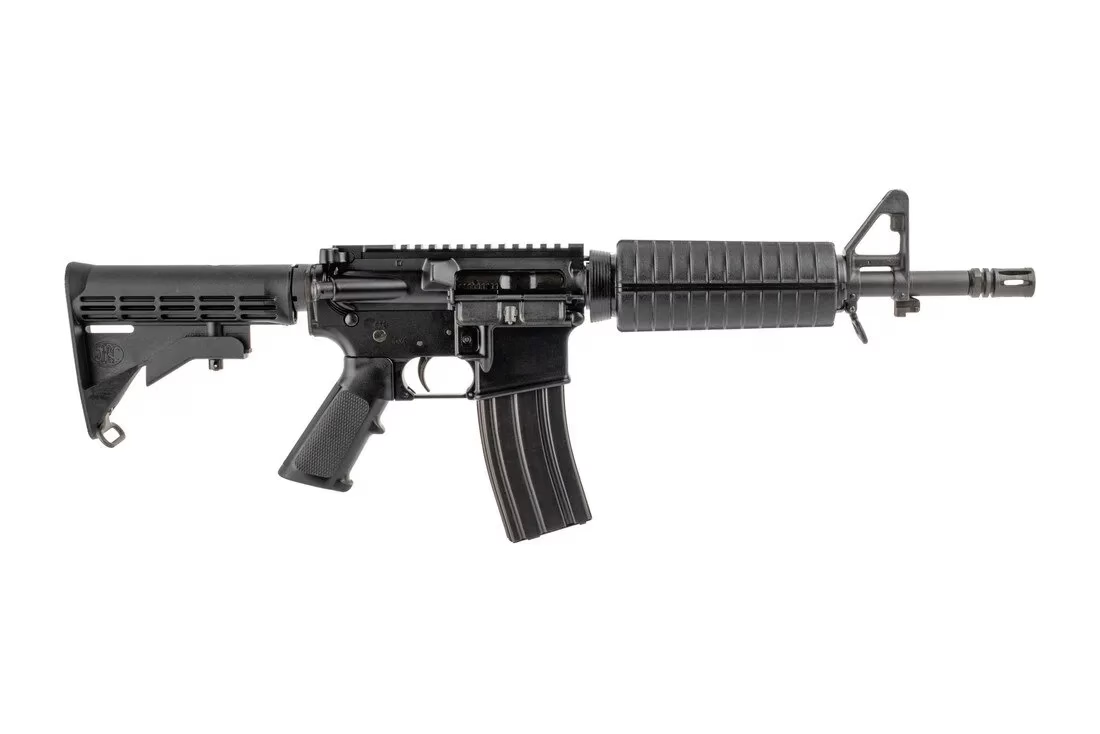
FN America FN15
Lastly, for those wanting a reliable, minimalistic rifle that’s ready for defensive and duty use, you don’t need to look any further than the FN15 5.56 NATO SBR. Featuring an 11.5-inch barrel, this compact AR-15 sports a mil-spec design, complete with a fixed front sight gas block combo, a two-piece clamshell style handguard, as well as a mil-spec grip and collapsible carbine stock. It even comes with mil-spec internals too.
However, despite its simplistic design, it still boasts some incredibly high-quality components. One of the greatest features of this rifle is its 11.5-inch cold hammer forged, button-rifled barrel that’s been chrome lined for greater durability. Overall, while it doesn’t have the same features as the rifles mentioned thus far, its simplistic design makes it an excellent pick for those wanting simple rifle build. And it’s also one of the more budget-friendly factory-built SBRs on the market.

How Suppressors Affect an SBR’s Performance
Much like with full-size rifles, adding a suppressor to an SBR can change the way it performs.
Sound And Flash Reduction
The chief advantage suppressors offer is their ability to reduce your rifle’s sound signature and muzzle flash. Despite looking like just a tube on the outside, suppressors are intriguingly complex internally. Most suppressors house a core made up of several baffle chambers that are designed to capture and slow down the expanding gases created after firing. Still, contrary to what many new enthusiasts may believe, suppressors don’t make your firearm ‘mute’ by any means.
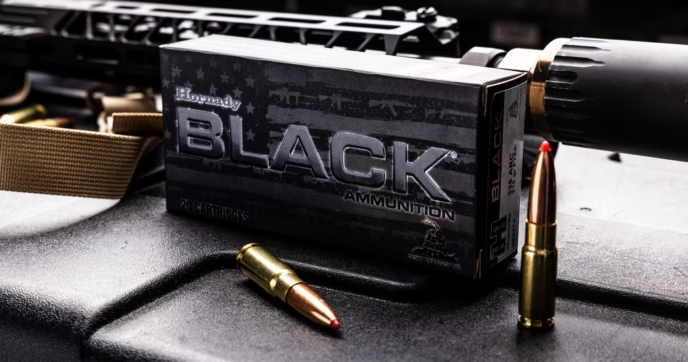
Our guide, “Understanding Suppressor Decibel Ratings” goes in-depth on this, but depending on the caliber your rifle is chambered in, the ammo you use, and even the suppressor itself, your rifle can still be quite loud. For instance, higher pressure cartridges like 5.56 NATO aren’t available in a sub-sonic variation that can reliably cycle out of an AR-15. As such, you still get the super-sonic crack that occurs when the projectile is moving faster than the speed of sound. Still, a suppressed 5.56 rifle is still going to be quieter than an unsuppressed one. But, if your rifle is chambered in a low-pressure cartridge like .300 Blackout, with the right ammo, tuning, and suppressor, your setup can be truly hearing safe.
Now, we aren’t saying this to dissuade you from suppressing a shorter 5.56 rifle, we tell you this to have a realistic set of expectations of how your rifle is going to perform.
Muzzle Velocity
While not always a guarantee, the addition of a suppressor has been known to increase the overall muzzle velocity of projectiles by as much as 10 to upwards of 50+ FPS (feet per second). Granted, this is heavily dependent on the caliber your rifle is chambered in, its barrel length, and the caliber you choose.
For instance, the internal volume of a suppressor acts as a barrel extension of sorts. This extra volume allows any unburnt powder to burn, further propelling the cartridge forward. Shortening the barrel of a rifle gives the powder less time to burn after ignition, resulting in a greater concussion and muzzle flash after firing, as well as less velocity. This is mostly true for high-pressure cartridges like 5.56 NATO, meaning that with a suppressor, the muzzle velocity of such calibers can be enhanced.
For lower pressure cartridges, like .300 Blackout, this doesn’t really happen all that often. By design, .300 Blackout performs optimally out of 7.5-to-8.5-inch barrels—on such rifles, adding a suppressor to your rifle will provide you with a negligible amount of extra muzzle velocity, if any at all.
Gas Pressure and Cycling
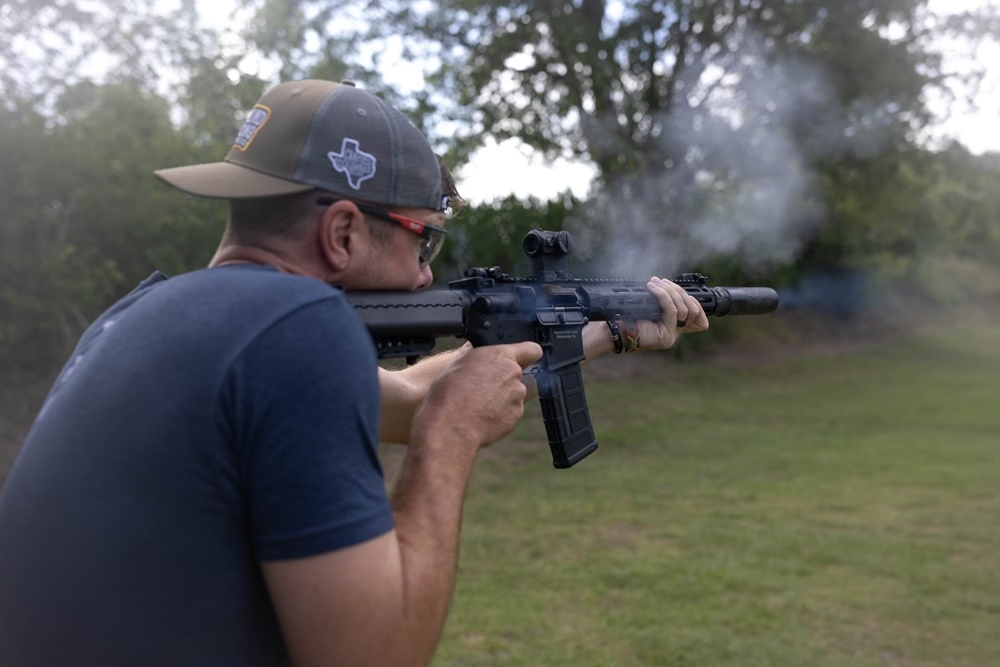
One of the most well-known side effects of running a suppressor is their increased bolt velocity. As suppressors capture gas, they can also inadvertently force more gas than usual back through the gas tube, causing it to cycle the bolt harder, while also causing excess gas to spill out of the receiver.
As gas spills out of the receiver, it stings the eyes and nose, making it difficult to maintain focus on your target when firing multiple shots. Also, the increased bolt velocity can cause excessive component wear, increased felt recoil, and lead to various feeding malfunctions. This combo not only makes firing your rifle unpleasant, but it also actively accelerates wear. Fortunately, all these issues are fixable.
Just like we mentioned earlier, AR platform rifles are some of the most adaptable rifles available, and just about every component can be upgraded or swapped out for another. And with adjustable gas blocks, suppressor charging handles, and heavier buffer weights, you can easily tune your rifle’s suppressed performance. Adjustable gas blocks allow you to close off the gas port to fine-tune the amount of gas siphoned from the barrel, suppressor charging handles have specialized channels and vents designed to deflect gas away from your face, and heavier buffer weights can slow the rifle’s bolt velocity, taming recoil.
With the right setup, you can dramatically increase the lifespan of your components, while also making your rifle more comfortable to use.
Suppressor Selection for SBR Use
Being such a sought-after accessory, there’s no shortage of suppressors to choose from, but knowing what to look for is key when selecting one out for your build. That said, a quick search will probably leave you with more questions than answers. That said, we can get you on the right track with an overview of a couple of the industry’s top manufacturers.

SureFire
SureFire is one of the industry’s foremost manufacturers of rifle accessories and has consistently pushed the boundaries to craft high-quality rifle parts and other gear. We go more in-depth on them in our SureFire Brand Review, but their lineup consists of several weapon lights, lasers, muzzle devices, and, of course, a whole slew of suppressors.
SureFire Suppressors are renowned by both professionals and civilians alike. Their SOCOM series have been meticulously engineered to offer solid performance across all conditions, with the SOCOM762-RC2, SOCOM556-RC3, and the newer SOCOM-RC4 have been engineered to exceed the standards of USSOCOM’s suppressor trials. Plus, the 556-RC3 and RC4 both make use of specialized designs that reduce back pressure too, making them a solid pairing for 5.56 rifles. It’s worth noting that with the RC4 being SureFire’s latest suppressor offering in the SOCOM line, they aren’t as widely available as their other models. That said, if you’re prospectively shopping, they’ll be readily available very soon.
And, if you plan to run a .300 Blackout setup, the 762-RC2 is a great pick, but you can also opt for the SOCOM300, a suppressor refined for the caliber.
SilencerCo
Another industry titan is SilencerCo. Throughout their tenure, they’ve developed several top-tier suppressor systems for rifles and pistols of all sizes and calibers. And, as you’d likely suspect, they have some excellent options for AR-15 SBRs.
Notably, the SilencerCo Velos LBP 5.56 Suppressor is one of their most popular, featuring a specialized low back pressure design that pairs exceptionally well with AR-15s. Much like SureFire’s suppressors, they are exceptionally durable too—they use a hybrid Inconel and 17-4 stainless steel construction, giving them solid heat resilience and structural integrity. Plus, they even come with an ASR QD compatible muzzle device, giving you the ability to quickly detach and install your suppressor onto your rifle whenever needed. As such, if you’re looking for dedicated 5.56 suppressors, it isn’t one to pass up on.
Additionally, if you’re trying to keep your rifle setup as compact as possible, the SilencerCo Velos K LBP. In all essence, it’s just a shorter version of the standard Velos LBP suppressor, measuring in at 4.76 inches long. Like the standard model, it also makes use of a low back pressure design, so you won’t likely need to change out any components on your rifle to use it efficiently.
Combat Application Technology
Combat Application Technology, better known as CAT, is another avid producer of manufacturers. Their lineup consists of vast assortment of different models; each one designed for specific platforms and calibers. But, for 5.56 SBRs, their WB suppressor is tough to beat.
The CAT WB suppressor is one of CAT’s most popular 5.56 suppressors—using an Inconel construction, they weigh just shy of a pound (14.6 ounces), and they measure at just 5.45 inches in length. And, like some of the other models mentioned thus far, they also make use of a low back pressure design in the form of CAT’s Surge Bypass internal pressure management system. And for .300 Blackout, the CAT DD is a great choice. For the most part, it’s an almost identical copy of the WB, one that’s slightly heavier—16.6 ounces—since it’s a .30 Cal model. Still, it’s a rather compact suppressor, measuring only 5.45 inches long.

HUXWRX
HUXWRX, formerly known as OSS Suppressors, is another top-tier brand producing some of the industry’s most sought-after suppressors. And for SBRs, two of their most popular lines are their FLOW and Ventum series.
The HUXWRX FLOW suppressor line is their current flagship offering. While many of the suppressors mentioned thus far have made use of low back pressure designs, HUXWRX is the pioneer of flowthrough technology. As such, the FLOW 5.56 is highly effective at reducing back pressure and slowing bolt velocity. The FLOW 5.56K is a lightweight and compact suppressors that pairs exceptionally well with the AR-15. Measuring only 5.5 inches long and weighing just 11.9 ounces, it’s made from 17-4 PH Stainless Steel, making it ready for just about every application. It’s also available in a titanium construction too that’s 6.8 inches long and weighs just 11.4 ounces.
The Ventum is an excellent contender, one that’s compatible with multiple calibers. The Ventum also makes use of a flowthrough baffle design, but it has some key differences. For starters, the Ventum is HUB compatible, meaning that with the right mounting adapter, it can be compatible with many different QD mounts. Also, it uses HUXWRX’s GeoFlash replaceable end caps, allowing you to optimize your suppressor for different calibers. Lastly, the Ventum is currently available in either a 5.56 or 7.62 configuration. Both share the same length and weight—6.7 inches and 14.5 ounces—but as their names suggest, they come pre equipped with 5.56 and 7.62 end caps and muzzle devices, respectively.

Conclusion
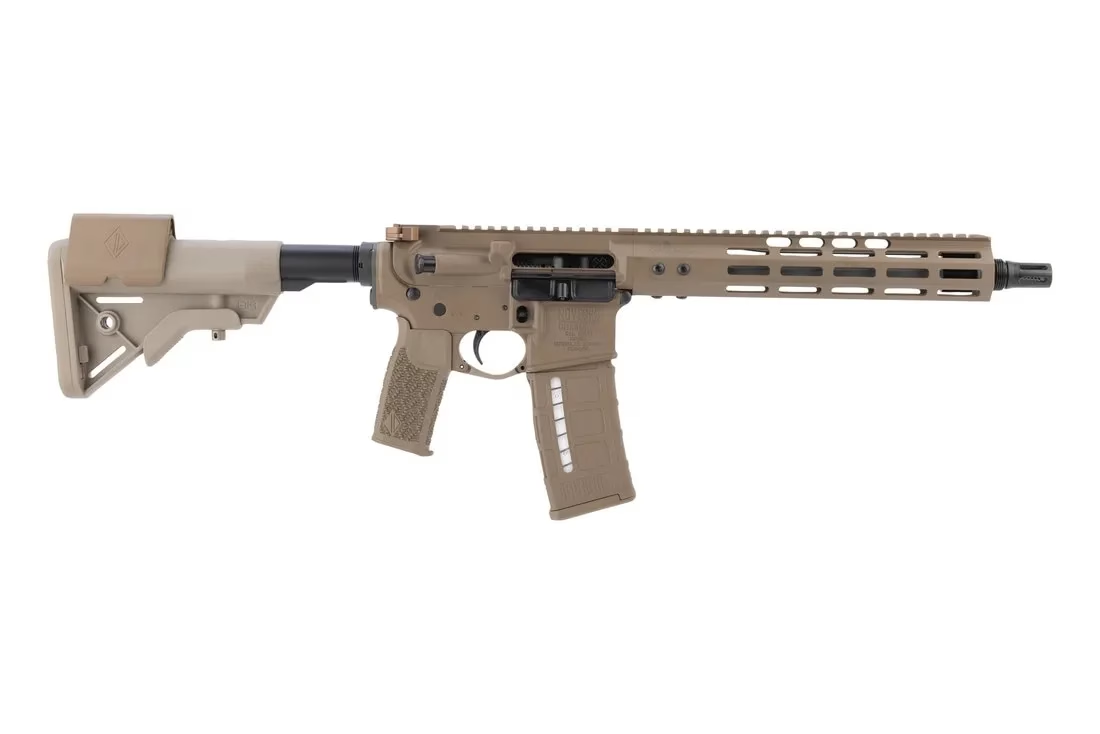
For defensive, competitive, and duty applications that place an emphasis on maneuverability, few firearms do it quite like SBRs. Whether you build or buy one, registered SBRs provide you with the same compact size as AR pistols, along with the same customization options and comfort as a standard-length rifle.
And as far as customization is concerned, the sky is the limit, with one of the best ways to overhaul your rifle’s performance, adaptability, and overall safety. While suppressors can make a standard rifle a bit bulky and cumbersome, they’re right at home on an SBR, complimenting their shorter OAL. And even though they can alter your rifle’s performance a bit, with the right ammo, some fine-tuning, and the right suppressor, you’ll have an excellent rifle that won’t fail you when you need it most.