For many firearm enthusiasts, the decision to attend a formal marksmanship match marks a meaningful transition from casual range time to a structured, skill-driven discipline. The first match often brings together excitement, curiosity, and a healthy dose of uncertainty, because competitive environments challenge participants to balance marksmanship, efficiency, and composure under a timer.
This guide provides prospective competitors with a clear roadmap for preparing for their first event, the equipment they may need, and the distinctions among the most common match formats. Whether you’re arriving with your daily-carry handgun or loading up a 3-Gun cart with everything and the kitchen sink, the goal is to help new participants enter their local club match with confidence, clarity, and an understanding of how to grow within the sport.
What Is Competition Shooting?
The term encompasses a broad family of disciplines, each defined by its own rules, scoring models, and practical challenges. Handgun events such as IDPA and USPSA emphasize marksmanship, efficient firearm presentation, and safe weapon manipulation under time pressure. Multi-gun events such as 3-Gun add complexity through the use of rifle, handgun, and shotgun within a single match, demanding a well-rounded skillset across multiple platforms. Precision-oriented disciplines such as the Precision Rifle Series focus on engaging distant targets with consistency while navigating varied positions and environmental conditions.
Club-level matches, sometimes called local or “outlaw” events, typically operate with more relaxed guidelines. They mirror the spirit of national organizations but adjust stage design, equipment flexibility, or scoring to suit local resources and community preferences. They offer an ideal entry point for new participants by providing a welcoming environment and a lower barrier to entry. State or national championship events operate under strict rulebooks and feature more complex stage architecture, higher round counts, and a field of well-established competitors.
Below, we’ll take a look at the equipment required to get started in each sport, as well as some of the more sophisticated gear for advanced competitors. One piece of gear that is consistent across every discipline, though, is ear and eye protection. You can’t safely shoot any of these firearms with them, so we won’t bother putting them on every list.
Handgun Competitions: IDPA and USPSA
Handgun matches remain the most accessible entry point for new competitors. They require minimal gear, they are widely available at local clubs across the country, often even indoors, and they focus on practical marksmanship skills that many individuals already practice in personal-defense training.
IDPA is designed to simulate defensive scenarios, emphasizing the use of cover, concealment garments, and equipment that mirrors carry-oriented setups.
USPSA, while still grounded in practical marksmanship, is more focused on the fundamentals of marksmanship and heavily rewards efficient movement, speed, and the use of purpose-built firearms designed for competition.
Both formats welcome newcomers and offer divisions that accommodate everything from a compact daily-carry pistol to a full-size competition-tuned handgun.
Basic IDPA/USPSA Gear:
- Handgun
- 1-2 Spare Magazines
- Secure Holster
A new competitor can enter IDPA with nothing more than their daily carry loadout. A reliable handgun, a safe and well-fitted holster, and one or two spare magazines will allow a new participant to complete an entire match. You’ll have to draw your reloads from your pocket, and you may have a slow draw time in you’re concealing under a heavier garment, but you’ll be fully-capable of completing the stages.
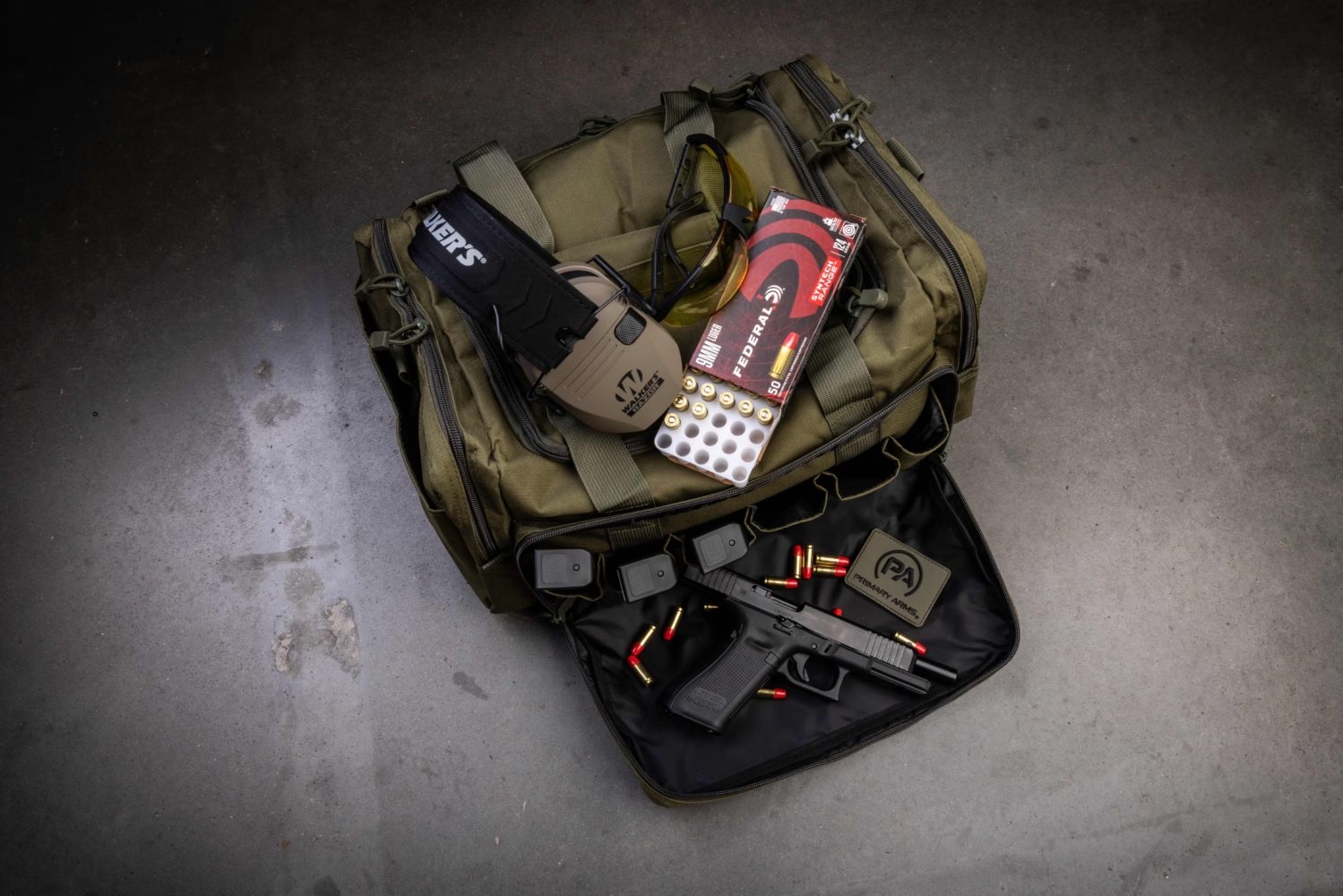
USPSA follows a similar pattern at the introductory level. While the rulebook leans more toward OWB holsters and may encourage the use of full-size firearms optimized for rapid reloads and minimal muzzle rise, the essential requirements remain the same. A dependable handgun, secure holster, and adequate magazine capacity provide a sufficient foundation for a first match. Many competitors arrive with range gear they already own stuffed in a backpack with a few boxes of ammo and refine their loadout over time as they observe what more experienced participants use.
Advanced IDPA/USPSA Gear:
- Handgun
- 2-3 Spare Magazines
- Secure Holster
- Mag Carrier Pouches
- Range Bag
- Gun Cleaning Supplies
- Tool Kit
- Gun Oil or Lubricant
- Spare Batteries
Those seeking higher performance in either discipline eventually refine every component of their equipment. The handgun itself becomes a focal point, with competitors selecting models known for excellent triggers, controllable recoil characteristics, and sighting systems that support rapid target engagement.
In USPSA, divisions such as Carry Optics and Open allow for slide-mounted or frame-mounted optics, respectively, further improving speed and precision. IDPA has more restrictive rules, but many competitors still choose larger handguns with improved ergonomics, enhanced sights, and carefully tuned controls.
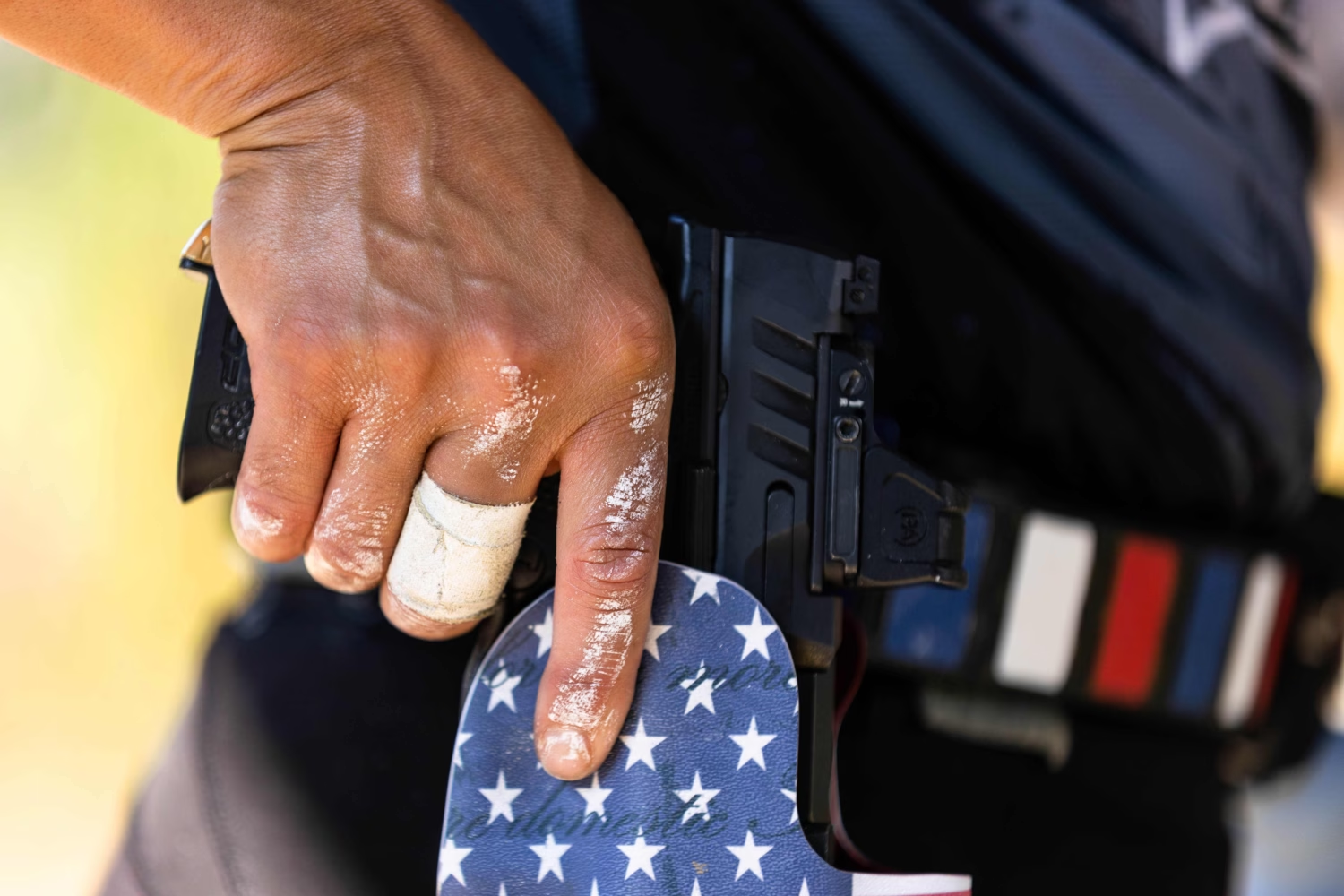
Holsters also become more specialized. Competitors prioritize models that provide secure retention while allowing a clean, consistent draw stroke with minimal friction. Magazine carriers transition from basic pouches to adjustable models that allow customized positioning and angle, helping competitors optimize reload efficiency during movement. In the case of USPSA, holsters are often offset slightly below the belt to allow for an easier draw, and sometimes slightly away from the body. Such holsters would be highly impractical for concealed carry, but are conducive to a fast draw.
IDPA, being more defensively focused, does not allow such holsters, but competitors still gravitate toward OWB designs. Since IDPA requires concealment, the cover garment also becomes a point of optimization. Most high-level competitors prefer simple vests that can be quickly swept out of the way during a draw and leave the arms free to move during target engagement.
A well-organized range bag becomes indispensable, carrying gun cleaning supplies, lubricant, spare parts, and any items necessary to keep equipment running throughout a long match day. A simple tool kit containing small punches, screwdrivers, hex keys, and a cleaning rod ensures that stoppages or mechanical issues do not prematurely end a match. Packing spare batteries for optics, additional ear protection, and hydration supplies keeps the competitor ready for unforeseen circumstances.
Over time, experience will guide each competitor toward the gear that best aligns with their division, skill level, and long-term goals.
Rifle Competitions: PRS
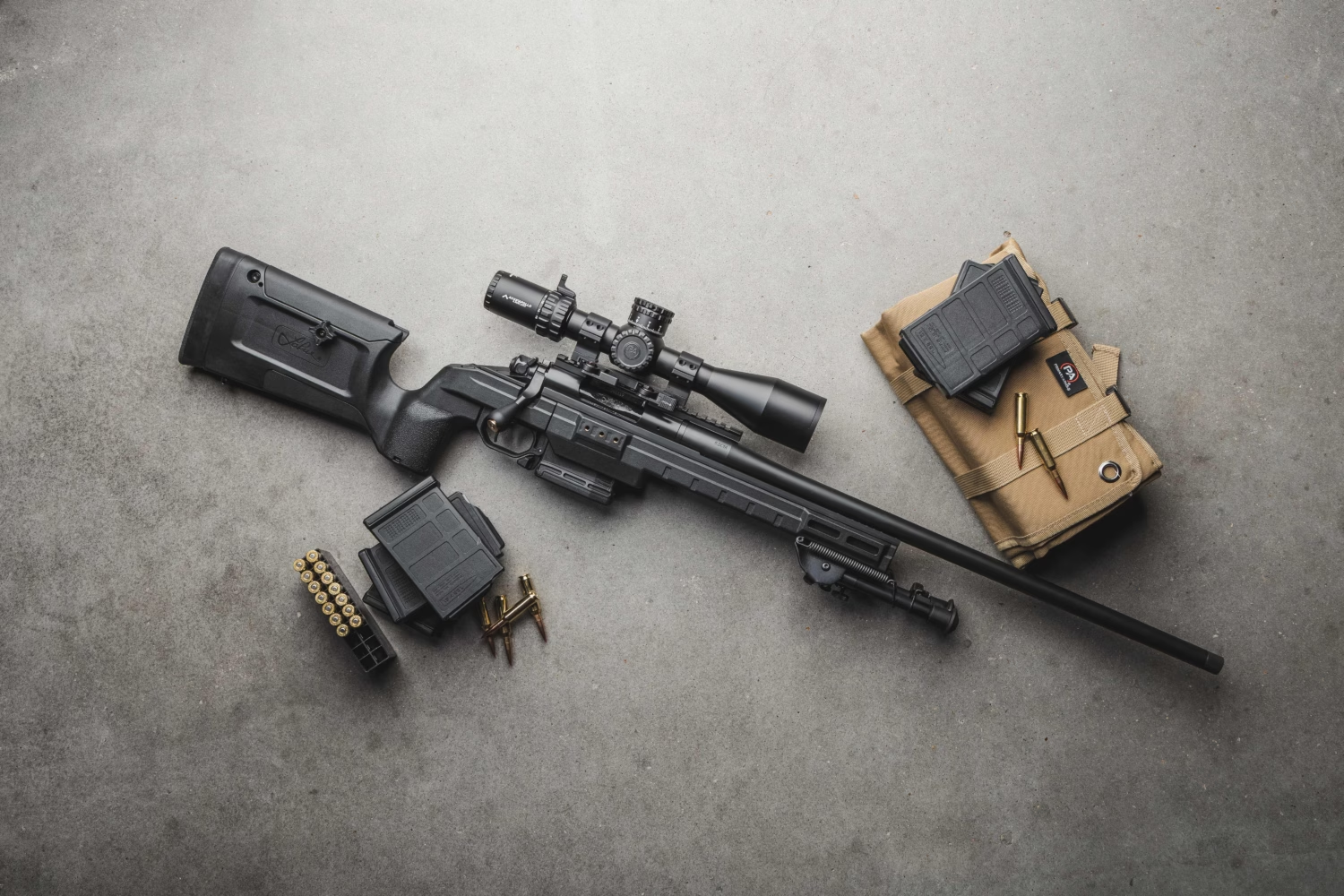
Precision Rifle Series competitions represent a different branch of the shooting sports ecosystem. Instead of rapid magazine changes or dynamic movement through walls and barrels, PRS emphasizes deliberate marksmanship at significant distances. Competitors engage steel plates from a variety of improvised positions, often atop barricades, rooftops, tank traps, or natural terrain features. Each stage presents a combination of time pressure, positional complexity, and environmental variables. As a result, the discipline requires a blend of marksmanship fundamentals, ballistic knowledge, and carefully selected gear.
Basic PRS Gear:
- Rifle chambered in a full-powered cartridge
- Appropriate scope
- Bipod
A new competitor does not need an extravagant setup to participate. At the most fundamental level, a rifle capable of consistent accuracy at long distances is essential. Many start with a production-class bolt-action rifle chambered in a widely supported cartridge such as 6.5 Creedmoor or .308 Winchester. However, even an AR-15 chambered in .223/5.56 can be sufficient for many matches, particularly local ones that don’t exceed 500-600 yards.
An optic with sufficient magnification to identify and hold on target at several hundred yards is absolutely essential, ideally one with exposed, precise turrets and a reticle designed for holdovers or wind calls.
A stable bipod forms the foundation for many positions and provides a reliable point of contact for prone or modified-prone stages. Even the most basic of models will do—you just need something with two legs to provide that extra stability when called for.
A few magazines allow the competitor to complete multi-target sequences without interruption, and many PRS events require at least two to ensure adequate capacity during stages with complex target arrays. With this basic loadout, a new competitor can complete a full match while learning the nuances of wind, ballistics, and stage planning.
Beyond that, gear largely becomes optional. While high-tier competitors often spend tens of thousands on advanced equipment, and with good reason, PRS is a sport that tends to reward soft skills such as wind calls, marksmanship fundamentals, and ballistic expertise over gear selection.
Advanced PRS Gear
- Rifle chambered in a flat-shooting, wind resistant cartridge
- Optimal Scope
- Bipod
- Rear bag
- Wind Meter
- Rangefinder (if your match features unknown-distance targets)
- Ballistic calculator
That said, as a competitor’s skills progress, equipment selection becomes increasingly significant. When you reach a level of competition at which everyone is a skilled marksman, having the best rifle starts to matter.
Many competitors choose a high-performance bolt-action rifle chambered in a low-recoil, flat-trajectory cartridge such as 6mm Creedmoor or one of the 6mm variants favored for their superb ballistic consistency.
The optic often becomes the single most critical upgrade, as clarity, magnification range, turret precision, and reticle design directly influence the ability to make accurate holds and wind calls under time constraints. Ideally, you’ll want a rifle with excellent clarity, a wide range of magnification, and a reticle that is both quick and precise. An overly complicated reticle, such as a cluttered, needlessly precise grid, will take too long to use and cost you precious seconds. On the other hand, a simple duplex won’t provide the data that you need to correct your hold after a miss.
A premium bipod with quick adjustments and wide stance options offers increased stability, particularly on barricade-style positions. You’ll want one that can be deployed and stowed quickly, with the widest range of adjustment possible, including pan and tilt correction.
Several stabilizing bags of various sizes and fills help craft consistent contact with irregular surfaces. Rear bags are popular with PRS competitors and often one of the first upgrades beyond basic gear, but other more specialized bags are common at high levels as well.
A ballistic calculator enables precise firing solutions that account for altitude, temperature, barometric pressure, and rifle-specific data. A chronograph provides accurate velocity inputs to those calculators, refining ballistic predictions. A rangefinder capable of quickly reading targets at varying distances becomes especially valuable for field-style matches or stages that require unknown-distance engagement. A compact weather meter ties these tools together by providing real-time atmospheric data for the most precise firing solutions possible.
These tools, combined with developing fundamental skills, allow competitors to push their performance across the increasingly demanding stages found in major PRS events.
Multi-Gun Competitions
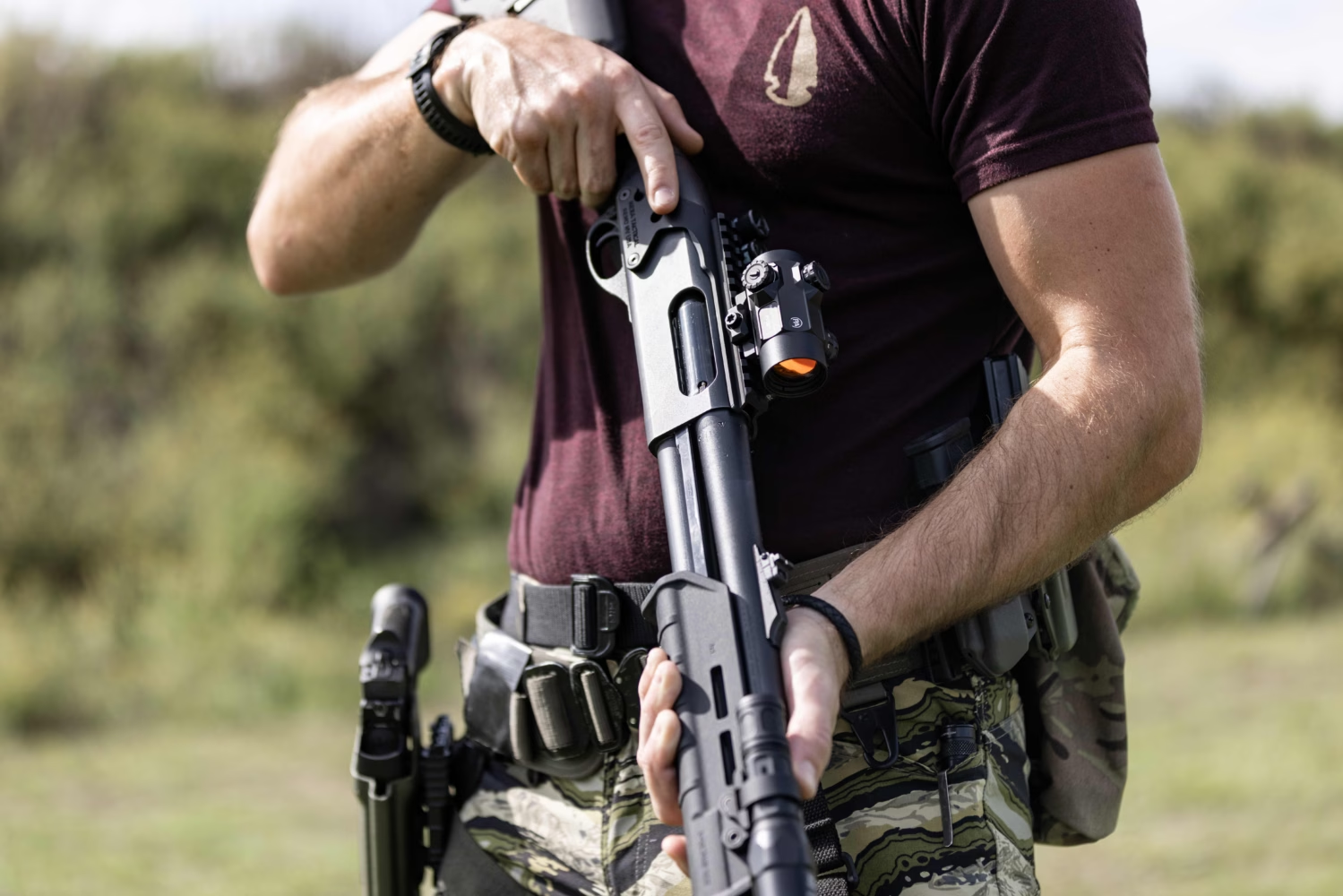
Multi-gun events, particularly 3-Gun matches, combine the speed and athleticism of USPSA-style handgun stages with the dynamic performance of rifle and shotgun engagements. These events often require the competitor to transition between firearms within the same stage, presenting unique logistical challenges that demand proficiency across firearm types. The variety of target types and engagement distances makes this discipline particularly gear-intensive, yet also exceptionally rewarding.
Basic 3-Gun Gear:
- Rifle
- Pistol
- Shotgun
- Pistol Holster
- 1-2 spare magazines for each
- Shell holder or pouch
- Chamber flags
A new competitor needs three primary firearms: a reliable rifle, a dependable handgun, and a shotgun suitable for engaging close-range steel, clay targets, or paper arrays. Spare rifle and handgun magazines allow the competitor to complete extended courses of fire. A quality holster ensures safe retention of the handgun during movement, and magazine pouches or a simple shell bag provide on-body storage for the necessary ammunition. Chamber flags are mandatory for safety, as they demonstrate clear and empty chambers when firearms are not in use.
This basic equipment allows a competitor to complete a full match while learning the fundamentals of stage planning, firearm transitions, and ammunition management.
Advanced 3-Gun Gear
- AR-15 or similar rifle
- High-capacity semi-auto pistol
- Semi-Auto Shotgun
- Pistol Holster
- 1-2 spare magazines for each
- Mag pouches
- Shotgun shell carrier
- Sturdy Belt
- Gun Oil or Lubricant
- Cleaning supplies
- Tool kit
- Spare batteries
- Chamber flags
- Range Bag or Cart
Competitors seeking to excel at multi-gun events eventually tailor each component of their equipment to the unique challenges of the discipline. A lightweight but accurate rifle chambered in 5.56 NATO provides low recoil and excellent controllability during rapid target transitions. The chosen optic depends on the division, but many favor low-power variable optics that allow a true one-power setting for close targets and higher magnification for long-range steel. A full-size 9mm handgun with generous magazine capacity provides the reliability and shootability that multi-gun stages demand.
Shotgun selection becomes even more critical. Many competitors choose semi-automatic models capable of accepting interchangeable chokes and accommodating higher shell capacities. Efficient shell-loading techniques drive the need for specialized carriers that hold shells in configurations optimized for quad-loading or caddy-style loading methods, rather than fishing shells out of a pouch.
A stiff, competition-oriented belt offers a strong platform for magazine pouches, shotshell carriers, and holster placement. Many prefer modular belt systems that allow rapid reconfiguration between stages or divisions. Holsters with stage-two retention provide additional security when running, kneeling, or climbing while still allowing efficient access to the firearm.
Given the substantial gear required, competitors often transport equipment in large range bags or rolling carts that store ammunition, cleaning tools, hydration, spare parts, and other essentials for a long day of competition. Organizational efficiency becomes almost as important as the firearms themselves, particularly during extended matches with numerous stages spread across large venues.
Conclusion
Entering the world of organized marksmanship competition introduces participants to a vibrant community, structured skill development, and challenges that reward preparation and consistent practice. Whether beginning with a simple IDPA match using a carry pistol or stepping into the complexity of PRS or 3-Gun, every competitor starts by learning the rules, gathering essential gear, and observing experienced participants. Over time, familiarity breeds confidence, equipment becomes refined, and skills evolve through repetition and honest assessment.
The disciplines discussed in this guide each represent a unique path within the shooting sports world, but they share a common foundation of safety, precision, and a desire to improve. With the proper knowledge and preparation, any new competitor can step onto the range for their first match and experience the satisfaction that comes from testing their abilities in a structured environment.