On an AR, having the ability to quickly switch between a magnified and non-magnified sight picture is critical for maximizing your adaptability across different scenarios. While you can always opt for something like qn LPVO, which has a dedicated 1x magnification setting, switching from its maximum magnification to 1x isn’t necessarily fast. And if you run something like a 3x or 5x prism scope, you’re locked into just one magnification setting, limiting your close-range performance.
At their core, both are fantastic optics, but they can be further enhanced with the addition of an offset red dot sight. As their name implies, offset red dots are mounted offset from your primary optic, allowing you to quickly shift to a non-magnified sight picture with a simple head movement.
For the uninitiated, an offset red dot isn’t necessarily one specific make or model of optic, but rather a mounting setup that multiple optics are compatible with. And when hearing the term ‘offset’, many typically think of the 45-degree, or 1 O’clock, offset position. While certainly useful, it requires you to tilt your rifle to use your other optic, which isn’t always ideal in every situation.
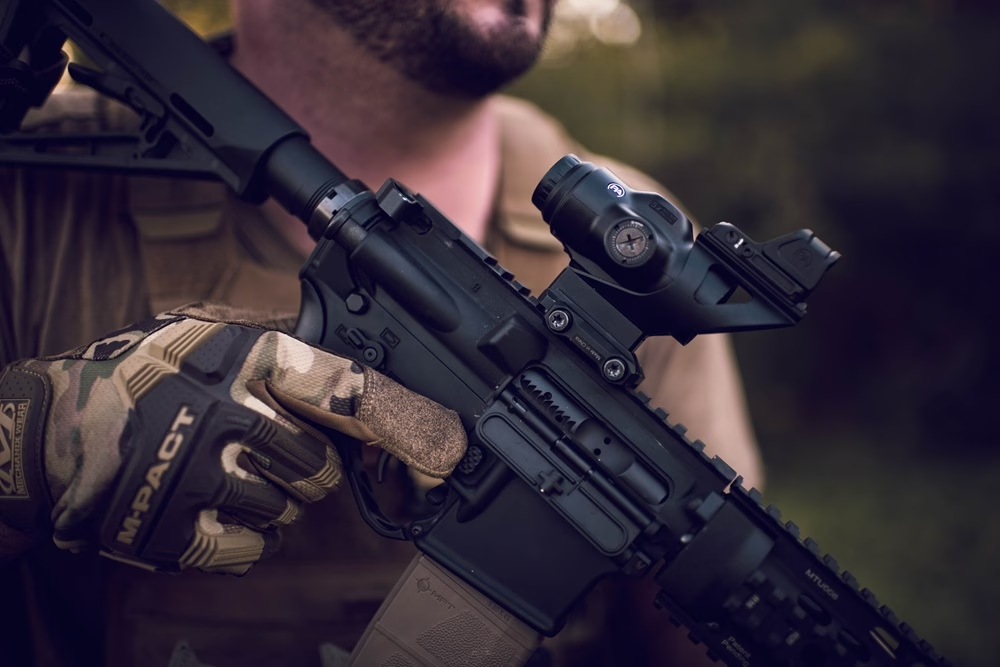
This leaves you with the ever-popular 12 O’clock mounting position, colloquially referred to as the “piggy-back” red dot. This mounting position is incredibly intuitive to use, but depending on your primary optic, the way in which you add one to your setup can look a bit different.
What Are Offset Red Dots and Do You Need One?
As we mentioned above, an offset red dot is a supplementary optic that’s mounted in an offset position from your primary one. These optics add another level of versatility to your rifle setup, allowing you to quickly switch between different optics to use whatever the situation calls for in the moment.
As such, they can be a critical piece in your setup, with them being advantageous across multiple applications. Take professional-level applications like duty use, and even more intensive competitive applications for instance. In both instances, every second matters, and the time it takes to adjust your optic or get a good sight picture on with fixed magnification can take precious time, making the ability to quickly switch between optics immensely useful.
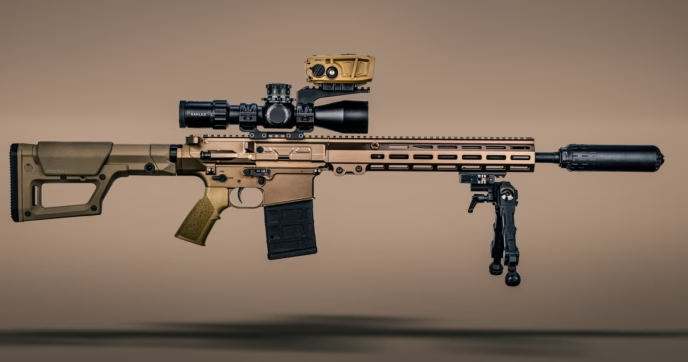
Now, whether they’re necessary or not depends heavily on how you plan to use your rifle, as well as what your choice of primary optic is. If you’re main rifle setup is a compact AR-15 with a red dot and magnifier, an offset optic isn’t necessary. But, if you’re building a General-Purpose (GP) rifle, or something like an SPR or DMR, that you plan to outfit with LPVO or a prism scope, an offset dot becomes much more practical. So, while it’s certainly possible to build up the reps needed to make running a single optic viable across dynamic applications, when seconds matter, an offset red dot can be a serious game changer.
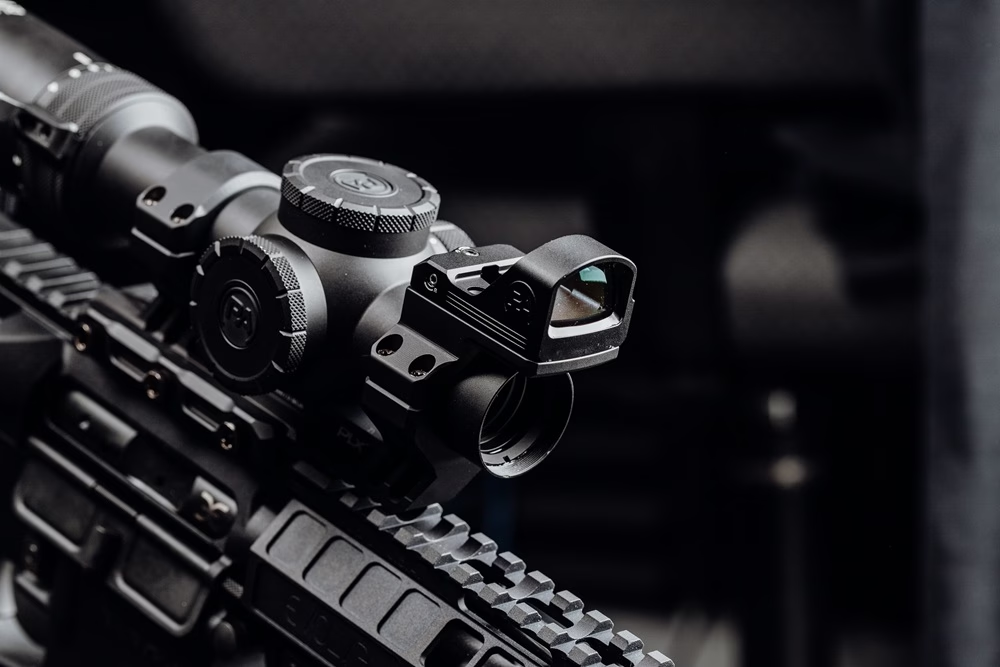
12 O’clock Mounts
Like we mentioned in the beginning, there’s multiple ways to mount a red dot sight in an offset position, with the most common being 45-degree and 12 O’clock mounts. Between the two, both can be incredibly effective, but like we said above, 45-degree mounts require you to rotate your rifle to one side to see up your sight picture, which isn’t the most conducive when in unconventional stances/positions, or when using NODs.
12 O’clock mounts, on the other hand, don’t have such issues. They’re generally considered to be more intuitive to use, as transitioning from optic to optic requires less overall movement—just a simple head raise. Plus, you’ll always have ready access to your offset dot since it isn’t biased to one side. So, if you ever were to transition shoulders to get a better angle on your target or maneuver around a corner, you’d still have full access to both optics. 12 O’clock aren’t without their cons though. Their higher height over bore can make it tricky to get a good cheek weld at times, and you’ll need to make sure you know your holds to account for its taller mount height.
This higher height isn’t all negative though, as 12 O’clock mounts are far more conducive for night-vision aiming with NODs. When running NODs, a higher sitting optic is often more comfortable to use, since they require you to have a less conventional cheek weld. So, with your red dot being mounted above your primary optic, you’ll have the right height necessary for aiming under night vision.
Different Types of 12 O’clock Mounts
As we’ve hinted throughout this article, there are several 12 O’clock, or piggyback, style mounts for offset red dots, many of which are offered by Primary Arms Optics. With that in mind, the type of mount you use will depend heavily on whatever your main optic is.
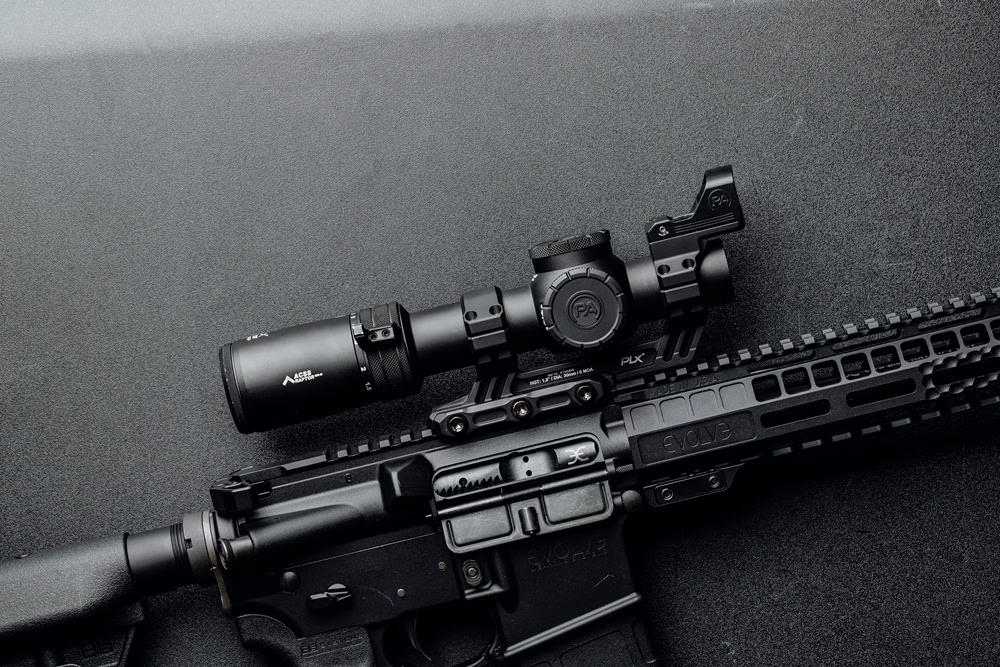
Rifle Scope Mounting Options
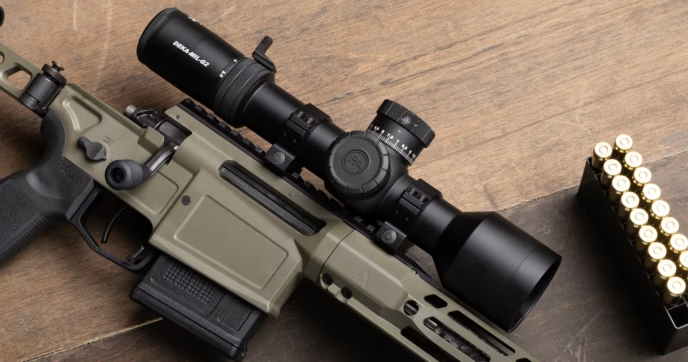
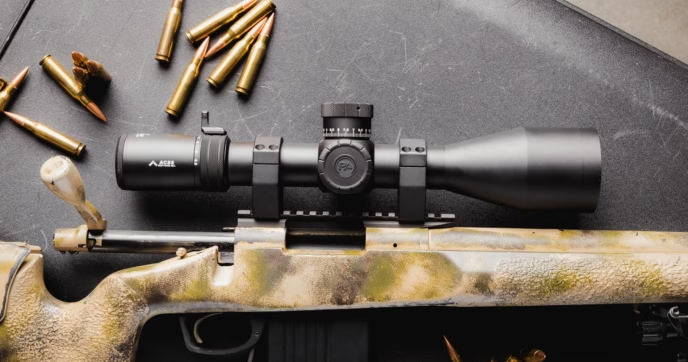
For rifle scopes, one of the best options available comes in the form of top cap mounts. PAO’s top cap mounts are designed to replace the upper cap of your scope mount. These caps have a built-in mounting surface for your optic, allowing you to run a mini-reflex sight in the 12 O’clock position over your optic.
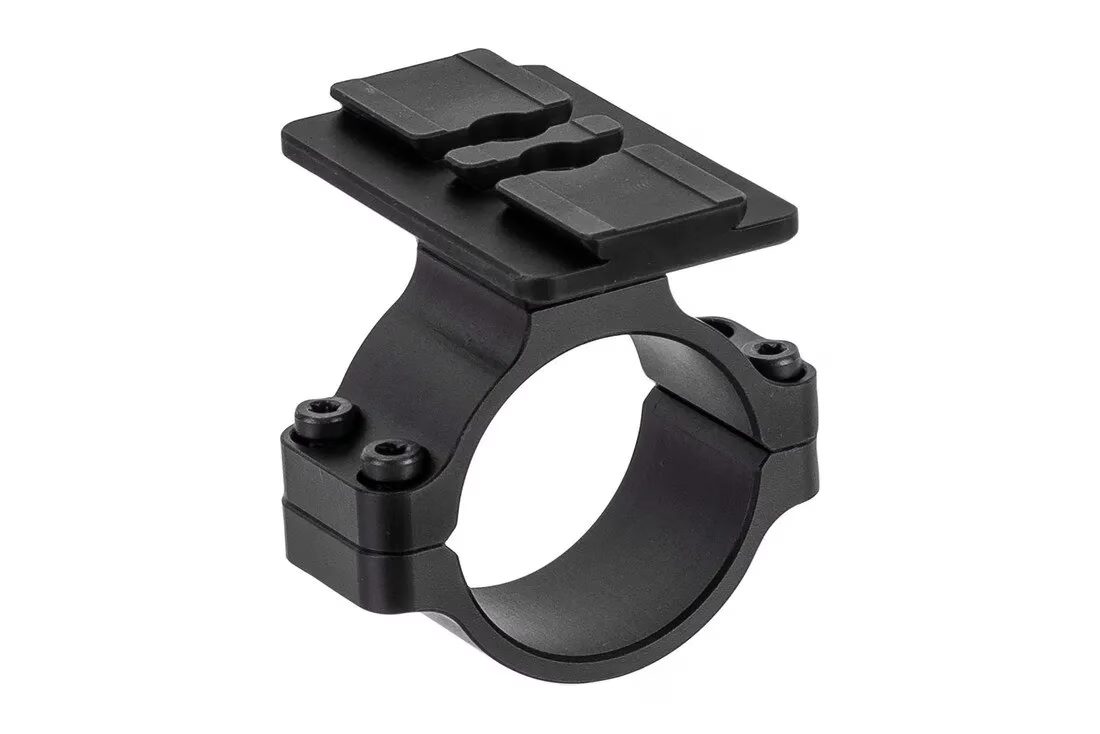
Compact rifle scopes like LPVOs and smaller MPVOs often make use of 30mm mounts, making the SLx® 30mm Top Cap Reflex Mount a solid choice to consider. Made from a durable 6061 Aluminum construction, they’re compatible with PAO’s SLx 1.5” 30mm Scope Mounts, giving your offset mini-reflex sight a 2.04” mount height. Also, this mount makes use of the popular Holosun 507C mounting footprint, making it compatible with many of the industry’s popular optics. But if you have an adapter, you can run other optics too, albeit with a slight increase in height.
If you run a larger rifle scope, PAO has you covered on that front too. The SLx 34mm Top Cap Reflex Mount is essentially just a larger version of the 30mm reflex mount. Like it, it’s also machined out of durable 6061 Aluminum and is compatible with the 507C mounting footprint. Similarly, it also provides you with a 2.04-inch mount for your mini-reflex sight, allowing you to easily transition to close-range targets or use NODs if you’re running your rifle at night.
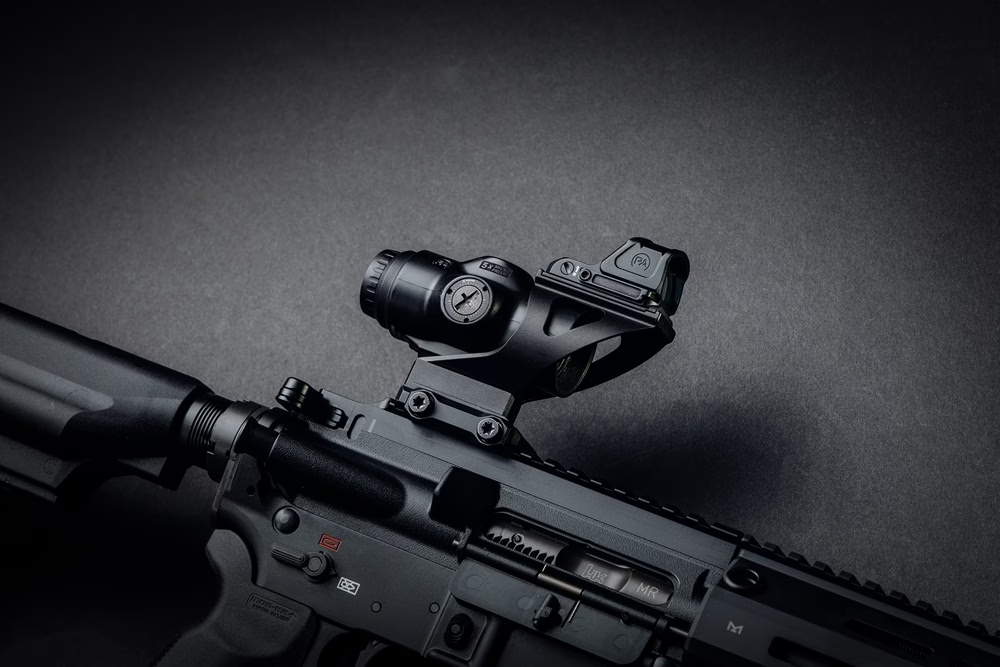
Prism Scope Mounting Options
If you prefer to run a prism scope, you aren’t out of luck if you want to run a 12 O’clock offset red dot. Even though PAO’s SLx and MicroPrism Scopes don’t have the space needed for ring mounts, there are still multiple Primary Arms Optic Mounts to choose from that will provide you with a solid mounting surface.
One of the best options to go with if you run a PAO MicroPrism is the MicroPrism 12 O’clock Mount. Designed for use on the SLx 3x and 5x MicroPrism Scopes, these mounts are made from a robust 6061 Aluminum construction. On top of that, the mount only weighs 1.07 ounces. To take its capabilities even further, its optic mounting surface is compatible with GLOCK’s Modular Optic System plate design, effectively making it compatible with just about every mini-reflex sight on the market, so long as you have the right adapter for it.
Additionally, you can also opt for you the MicroPrism Offset Reflex Mount too. Although it isn’t a 12 O’clock mount, this guide wouldn’t really be complete without mentioning it. Just like the MicroPrism 12 O’clock mount, the offset reflex mount is designed primarily for the SLx 3x and 5x MicroPrism scopes, but instead of mounting in-between the optic and its base mount, the MROM replaces the picatinny rail keeper. This ensures that both your primary and offset optics are mounted exceptionally secure to your rifle, allowing you to effectively maintain zero with no issues. And lastly, it also makes use of GLOCK MOS plates, so you can pair it with nearly every optic on the market.
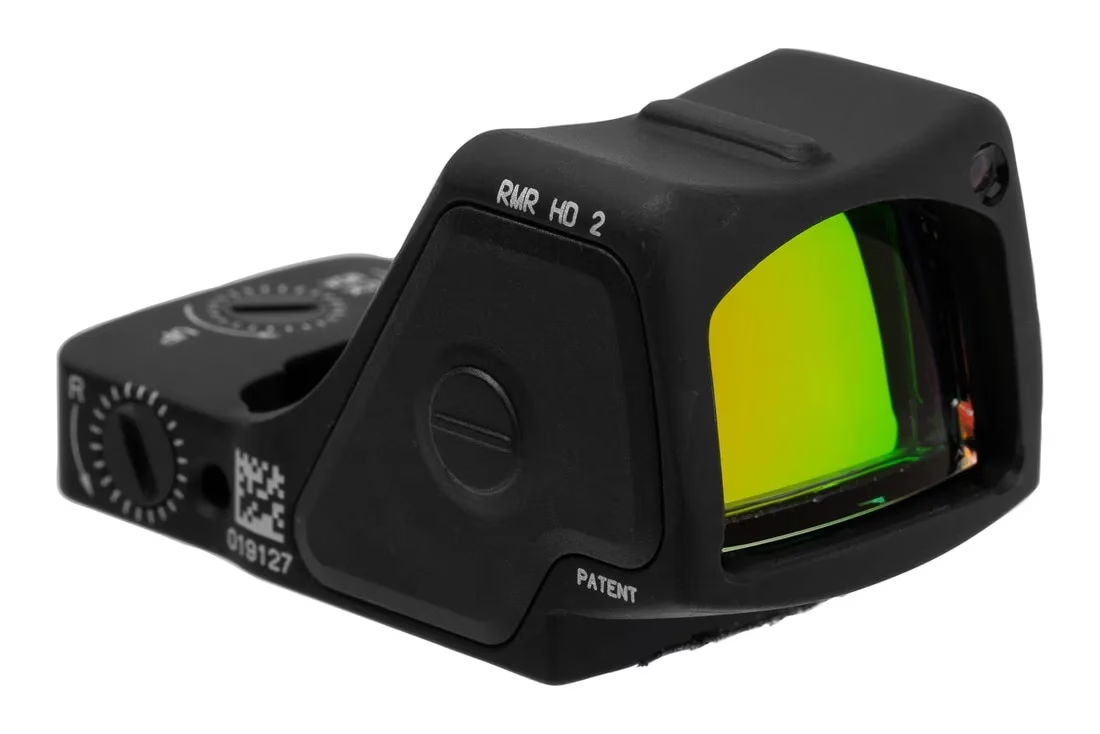
Conclusion
Refining your optic setup should always be one of your highest priorities whenever you’re building a new rifle setup. And, if you plan to use yours for more intensive competitive or duty use, or just want to maximize your overall adaptability, we highly recommend looking into running a 12 O’clock offset red dot alongside your primary optic.
Allowing you to quickly switch from a magnified to a non-magnified image by simply shifting your head-position, 12 O’clock mounts easily one of the best offset red dot mounting positions. Compatible with both rifle scopes and other optics like prism scopes, they can seriously overhaul your rifle’s performance, allowing you to effectively transition between distant and close-range targets with minimal movement.
That said, while opting for a 12 O’clock offset mount is easy, choosing an optic to go alongside it is a challenge in and of itself. So, to make it as easy as possible, we recommend checking out our guide, “Behind the Glass: Mini-Reflex Sights”, to get a better idea of the different sight options to choose from.